





Antique Belt Pistol
An antique belt pistol is a historic firearm designed to be tucked into a belt or sash for personal defence, combining steel, wood, and brass.
Antique Belt Pistol
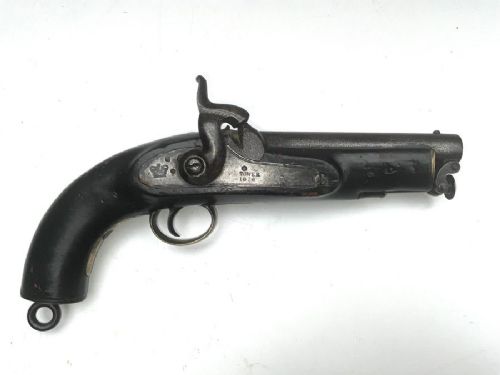
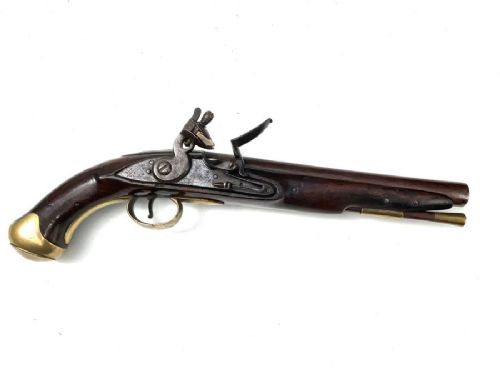
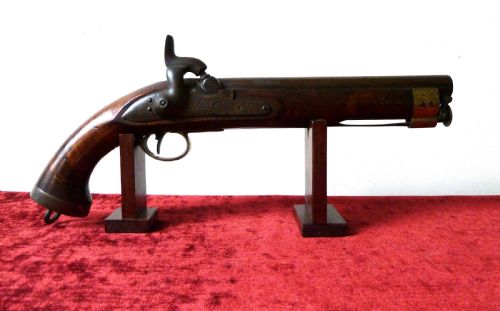
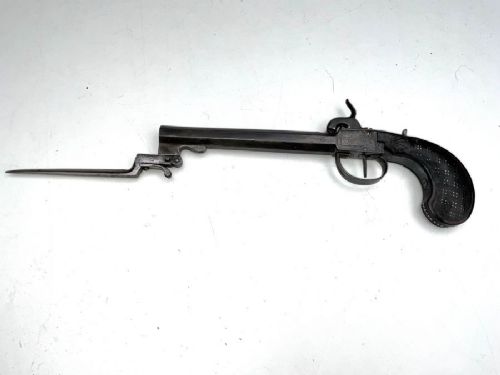
An antique belt pistol represents a practical side of historic weaponry, compact enough for carriage by officers, travellers, and gentlemen. The examples seen on this page span the Georgian and Victorian eras, covering military service, Scottish Highland traditions, and continental styles.
The most frequent encounters include robust percussion and flintlock mechanisms from British military and civilian workshops. Pieces range from regulation dragoon and sea service arms to ornate Ottoman miquelet designs and Scottish scroll-butt pistols.
Materials and construction
Makers relied on forged steel and iron for barrels and lockplates, ensuring the strength required for gunpowder charges. Stocks were shaped from dense hardwoods like walnut or general timber, shaped to fit the hand securely.
Brass and silver frequently appeared in mounts, trigger guards, and decorative cladding, particularly on Highland and Ottoman examples. Mechanics involved precise metalworking for flintlock and percussion ignition systems.
Balkan traders sometimes wrapped firearms entirely in embossed brass, ensuring a pirate aesthetic that dazzled both targets and customs officials.
Assessing quality and origin
Quality rests in the crispness of maker signatures, proof marks, and the finesse of metal engraving on locks and mountings. Maker-signed pieces by known gunsmiths demonstrate superior engineering compared to unmarked military contracts.
The integrity of the timber stock and the alignment of brass or iron furniture also dictate standing. Untouched condition with original patination holds greater historical weight than heavily restored or polished surfaces.
Harrison of London·John Campbell of Doune·Henry Nock·George Sherwood of Portsmouth
The Antique Belt Pistol Glossary
- Flintlock
- An ignition mechanism that uses a piece of flint held in a cock to strike a steel frizzen, creating sparks to ignite the priming powder. This system dominated military and civilian firearms from the seventeenth into the nineteenth century.
- Percussion
- A later ignition system utilising a small percussion cap struck by the hammer to detonate the charge. It largely replaced the flintlock due to its reliability in wet weather.
- Scroll-butt
- A traditional pistol grip ending in a tightly curved, often metal or engraved wood scroll shape. It is characteristic of seventeenth and eighteenth-century Scottish Highland firearms.
- Sea service
- A pattern of firearm specifically manufactured for naval personnel and marines, typically featuring robust brass furniture to resist saltwater corrosion.
Antique Belt Pistol: Frequently Asked Questions
How do I know if a belt pistol is military or civilian?
Military pieces usually display government ownership broad arrow marks, regulation bore sizes, and standardised brass or iron furniture without excessive ornamentation. Civilian and officers' pistols often feature finer checkering, private maker signatures, and engraved silver mounts.
Contract pieces made for organisations like the East India Company bridge the two categories, carrying commercial proofs alongside corporate stamps.
What is the difference between flintlock and percussion pistols?
Flintlock pistols rely on a flint striking a steel plate to produce sparks for ignition, marking the earlier technology seen predominantly in eighteenth and early nineteenth-century pieces. Percussion pistols use a hammer striking a small copper cap filled with fulminate of mercury, introduced in the nineteenth century for superior reliability.
Both systems appear across the listings, reflecting the technological transition of the era.
Why do some pistols have belt hooks?
Belt hooks allowed individuals to secure the firearm directly to a sash, belt, or waistband for rapid access without requiring a bulky holster. This feature was particularly essential for horsemen, naval officers, and travellers needing immediate defence.
Not every arm designated as a belt pistol retains its original side hook, as many were carried in pockets or holster rigs.
How should I care for an antique pistol?
Keep the metal lightly oiled with a neutral gun oil to prevent active corrosion and store the piece in a dry, stable environment away from direct sunlight. Avoid aggressive cleaning of the metal surfaces, as original patination contributes significantly to historical authenticity.
Wooden stocks benefit occasionally from microcrystalline wax to nourish the grain without leaving sticky residues.