






Victorian Percussion Firearm
A victorian percussion firearm represents a mid-nineteenth-century leap in ignition technology that collectors prize for its mechanical ingenuity and martial history.
Victorian Percussion Firearm
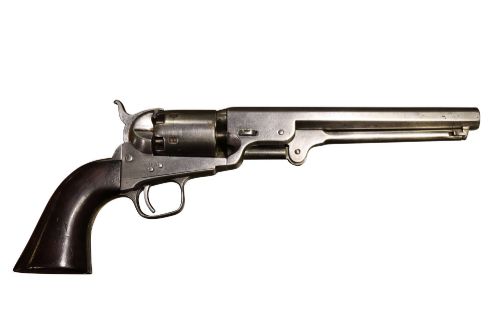
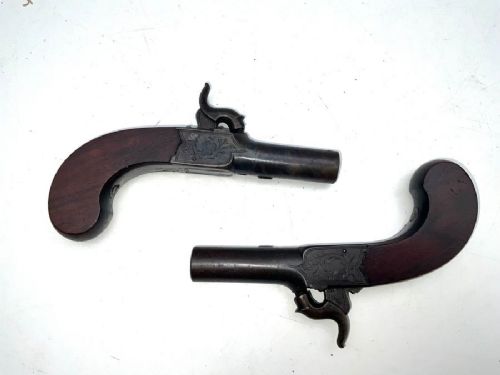
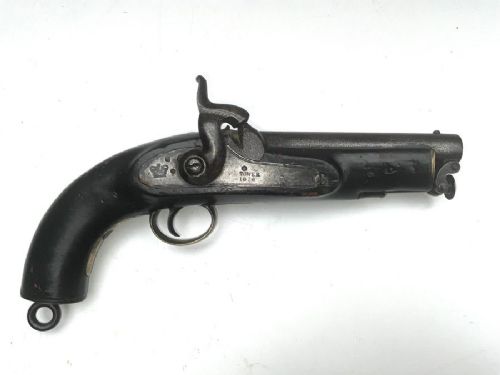
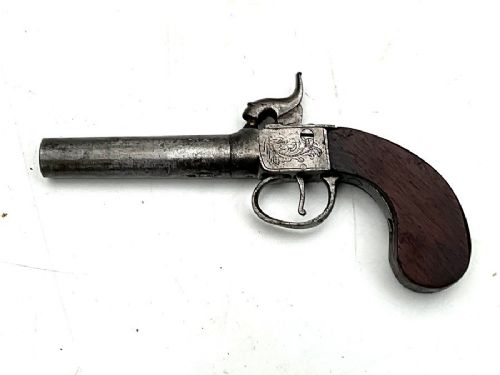
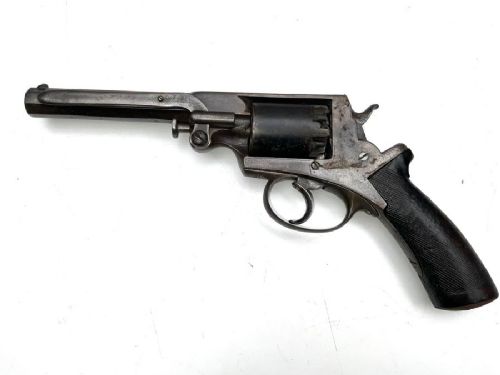
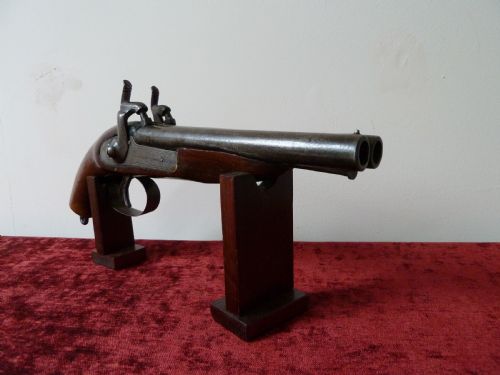
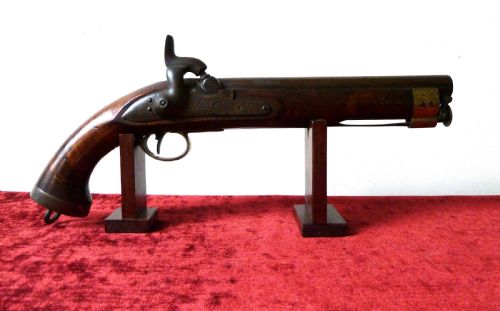
A victorian percussion firearm spans pocket pistols, military belt pistols, revolvers, and muskets produced during the nineteenth century. The prevailing forms on this page include pocket pistols, heavy cavalry and belt pistols, and multi-shot revolvers.
These items originate from British military contracts, London and provincial makers, and continental workshops. Standard military pieces bear government stamps, while civilian models range from gentleman's pocket protectors to cased duelling sets.
The selection reflects both domestic defence and imperial expansion. Collectors encounter arms issued to the East India Company alongside privately purchased officer sidearms.
Materials and Construction
Makers utilised forged steel and iron for barrels, frames, and lock mechanisms, ensuring the strength required for black powder charges. Brass and mahogany frequently appear in mounts, furniture, and fitted presentation cases.
Stocks and grips are predominantly shaped from walnut or other dense hardwoods, occasionally complemented by velvet linings inside storage boxes. Metal components often feature crisp engraving, Birmingham or London proof marks, and stamped military inspection tallies.
Several pocket pistols hide their triggers inside the frame until you cock the hammer, ready to surprise an unwary pickpocket.
Assessing Quality
The upper tier of these arms is defined by the crispness of the lock action, the legibility of maker signatures, and the survival of matching serial numbers. Retained original finish on the metal and checkering on the wood elevate an example significantly.
Cased sets complete with original accessories demonstrate superior provenance compared to loose sidearms. Workshop execution distinguishes standard government issue pieces from bespoke London or continental output.
Auguste Francotte·George Sherwood·J.R. Cooper·John Manton
The Victorian Percussion Firearm Glossary
- Percussion cap
- A small copper or brass detonating cup placed on the nipple of a firearm to ignite the gunpowder charge when struck by the hammer. This innovation replaced flintlocks and functioned reliably in wet weather.
- Boxlock
- A firearm design where the hammer and lockwork are contained within an internal frame rather than mounted on a sideplate. This compact layout appears frequently on pocket pistols.
- Proof mark
- An official stamp applied to a firearm barrel after passing pressure tests at a recognised assay office such as Birmingham or London. These marks confirm the legality and safety of the piece for sale.
- Smoothbore
- A barrel lacking internal rifling grooves, designed to fire lead shot or round balls over shorter distances. Military muskets and certain service pistols utilised this boring method.
Victorian Percussion Firearm: Frequently Asked Questions
How do these firearms operate?
A percussion firearm uses a hammer to strike a priming cap placed on a hollow nipple. This action creates a spark that travels down to ignite the black powder charge inside the barrel.
The resulting gas pressure drives the projectile forward. This mechanism superseded the earlier flintlock system by offering much faster ignition times and greater weather resistance.
What is the difference between a pocket pistol and a belt pistol?
Pocket pistols are small, easily concealed firearms designed for civilian self-defence in the nineteenth century. They often feature folding triggers or lack protruding sights to prevent snagging on clothing.
Belt pistols are larger, heavier military or civilian arms equipped with a side hook or belt loop for open carry. They served officers and travellers who required greater stopping power and range.
Why do some pistols have bayonets?
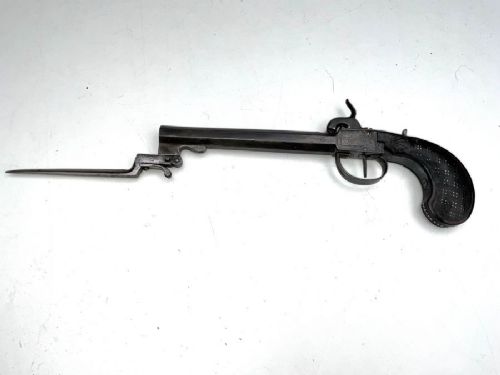
Spring-loaded or flick bayonets were fitted to self-defence pistols so the owner could engage an assailant in close combat after firing the single shot. The blade locks forward along the barrel until released by a catch.
This feature provided a secondary defensive option during an era when reloading a muzzle-loading pistol took considerable time.
How do I care for a percussion arm?
Metal components require a light coating of gun oil or museum-grade wax to prevent active oxidation and rust. Wooden stocks benefit from occasional treatment with appropriate conditioning oils to maintain moisture.
Store these pieces in stable environmental conditions away from direct heat and dampness to preserve the historical materials.