
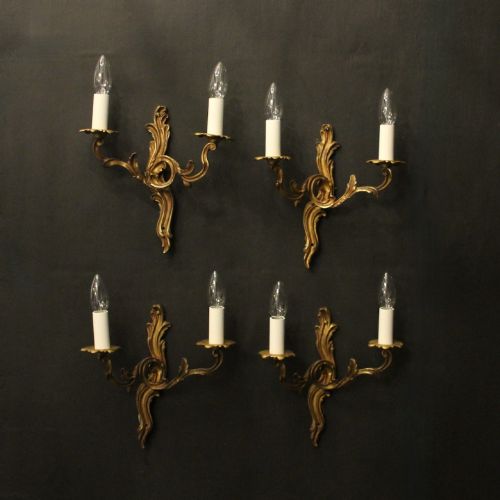


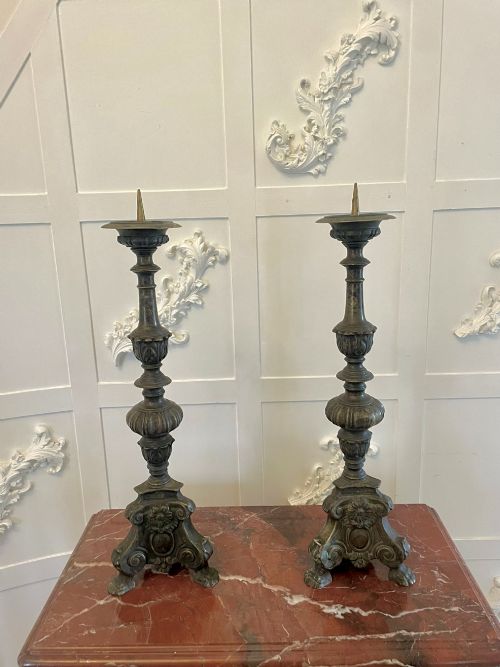
Antique Brass Lighting Pair
An antique brass lighting pair brings warm metal and period form into a room, offering matched illumination from past centuries.
Antique Brass Lighting Pair
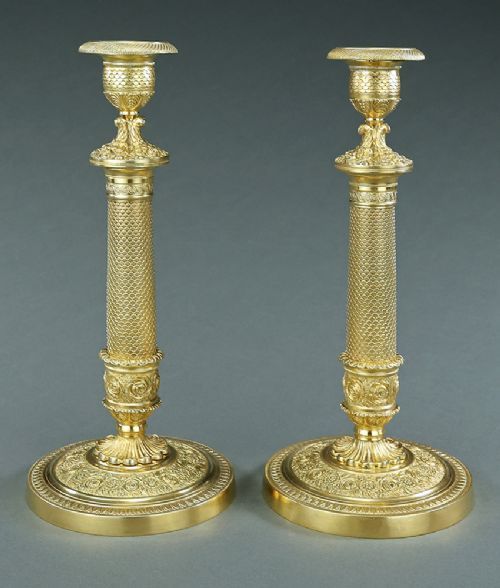
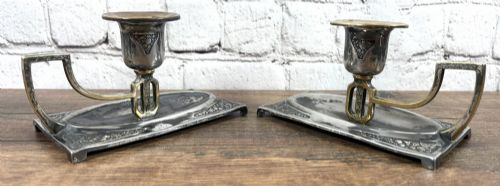
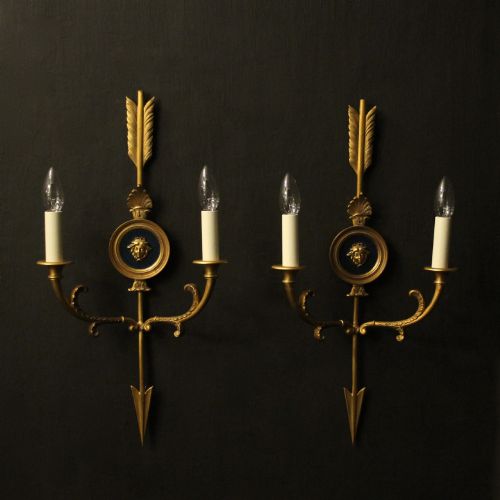
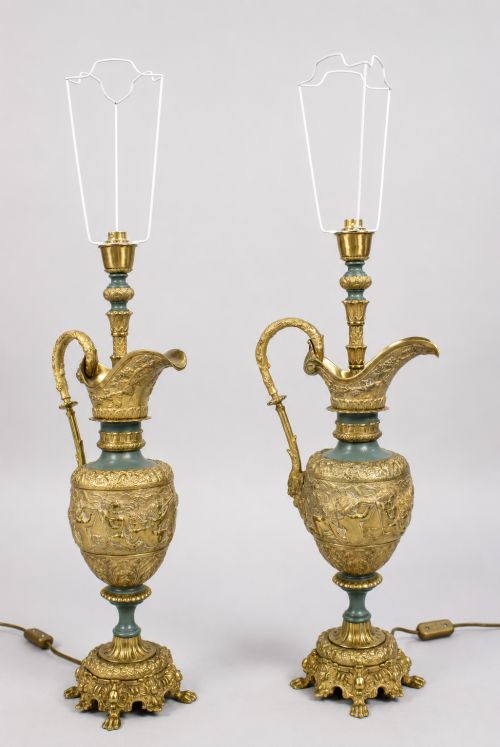
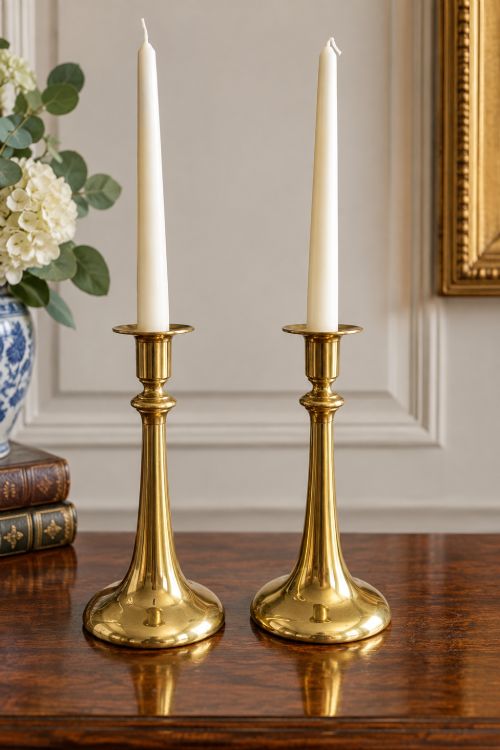
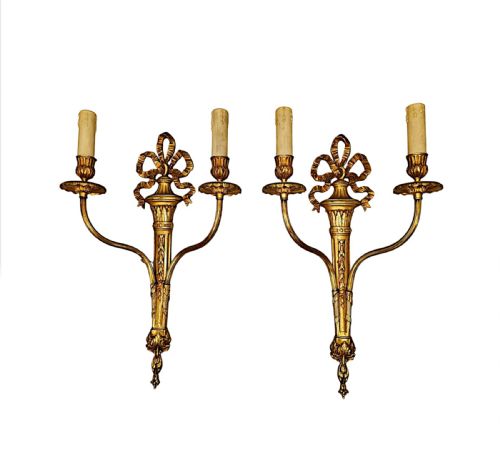
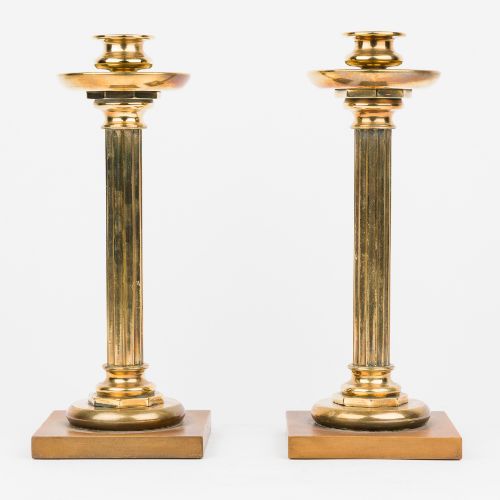
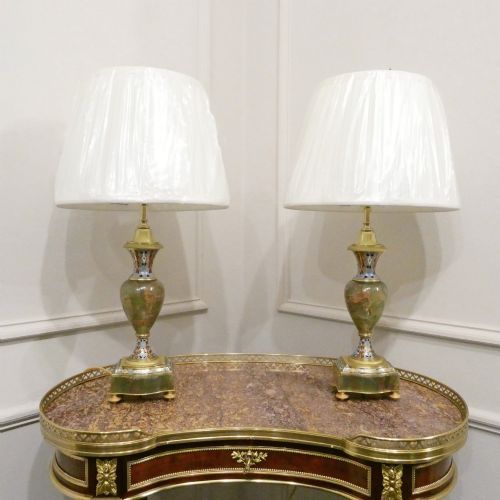
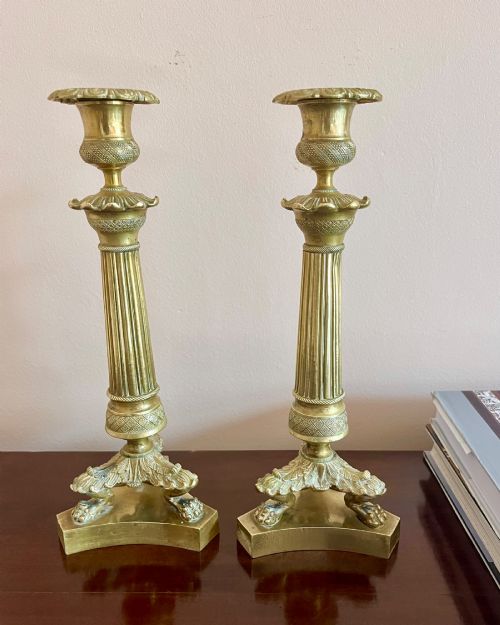
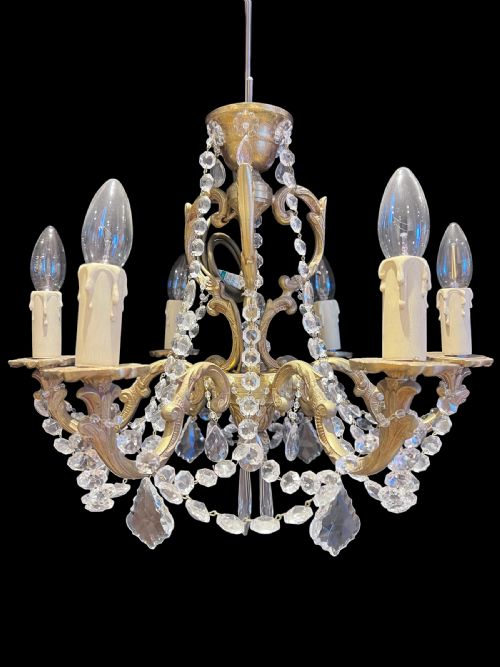
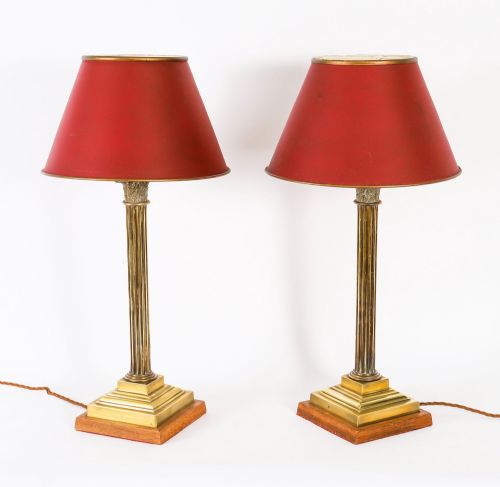
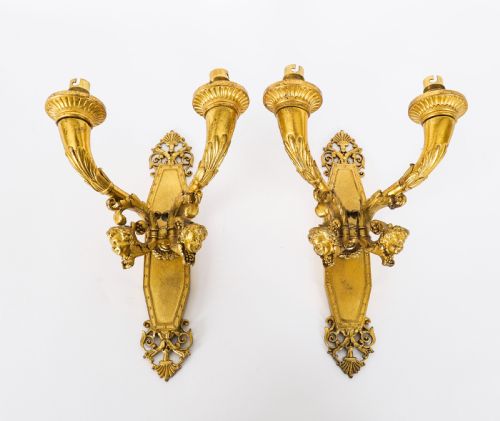
When searching for an antique brass lighting pair, buyers encounter matched sets designed for walls, tables, and mantelpieces. The selection spans utilitarian candlesticks, elaborate candelabra, and electrified table lamps.
Most examples originate from the nineteenth and early twentieth centuries, drawing on Victorian, Edwardian, and French revival aesthetics. Wall lights, sconces, and chandeliers frequently appear alongside standing table pieces.
Continental workshops and English makers produced these pairs for domestic drawing rooms, grand halls, and ecclesiastical settings. Their forms reflect the lighting technology of their respective decades, transitioning from wax and oil to early electricity.
Materials and construction
Foundry work relied on cast and spun brass, often combined with gilt bronze, ormolu, and wrought copper. Makers incorporated glass, crystal drops, and porcelain elements to diffuse and reflect the candle or lamp flame.
Surface finishes include polished metal, parcel-gilding, and patinated bronze, sometimes paired with structural marble, onyx, or wood elements. Components were threaded, pinned, or screwed together by hand.
Fabric shades and opaline glass were added to later nineteenth and early twentieth-century pieces to soften electric or oil illumination. Architectural salvage items utilise heavy marine brass and copper built for endurance.
The listings show materials ranging from raw brass and copper to gilt bronze, onyx, and hand-cut crystal drops.
Quality and execution
The distinction between ordinary and superior pairs lies in the crispness of the casting and the depth of the chased detail. Fine examples show sharp acanthus leaves, cleanly rendered figures, and balanced proportions.
Weight and metal gauge indicate quality, with heavier castings providing stability to tall table lamps and multi-armed candelabra. Superior gilding and fire-applied ormolu retain their lustre better than thin electroplated finishes.
Matched consistency matters greatly in a pair, as hand-finished pieces often exhibit subtle individual differences from the foundry floor. The integrity of the original components and structural mounts determines the overall execution.
Barbedienne·W.A.S. Benson
The Antique Brass Lighting Pair Glossary
- Ormolu
- Gilded bronze, where a gold-mercury amalgam is applied to a bronze base. This technique creates a rich, matte golden finish typical of French decorative pieces.
- Pricket
- A sharp metal spike in the centre of a drip pan designed to hold a candle. These are common on ecclesiastical candlesticks and church lighting.
- Champleve
- An enamelling technique where troughs are dug into a metal surface and filled with vitreous enamel before firing. It appears frequently on decorative nineteenth-century table lamps.
- Candelabra
- A branched lighting fixture holding multiple candles or lamp bulbs. They range from two-arm wall sconces to massive table-standing centrepieces.
- Port hole
- A heavy brass or bronze marine window frame adapted for interior lighting or architectural salvage. These items provide an industrial aesthetic to walls.
Antique Brass Lighting Pair: Frequently Asked Questions
Can these antique lights be electrified?
Many pairs designed for candles or oil have already been converted to electricity over their long lifetimes. Professional rewiring ensures safety while maintaining the original metal components and aesthetic.
Consult a qualified electrician to check older wiring before use. Unconverted candlesticks can often be adapted using subtle candle tubes that house modern wiring.
How do I date a brass pair?
Examine the casting marks, construction fasteners, and overall style to establish a working period. Georgian and Victorian pieces often show hand-filed surfaces and heavy gauge brass, while Edwardian items feature lighter mounts.
Stylistic cues such as French Rococo revival or Arts and Crafts movement details also point to specific decades of manufacture. Comparing the patination and wear patterns helps confirm the age.
Where should I place wall sconces?
Wall lights suit hallways, flanking fireplaces, or framing mirrors in principal living spaces. Ensure they are mounted at eye level to balance room proportions and provide flattering illumination.
Pair them with dimmer switches to recreate the soft glow of historical candle lighting. Consider the scale of the room when selecting twin-arm or multi-branch fixtures.