


Cream Fringed Lampshade
A cream fringed lampshade tops historical lighting with soft, textured warmth.
Cream Fringed Lampshade
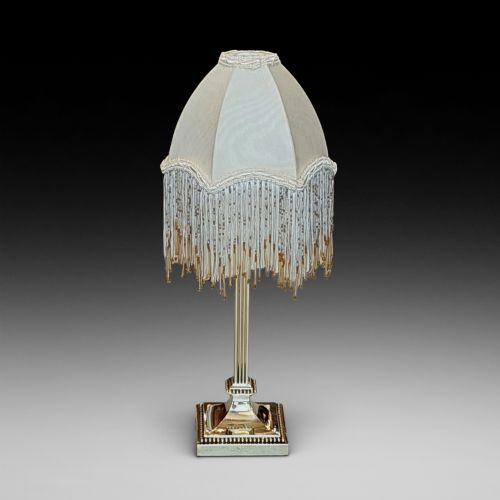
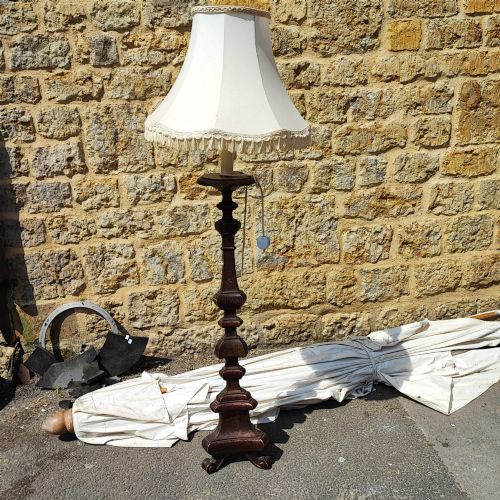
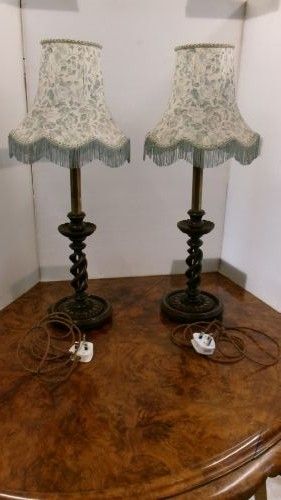
A cream fringed lampshade crowns historical lighting fixtures ranging from slender table lamps to tall standard lamps. These pieces sit atop bases formed from brass, carved wood, and ceramic dating from the nineteenth century into the nineteen thirties.
Edwardian neoclassical revival styles and traditional English country forms dominate the selection. Buyers will frequently encounter brass columns and wooden torchere vase standards paired with these textile shades.
The objects serve primarily as functional room illumination while carrying distinct period character. They bridge nineteenth century candlesticks and early twentieth century light fittings with classic gathered textile work.
How they were made
Makers constructed these shades and lamps using traditional textile and metalworking techniques. Silk and standard fabrics form the shades, often suspended with decorative fringing.
Underpinning these shades are rigid internal frames supporting the soft materials. Bases utilise pressed brass, cast bronze, silver plate, and carved oak, sometimes incorporating glass elements.
Listings feature materials spanning silk, fabric, brass, glass, ceramic, silver plate, carved wood, and oak.
What varies in quality
Material selection dictates the grade of each piece, distinguishing solid brass castings and carved wood from lighter pressed metal components. The weight and substance of the base anchor the overall composition.
Textile execution marks the difference between standard production and finer work. The density of the fabric, the intricacy of the fringe, and the hand-finished details on the metal or wood determine the piece's standing.
The Cream Fringed Lampshade Glossary
- Standard lamp
- A tall floor-standing lighting fixture designed to illuminate a room from a corner or beside seating. These often take the form of wooden columns or metal pedestals.
- Torchere
- A tall ornamental stand or candlestick adapted in later periods to hold a light fitting. The term derives from French origins associated with supporting torches.
- Neoclassical revival
- A decorative style drawing inspiration from classical antiquity, prominent in architecture and decorative arts during the nineteenth and early twentieth centuries. It favours symmetry and classical motifs.
- Pressed brass
- Sheet brass shaped by mechanical presses rather than hand hammering. This technique enabled mass production of decorative lamp components from the Victorian era onward.
- Candlestick
- A holder designed to support a wax candle, frequently converted in later eras to house electrical lamp fittings. Substantial examples from the Regency period often form the base for larger table lights.
Cream Fringed Lampshade: Frequently Asked Questions
How do I style a fringed shade?
Pair the shade with traditional or Edwardian wooden and brass bases to maintain period harmony. The gathered fabric suits spaces aiming for a classic English country interior.
Position the lamp on side tables or beside seating areas where the soft diffusion of light flatters the surrounding furniture.
Are these lamps originally electric?
Many early pieces began life as oil lamps, gas fixtures, or candlesticks before receiving electrical conversions. The transition from alternative fuels to wiring occurred across the late nineteenth and early twentieth centuries.
Buyers should examine the internal fittings to understand the extent of any rewiring or historical adaptation.
What periods do these lamps cover?
The available lighting spans from the Regency era through the nineteenth century and into the nineteen thirties. Edwardian examples are particularly common among these offerings.
Each decade brings distinct stylistic shifts, moving from classical Regency silhouettes to early twentieth century pressed brass work.
How do I identify standard lamps?
Standard lamps stand taller than table models, designed to rest directly on the floor. They often feature weighted bases to support the height of the column and shade.
Examples include wooden torchere vase forms and substantial metal columns suited for corner placement.