

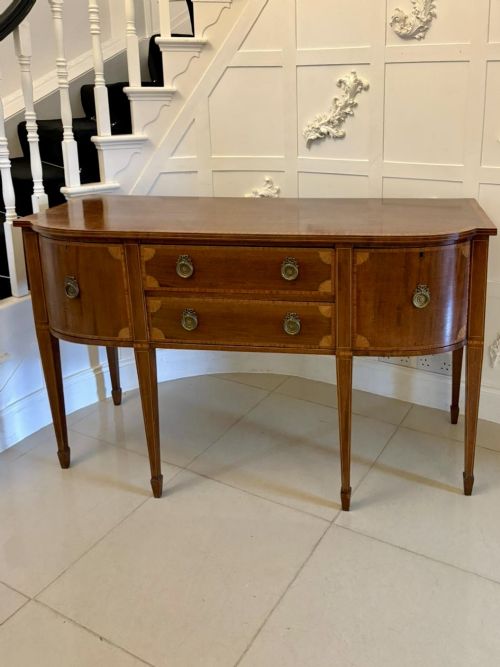
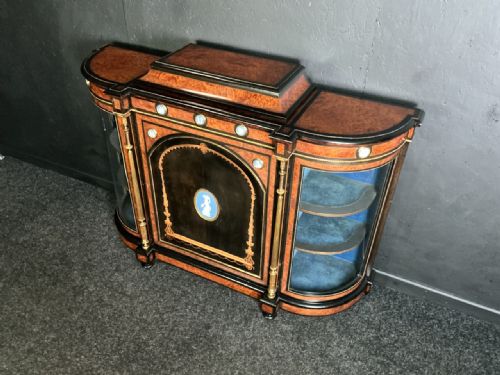
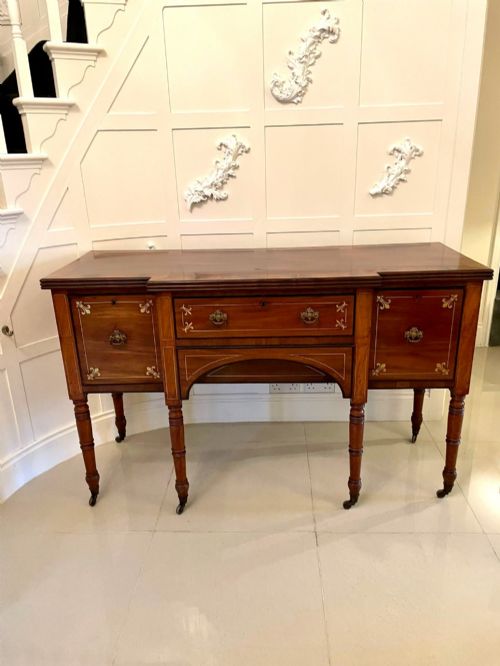
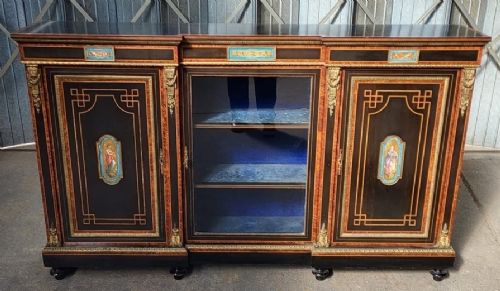
Antique Brass Inlaid Sideboard
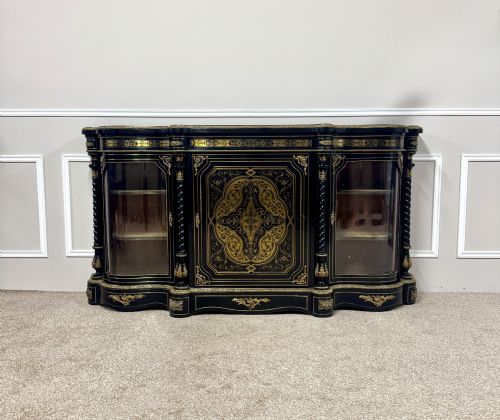
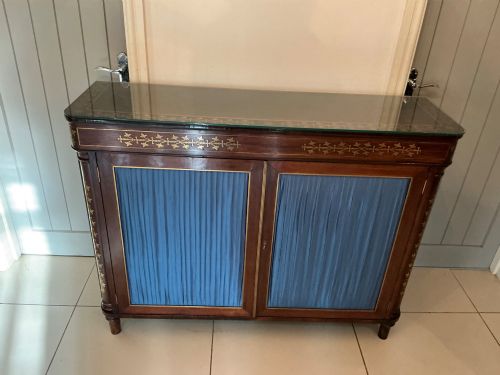
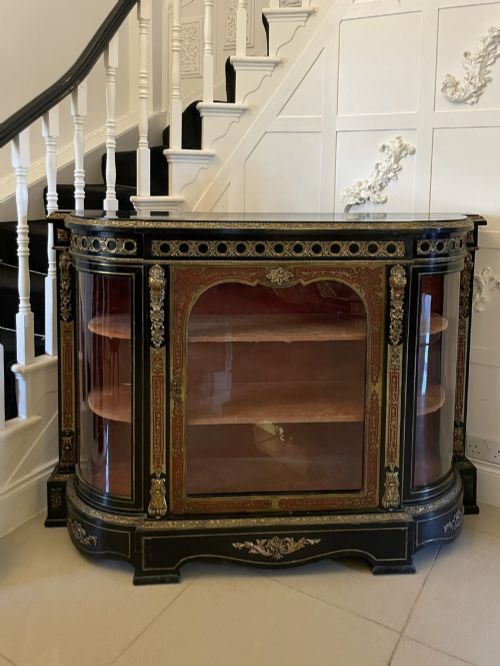
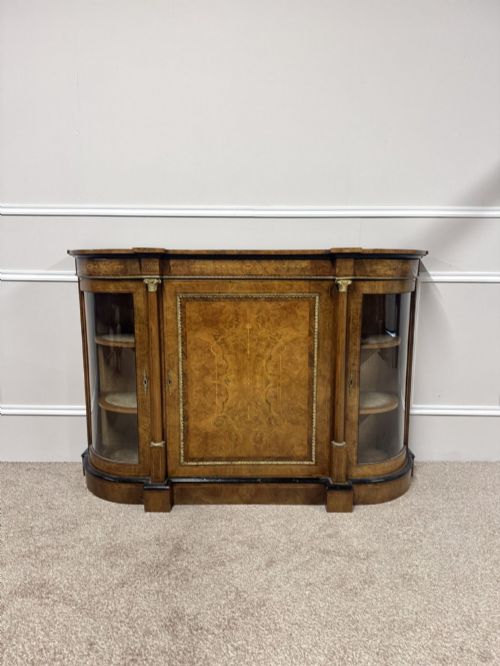
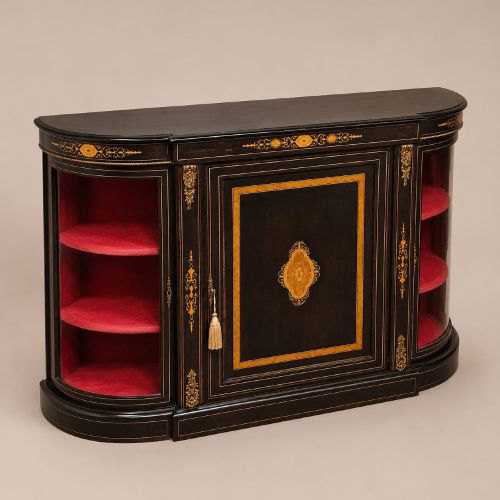
An antique brass inlaid sideboard brings formal dining storage into focus through striking metalwork set against rich timber.
Antique Brass Inlaid Sideboard
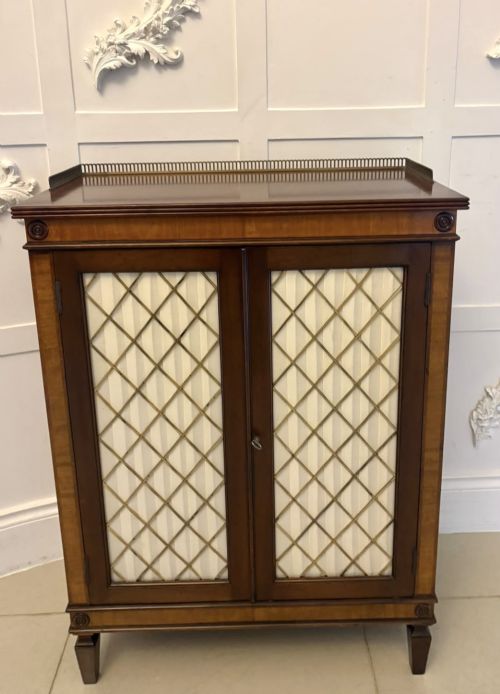
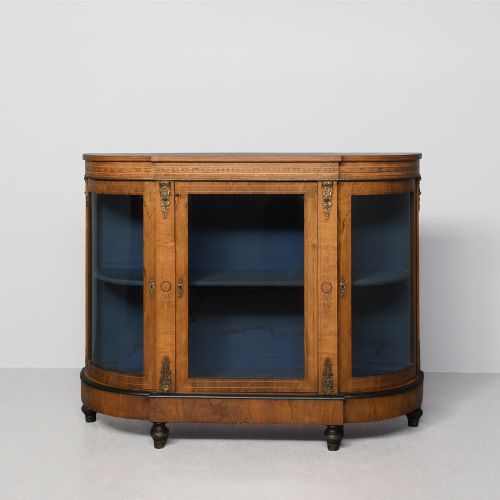
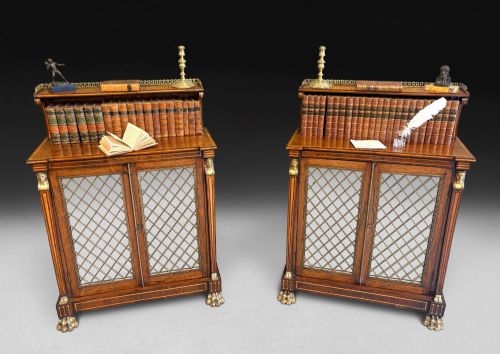
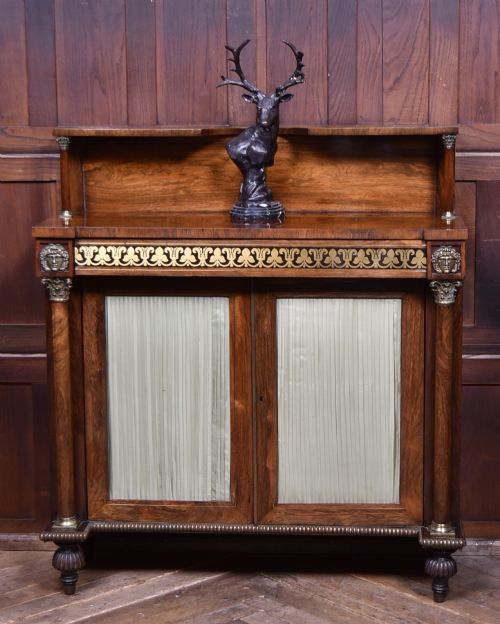
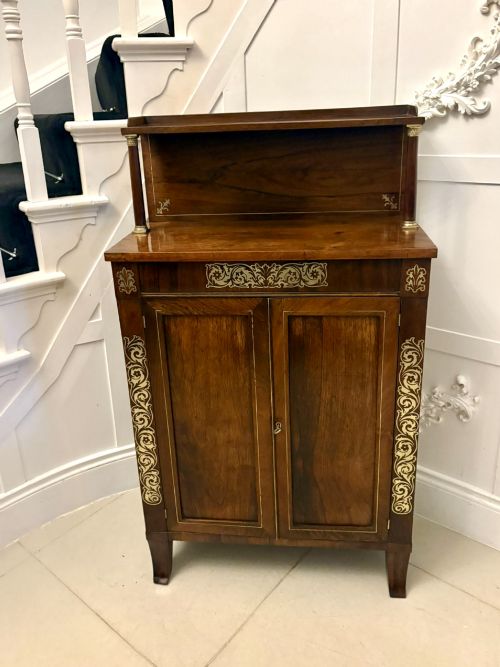
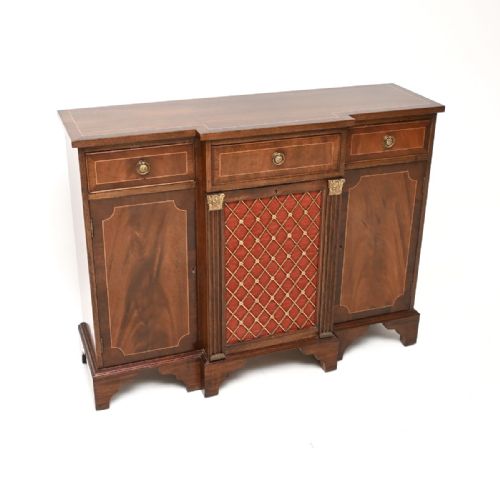
An antique brass inlaid sideboard encompasses formal dining room storage furniture, including credenzas, side cabinets, and chiffoniers.
The versions most commonly met on this page date from the Regency and Victorian periods, though earlier Georgian examples also appear.
Makers utilised dark timbers such as mahogany, rosewood, and ebonised wood to provide contrast for bright brass inlay and ormolu mounts.
Materials and construction methods
Cabinet makers constructed carcass frames from solid hardwoods like mahogany and walnut, often applying decorative veneers of satinwood, rosewood, and amboyna.
Craftsmen embedded delicate brass stringing and floral motifs directly into the wooden surfaces, sometimes pairing the metalwork with glass panels and brass grilles.
Antique Brass Inlaid Sideboard Retail Price Guide 2026
Typical asking prices for brass inlaid sideboard among the pieces listed under this phrase on Sellingantiques today, from the lower quarter to the upper quarter. They describe what is for sale here now, not the wider market.
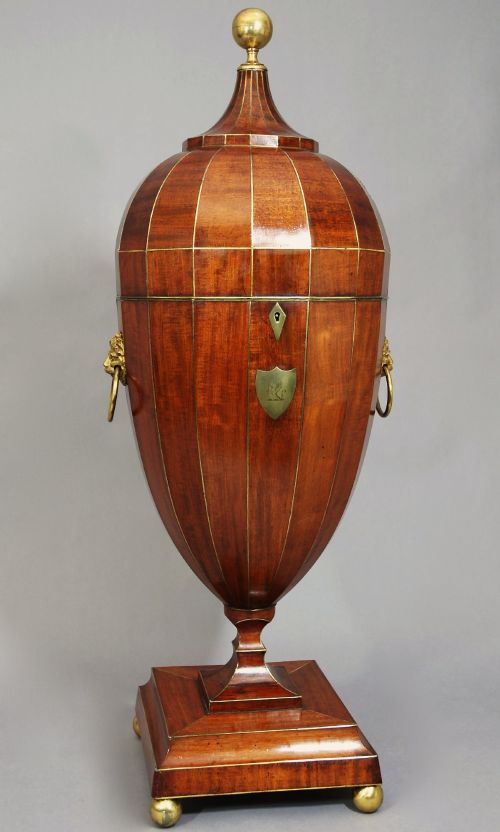
A solitary mahogany cutlery urn from the early 19th century stands ready to guard the dining table's silver.
Assessing quality and finish
Superior pieces display precise, flush brass inlay that follows complex curves without gaps or lifting along the grain of the timber.
Finer examples incorporate cast ormolu mounts, well-figured veneers such as burr walnut, and harmonious proportions across breakfront or serpentine facades.
Hewetsons London·Gillows
The Antique Brass Inlaid Sideboard Glossary
- Credenza
- A low cabinet or sideboard often featuring glazed doors and elaborate inlay, popular in Victorian interiors. It serves as both a display surface and storage unit.
- Chiffonier
- A compact sideboard or cabinet typically fitted with shelves or a bookcase tier above the main surface. Originating in the Regency era, it provides secondary storage for dining rooms.
- Ormolu
- Gilded bronze used for decorative mounts and furniture trim. It adds sculptural detail and rich contrast to dark cabinet timbers.
- Boulle
- A style of marquetry using brass and tortoiseshell inlay developed in France. It creates elaborate metallic patterns across ebonised furniture surfaces.
- Serpentine
- A curved furniture front shaped in a continuous wave with a convex centre flanked by concave sides. This form demands advanced carpentry skills.
Antique Brass Inlaid Sideboard: Frequently Asked Questions
What is an antique brass inlaid sideboard?
An antique brass inlaid sideboard is a formal dining or entertaining cabinet decorated with metal stringing or marquetry. These pieces range from Regency rosewood chiffoniers to Victorian ebonised credenzas.
They combine functional storage for plate and glassware with decorative timber and metal craftsmanship designed for formal reception rooms.
How do I date a brass inlaid sideboard?
Dating relies on timber choice, architectural style, and cabinet proportions. Regency pieces often use rosewood with precise brass stringing, while Victorian examples frequently feature ebonised finishes and ormolu mounts.
Looking at the construction of the drawers and internal carcass reveals further clues about the manufacturing period.
Where were these sideboards placed originally?
These cabinets stood against dining room walls to hold serving dishes, cutlery, and glassware during formal meals. Later Victorian versions often moved into drawing rooms as display pieces for porcelain.
Their decorative facades ensured they functioned as ornamental focal points as well as practical storage units.
How should I care for brass inlay?
Maintaining brass inlay requires dusting with a soft, dry cloth and avoiding harsh chemical polishes that can stain the surrounding wood. Keeping the timber away from direct heat sources prevents the wood from shrinking and loosening the metalwork.
Occasional waxing preserves both the polish of the timber and the brightness of the brass.