






French Boulle Credenza
A French boulle credenza brings nineteenth-century ebonised timber, tortoiseshell, and brass inlay together to anchor a room with heavy, gleaming presence.
French Boulle Credenza
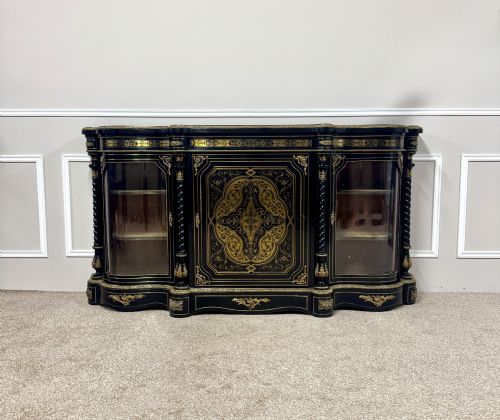
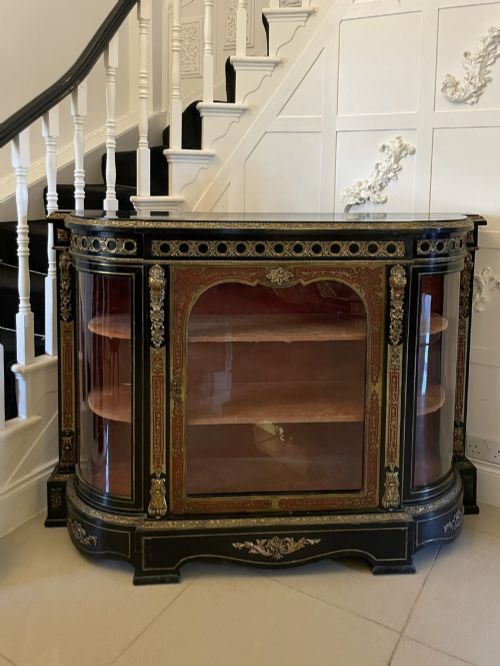
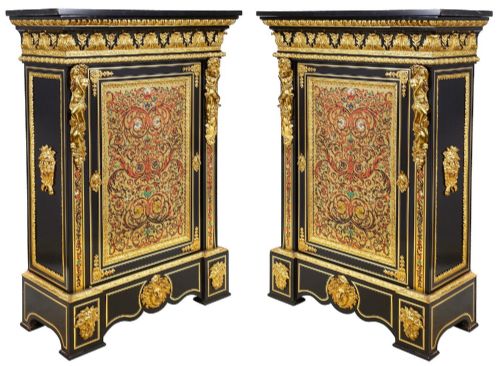
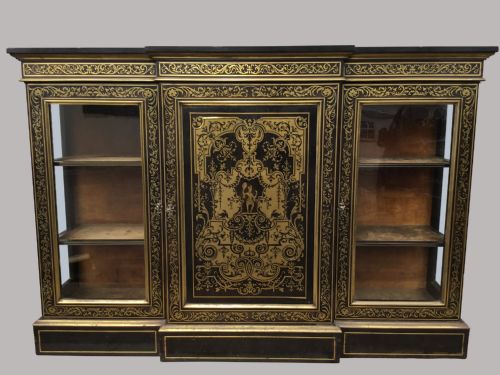
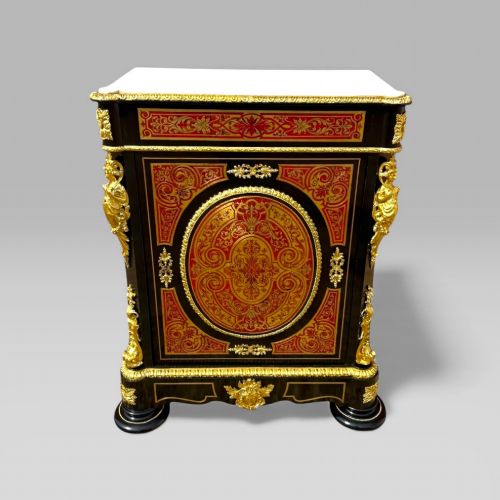
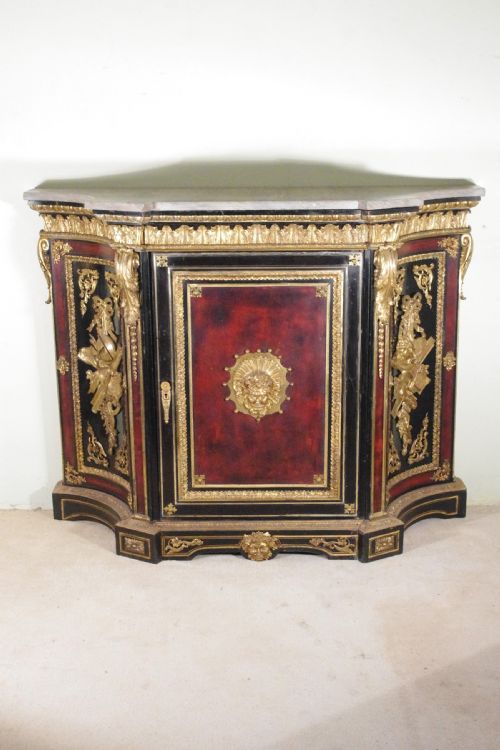
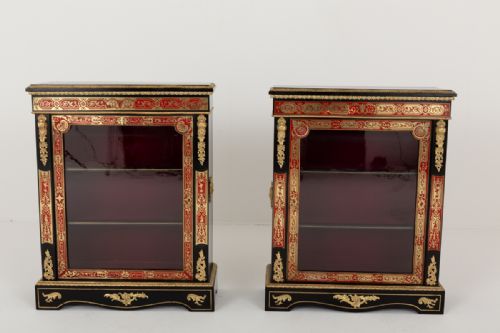
A french boulle credenza is a substantial nineteenth-century cabinet designed for display and storage, commonly appearing from the Napoleon III and Victorian periods. These pieces frequently manifest as pier cabinets, side cabinets, and breakfront sideboards rather than low credenzas alone.
The dominant forms on this page date from the middle to late nineteenth century, specifically around eighteen fifty to eighteen eighty. They range from single display cabinets to matching pairs and serpentine-fronted examples.
Makers and workshops of the era drew heavily on Louis XVI style and French Revival aesthetics. Buyers encounter ebonised wood surfaces heavily populated with tortoiseshell and brass work.
What varies in quality
The crispness of the brass and tortoiseshell inlay separates standard production from finer examples. Precision in the cutting and fitting of these delicate materials determines the visual depth of the surface.
The weight and finish of the ormolu mounts dictate overall distinction. Substantial gilt bronze castings with sharp chiselling distinguish superior cabinets from simpler commercial outputs.
French Boulle Credenza Retail Price Guide 2026
Typical asking prices for french boulle credenza among the pieces listed under this phrase on Sellingantiques today, from the lower quarter to the upper quarter. They describe what is for sale here now, not the wider market.
Tortoiseshell panels caught the candlelight of nineteenth-century drawing rooms, glowing from within when the evening lamps were lit.
The French Boulle Credenza Glossary
- Boulle
- An marquetry technique utilising brass and tortoiseshell cut together in matching negative and positive patterns. Named after André-Charles Boulle, it defines these ornate nineteenth-century surfaces.
- Ebonised wood
- Timber treated to imitate ebony through staining or painting. This dark finish creates the high-contrast backdrop essential for brass inlay.
- Ormolu
- Gilt bronze mounts applied to furniture edges, feet, and friezes. The term denotes finely cast metalwork finished in gold.
- Pier cabinet
- A narrow display cabinet designed to sit against a wall space between windows. These vertical pieces frequently feature single glass doors and marble tops.
- Serpentine
- A curved furniture front characterised by a convex centre flanked by concave ends. This undulating profile requires skilled carpentry.
French Boulle Credenza: Frequently Asked Questions
What is a french boulle credenza?
A french boulle credenza is a nineteenth-century cabinet decorated with brass and tortoiseshell marquetry on an ebonised wooden carcase. They often include marble tops and gilt metal mounts.
These pieces function as focal points in reception rooms, combining enclosed storage with glass-fronted display space.
How do I date a boulle cabinet?
Dating relies on stylistic markers from the nineteenth century, specifically Napoleon III and Victorian revivals between eighteen fifty and eighteen eighty. Construction methods and wood types also indicate the period.
Cabinet forms from this era integrate serpentine fronts, gilt bronze mounts, and specific marquetry patterns typical of mid-century workshops.
Where do I place a pier cabinet?
A pier cabinet fits well against narrow wall sections, hallways, or between large windows where floor space is limited. Their vertical proportions maximise display area without dominating the room.
Pairing matching cabinets on either side of a fireplace or mirror creates balanced symmetry in a traditional interior.
Are these cabinets made of solid ebony?
Most cabinets utilise ebonised timber or rosewood as a base rather than solid ebony. The dark surface serves as a grounding plane for the tortoiseshell and brass inlay.
This construction method provided structural stability while achieving the desired contrast for the boulle work.