


Curved Glass Credenza
A curved glass antique credenza brings architectural presence to a room, offering low-profile display storage shaped by nineteenth-century cabinetmakers.
Curved Glass Credenza
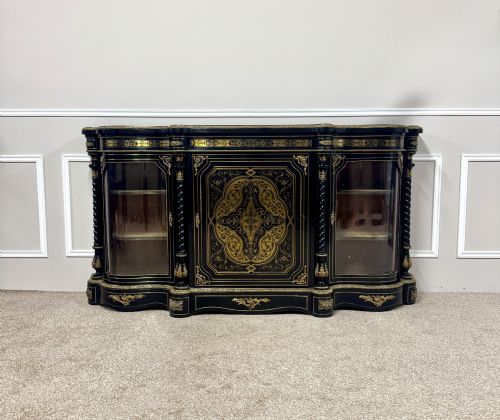
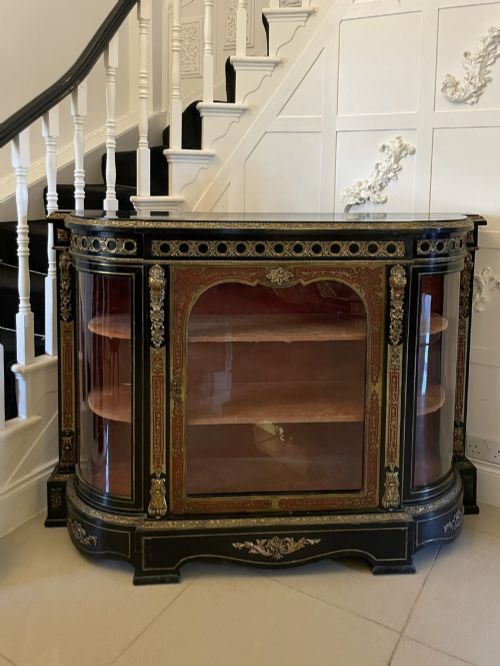
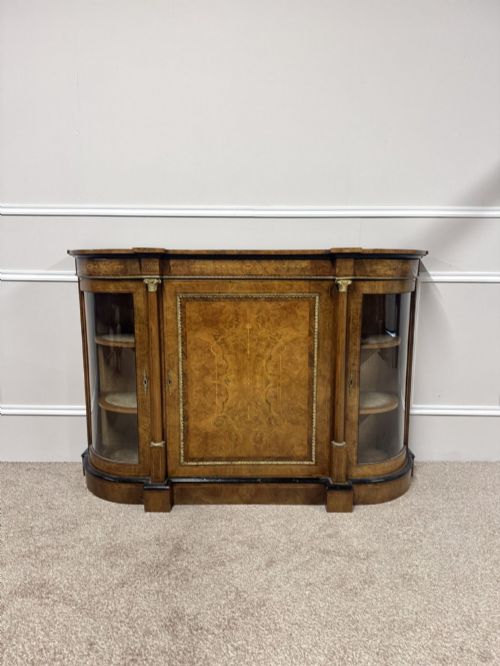
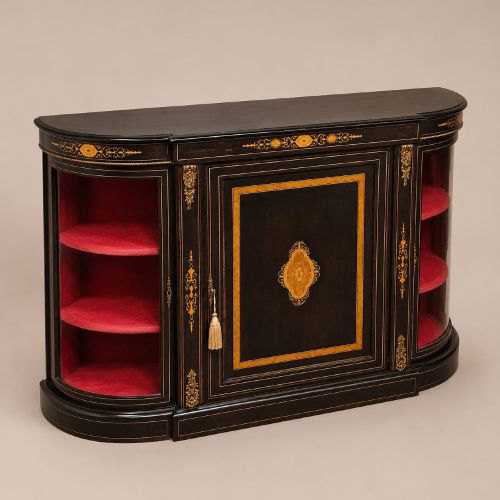
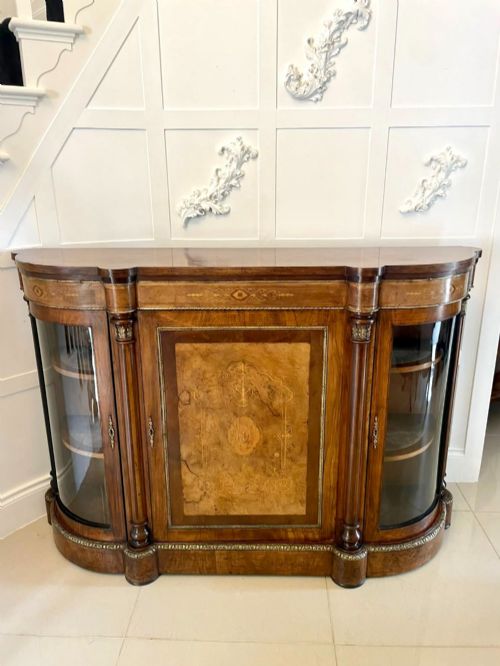
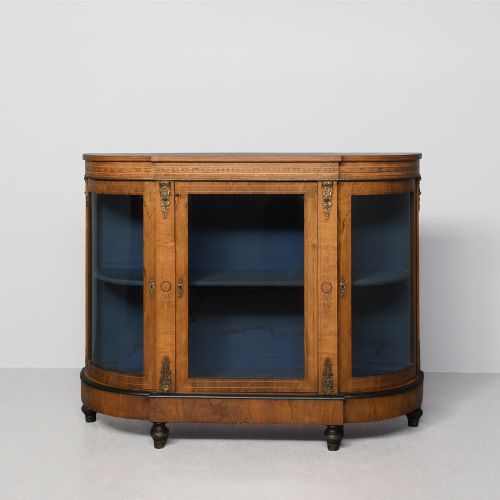
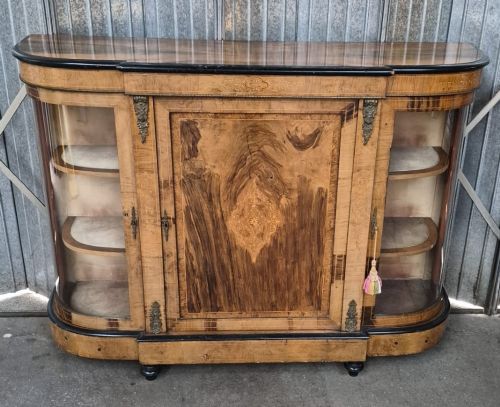
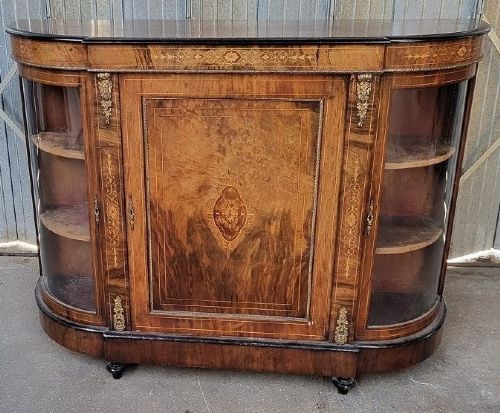
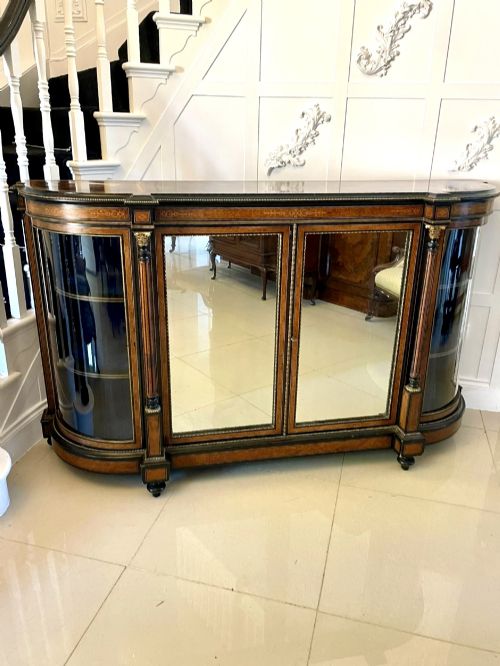
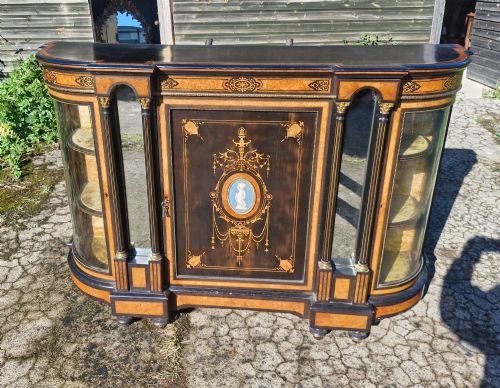
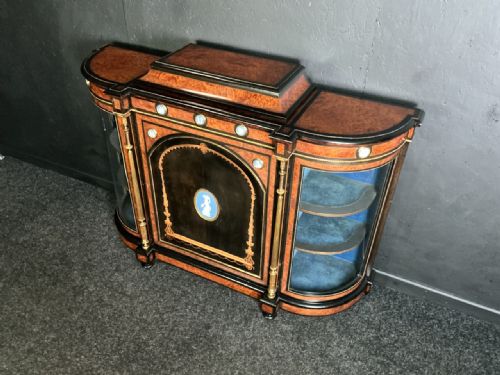
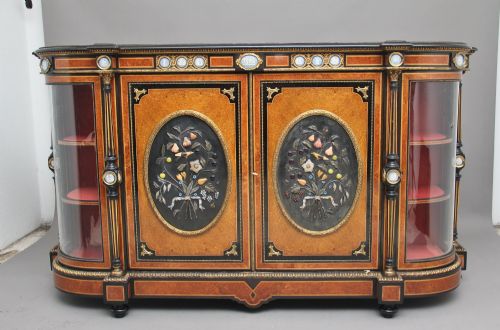
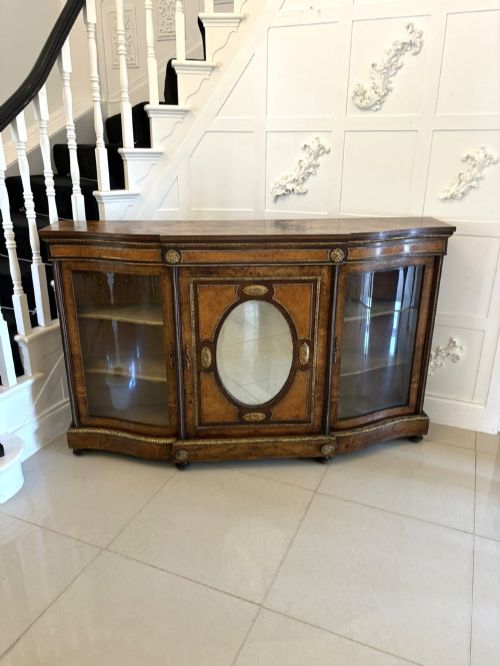
When searching for a curved glass antique credenza, one encounters low nineteenth-century storage cabinets built primarily during the Victorian and Napoleon III periods. These pieces combine central display cupboards with flanking curved glass side doors, often referred to in listings as side cabinets or sideboards.
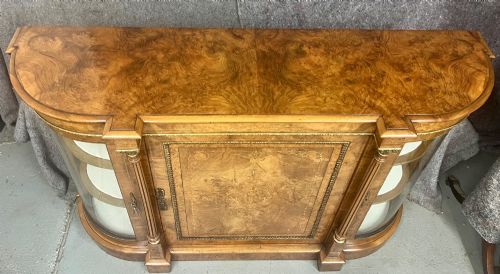
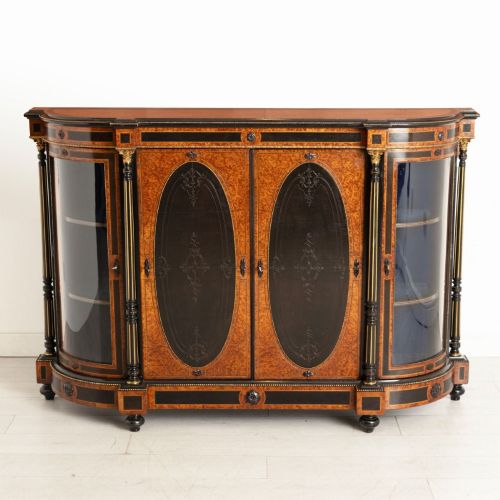
The version most commonly met on this page is the Victorian walnut credenza, frequently featuring burr walnut veneers, intricate marquetry, and breakfront or serpentine shapes. French revival influences also appear regularly, alongside ebonised wood finishes and elaborate brass or ormolu mounts.
How they were made
Cabinetmakers utilised dense timbers such as walnut, amboyna, and ebonised wood as foundations for delicate marquetry and boxwood inlay. Burr walnut provided rich, figured grain patterns across the primary surfaces of the carcase.
Gilded bronze ormolu mounts, porcelain plaques, and cast brass details were applied to accentuate the architectural lines of the credenza, while specialised framing supported the curved glass side panels.
Curved Glass Credenza Retail Price Guide 2026
Typical asking prices for curved glass credenza among the pieces listed under this phrase on Sellingantiques today, from the lower quarter to the upper quarter. They describe what is for sale here now, not the wider market.
Materials recorded across the inventory include burr walnut, amboyna, ebonised wood, kingwood, ormolu, porcelain, and curved glass.
What varies in quality
The refinement of the marquetry and the depth of the timber figuring separate standard production from exhibition pieces. Hand-cut floral inlays and finely cast ormolu mounts indicate superior workshop standards.
Structural complexity also defines the tier of the piece; serpentine fronts and curved glass doors require advanced joinery compared to flat-fronted side cabinets.
H. Goodall of Newcastle·Maison Gagneau
The Curved Glass Credenza Glossary
- Credenza
- A low dining or reception room cabinet used for display and storage, typically fitted with a central cupboard and curved side cabinets. It emerged as a prominent form during the Victorian era.
- Ormolu
- Gilded bronze mounts cast and chased to ornament furniture borders and panels. This decorative technique added metallic contrast to dark woods.
- Marquetry
- Inlaid wood veneers arranged in pictorial or floral patterns across the surface of the cabinet. Craftsmen used contrasting natural timbers to create tonal detail.
- Burr walnut
- Timber taken from walnut tree growths, valued for its swirling grain patterns. It provided highly decorative surfaces for Victorian case furniture.
- Serpentine
- A front shape curving inward and outward in a continuous flowing line. This form demanded advanced woodworking skill from the maker.
Curved Glass Credenza: Frequently Asked Questions
What is a curved glass antique credenza?
A low nineteenth-century cabinet designed for living spaces, combining a central timber door with curved glass side panels for display.
These pieces typically date from the Victorian and Napoleon III eras, integrating decorative marquetry and metal mounts.
How were credenzas used originally?
Victorian households used them in principal rooms to display porcelain, silver, and decorative objects while storing dining accessories within the lower cupboards.
The glass side cabinets protected delicate items from dust while maintaining visibility from multiple angles in the room.
How do I identify a Victorian credenza?
Look for characteristic nineteenth-century markers such as burr walnut veneers, ebonised finishes, and elaborate boxwood marquetry.
Proportions are typically low and wide, often featuring breakfront or serpentine fronts framed by brass or ormolu mounts.
Where should I place a credenza?
These long, low cabinets suit dining rooms, living rooms, or wide hallway spaces where they provide surface display without obstructing eye lines.
Their shallow depth allows them to sit flat against walls while offering substantial interior storage.