



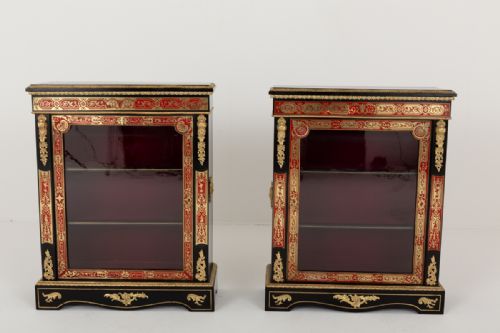
Ebonised Brass Credenza
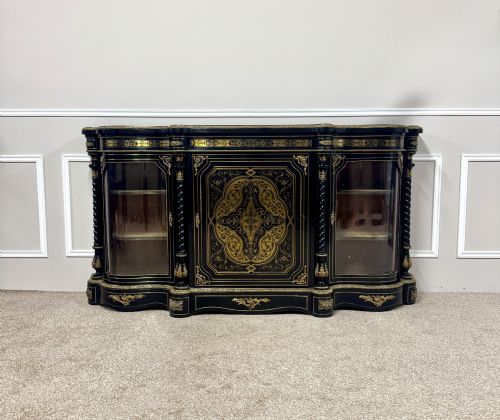
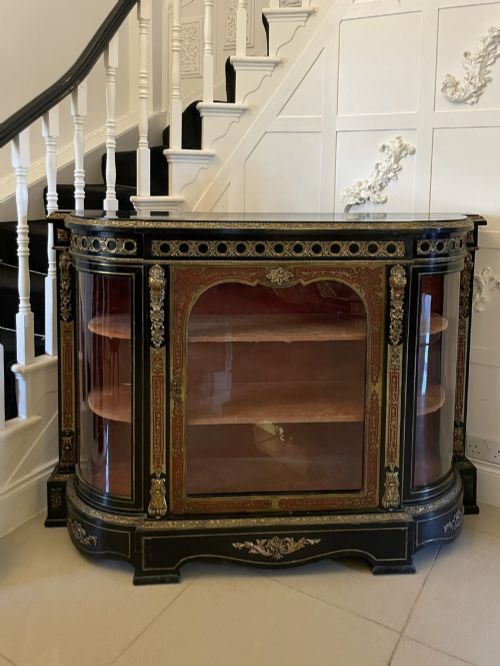
An ebonised brass credenza brings nineteenth-century French and Victorian grandeur into a room through dark polished surfaces and gleaming metallic inlay.
Ebonised Brass Credenza
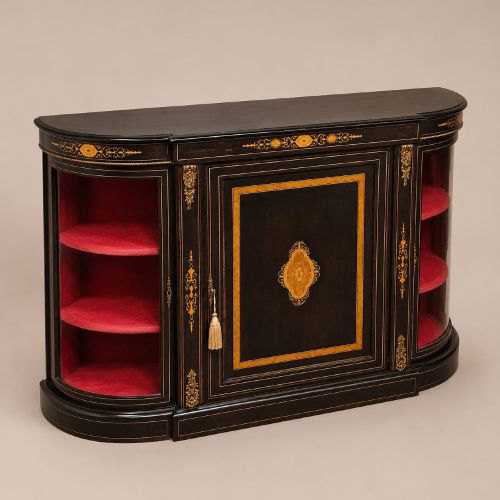
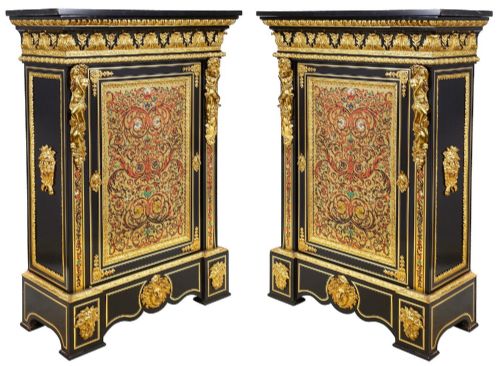
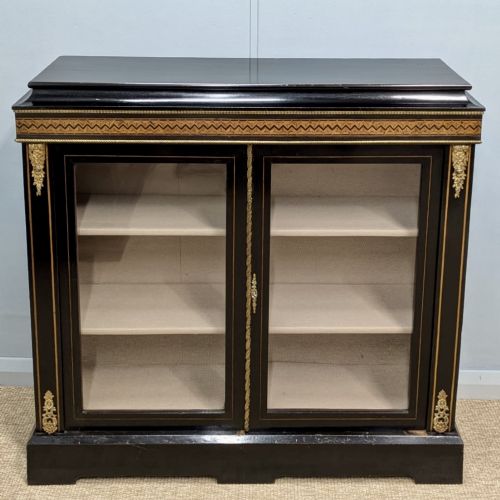
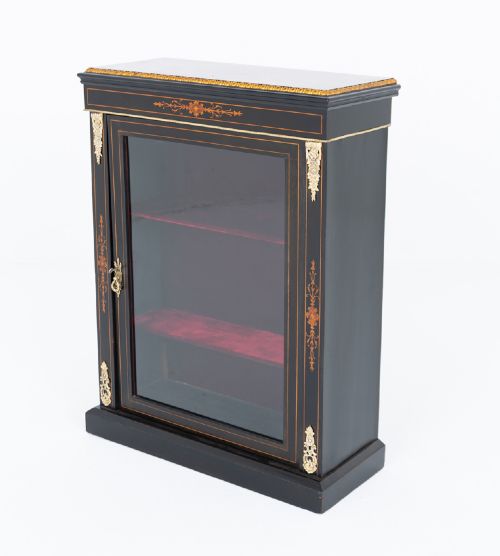
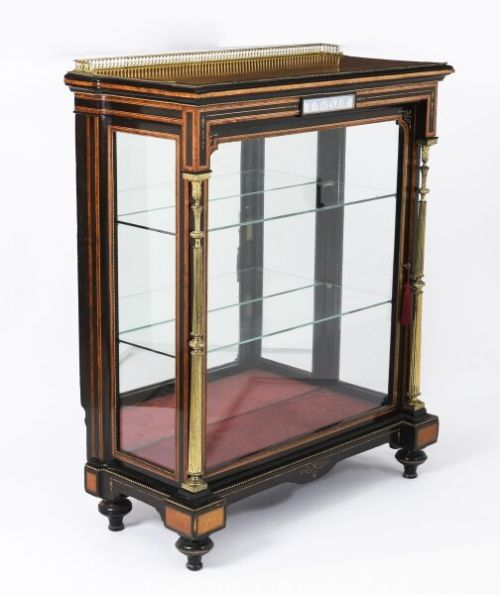
An ebonised brass credenza is a substantial low storage piece, most frequently encountered from the nineteenth century, including the Victorian and Napoleon III periods. These cabinets often appear alongside related forms such as pier cabinets, side cabinets, and display cabinets with glass doors.
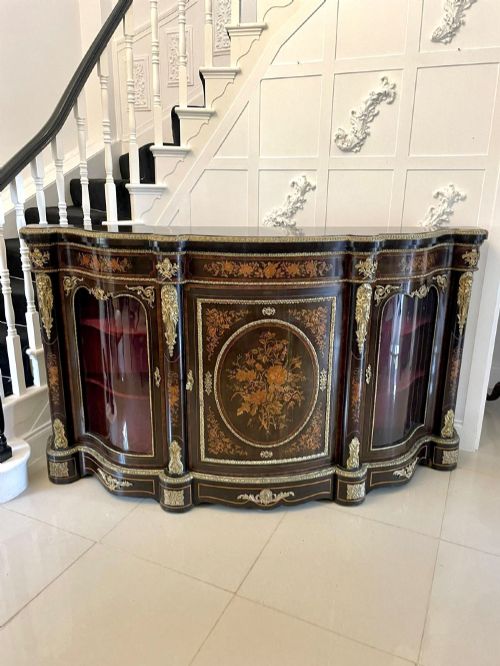
The aesthetic of an ebonised brass credenza draws on French Revival, Louis XVI style, and the Aesthetic Movement. Pieces range from single pier cabinets to large serpentine-fronted three-door or four-door credenzas designed to anchor a principal reception room.
Materials and construction
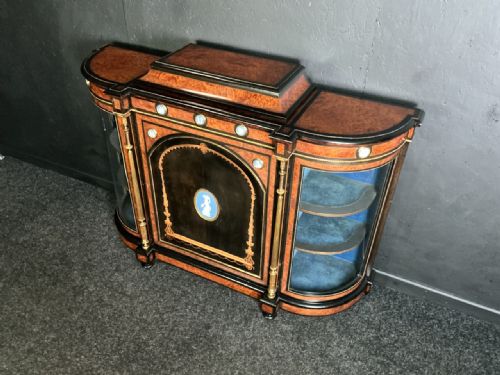
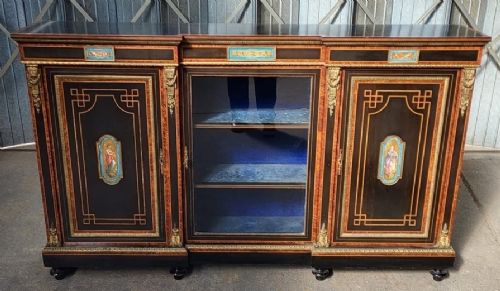
The primary effect relies on ebonised wood, giving a dense black finish that imitates ebony, combined with intricate brass inlay. Craftsmen integrated materials such as tortoiseshell, porcelain plaques, amboyna, and satinwood into the carcass.
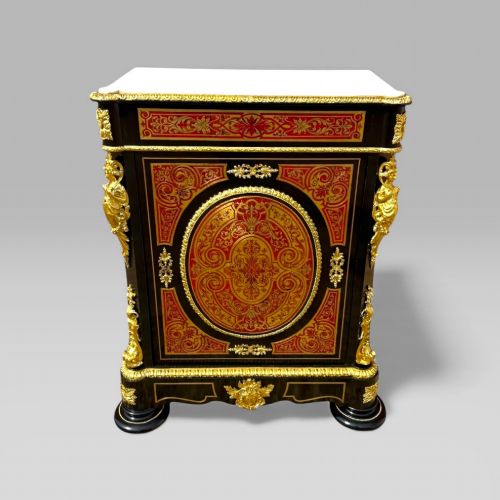
Mounts in ormolu or gilt-metal edge the doors, panels, and feet, whilst marble tops occasionally finish the surfaces of pier cabinets. Marquetry in floral patterns and Boulle work complete the decorative scheme.
Ebonised Brass Credenza Retail Price Guide 2026
Typical asking prices for ebonised brass credenza among the pieces listed under this phrase on Sellingantiques today, from the lower quarter to the upper quarter. They describe what is for sale here now, not the wider market.
Listings feature pieces spanning the nineteenth century, with specific dates noted from eighteen-fifty, eighteen-sixty, eighteen-seventy, and eighteen-eighty, alongside Edwardian examples.
Craftsmanship and distinction
The refinement of the brass inlay and the depth of the ebonised finish set the standard across these pieces. Superior examples display precise metalwork set flush into the dark wood alongside well-modelled ormolu mounts that retain their crisp detail.
Proportion and silhouette also dictate standing, with serpentine fronts and breakfront configurations demanding greater joinery skill than flat-fronted equivalents. The inclusion of matching pairs or detailed marquetry panels elevates the distinction of the furniture.
DOVESTONE, BIRD & HULL
The Ebonised Brass Credenza Glossary
- Ebonised
- Wood treated to resemble solid ebony through staining or painting. This dark finish provides a high-contrast background for brass inlay and gilt mounts.
- Boulle
- An elaborate form of marquetry utilising brass and tortoiseshell developed by André-Charles Boulle. Pieces employ this technique to create intricate metallic patterns across the door and panel surfaces.
- Ormolu
- Gilt-bronze mounts applied to furniture edges and corners. These decorative metal additions catch the light and define the architectural lines of the cabinet.
- Pier cabinet
- A narrow display cabinet designed to fit the wall space between windows. These upright pieces frequently share the ebonised and brass-inlaid vocabulary of larger credenzas.
- Marquetry
- Decorative patterns formed by the insertion of various woods and materials into a veneered surface. Floral and geometric motifs appear across the doors and friezes of these cabinets.
Ebonised Brass Credenza: Frequently Asked Questions
What is an ebonised brass credenza?
An ebonised brass credenza is a nineteenth-century low cabinet finished in a dark, polished wood and decorated with metallic inlay. These pieces typically originate from Victorian or French Napoleon III workshops.
Such cabinets served as principal display and storage furniture in formal rooms. Their combination of dark surfaces and bright metalwork suited the decorative tastes of the period.
Where were credenzas placed?
These cabinets sat against principal walls in dining rooms and drawing rooms. Their low profile allowed mirrors or artwork to be hung directly above them.
Narrower variants, such as pier cabinets, occupied specific wall spaces between windows. They provided enclosed display space without obstructing natural light.
How do I care for ebonised wood?
Ebonised surfaces require dusting with a soft, dry cloth to prevent the accumulation of particles. Avoid harsh chemical cleaners that might dull the polished black finish.
Keep the timber away from direct heat sources and strong sunlight to protect the wood and the underlying brass inlay from movement. Gentle waxing helps maintain the lustre of the polish.
How do I distinguish Victorian from French pieces?
French Napoleon III and Boulle revival pieces often incorporate tortoiseshell and elaborate cast ormolu mounts. Their decorative schemes follow continental design traditions of the mid-nineteenth century.
Victorian cabinets frequently utilise native timbers like amboyna alongside ebonised finishes and simpler brass stringing. Regional British workshops adapted these continental motifs to suit domestic interiors.