

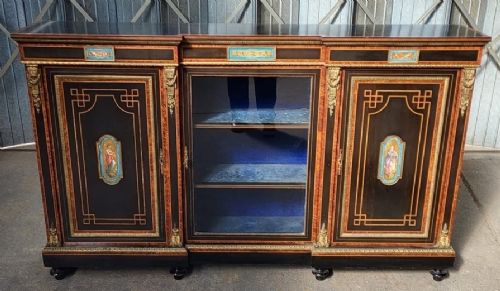
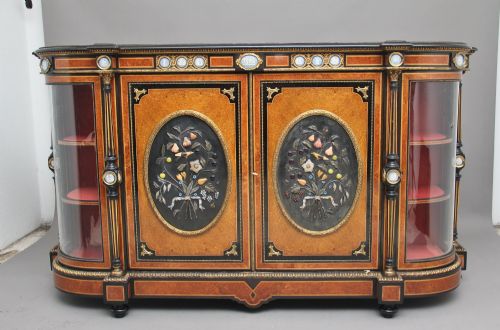
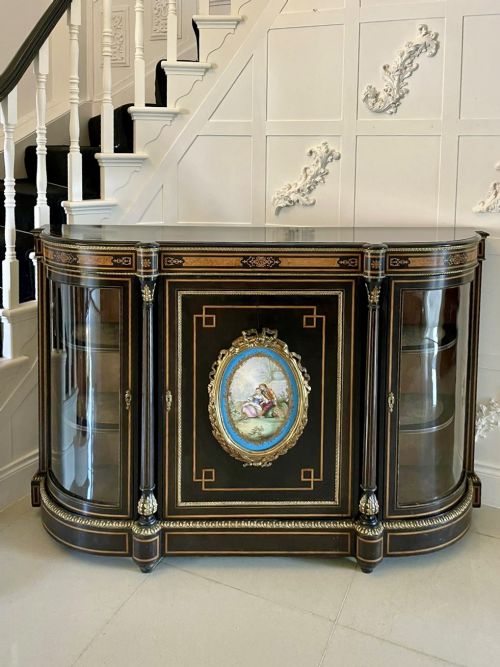
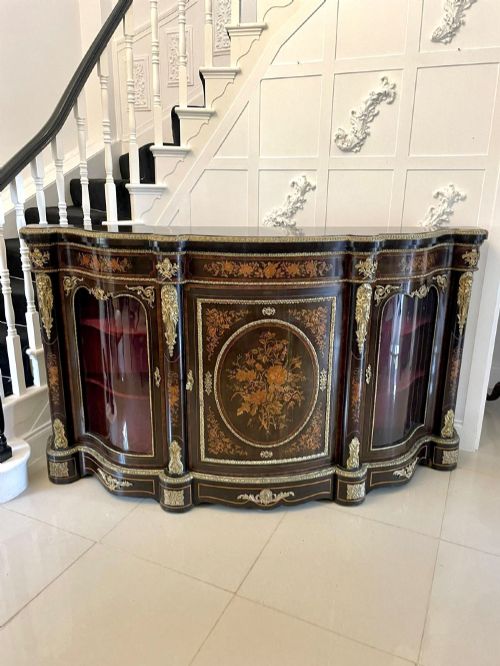
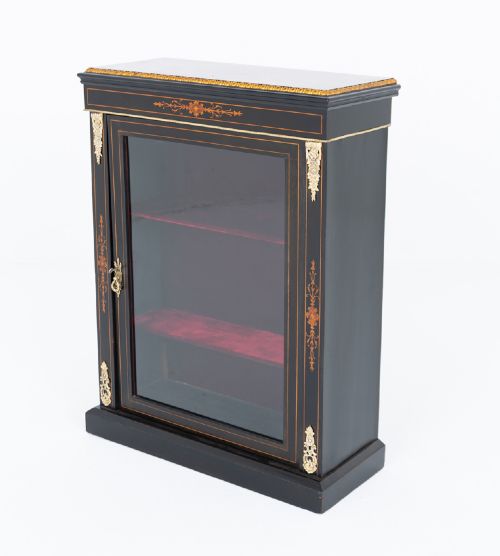
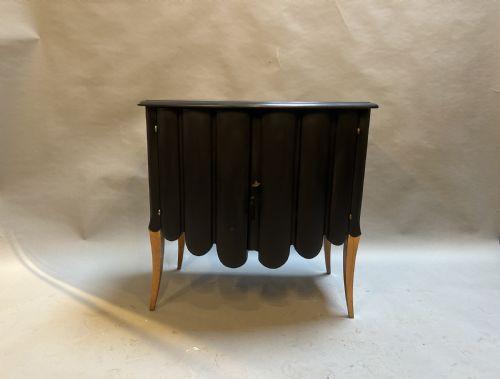

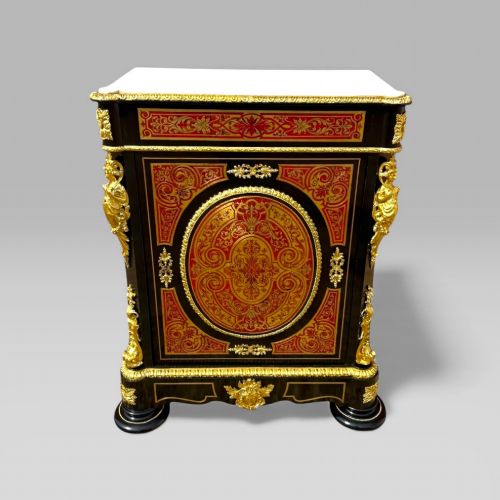
French Ebonised Credenza Cabinet
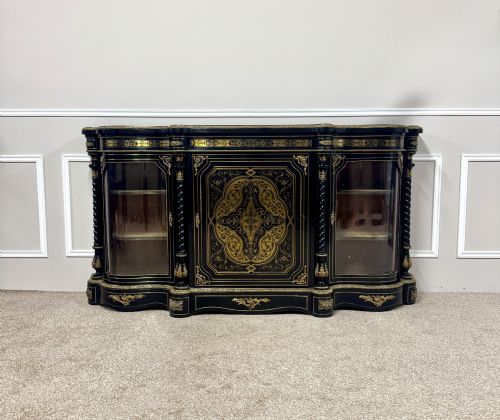
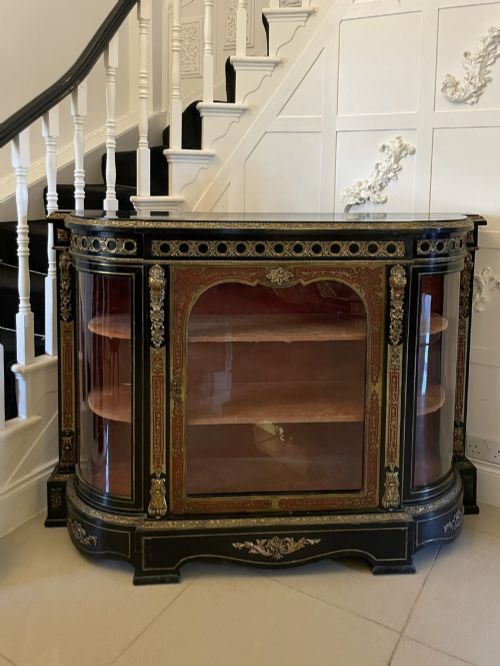
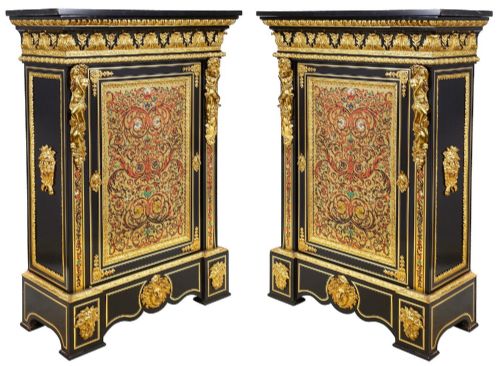
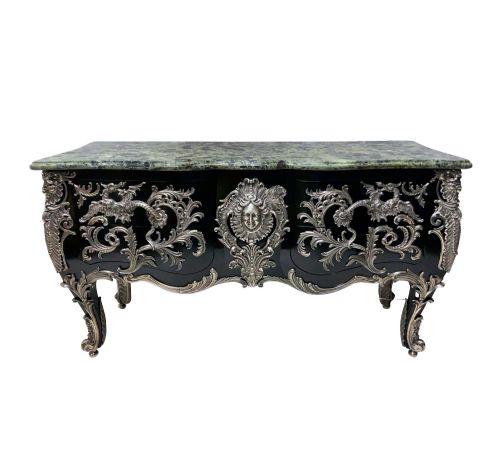
These french ebonised credenza cabinet examples bring together nineteenth-century dark timbers and gilt mounts to anchor a formal interior.
French Ebonised Credenza Cabinet
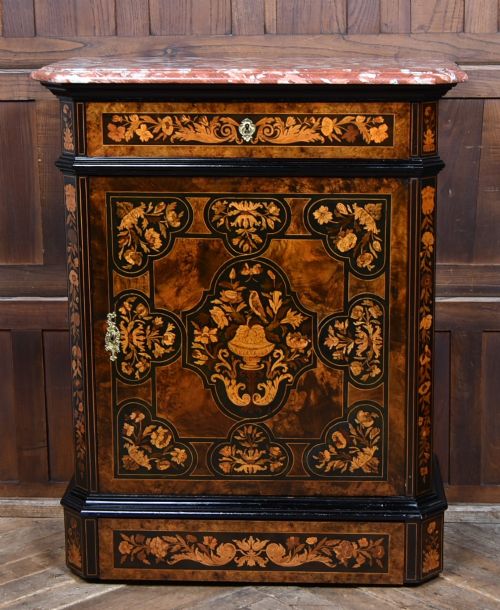
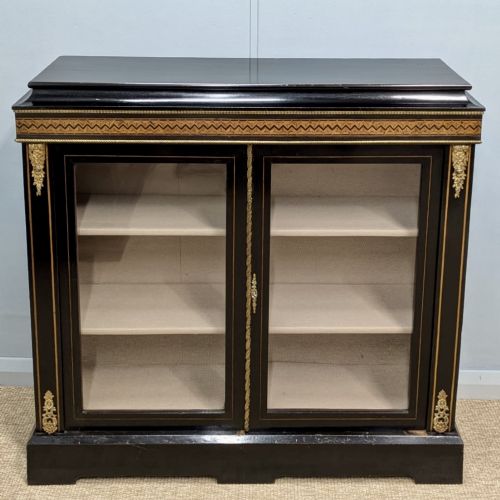
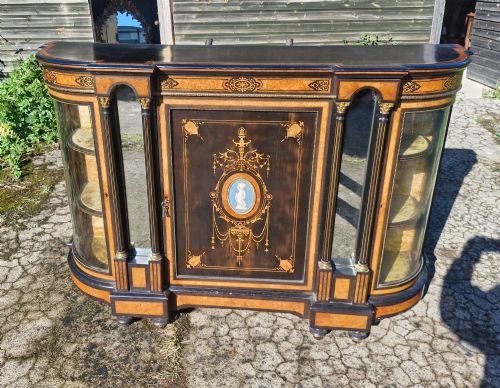
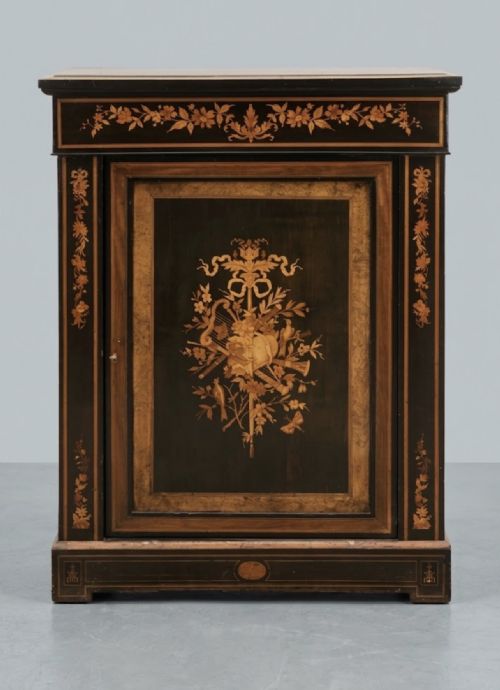
A french ebonised credenza cabinet combines nineteenth-century display space with low, formal proportions designed for a principal room. The majority stem from the Victorian era and the Napoleon III period, taking forms such as pier cabinets, side cabinets, and multi-door credenzas.
Makers drew on French styles including Napoleon III, Rococo, and Directoire, often pairing ebonised wood with glazed doors for displaying porcelain and curiosities. These low cabinets function as both furniture and surface, sitting comfortably beneath mirrors or large paintings.
Materials and Techniques
Craftsmen built these pieces using timber carcasing finished with ebonisation to mimic expensive ebony, then applied intricate marquetry, brass inlay, and tortoiseshell in the Boulle technique. Ormolu mounts and gilt-bronze details provide structural accent and border decoration.
Surfaces frequently incorporate marble tops, Sevres style porcelain plaques, and pietra dura panels set directly into the wood. Glazed central and side compartments protect contents while maintaining visual openness across the front.
French Ebonised Credenza Cabinet Retail Price Guide 2026
Typical asking prices for french ebonised credenza cabinet among the pieces listed under this phrase on Sellingantiques today, from the lower quarter to the upper quarter. They describe what is for sale here now, not the wider market.
Listings feature nineteenth-century walnut, amboyna, and ebonised wood paired with marble tops.
Standards of Execution
Quality rests in the precision of the brass inlay, the crispness of the cast ormolu mounts, and the depth of the floral marquetry. Superior examples exhibit tightly fitted doors, undamaged tortoiseshell panels, and substantial marble slabs with clean edge profiles.
Inferior pieces show simplified cast metalwork, flat or painted rather than inlaid decoration, and loose joints in the ebonised timber framing. The integration of porcelain plaques and pietra dura work signals the ambition of the original commission.
Antoine-Robert Gaudreau
The French Ebonised Credenza Cabinet Glossary
- Ebonised
- Timber treated to achieve the deep, black appearance of ebony. This finish was widely utilised on nineteenth-century furniture to contrast with gilt mounts.
- Boulle
- A method of marquetry using brass and tortoiseshell inlaid in counterchange patterns. Named after the royal cabinetmaker André-Charles Boulle, it defines Napoleon III pieces.
- Ormolu
- Gilt-bronze mounts applied to furniture edges and corners. The finish involves mercury gilding or modern electroplating depending on the date.
- Marquetry
- Veneered patterns forming pictorial or floral designs on the cabinet surface. Woods like walnut, amboyna, and burr timbers contrast against dark backgrounds.
- Pietra dura
- Inlaid work using polished, coloured stones to create hardstone pictures. Panels appear set into cabinet doors and friezes on select nineteenth-century pieces.
French Ebonised Credenza Cabinet: Frequently Asked Questions
What is a french ebonised credenza cabinet?
A low nineteenth-century storage and display unit featuring blackened wood and decorative mounts. These cabinets typically incorporate glazed doors and intricate brass or tortoiseshell inlay.
Originating across Victorian and Napoleon III workshops, they served as formal reception room furniture. Their balanced proportions suit modern living spaces as focal display pieces.
How do I date an ebonised cabinet?
Dating relies on combining stylistic markers with material construction methods. Pieces from the 1850s to 1880s often display French revival influences and complex Boulle marquetry.
Later Victorian and 1930s examples shift toward simpler lines or heavier revival styles. Examining the internal secondary timbers and backboards helps confirm the period.
Where should I place a credenza?
These cabinets suit dining rooms, hallways, and principal living areas where low furniture preserves wall space. Their flat tops provide an ideal surface for lamps, sculptures, or decorative objects.
Keep them away from direct sunlight and heat sources to protect the delicate ebonised finish, veneer, and tortoiseshell panels from cracking.
What are ormolu mounts?
Ormolu refers to gilded bronze mounts fixed to the corners, feet, and friezes of cabinets. They protect vulnerable edges and add decorative contrast to the dark timber.
On higher-quality pieces, these mounts feature sharp, hand-chiseled detailing. Simpler production methods yield softer, cast-only finishes.