
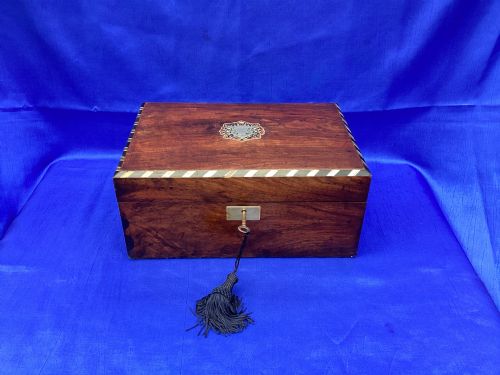
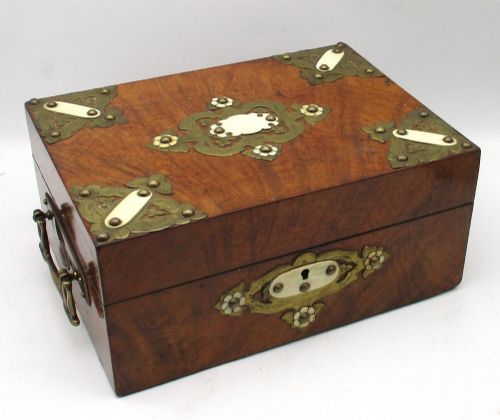
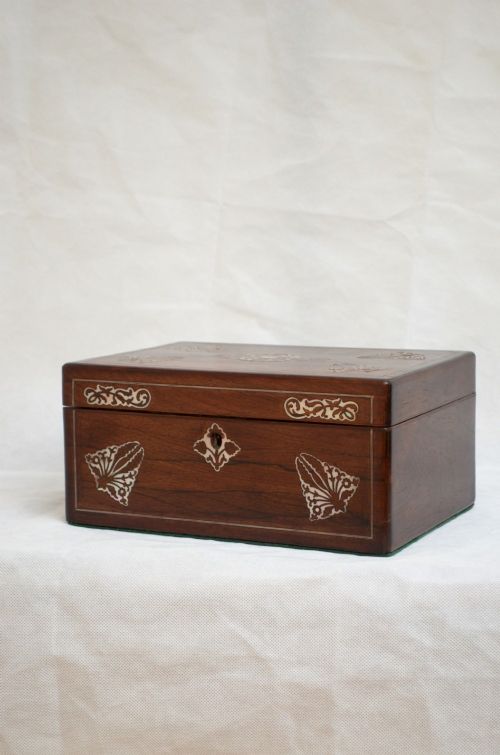
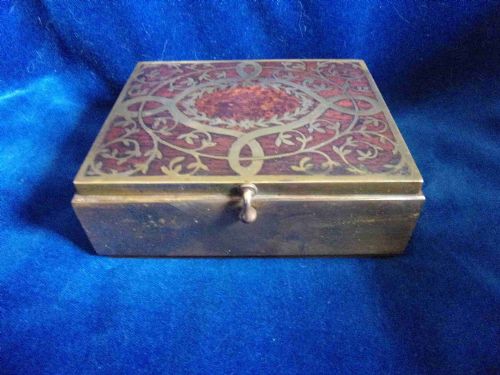


Antique Brass Inlaid Casket
An antique brass inlaid casket holds letters, trinkets or tea, combining dense exotic woods with precise metalwork from the Regency, Victorian and Georgian eras.
Antique Brass Inlaid Casket
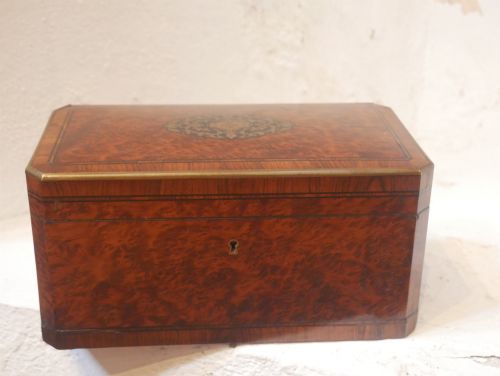
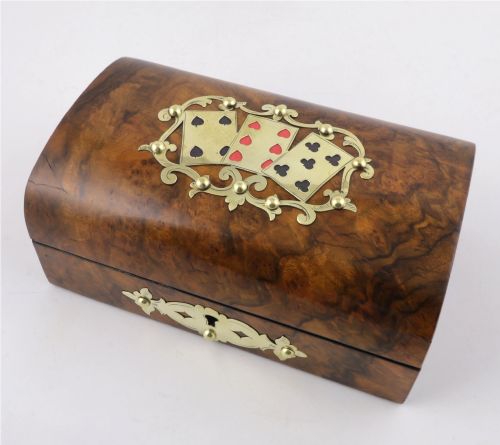
An antique brass inlaid casket takes many forms across this selection, from tea caddies and document boxes to jewellery containers and stationery cabinets. You will frequently encounter rosewood and mahogany bodies finished with cut brass lines, scrolls or boullework.
The periods represented stretch from the Georgian era through the Regency period and deep into Victorian production. These pieces served practical domestic functions on dressing tables, desks and drawing room sideboards.
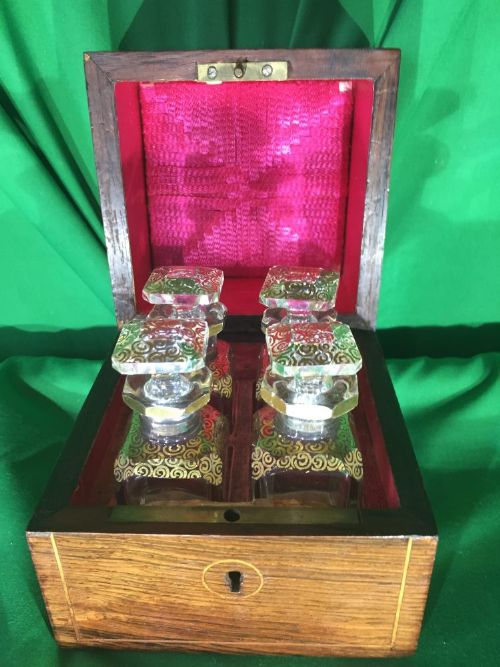
Makers and makers' retailers occasionally stamped their work, though many survive unsigned. Variations span small trinket boxes up to larger fitted dressing cases containing glass bottles and trays.
Materials and construction methods
Cabinet makers utilised dense hardwoods such as rosewood, mahogany, walnut and coromandel as the primary carcase material. These timbers provided a dark, stable ground that contrasted sharply with bright metal inlay.
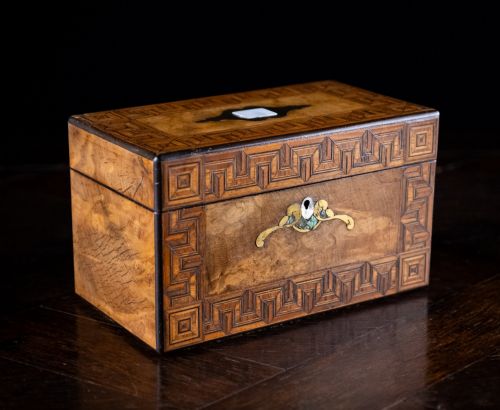
Brass was cut into thin sheets and strips, then hand-sunk into channels chiselled into the wood surface. Mother-of-pearl and contrasting woods were often combined with the brass to build up intricate geometric or floral motifs.
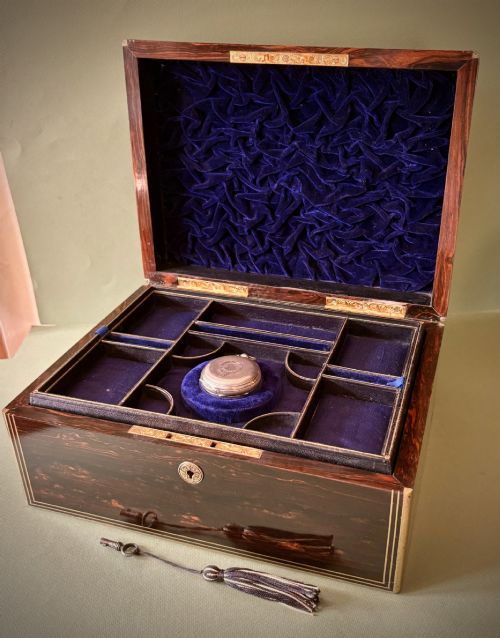
Interiors frequently received silk, velvet or paper linings alongside fitted compartments for bottles, cards or sewing implements. Brass banding and corner brackets added both structural reinforcement and decorative weight to the edges.
The listings here demonstrate that rosewood serves as the most frequent timber foundation for these caskets, followed by mahogany and walnut.
Judging quality and execution
The precision of the brass inlay work separates standard commercial production from exceptional pieces. Superior boxes show tight, seamless joints where the metal meets the timber without excessive filler.
The choice of secondary woods and the grain figure of the primary veneer dictate the baseline quality of the object. Richly figured rosewood and coromandel command higher regard than plain mahogany or simple softwoods.
Completeness of internal fittings, such as original trays, working locks with keys and undamaged glass scent bottles, preserves the integrity of the piece. Linings replaced at a later date alter the original character compared to untouched interiors.
Tahan Paris·Erhard and Sohne·Lund Of Cornhill·C.G. Hope Hastings
The Antique Brass Inlaid Casket Glossary
- Boulle
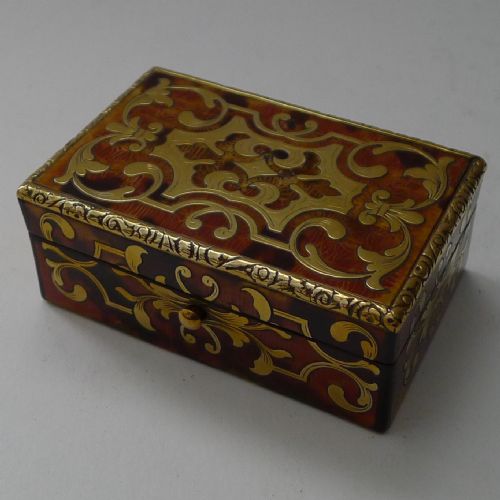
- Marquetry technique using brass and tortoiseshell inlaid in counterchange patterns, popular in French decorative arts. It appears on nineteenth-century trinket boxes and caskets.
- Parquetry
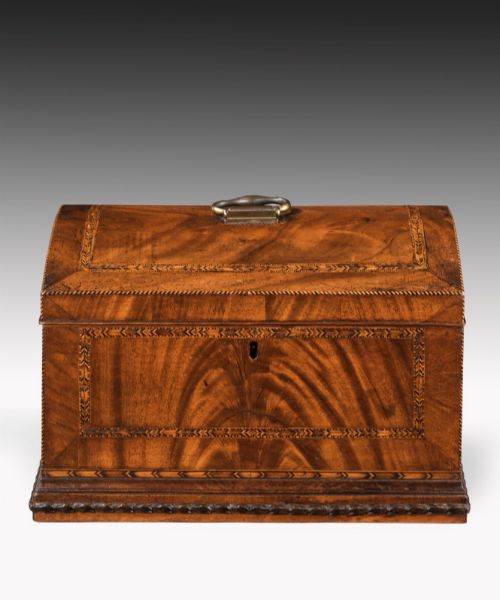
- Geometric wood inlay forming regular patterns like cubes or herringbone across the lid or sides. This technique highlights the natural colour variations of different timber species.
- Sarcophagus
- A box shape featuring a domed or sloping lid resting on a rectangular base, reminiscent of classical monumental tombs. Regency tea caddies frequently adopt this silhouette.
- Pietra dura
- Inlay work using polished, cut coloured stones to form pictorial designs set into a stone or wood background. It denotes high-status Victorian stationery boxes.
- Caddy
- A small container originally designed for storing loose tea leaves securely under lock and key. Many examples incorporate dividers and mixing bowls inside.
Antique Brass Inlaid Casket: Frequently Asked Questions
What were these boxes used for originally?
These boxes held valuable personal items including jewellery, letters, tea leaves, sewing tools and playing cards. Wealthy households kept them in public rooms or private chambers to organise daily accessories.
Many featured internal partitions, removable trays and integrated locking mechanisms to secure private correspondence or small treasures away from general view.
How do I tell Regency from Victorian pieces?
Regency pieces often display crisp cut-brass scrollwork on dark rosewood with sarcophagus proportions or bold brass banding. They generally date from the early nineteenth century around eighteen twenty to eighteen thirty.
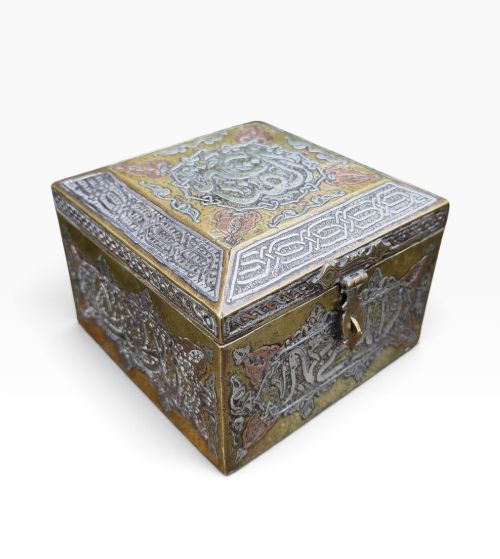
Victorian boxes frequently introduce mother-of-pearl highlights, parquetry or heavy brass mounts alongside broader stylistic revivals like Mamluk or Arts and Crafts influences later in the century.
Are replacement interiors acceptable?
Linings in velvet, silk or paper frequently wore out through centuries of use and handling. Many surviving pieces feature professional new linings that match the historic style.
Original linings add historical depth, but a clean replacement makes a box functional for holding modern jewellery without risking stains to delicate old fabrics.
Should I polish the brass inlay?
The brass generally develops a warm, dark patina over decades of exposure to air and light. Aggressive cleaning can strip this aged character and dislodge thin metal strips from their wood channels.
Gentle dusting and occasional light waxing protect the wood and metal without erasing the physical evidence of the box's age and handling history.