


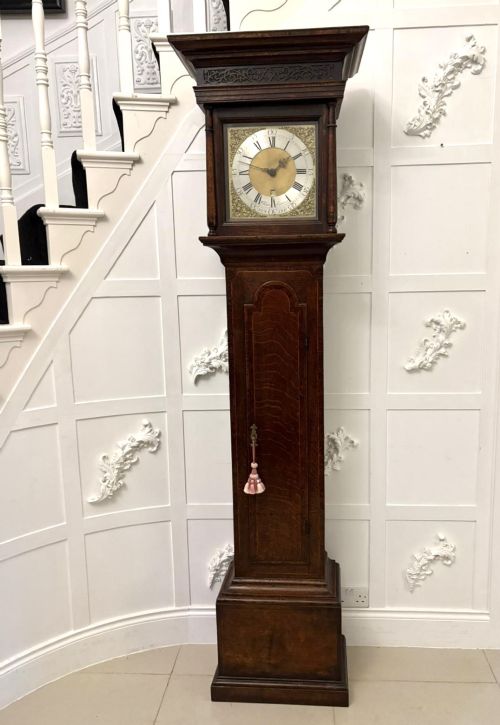
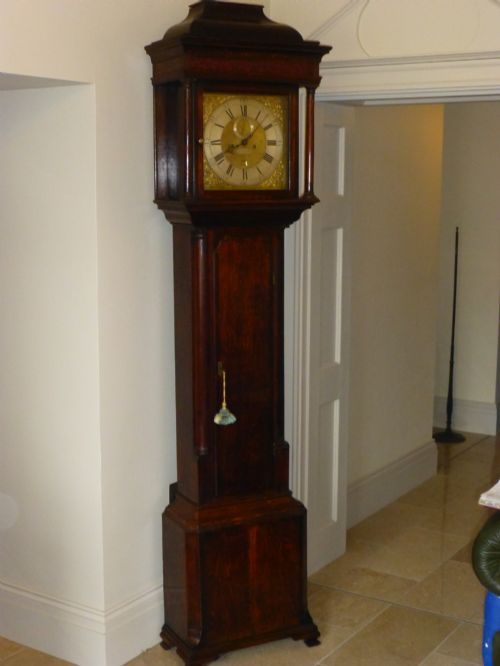
Antique Brass Grandfather Clock
When you handle an antique brass grandfather clock, you hold centuries of domestic timekeeping in a timber case.
Antique Brass Grandfather Clock
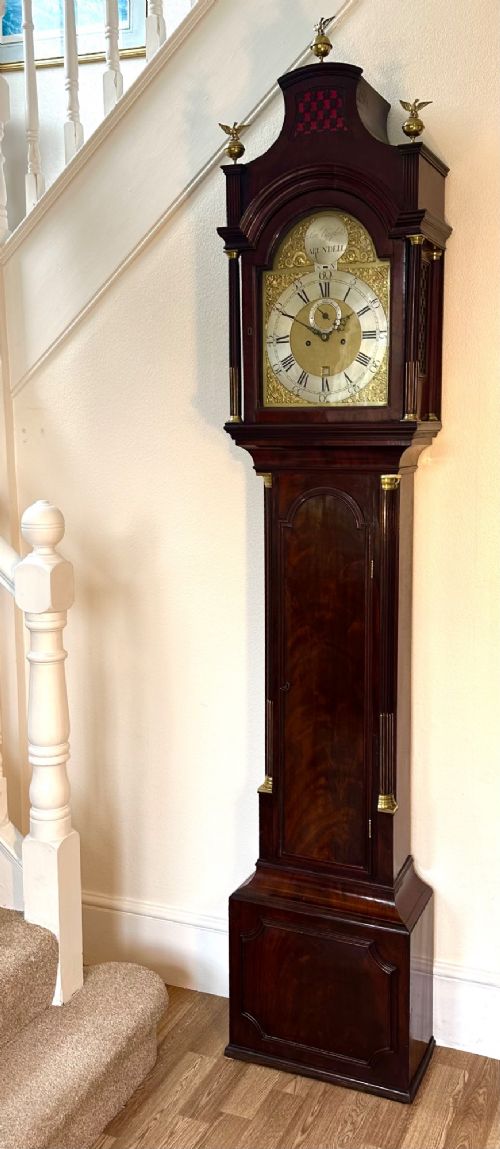
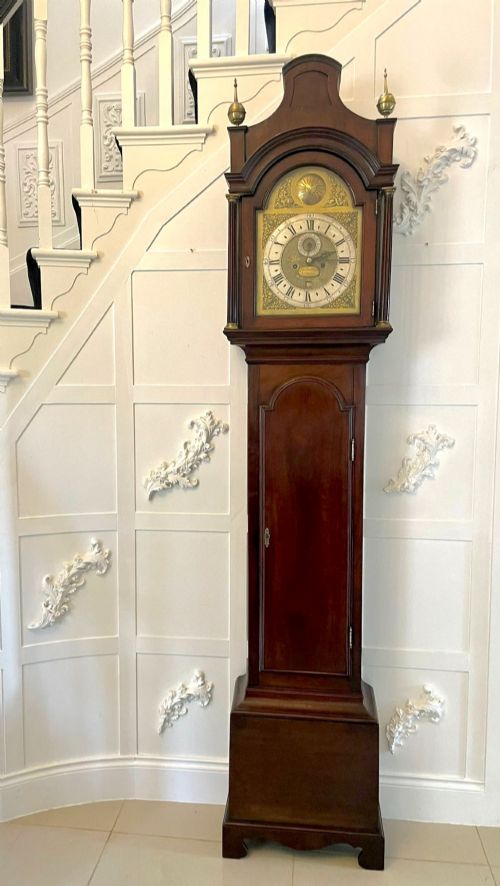
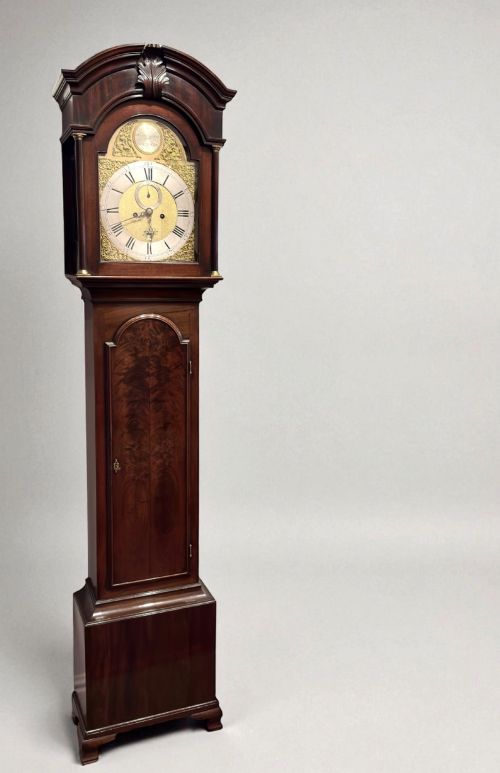
An antique brass grandfather clock is a tall floor-standing timepiece housing a weighted movement and a brass dial, commonly referred to in period records as a longcase clock. These tall pieces span several centuries of British domestic life, originating in standard proportions before smaller variants emerged later.
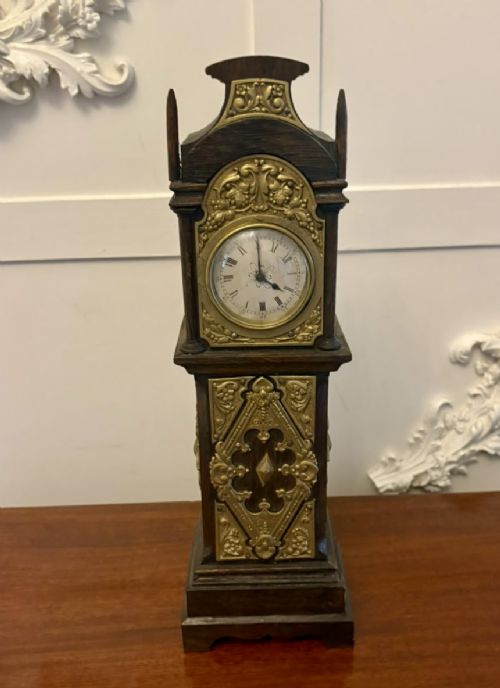
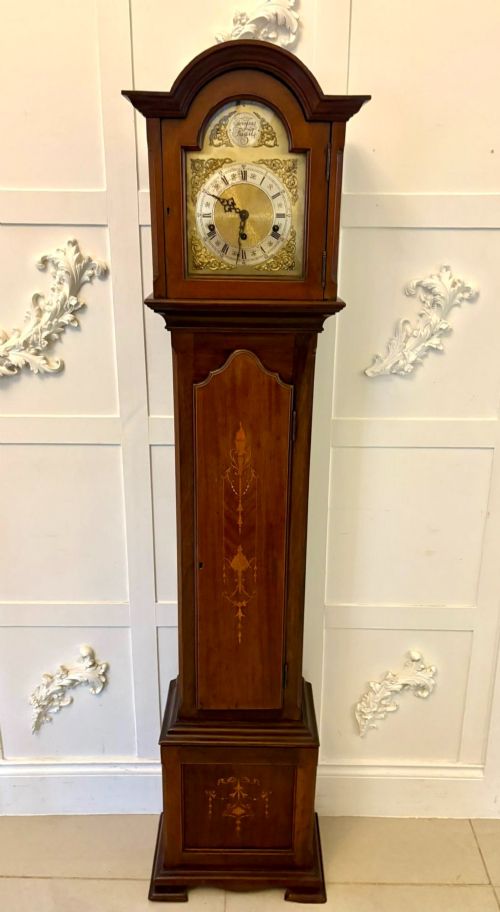
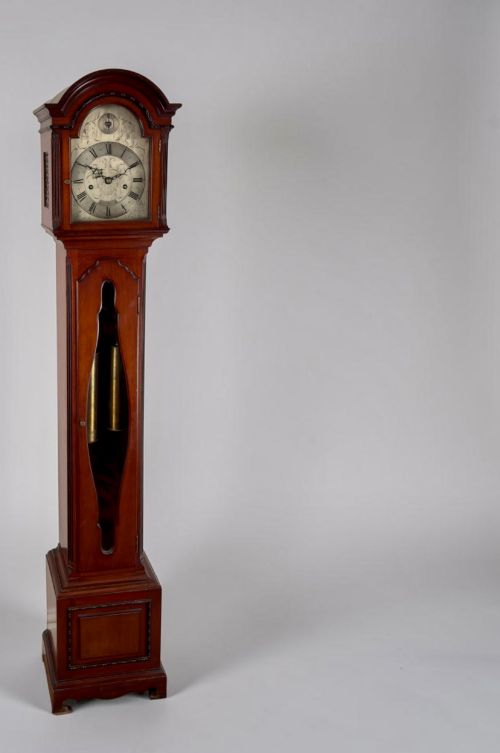
The versions most frequently met on this page date from the eighteenth century, during the Georgian and George III periods, housed in timber cabinets. Alongside full-sized examples, smaller grandmother clocks and miniature formats appear from the Edwardian era and the early twentieth century.
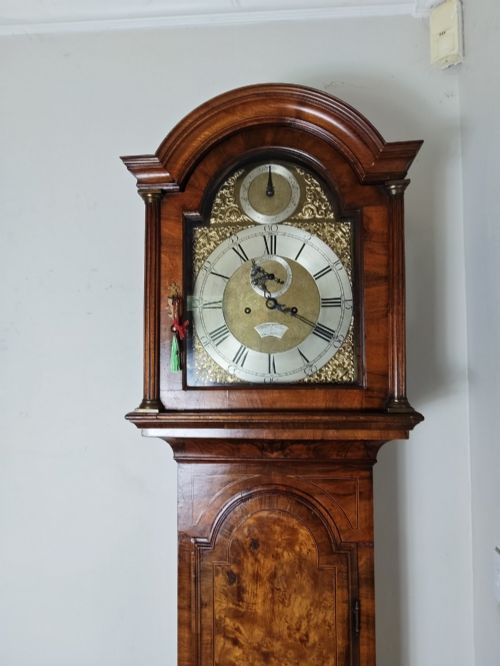
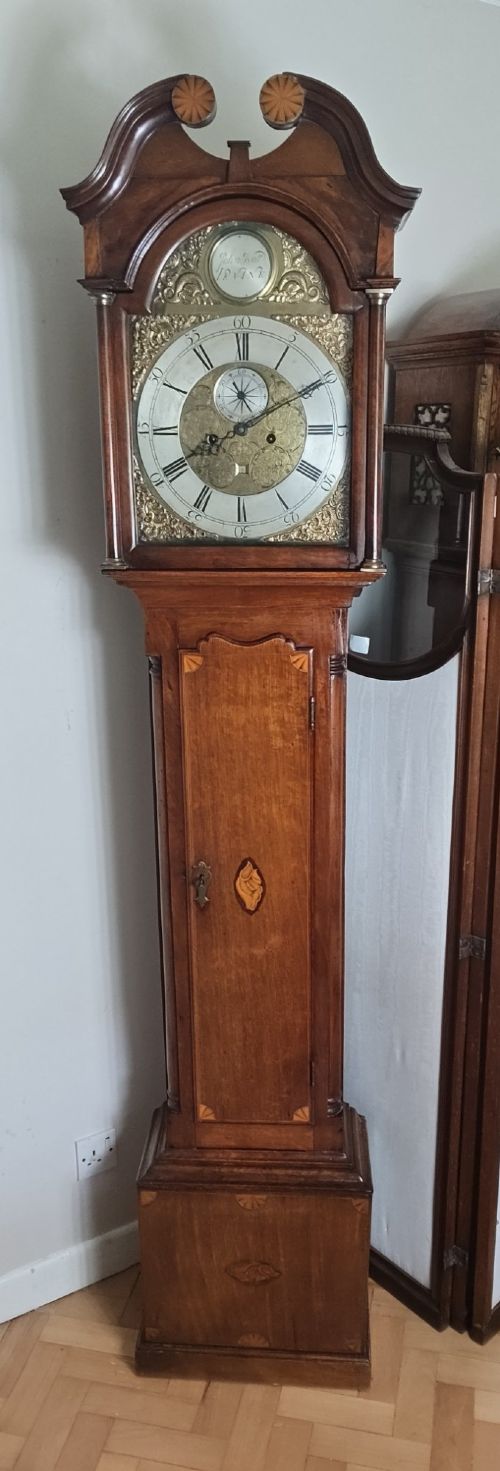
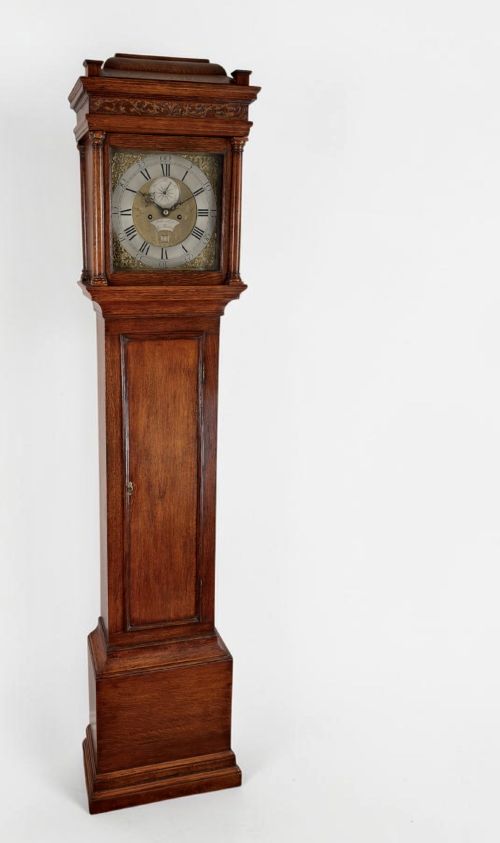
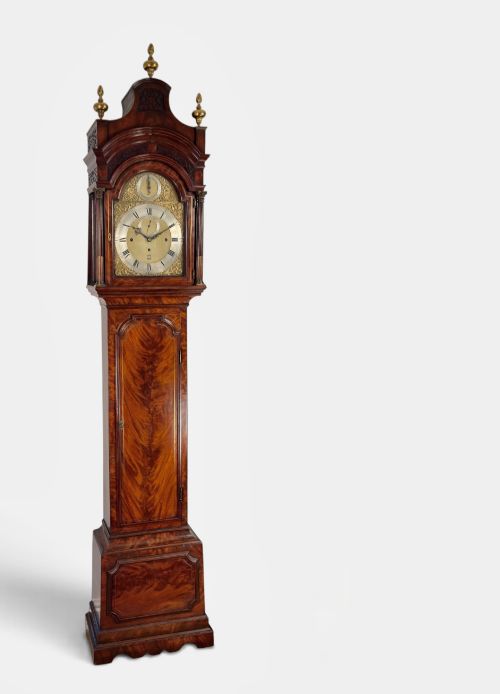
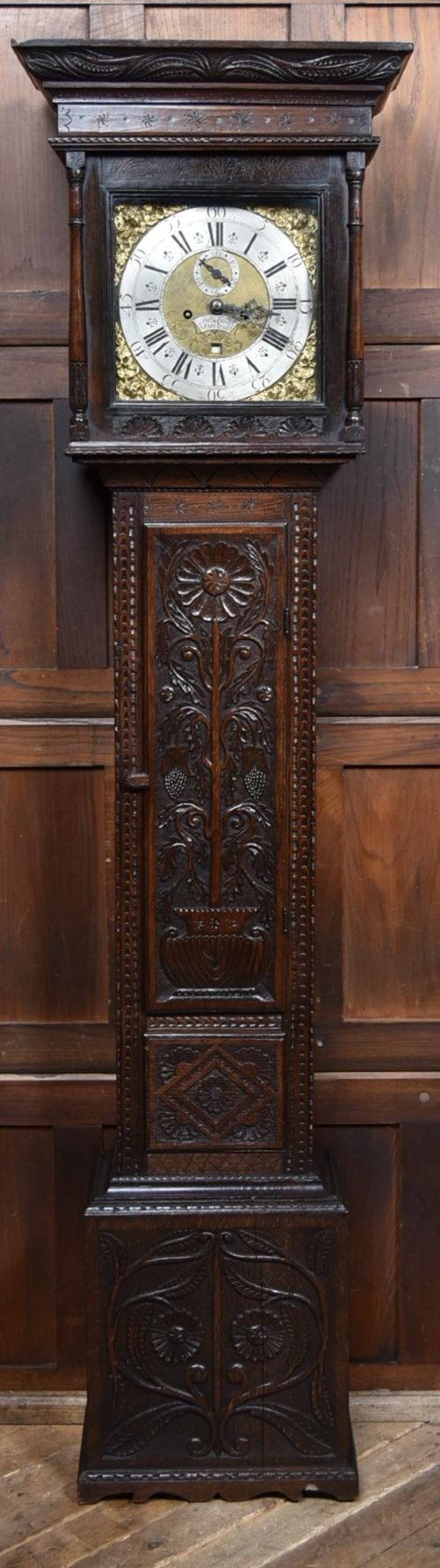
Regional variations feature strongly among these items, with Scottish longcase clocks from centres such as Aberdeen, Montrose, Falkirk and Peebles appearing alongside London-made pieces and provincial English workshops. Timber choices alter the character of each piece, ranging from figured mahogany and walnut to sturdy oak.
Materials and Construction
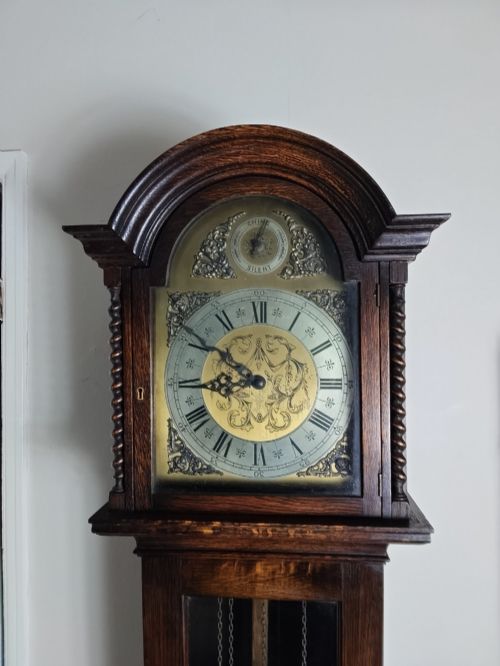
Cases rely on cabinet timbers including mahogany, oak and walnut, often enhanced with burr walnut veneers or inlaid paterae, housing movements constructed from brass and steel components. Dials combine cast brass chapters, spandrels and engraved silvered rings behind protective glass panels.
Listings feature longcase clocks spanning the eighteenth, nineteenth and twentieth centuries, constructed from oak, mahogany, walnut and burr walnut.
Assessing Quality
Quality rests in the harmony between the movement and the cabinetry, where crisp engraving on the brass dial matches the proportions and timber figuring of the longcase. Finer examples display meticulous attention to the internal brass work and signed dials by established makers.
The integrity of the timber case significantly influences standing, as original patination, well-matched veneers and undisturbed brass dial components separate standard regional clocks from exceptional works of horology.
Charles Shuckburgh·John Ellicott·James McCabe·William Jourdain·Benjamin Taylor
The Antique Brass Grandfather Clock Glossary
- Longcase clock
- The formal term for a tall pendulum clock housed in a wooden case, commonly known as a grandfather clock. These standing timepieces protect the hanging weights and pendulum within a trunk.
- Grandmother clock
- A smaller, more slender version of the longcase clock, typically produced during the Edwardian period and the early twentieth century. They occupy less floor space while retaining a brass dial and weight-driven movement.
- Spandrel
- An ornamental corner piece fitted to the dial of a clock outside the chapter ring. These cast brass decorations often change in design according to the period of manufacture.
- Chapter ring
- The circular metal ring on a clock dial that bears the hour numerals. They are usually silvered brass with engraved markings for hours and minutes.
- Strike-silent
- A mechanism that allows the striking train of a clock to be disengaged so the piece remains quiet during the night. This function is controlled by a small lever positioned on the dial face.
Antique Brass Grandfather Clock: Frequently Asked Questions
How do I wind an eight day clock?
Eight day longcase clocks require winding once a week using a crank key inserted into winding holes on the brass dial face. Turning the key gently raises the internal weights back toward the top of the trunk.
Care must be taken not to overwind the movement, stopping as soon as resistance is felt. Ensure the pendulum remains stationary before adjusting the hands.
What is the difference between a grandfather and grandmother clock?
Grandfather clocks are full-sized floor-standing timepieces developed primarily during the seventeenth and eighteenth centuries. They require adequate ceiling height and floor space.
Grandmother clocks are scaled-down versions produced in the twentieth century. They feature shorter, narrower cases suited to smaller domestic rooms.
Where should I place a longcase clock?
Longcase clocks need a stable, dry interior wall away from direct sunlight, central heating vents and exterior doors. Fluctuating temperatures can affect the timber case and the expansion of internal metal parts.
Position the piece on a solid floor surface and secure the trunk to the wall using the internal bracket if provided. A stable foundation ensures the pendulum swings evenly.
How do I date an antique clock?
Dating relies on examining the style of the brass dial, the formation of the cabinet timber, and the signature of the maker engraved on the face. Regional variations in spandrel design and case construction provide clear chronological clues.
Many makers recorded their working dates in trade directories or historical registers. Comparing the movement and wood type against documented examples narrows the period of origin.