

Antique Bowfront Furniture
Antique bowfront furniture brings curved fronts and practical storage together, offering classic forms across Georgian, Regency, and Victorian periods.
Antique Bowfront Furniture
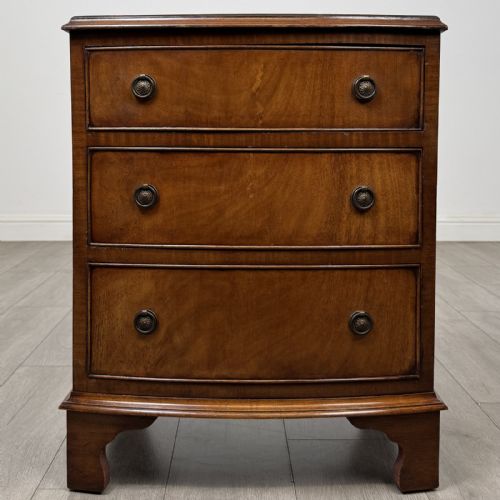
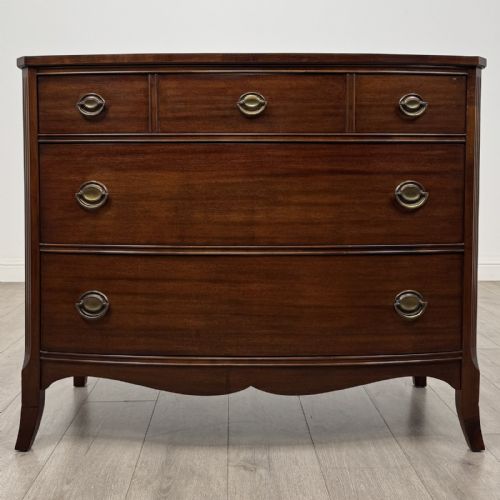
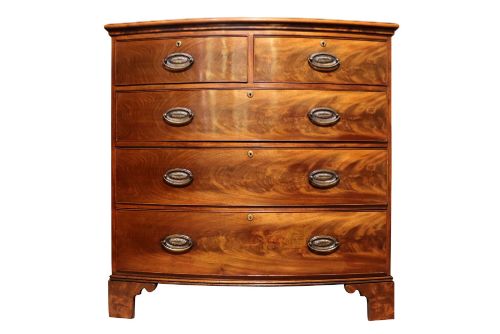
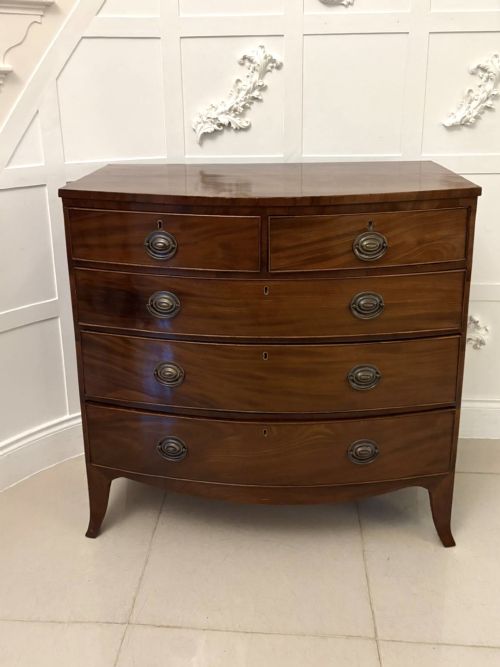
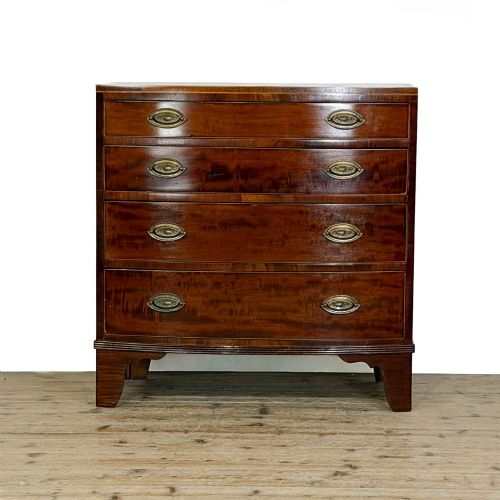
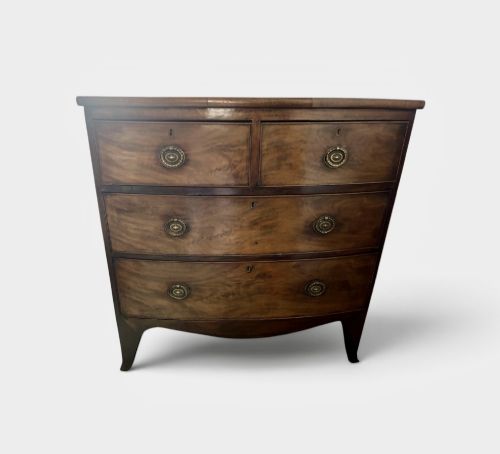
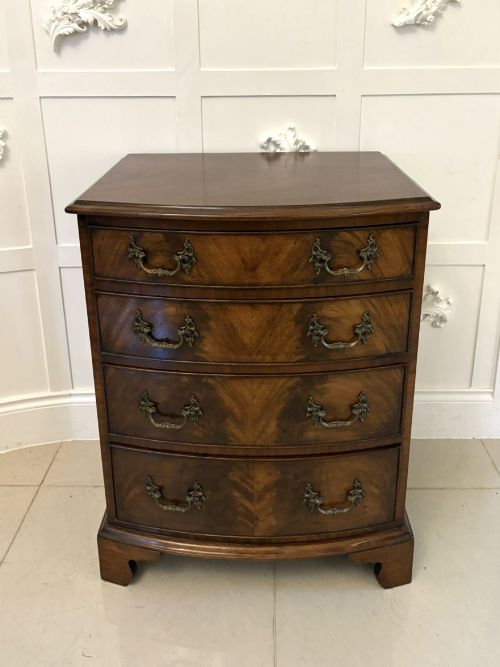
When you search for antique bowfront furniture, you are looking at items designed with a convex, curved front rather than a flat plane. The pieces on this page span several centuries, including Georgian, Regency, and Victorian eras, along with later revival pieces.
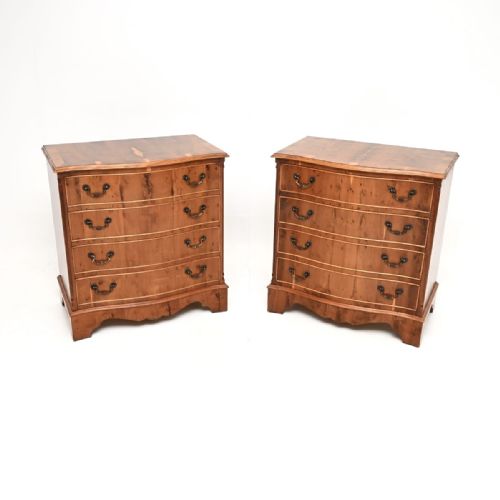
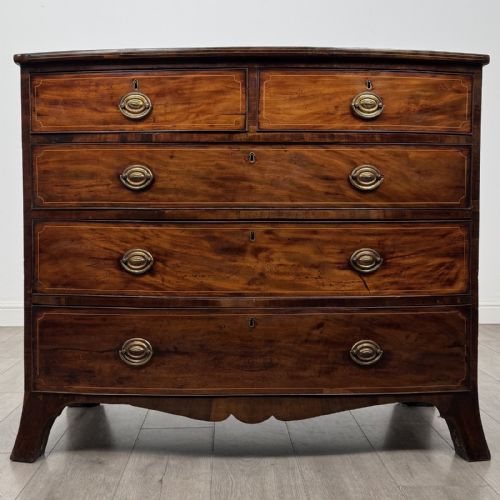
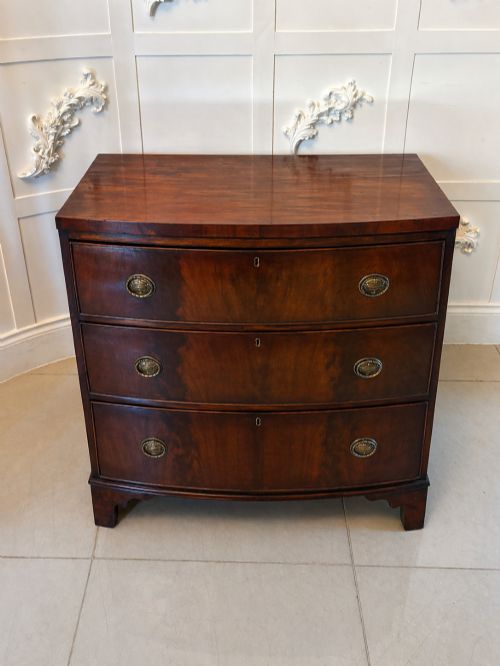
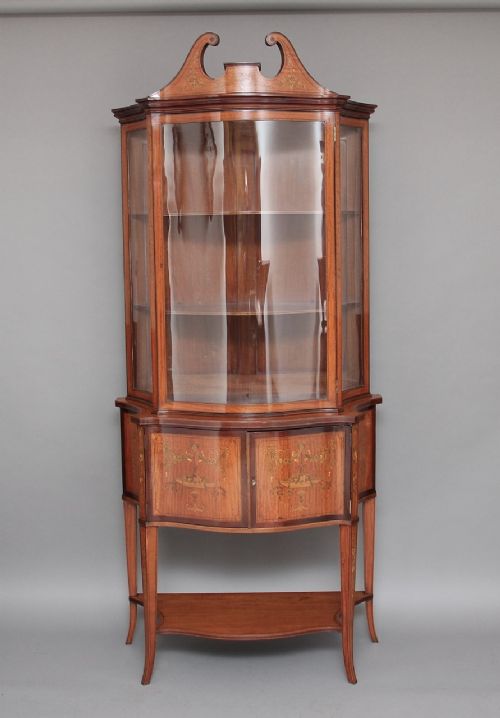
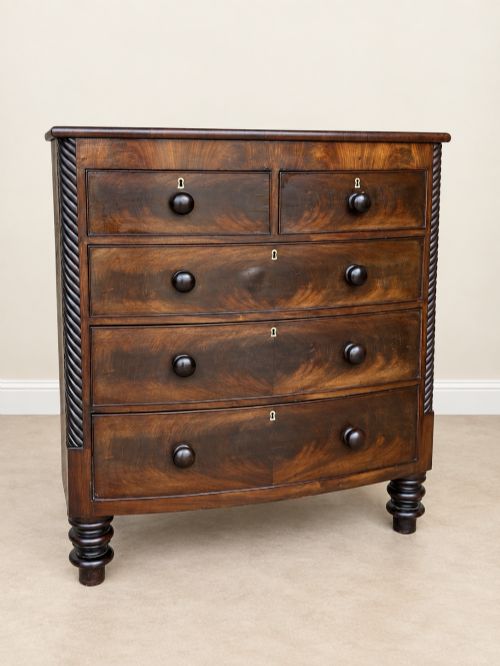
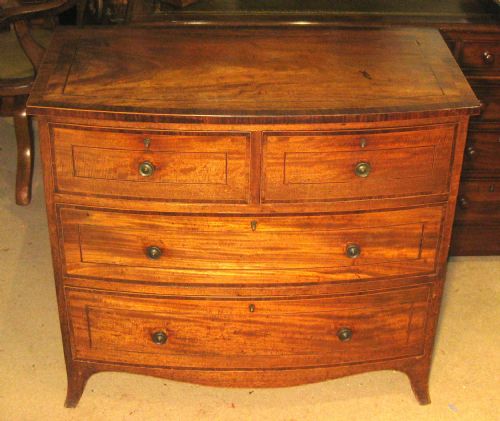
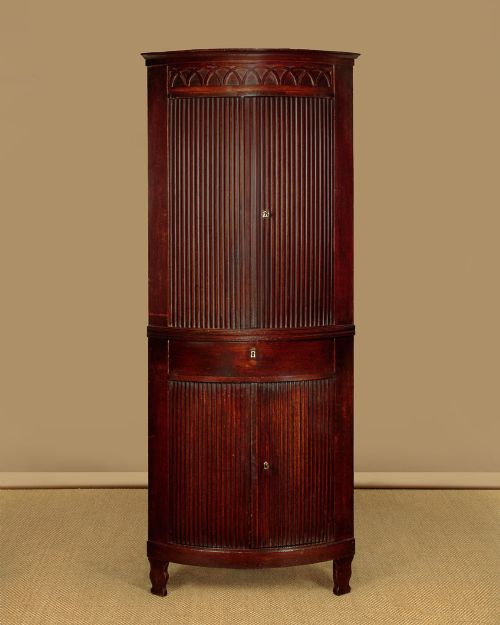
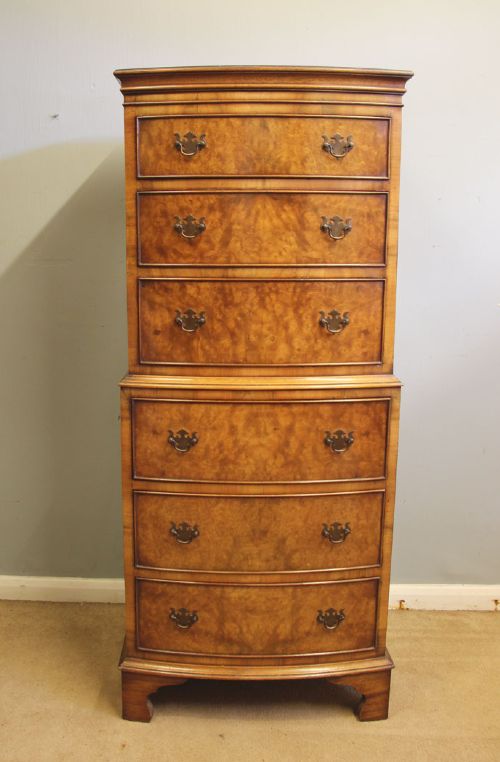
The chest of drawers stands as the most common form you will meet on this page, appearing frequently in mahogany, burr walnut, and oak. Alongside chests, the selection includes corner cupboards, display cabinets, sideboards, side cabinets, and linen presses.
Origins range across the 18th, 19th, and early 20th centuries, taking in styles from George III and Regency periods to Edwardian and Sheraton Revival interpretations. Cabinets and sideboards offer larger proportions, while small chests and corner cupboards suit compact spaces.
How they were made
Cabinet makers built these curved fronts using solid and veneered timbers, predominantly mahogany, alongside satinwood, oak, walnut, and burr walnut. Timber selection mattered greatly for the front, where figured mahogany and flame mahogany grain patterns were chosen to catch the light.
Details include brass handles, boxwood stringing, and satinwood inlay work, particularly in pieces following Sheraton Revival designs. Corner cupboards and chests often feature dovetailed drawer construction and secondary softwood or oak linings behind the primary show woods.
Listings feature timbers including mahogany, satinwood, oak, burr walnut, walnut, and boxwood across multiple centuries.
What varies in quality
The quality of antique bowfront furniture rests heavily on the choice of timber figure and the precision of the curved drawer fronts. Finer examples display carefully matched flame mahogany or burr walnut veneers that follow the sweep of the curve without buckling.
Proportion and scale distinguish finer pieces, such as small Regency chests and narrow Scottish bowfronts with graduated drawers. Secondary elements like original brass hardware, clean dovetailing, and crisp inlay distinguish workshop standards across periods.
The Antique Bowfront Furniture Glossary
- Bowfront
- A furniture front that curves outward in a convex arc. This shape softens the corners of chests and sideboards while increasing internal volume.
- Flame mahogany
- A veneer cut from mahogany where the grain resembles flickering flames. It appears on the drawer fronts of finer Regency and Georgian pieces.
- Stringing
- Thin lines of contrasting wood inlaid into the surface of a cabinet or chest. Boxwood stringing often outlines satinwood panels on Sheraton Revival items.
- Chest on chest
- A tall storage unit formed by stacking one smaller chest of drawers directly on top of a larger base chest. This form maximises vertical capacity.
- Secretaire
- A desk disguised as a chest of drawers, featuring a drop-front top drawer fitted with writing surfaces and small internal compartments.
Antique Bowfront Furniture: Frequently Asked Questions
How do I date a bowfront chest?
Dating relies on combining timber types, construction methods, and stylistic details like handle design and foot shapes. Georgian pieces often show simpler bracket feet and solid mahogany, while Regency versions feature flame veneers and turned feet.
Later Edwardian and 1920s revival pieces mimic these earlier eras but usually employ different internal secondary woods and modern locking mechanisms.
Where should I place a bowfront cabinet?
Bowfront chests and sideboards suit hallways, dining rooms, and bedrooms because their curved fronts project less into walkways than square corners might. Corner cupboards fit neatly into unused wall angles to utilise otherwise dead room space.
Placing them away from direct sunlight and strong heat sources protects the polished timber veneers from fading and splitting over time.
Are bowfront drawers deep?
The curved front increases the internal depth at the centre point compared to a flat drawer of the same overall dimensions. Graduated drawers on chests typically decrease in depth from bottom to top for balanced proportions.
Smaller side chests and narrow Scottish models offer compact storage while retaining the signature curved profile of the larger sideboards.