

Georgian Period Mahogany Dresser
A georgian period mahogany dresser offers serious timber and honest proportions, giving any room a grounded, architectural anchor.
Georgian Period Mahogany Dresser
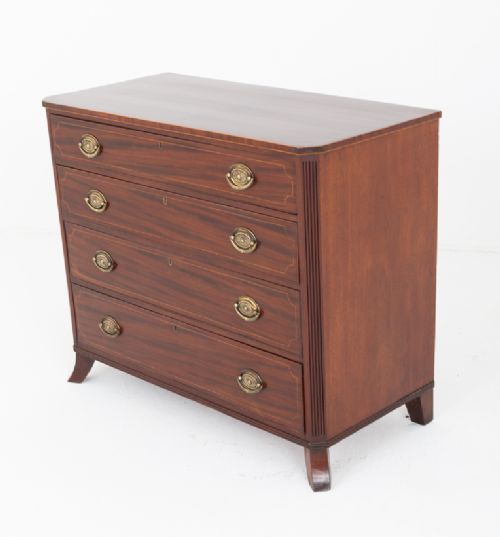
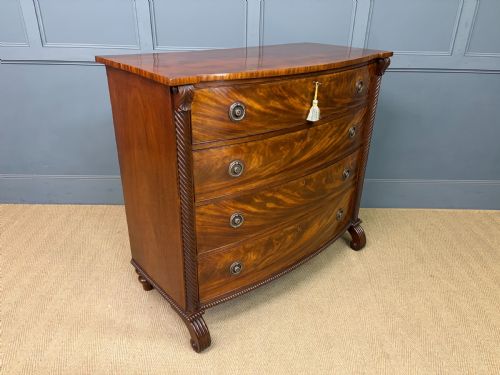
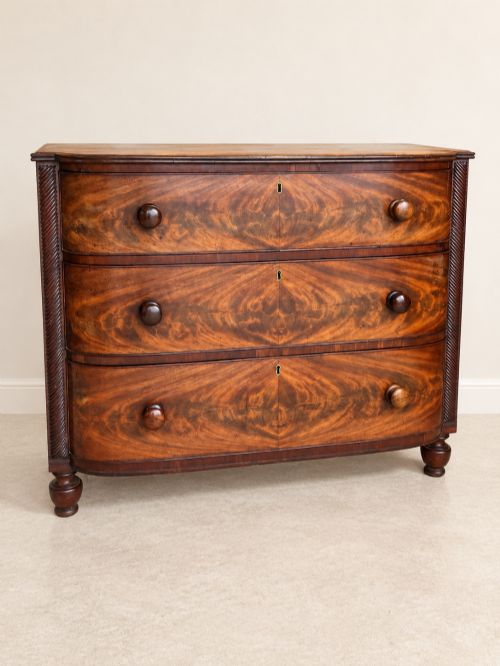
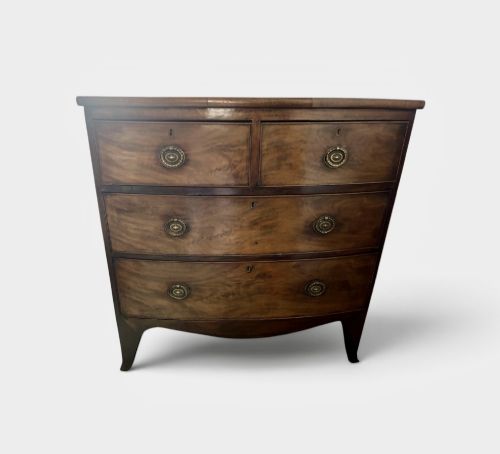
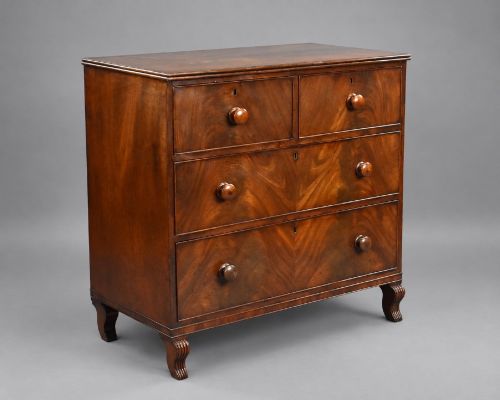
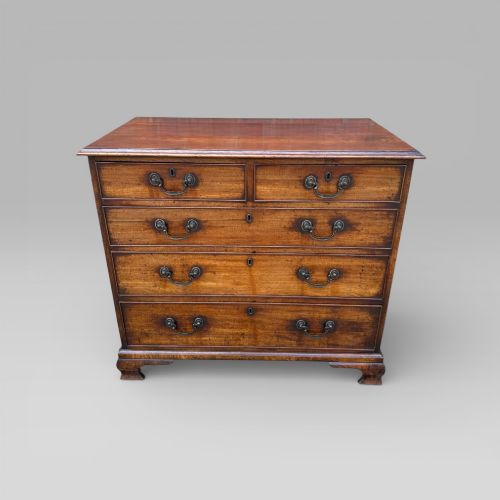
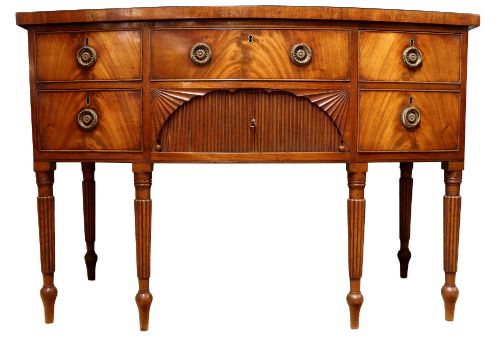
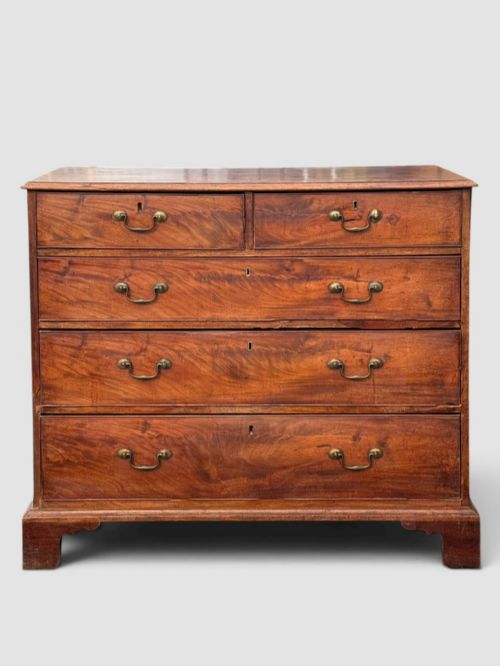
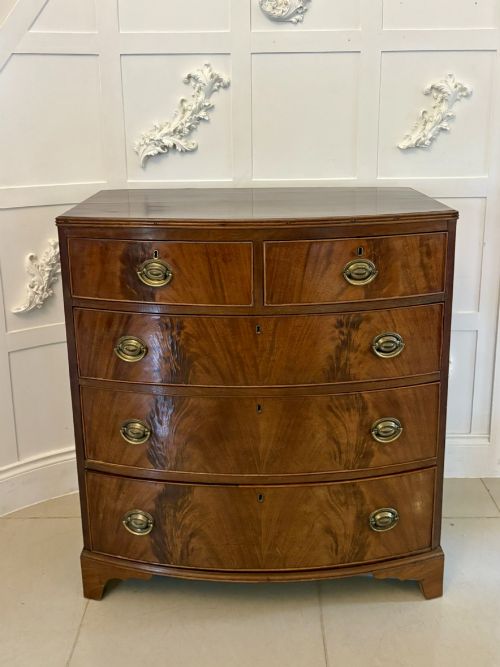
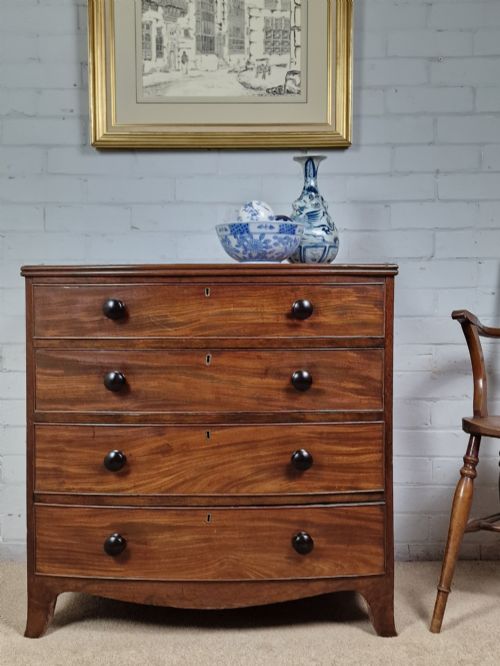
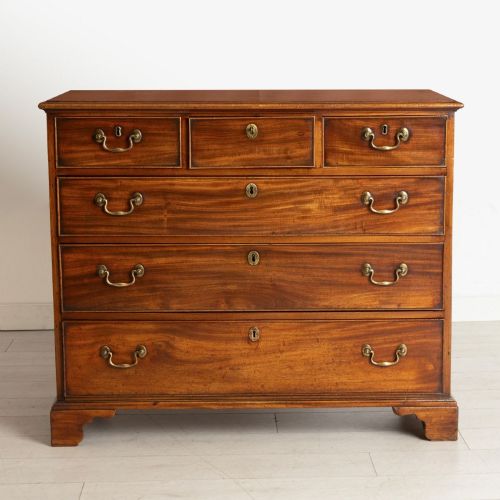
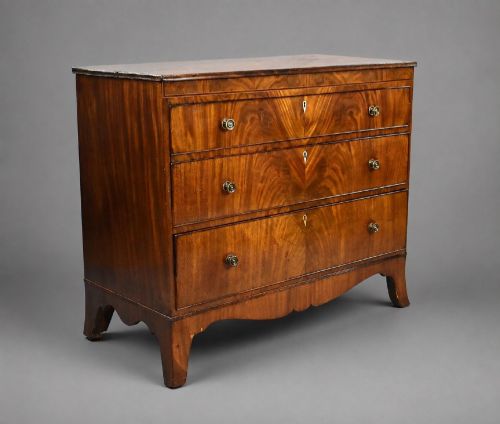
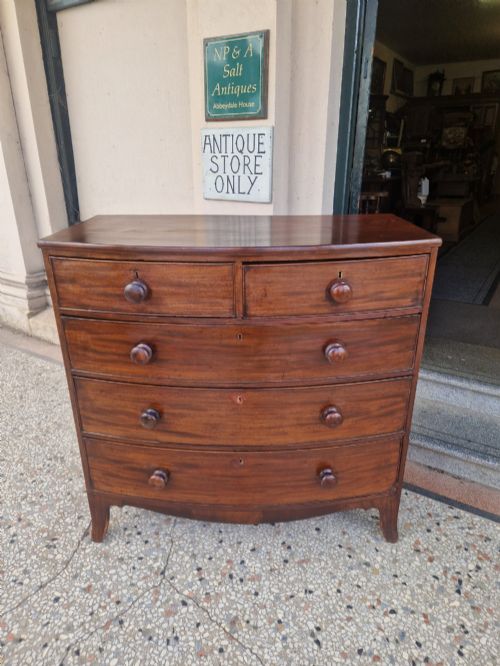
When you search for a georgian period mahogany dresser, you encounter timber case furniture spanning the eighteenth and early nineteenth centuries. The listings show forms primarily consisting of chests of drawers, bow front chests, sideboards, and occasional bookcase combinations.
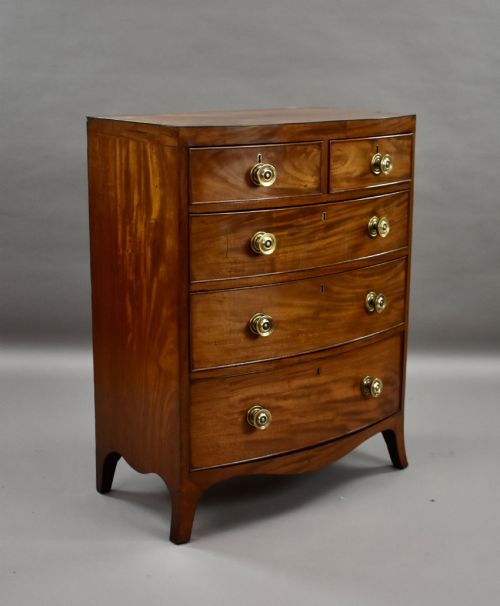
The prevailing style across these pieces is Georgian, alongside George III, George II, and Regency periods. You will frequently meet pieces featuring a two over three drawer configuration or compact proportions suitable for narrower spaces.
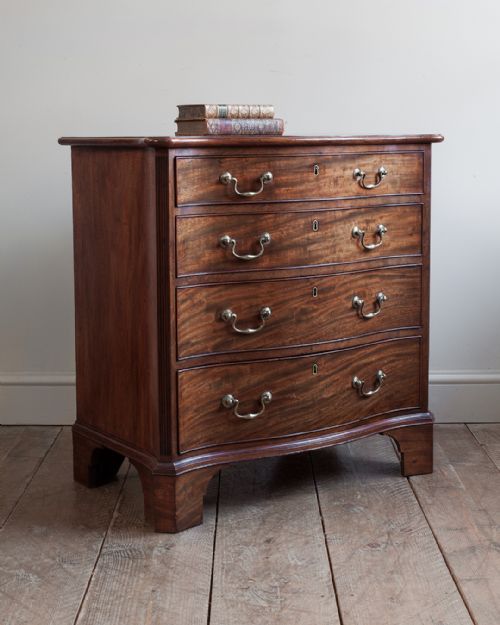
Originating predominantly from the Georgian era, these items combine utilitarian storage with cabinet-making skill. The evidence records variations from simple hall chests to refined serpentine fronts with original brackets and brass handles.
Judging quality and character
Quality rests heavily on the depth of the timber's patina and the crispness of the secondary wood selection. Superior pieces display carefully matched flame mahogany veneers and uncompromised structural proportions.
The refinement of the drawer front shapes, such as a controlled bow or a serpentine sweep, separates standard utility items from finer workshop output. Original brass hardware and working keys add notable distinction to surviving examples.
Working keys tucked into centuries-old keyholes still turn today, offering a direct tactile link to the original owner.
J Moorcroft
The Georgian Period Mahogany Dresser Glossary
- Bow front
- A convex curved cabinet front that swells outward in the centre. This shape became popular during the Regency and late Georgian periods.
- Brushing slide
- A pull-out shelf integrated above the top drawer used for writing or folding garments. It slides flush into the carcass when not in use.
- Flame mahogany
- A veneer cut from the branch forks of the mahogany tree to create a fiery, swirling grain pattern. Cabinet-makers reserved this timber for principal drawer fronts.
- Serpentine
- A front configuration curving inward centrally and outward at the ends in an S-shape. This requires advanced woodworking skill to execute cleanly.
- Bracket feet
- Simple, right-angled feet supporting the corners of case furniture during the eighteenth century. They often feature shaped inner brackets.
Georgian Period Mahogany Dresser: Frequently Asked Questions
What is a georgian period mahogany dresser?
It is a substantial piece of wooden storage furniture built during the eighteenth or early nineteenth centuries. These items typically take the form of chest of drawers or sideboards made from mahogany.
They served functional domestic roles in bedrooms and hallways, offering deep drawer capacity. Today, collectors value them for their durable construction and rich timber patination.
How do I spot a George III chest?
Look for proportion, timber choice, and specific foot types such as bracket feet or ogee feet. George III pieces often display figured mahogany veneers and hand-cut dovetail joints.
Hardware details like brass drop handles or oval plates provide further chronological clues. Examining the secondary pine or oak interiors helps confirm the eighteenth-century origin.
What is a brushing slide used for?
A brushing slide served as a temporary horizontal surface for grooming tasks or folding clothes. Owners pulled it out from just beneath the top surface before pushing it away.
This feature is commonly found on smaller bachelor chests and select Georgian case pieces. It adds practical utility without altering the clean exterior lines.
How do I care for mahogany furniture?
Keep wooden furniture away from direct sunlight and steady heat sources to prevent timber splitting. Maintain a stable room temperature to protect the antique veneer surfaces.
Apply a traditional wax polish sparingly to nourish the grain and preserve the patina. Avoid modern silicone sprays that can damage the historical finish.