
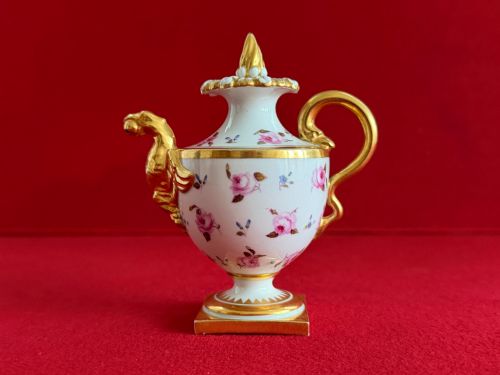
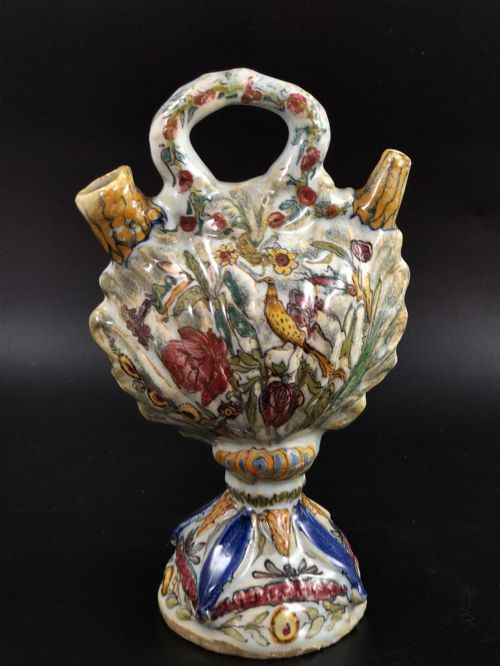
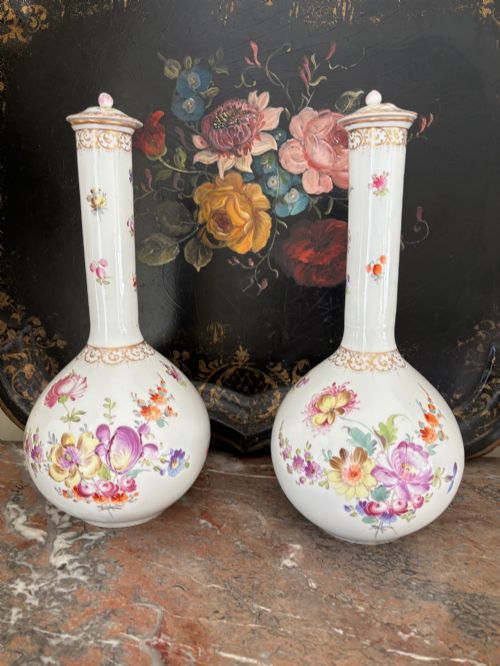
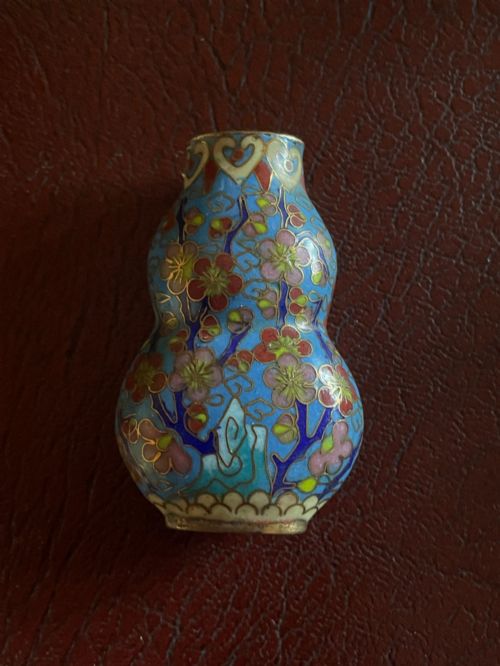

Antique Bottle Vase
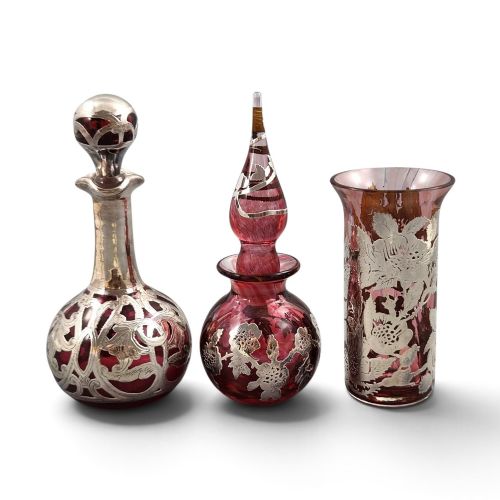
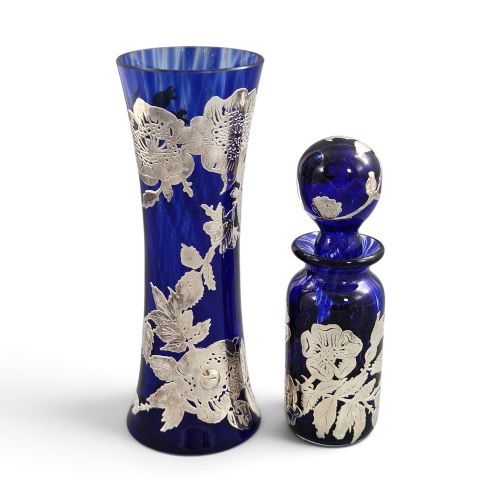
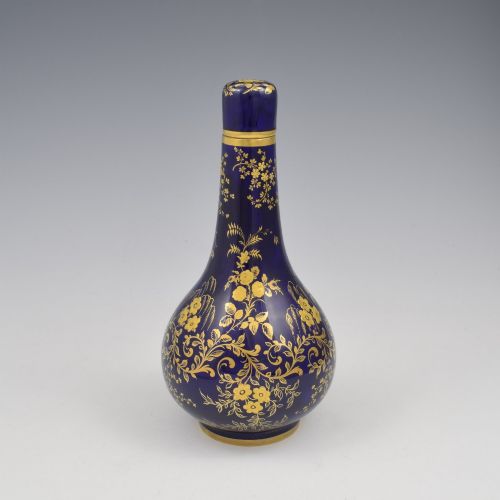
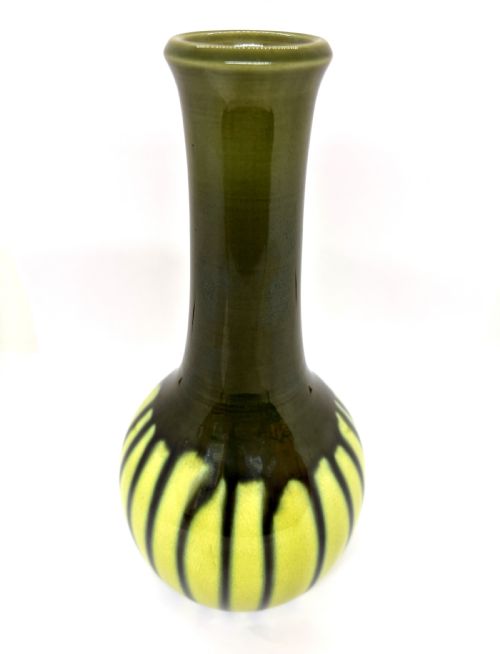
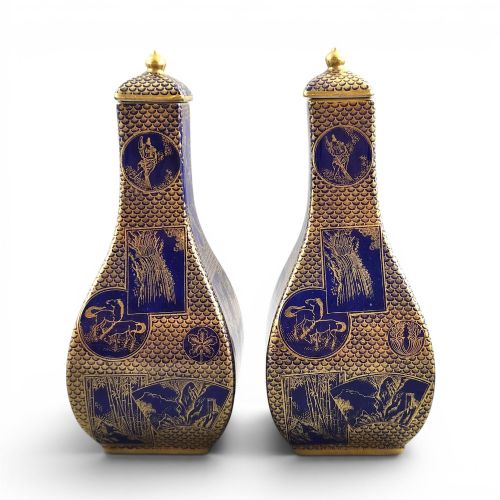
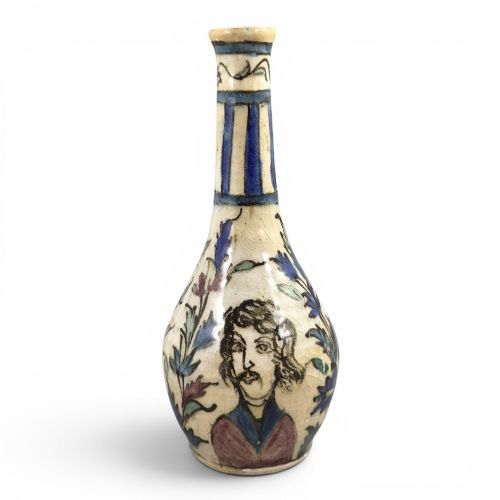
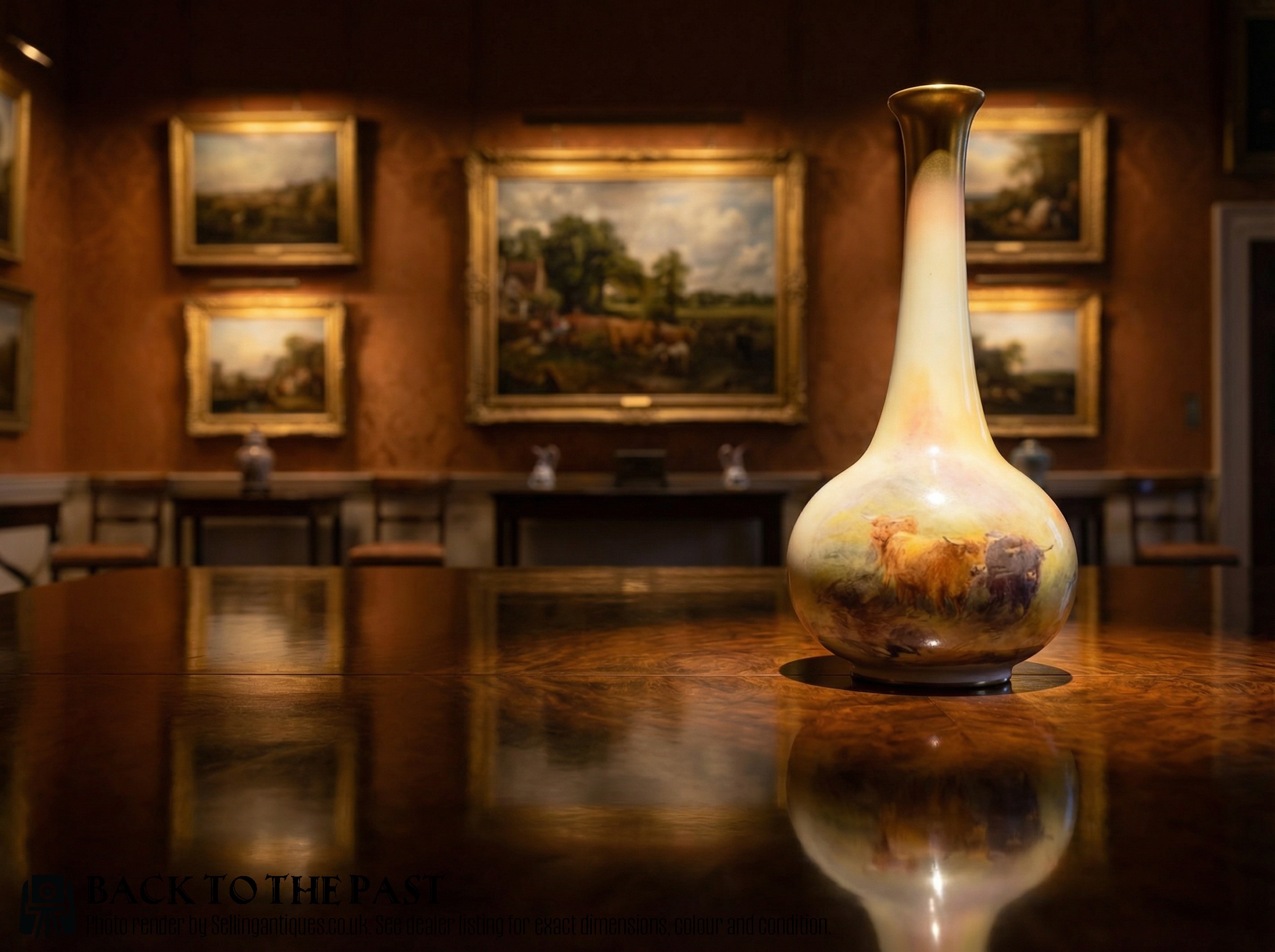
An antique bottle vase brings a focused, upright silhouette to a room, drawing the eye upward with its slender neck and swelling body.
Antique Bottle Vase
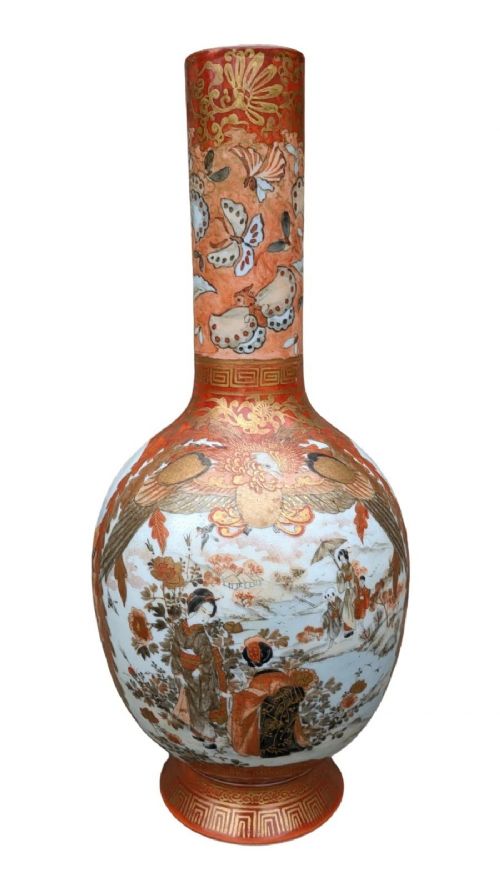
When you search for an antique bottle vase, you are looking at hollow ceramic and porcelain vessels designed with narrow necks and rounded bodies, originating from periods spanning the seventeenth century through to the early twentieth century.
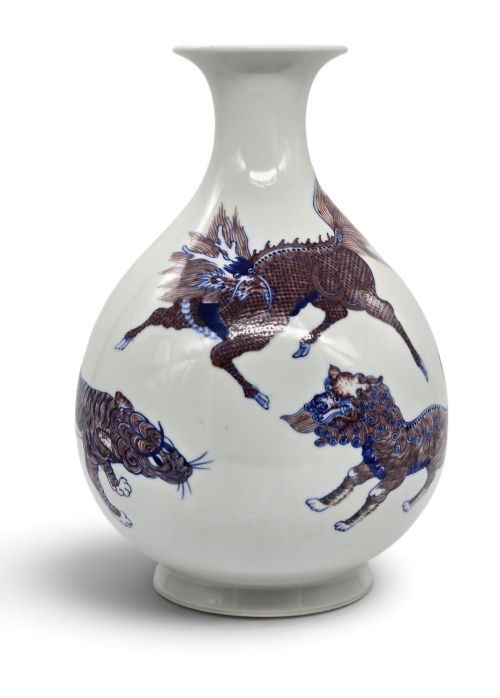
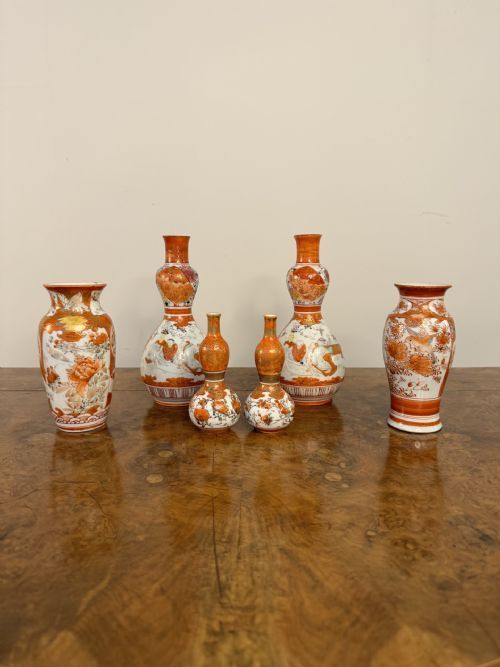
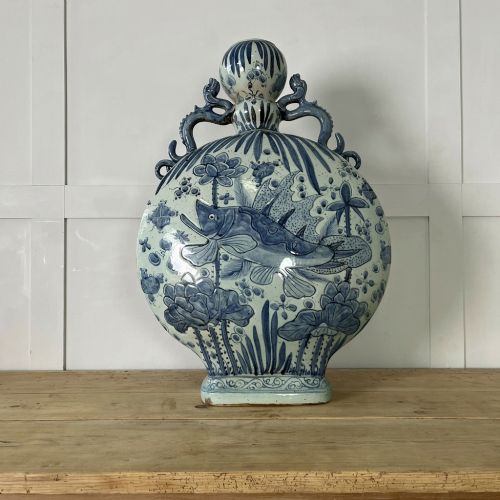
The versions you are most likely to meet on this page include Chinese porcelain pieces bearing blue and white decoration or celadon glazes, alongside Japanese Kutani and Imari examples from the Meiji period.
European makers are also well represented, ranging from English stoneware and porcelain by factories such as Doulton, Derby, and Mason's to Dutch Delftware and Italian majolica containers.
How they were made
Potters shaped these vessels from clay bodies including earthenware, stoneware, and fine porcelain, often throwing them on a potter's wheel before refining the profiles.
Decoration was applied using underglaze blue, hand-painted enamel colours, and sometimes gold leaf gilding or cloisonné wirework, followed by high-temperature firing to vitrify the glaze.
Listings feature pieces spanning the seventeenth century, the Regency era, and the Victorian period, executed in porcelain, earthenware, and stoneware.
What varies in quality
The success of an antique bottle vase rests on the precision of its proportions and the skill of the brushwork applied to its surface, where spontaneous hand-painted details distinguish superior pieces from mass-produced wares.
Depth of glaze colour, such as the richness of a cobalt blue or the subtle tone of a tea dust or celadon surface, dictates the visual weight and sophistication of the finished object.
Flight, Barr and Barr·Sitzendorf·Burmantoft's Pottery·Mason's·Stevenson and Hancock·Crown Staffordshire·Doulton Lambeth·Choshuzan
The Antique Bottle Vase Glossary
- Celadon
- A pale green jade-like glaze originating in East Asia. It relies on iron oxide in the glaze mixture reacting during a reduction firing.
- Imari
- A style of Japanese porcelain decorated in underglaze blue and contrasting iron red, supplemented with gilt details. These wares were heavily exported to Europe from the port of Imari.
- Albarello
- A type of majolica earthenware jar designed with a concave waist for easy gripping by apothecaries. They held drugs and dry pharmaceuticals in historic pharmacies.
- Moon flask
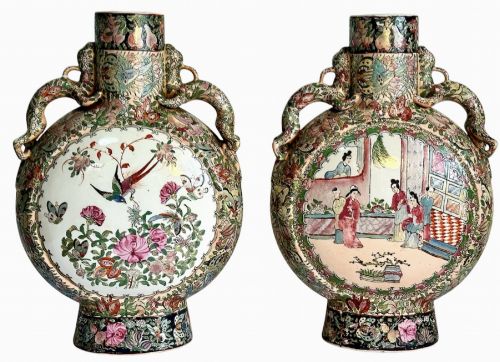
- A flattened circular ceramic flask featuring two loop handles and a short neck. This form derives from ancient leather water vessels adapted for porcelain.
- Underglaze blue
- Pigment painted directly onto an unglazed ceramic body before a transparent glaze is applied over the top. The piece is then fired at a high temperature to seal the cobalt design permanently.
Antique Bottle Vase: Frequently Asked Questions
What were antique bottle vases used for?
These vessels were primarily made to hold single stems of flowers, scent, or specific liquids like wine and oils, depending on their scale and origin.
Over time, many served purely as decorative objects or garniture sets displayed on mantelpieces and cabinets to showcase wealth and taste.
How do I display an antique bottle vase?
Their narrow profiles make them ideal for narrow shelves, windowsills, or mantelpieces where wider vessels would not fit.
Grouping them by colour or period, such as pairing blue and white Chinese porcelain with Japanese Imari pieces, creates a balanced interior display.
How can I tell the period of a bottle vase?
Dating relies on examining the characteristics of the ceramic body, the palette of the enamel colours, and any reign marks or backstamps pressed into the base.
Stylistic clues like Art Nouveau curves or Meiji period motifs provide clear markers for placing a piece within its correct century.