


Antique Bottle Slides
These antique bottle slides protect your dining table from rings and condensation while passing the wine effortlessly between guests.
Antique Bottle Slides
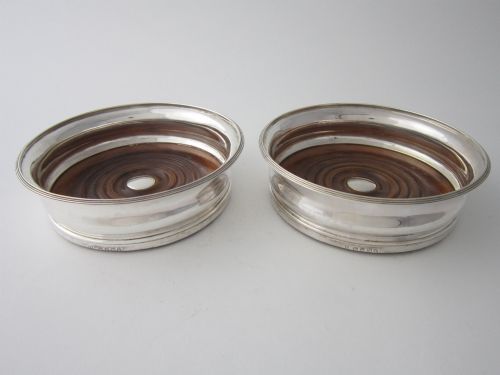
When you search for antique bottle slides, you encounter low circular trays designed to hold wine bottles and decanters securely during dinner. Most examples on this page date from the Georgian and Victorian periods, often appearing in matched pairs or larger sets.
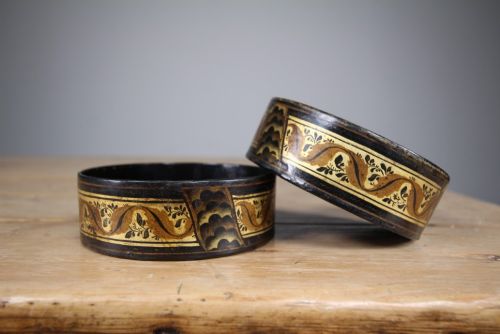
Makers fashioned these pieces to glide smoothly across polished mahogany or walnut dining tables without scratching the surface. Alongside traditional single-bottle holders, the selection includes larger magnum sizes and occasional variations in papier-mâché or rosewood.
How they were made
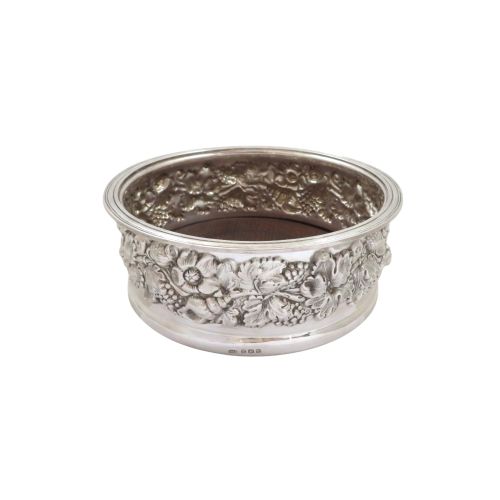
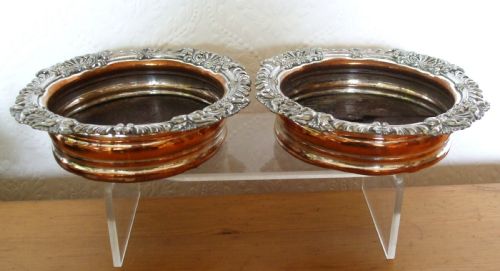
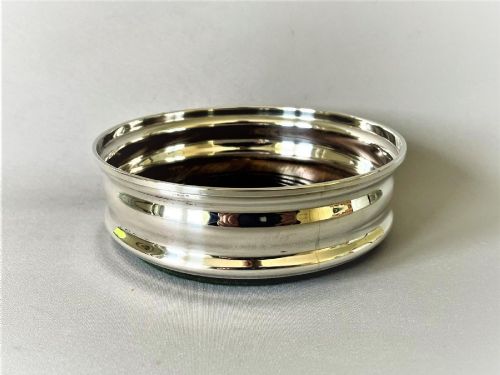
Silversmiths utilised sterling silver and Old Sheffield Plate, fusing thin silver sheets onto copper bases to achieve durable metallic walls. Turned timber bases, notably mahogany and oak, frequently provide the stable foundation required to support heavy glass decanters.
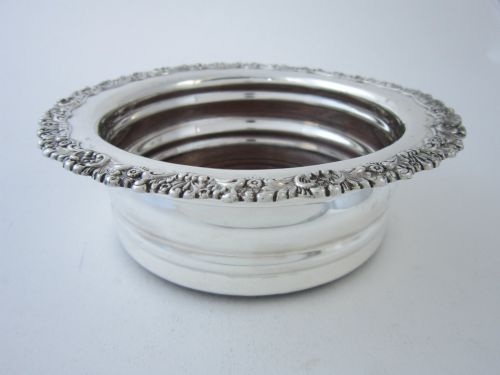
Workshops lined the interiors with baize, felt or leather to cushion the base of the bottle and quieten the movement across the timber furniture. Pierced galleries, chased floral borders and applied scrollwork decorate the metal rims of better examples.
Listings span from the Georgian era through to the mid-twentieth century, utilising silver, mahogany, papier-mâché and Old Sheffield Plate.
What varies in quality
The standard of craftsmanship shows in the crispness of the pierced metalwork and the weight of the silver or silver plate. Thicker Old Sheffield Plate reveals subtle hints of copper showing through at high points of wear, whereas lesser pieces rely on thin modern electroplating.
Carpentry defines the wooden iterations, where finely turned grain and secure turned mountings separate standard vessels from works by known makers. Original baize linings and matching hallmarks across a set elevate the desirability of the piece.
James Mein of Kelso
The Antique Bottle Slides Glossary
- Old Sheffield Plate
- A fused bilayer metal made by heating copper and silver together before rolling them into sheets. This technique predates modern electroplating.
- Decanter coaster
- An alternative name for a bottle slide sized specifically to fit the wide base of a port or sherry decanter.
- Magnum coaster
- An oversized variant built to accommodate champagne bottles or larger wine vessels. These items require sturdier timber bases.
- Pierced gallery
- An openwork decorative band pierced through the metal wall of the slide. It lightens the visual weight of the piece.
- Baize
- A coarse woolen fabric glued to the underside of the slide. It protects the dining table from friction.
Antique Bottle Slides: Frequently Asked Questions
What is the difference between bottle slides and coasters?
The terms are largely interchangeable, though bottle slide historically emphasises the low profile designed for sliding across tables during port service.
Traditional examples often feature small rollers or baize bottoms specifically engineered for this motion.
How do I clean silver plated bottle slides?
Use a soft cloth and a gentle silver cream formulated to protect thin metal layers from abrasion.
Avoid immersing wooden-based slides in water to prevent the timber from warping or loosening the internal glue.
Can these hold modern wine bottles?
Most standard antique slides comfortably accommodate traditional Bordeaux and Burgundy wine bottles.
Larger magnum sizes are better suited to champagne or wider specialty bottles found on modern dining tables.
How can I tell Old Sheffield Plate from electroplate?
Look closely at the rims and edges where the underlying copper core occasionally shows through a thin layer of silver.
Nineteenth-century fusion plating lacks the uniform greyish hue associated with late Victorian electroplated wares.