


Antique Botanical China
Antique botanical china brings together delicate craftsmanship and natural history, offering painted flowers, birds and leaves on porcelain and bone china for display or dining.
Antique Botanical China
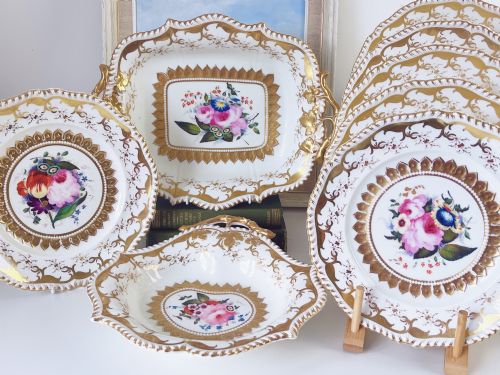
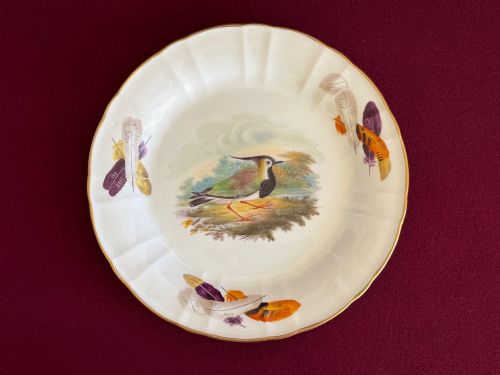
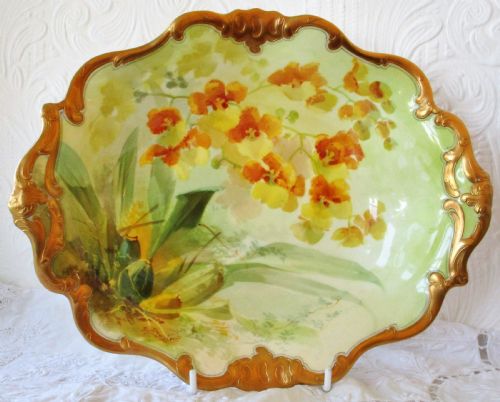
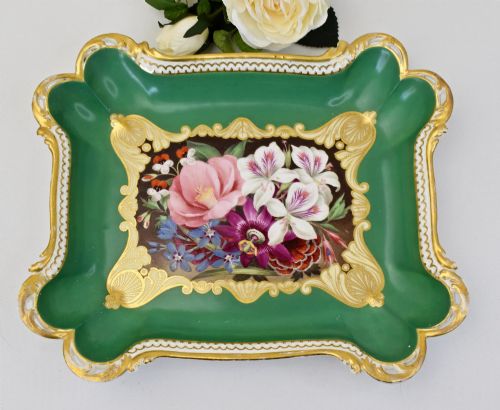
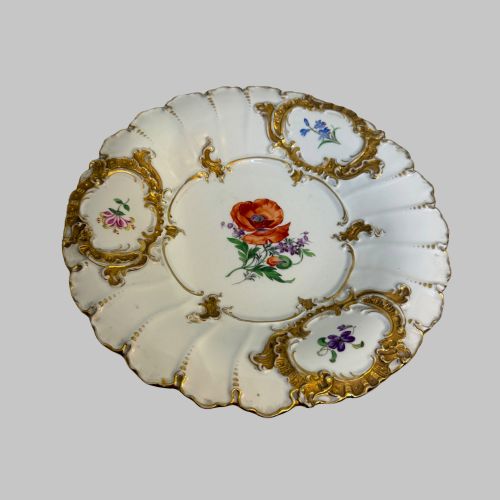
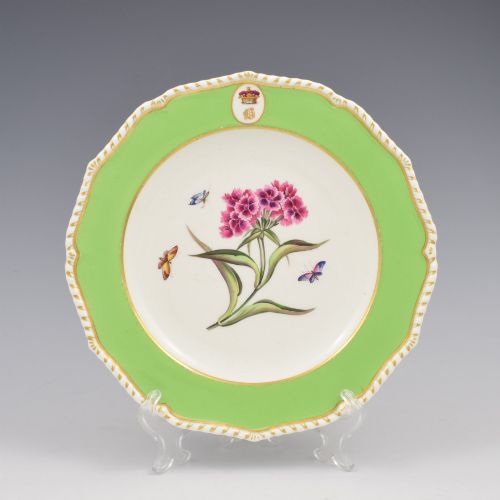
Antique botanical china comprises tableware and decorative display pieces painted with flowers, plants, and birds. These items range from individual cabinet plates to complete dessert services and teacups.
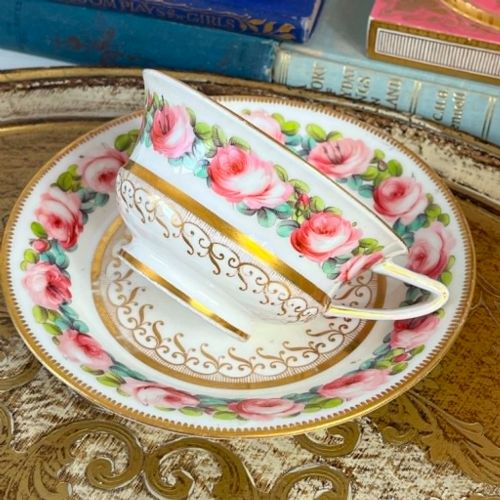
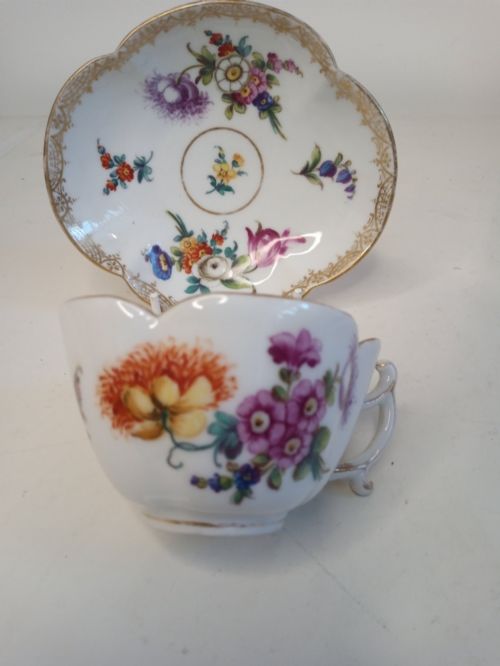
The pieces on this page appear across multiple periods, most notably the Georgian, Regency, and Victorian eras. Forms include cabinet plates, teacups and saucers, dessert services, and serving dishes.
Originating largely from prominent English potteries and continental factories, these items reflect both utilitarian dining use and polite display in drawing rooms.
Materials and technique
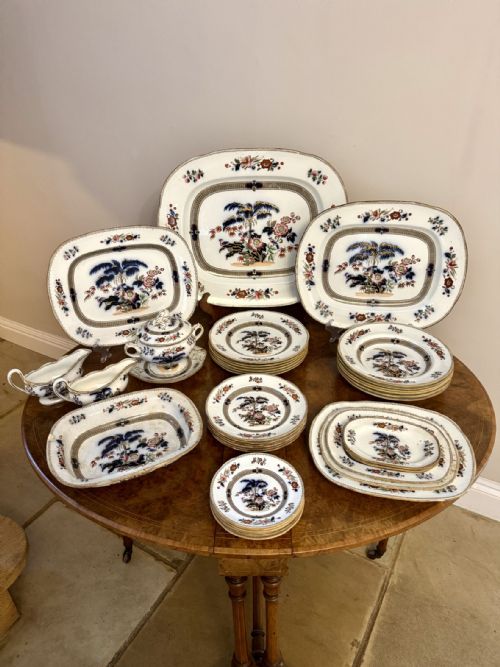
Manufacturers utilised fine bodies such as porcelain, bone china, creamware, ironstone, and felspar porcelain. Potters formed these materials into plates, dishes, and vessels before firing and glazing.
Decoration relied on handpainting, frequently combined with gilding, gold leaf, and enamel work. Skilled artists rendered natural specimens directly onto the ceramic surface, often framing botanical subjects with coloured borders.
Listings span the eighteenth, nineteenth, and early twentieth centuries, utilising porcelain, bone china, earthenware, and creamware decorated with handpainting and gilding.
What varies in quality
Quality rests upon the precision of the handpainting and the refinement of the ceramic body. Pieces bearing identifiable botanical specimens or armorial details by named painters show superior artistic execution.
The integrity of the gilding and the crispness of the enamel work distinguish finer factory output from standard production. Complete services and matching sets retain greater cohesion than assembled groups.
Grainger Lee & Co·Flight Barr & Barr·Wedgwood·Davenport·Chamberlains Worcester·Doe & Rogers·Meissen·Bloor Derby·Chelsea Derby·Spode·Copeland·Sevres·Coalport·Royal Worcester·Kornilov Brothers·Livesley Powell & Co·Rockingham·Ridgway·Nantgarw·Elkin & Newbon·New Hall·Royal Crown Derby
The Antique Botanical China Glossary
- Bone china
- A type of soft-paste porcelain containing bone ash, developed in England to create a durable, translucent white body.
- Cabinet plate
- A decorative plate intended for display in a cabinet or on a wall rather than for practical dining use.
- Gilding
- The application of gold leaf or gold paint to ceramic surfaces, frequently seen highlighting rims and borders.
- Creamware
- A fine earthenware with a pale yellowish-cream glaze, perfected in England during the eighteenth century.
- Armorial
- Bearing a coat of arms or family crest, usually handpainted alongside botanical motifs on high-status dessert services.
Antique Botanical China: Frequently Asked Questions
How do I care for antique botanical china?
Wash these pieces gently by hand using mild soap and warm water, avoiding harsh scrubbing or dishwashers that might damage the delicate enamels and gilding.
Store plates in padded racks or use felt dividers between stacked items to protect the handpainted surfaces from friction and chipping.
Were these pieces used for dining?
Many items, such as dessert services and dinnerware, saw actual use during formal dining occasions in wealthy households. Plates and dishes served sweet courses or side dishes at the conclusion of a meal.
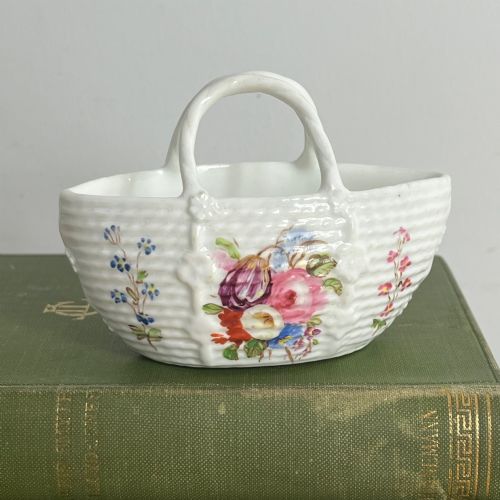
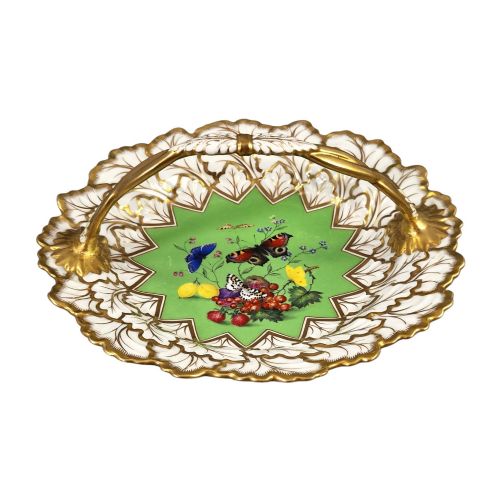
Cabinet plates and miniature baskets were primarily decorative ornaments intended to display artistic skill and botanical interest in public rooms.
How can I tell different periods apart?
Stylistic shifts offer key clues, as Georgian and Regency pieces often feature neoclassical borders and botanical specimens with handwritten plant names on the reverse. Victorian examples frequently display heavier gilding, richer colours, and diverse industrial ceramic bodies.
Factory marks stamped, painted, or impressed on the base provide definitive chronological reference points when cross-referenced with maker histories.
What is a botanical dessert service?
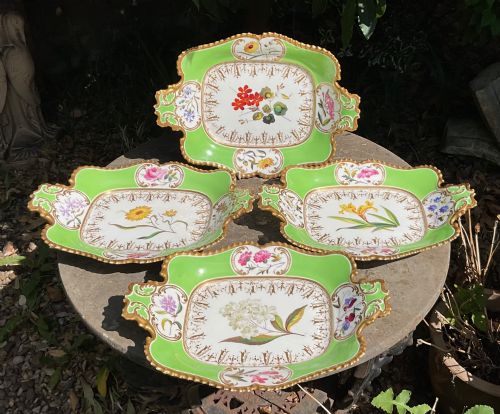
A botanical dessert service is a matched set of plates, dishes, and sometimes a central compote or centerpiece used for serving fruit and sweetmeats. Each piece is individually painted with different flowers, fruits, or plants.
These services often formed part of lavish dining displays where the host demonstrated refinement through natural history knowledge and costly tableware.