

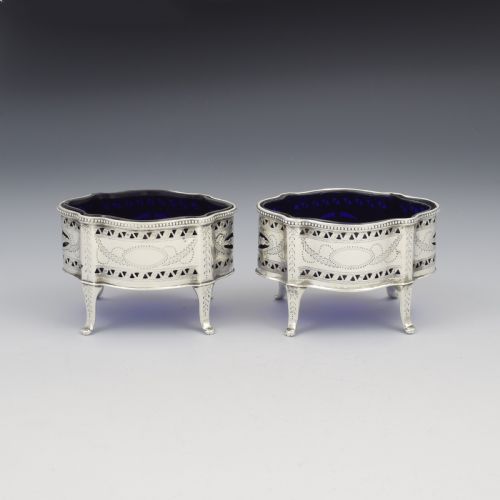


Antique Blue Glass Pair
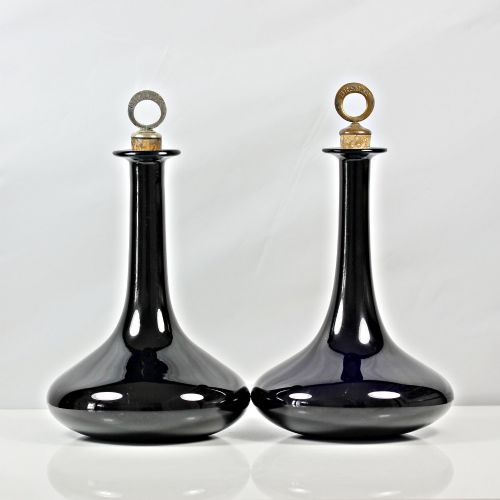
These antique blue glass pair pieces bring rich cobalt and turquoise tones to a room, offering matching symmetry in decanters, vases, and salt cellars.
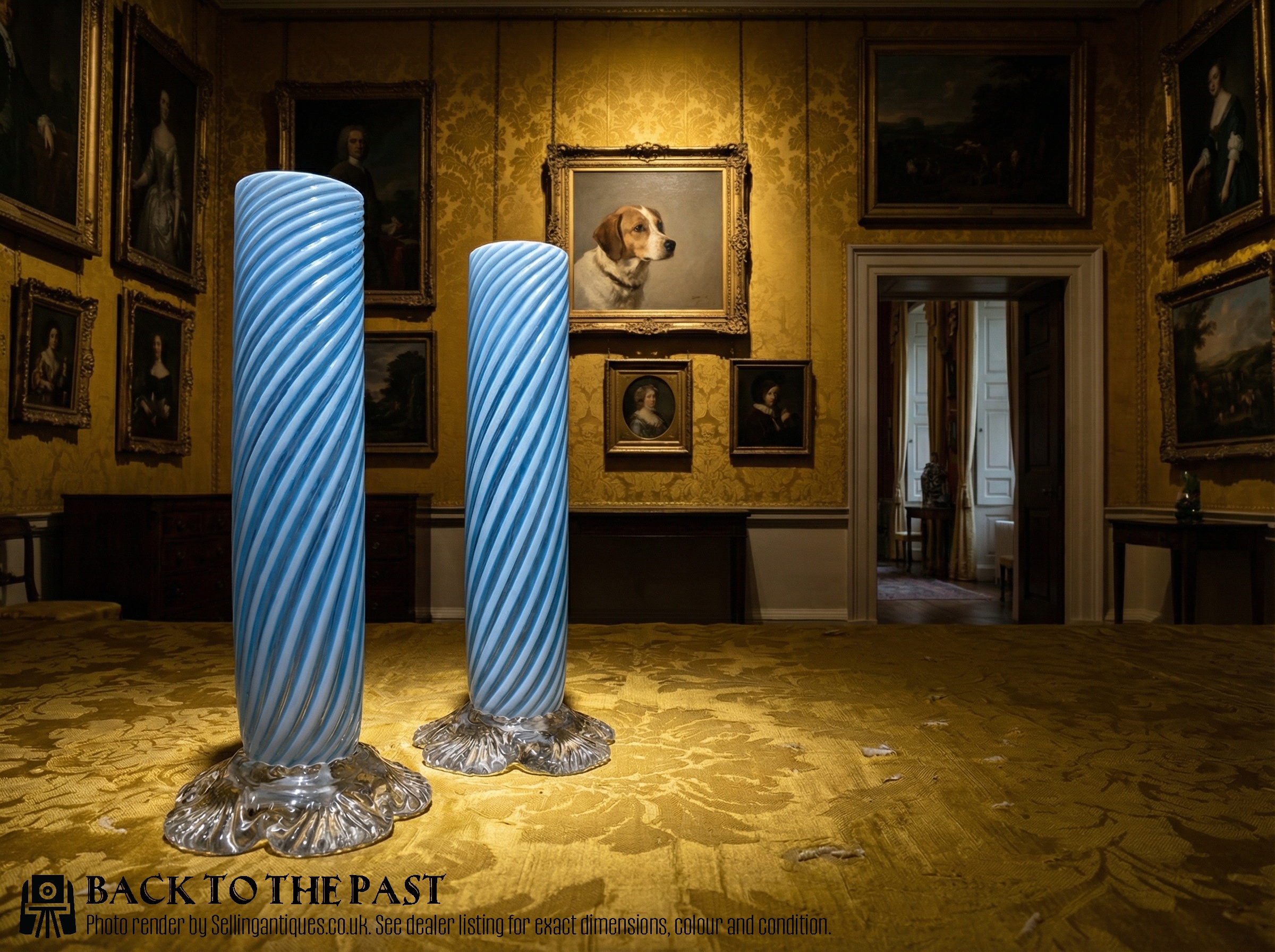
Antique Blue Glass Pair
An antique blue glass pair brings matching symmetry to interiors, taking forms such as decanters, decorative vases, and table salts with cobalt or turquoise liners.
The selections span the nineteenth century into the early twentieth century, incorporating English Bristol glass, Bohemian overlay work, and Venetian vessels.
Buyers encounter functional tableware alongside ornamental mantel items, often mounted in silver, brass, or gilt bronze fittings.
How they were made
Glastmakers achieved deep blue hues by adding cobalt oxide to the molten batch, shaping vessels by free-blowing or moulding.
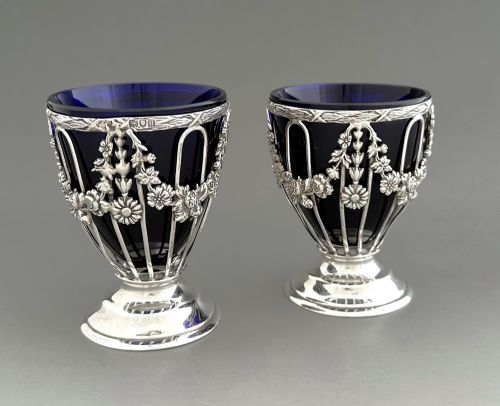
Many examples combine the glass body with metalwork, integrating sterling silver wirework, brass mounts, or ormolu trim.
Decoration involved cutting, engraving, enamel painting, and applying gold leaf or gilt overlays to the cooled surface.
The listings demonstrate strong representation of nineteenth century manufacturing, spanning Georgian decanters through Victorian vases and Edwardian silver table salts.
What varies in quality
Quality rests upon the depth and clarity of the blue metal, alongside the crispness of any wheel-engraved or gilt surface decoration.
The integration of metal mounts dictates value, separating simple glass forms from pieces featuring chased brass, ormolu, or hallmarked silver frames.
Condition and completeness define the standing of a pair, particularly when original stoppers, liners, or matching stands remain intact.
The Antique Blue Glass Pair Glossary
- Bristol blue
- A deep cobalt glass traditionally associated with English production around the city of Bristol during the Georgian and Victorian eras.
- Overlay
- A technique where a layer of coloured glass is cased over a clear or contrasting body and partially cut away to reveal the base layer.
- Lustre
- An ornamental glass vase hung with cut glass prisms designed to catch and reflect candlelight.
- Salt cellar
- A small open vessel or tub used at the dining table for salt, frequently fitted with a removable blue glass liner.
- Ormolu
- Gilt bronze mounts applied to furniture and decorative objects to frame or elevate the primary material.
Antique Blue Glass Pair: Frequently Asked Questions
What were blue glass salt cellars used for?
Dining guests used these small open vessels to take salt at the table, protecting the silver or metal frames from corrosion through the use of removable blue glass liners.
They sat upon formal dining tables in matched pairs or larger sets throughout the Georgian and Victorian periods.
How do I date antique blue glass?
Dating relies upon a combination of pontil mark characteristics, stylistic mounts, and manufacturing techniques recorded across the nineteenth century.
Silver hallmarks on accompanying frames or structural fittings provide precise years of origin for many mounted items.
Are Bohemian and Bristol blue glass different?
Bristol blue typically denotes deep, uniform English cobalt vessels from the Georgian and Victorian eras, while Bohemian glass often incorporates heavy cutting, gilding, and overlay techniques.
Central European makers favoured multi-layered casing and elaborate enamel ornamentation compared to simpler English forms.
How should I clean antique glass pairs?
Warm water and mild soap suffice for routine maintenance, avoiding harsh abrasives that might damage surface gilding or enamel work.
Metal mounts require separate care to prevent polish residues from contacting vulnerable glass surfaces.