


Blue and Clear Glass
Blue and clear glass combines transparent clarity with rich cobalt or pale blue tones across centuries of decorative vessels and lighting.
Blue and Clear Glass
When you search for blue and clear glass, you encounter everything from Georgian table wares with simple blue rims to elaborate Art Deco opalescent bowls and heavy Victorian cut crystal vases. The selection spans domestic utility and decorative artistry, capturing light through contrasting colour sections and transparent crystal.
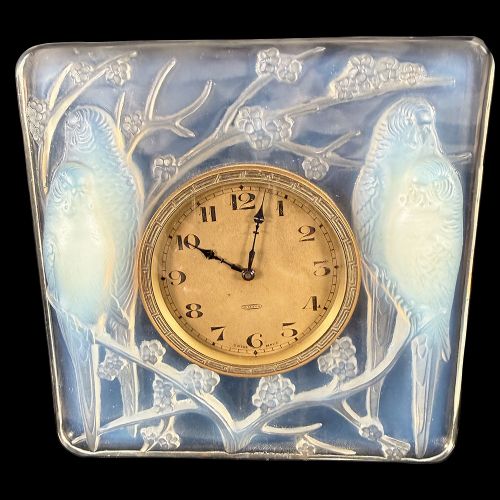
You are most likely to meet 20th-century moulded pieces from the Art Deco period alongside 19th-century Bohemian cobalt items and English glassware featuring applied blue glass details. These objects range from scent bottles and paperweights to large decorative bowls and chandeliers.
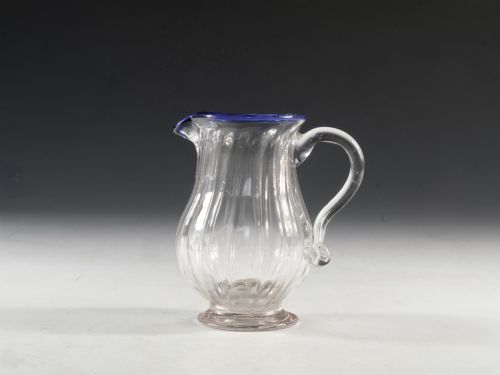
Earlier examples include eighteenth-century cream jugs and monteith bowls accented with delicate blue rims, showing how long makers combined these two visual states in domestic settings. The enduring appeal lies in this interplay between transparent material and deep blue pigment.
How blue and clear glass was made
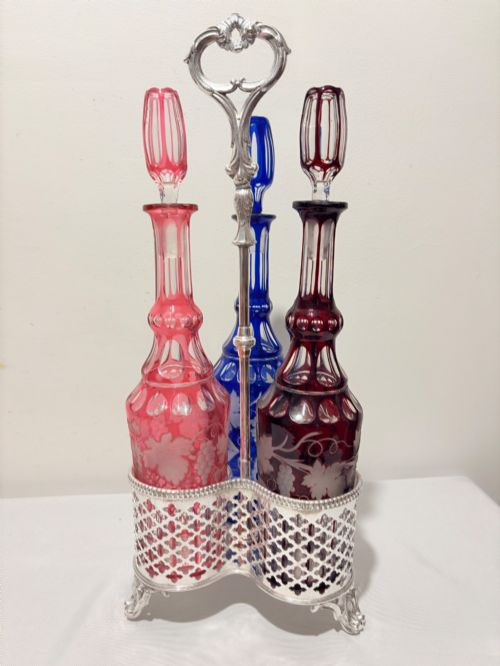
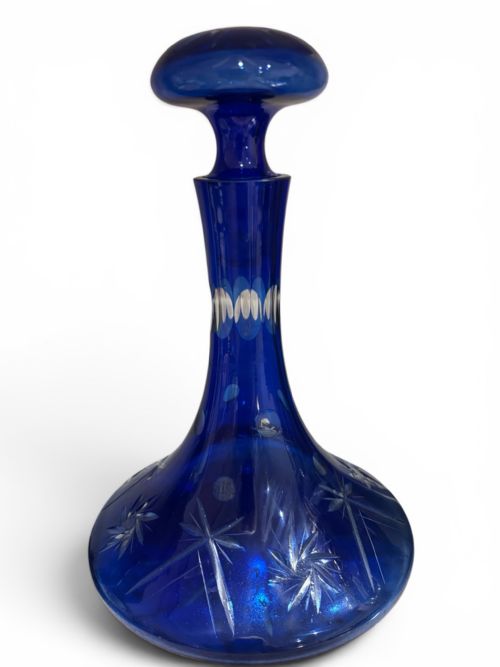
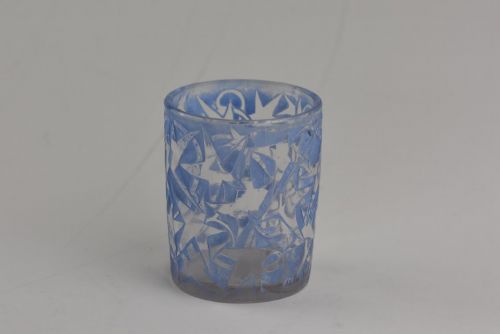
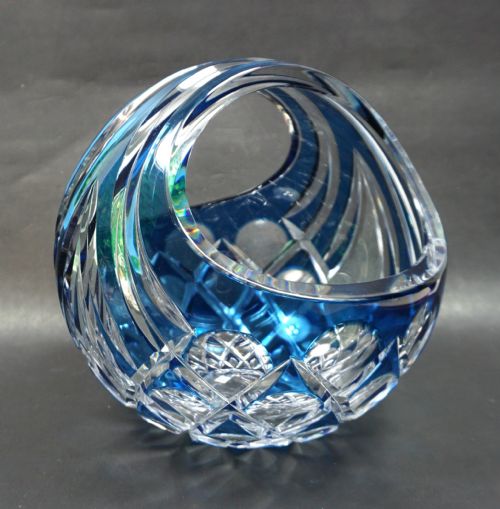
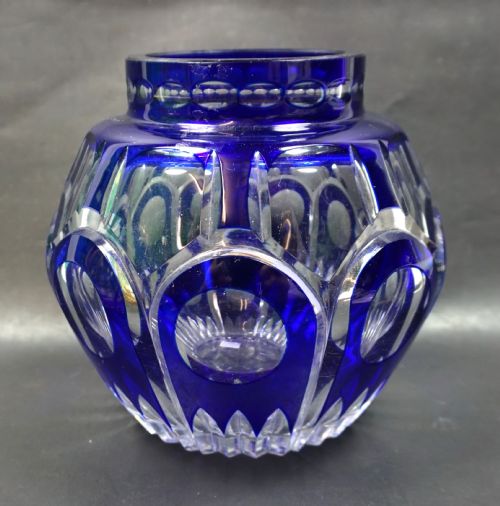
Makers achieved these combinations using techniques such as overlaying, where a layer of cobalt glass is cased over clear crystal before being cut away to reveal the transparent layer beneath. This method creates sharp contrast and depth, particularly seen in Victorian and Bohemian vessels from the nineteenth century.
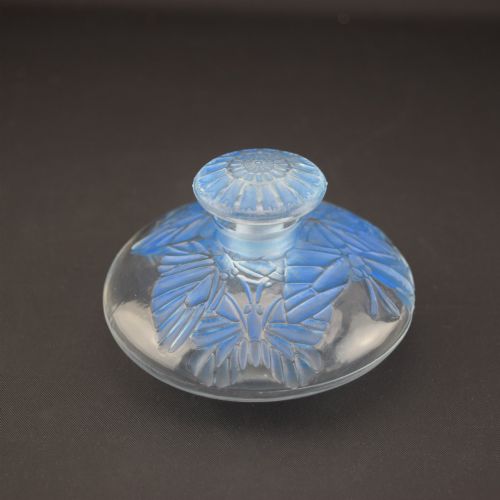
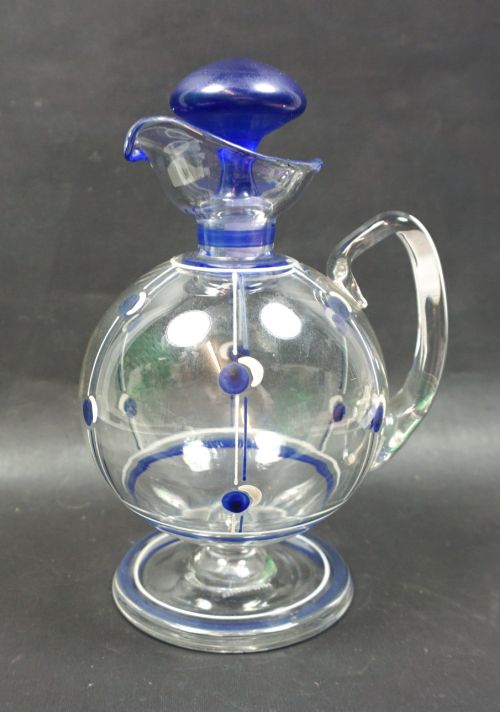
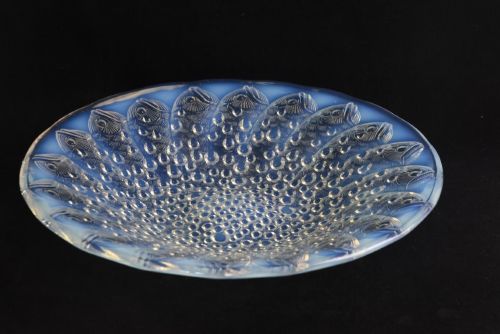
Moulded and opalescent pieces from the twentieth century relied on chemical agents added to molten glass, producing translucent milky effects that catch light differently across frosted and clear surfaces. Enamel decoration was also applied to the surface, adding painted motifs directly onto the clear or blue glass body before firing.
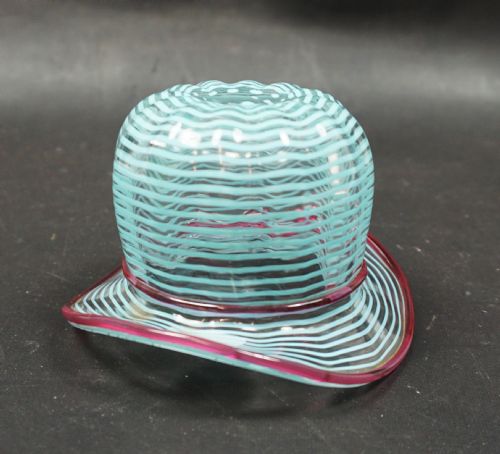
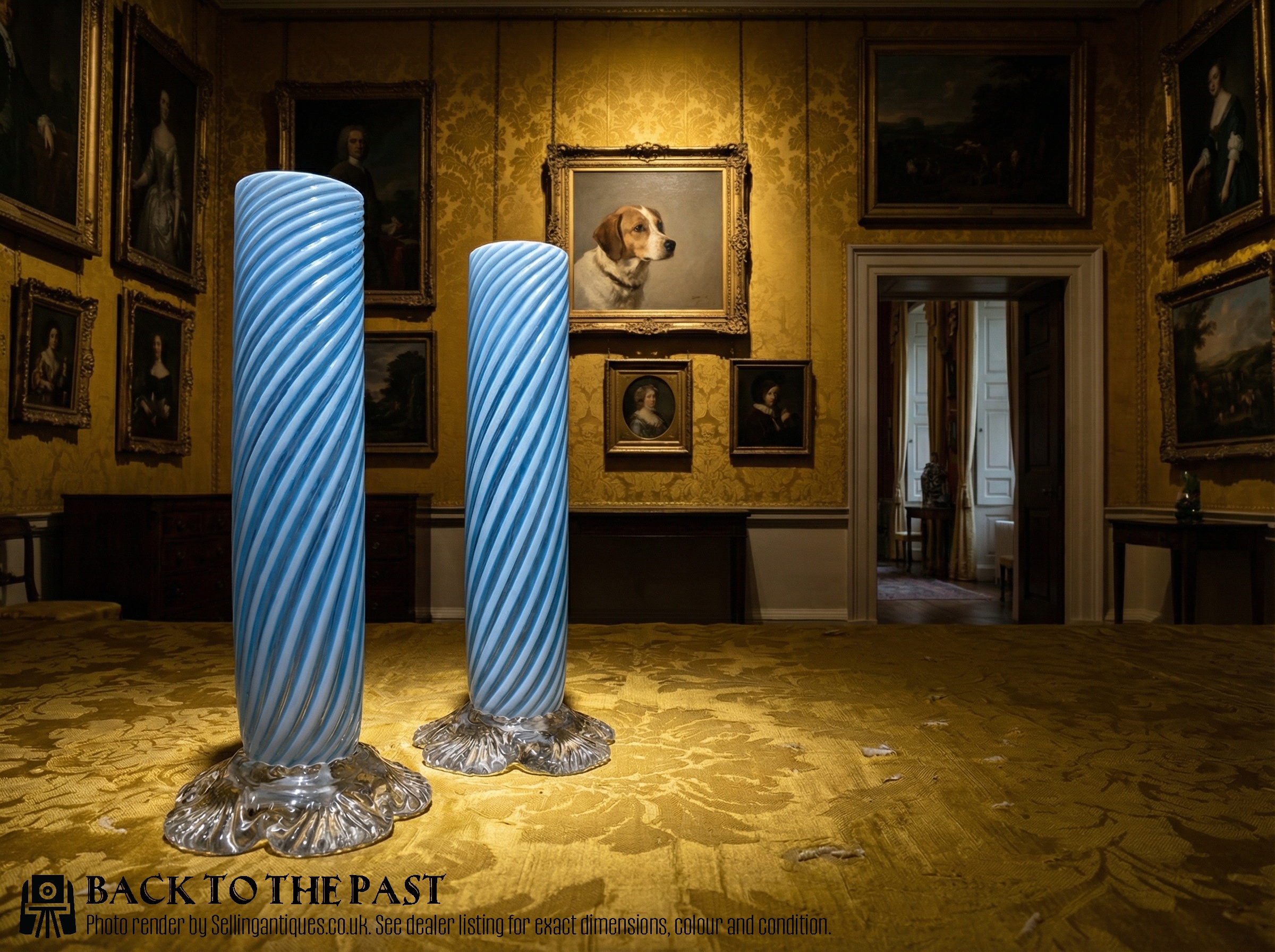
Free-blowing and cane work appear in earlier English and folk items, where coloured glass threads or canes were incorporated into the clear metal while hot. These varied methods dictated the weight, texture, and optical qualities of each finished object.
Listings span periods from the eighteenth century to the Art Deco era, utilising materials such as lead crystal, opalescent glass, and enamel.
What varies in quality
The precision of the cutting and the depth of the overlay determine the visual strength of cased and cut vessels, where sharper facets yield a crisper contrast between the clear and blue strata. Superior pieces maintain clean lines and exact symmetry in moulded forms, avoiding blurring or distortion in the relief details.
The quality of the material itself is evident in the clarity of the clear crystal sections and the even saturation of the blue glass, free from internal cloudiness or unintended bubbles unless proper to the specific style. Artist signatures and factory marks also distinguish standard production items from masterworks designed by leading creators of the period.
Rene Lalique·Val St. Lambert·Moser·Marius Ernest Sabino
The Blue and Clear Glass Glossary
- Cobalt glass
- Glass coloured deep blue by the addition of cobalt oxide during manufacturing. This intense pigment appears frequently in nineteenth-century Bohemian and Victorian decorative objects.
- Opalescent glass
- A milky, translucent glass that displays blue or amber tones when lit from certain angles. It gained widespread popularity during the Art Deco period through French mold-makers.
- Cased glass
- A vessel formed of two or more distinct layers of glass, often combining a blue outer layer with a clear interior. Artisans cut through the outer layer to expose the contrasting colour underneath.
- Monteith
- A bowl with a scalloped or notched rim historically used for chilling wine glasses. Examples occasionally feature contrasting blue glass rims on clear bodies.
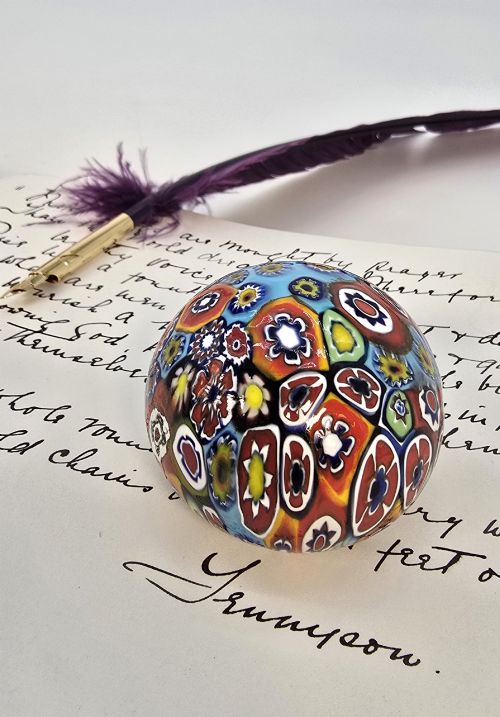
- Millefiori
- A glasswork technique producing distinctive patterned mosaics using multicolored canes. These canes are fused and sliced to create dense floral designs within paperweights.
Blue and Clear Glass: Frequently Asked Questions
How can I tell Victorian from Art Deco pieces?
Victorian items often display heavy hand-cutting, applied coloured glass rims, and traditional floral motifs on robust lead crystal forms. They emphasise ornate detail and high-contrast cased layers.
Art Deco pieces favour stylized motifs, opalescent or frosted finishes, and sculptural moulded reliefs created by prominent twentieth-century studios. The lines lean toward geometric symmetry and frosted translucency.
What is cased glass?
Cased glass consists of two or more distinct layers of molten glass fused together during production, typically pairing a vibrant blue exterior with a clear crystal interior. This method allowed craftsmen to cut away parts of the outer layer to reveal the transparent glass beneath.
The resulting contrast gives depth and tactile dimension to vases, goblets, and decanters from the nineteenth century.
Where should I display glass chandeliers?
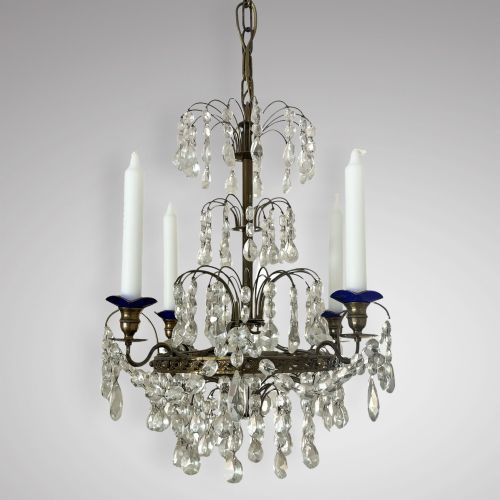
Hang chandeliers in rooms with stable temperatures and away from direct, harsh sunlight to protect any integrated enamel or coloured glass prisms. Ensure the ceiling fixing is secure, as these historic light fittings carry considerable weight from lead crystal beads and metal frames.
Position them where ambient interior light can catch the blue prisms and clear glass components effectively.