



Decorative Victorian Mantle Vases
These decorative victorian mantle vases bring colour and presence to a room, offering nineteenth-century craftsmanship in porcelain, glass, and papier mâché.
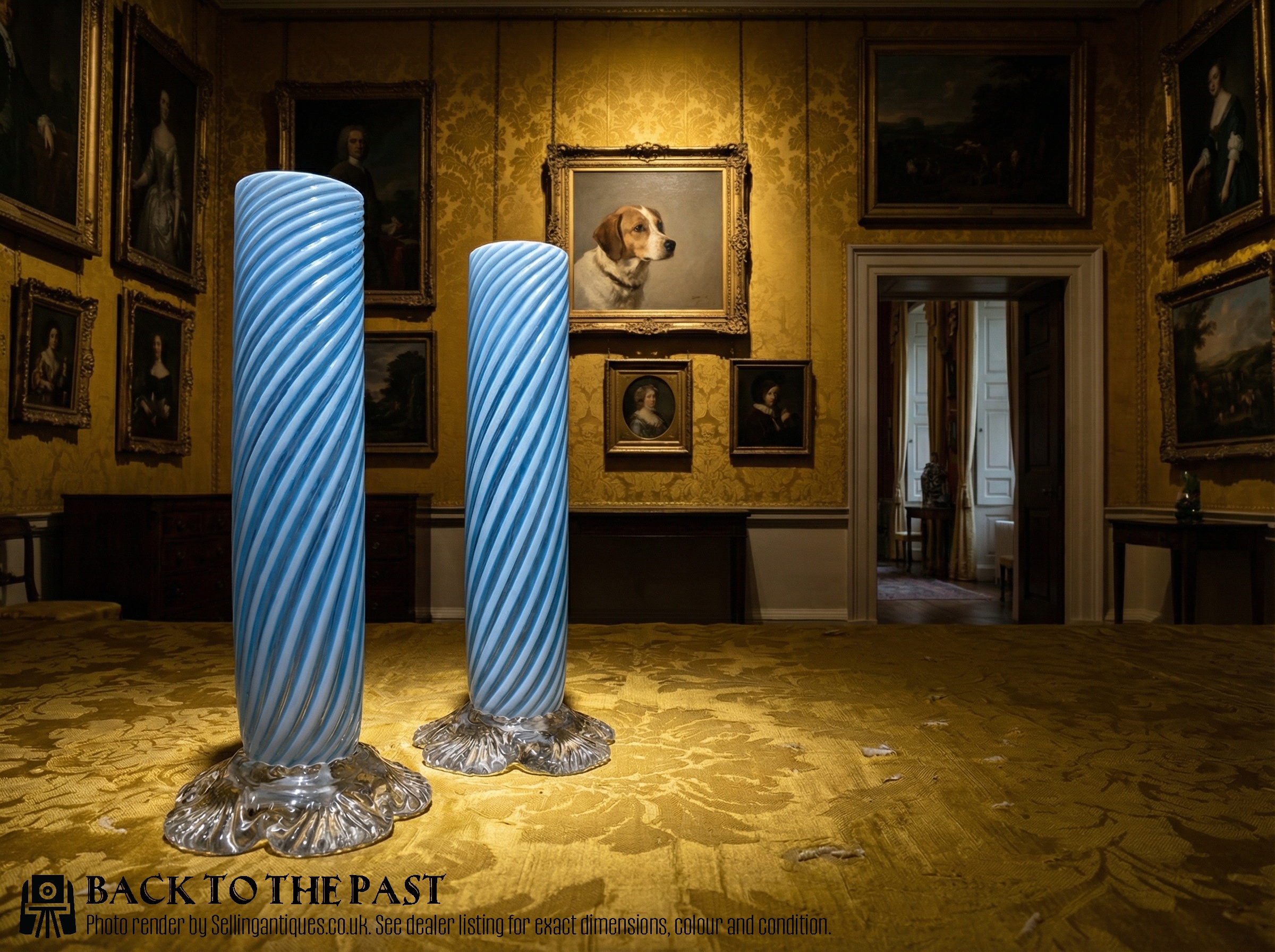
Decorative Victorian Mantle Vases
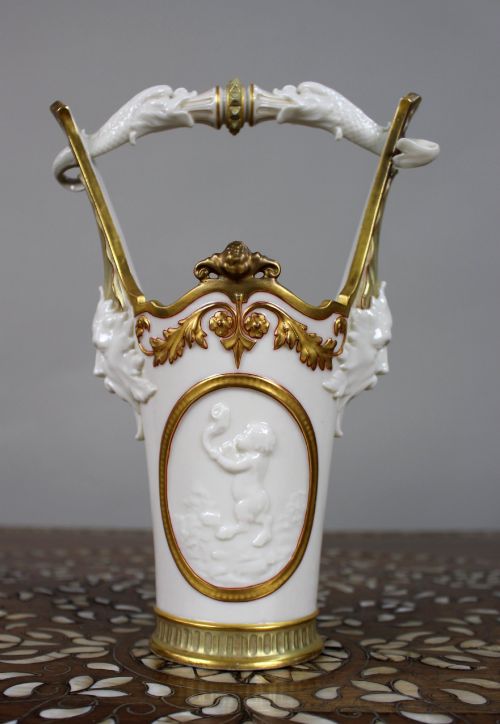
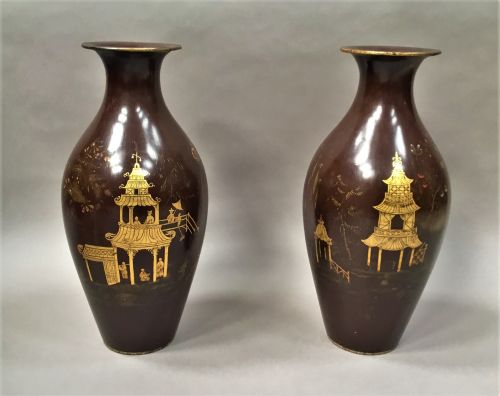
Decorative victorian mantle vases comprise a variety of nineteenth-century vessels designed for display on mantelpieces, including pairs of urns, garniture sets, and mantle lustres. The selections span styles from Rococo Revival and Neoclassical to French Louis XVI and Arts and Crafts.
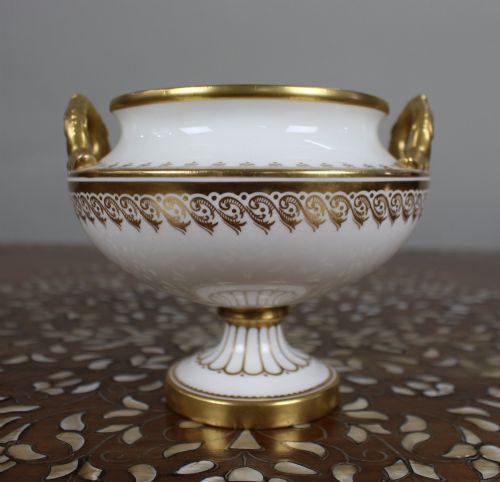
Porcelain and glass dominate the offerings, appearing alongside earthenware and lacquered papier mâché. Buyers meet shapes ranging from wide-rimmed basins and two-handled urns to tall exhibition pieces and lidded vessels.
Origins stretch across English potteries and continental European makers, capturing the eclectic tastes of the nineteenth century through hand-painted florals, portraits, and gilt bronze mounts.
What varies in quality
Quality rests upon the crispness of the modelling and the finesse of the hand-painting, where delicate brushwork and detailed rose or portrait painting elevate a piece. The presence of sophisticated embellishments, such as pate-sur-pate detailing or fine gilt bronze mounts, distinguishes superior examples.
The integrity of the material and the preservation of original gilding and enamels dictate the standing of a vase. Maker attribution and retail provenance, particularly through documented houses and retailers, further define the stature of these nineteenth-century items.
Object forms range from single display urns and lidded vessels to complete clock garniture sets and prism-hung mantle lustres.
Royal Worcester·Doulton Lambeth·Dresden porcelain·Vion et Baury·Minton·Royal Vienna·Jennens and Bettridge
The Decorative Victorian Mantle Vases Glossary
- Garniture
- A matched set of three or more ornamental vases or urns designed to sit together on a mantelpiece. These sets typically feature a central large vase flanked by two smaller matching vessels.
- Mantle lustre
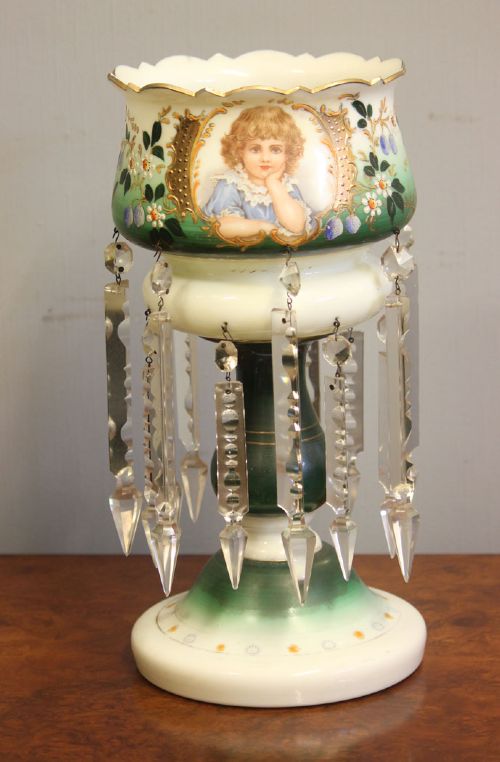
- A type of vase hung with crystal prisms, designed to catch and reflect candlelight from a mantelpiece. They frequently appear in pairs alongside nineteenth-century clock garnitures.
- Pate-sur-pate
- A ceramic decoration method where wet white porcelain slip is built up in successive layers on a coloured body to create a low relief cameo effect. This technique demands high skill from the ceramic artist.
- Ormolu
- Gilded bronze mounts and decorative trims applied to porcelain and glass bodies. The finish mimics solid gold and provides structural framing for the vessel.
- Bisque
- Unglazed white porcelain that possesses a matte, marble-like texture. It was frequently utilised for figural and classical revival vases.
Decorative Victorian Mantle Vases: Frequently Asked Questions
What is a garniture set?
A garniture set consists of matching ornamental vessels, usually a central vase accompanied by two smaller side pieces, designed for display on a mantelpiece.
These sets were arranged symmetrically to create a balanced focal point in nineteenth-century reception rooms.
How do mantle lustres work?
Mantle lustres are decorative vases fitted with glass pendants or prisms that hang from the rim to refract light.
Placed on a mantelpiece, they amplified the flickering illumination of nineteenth-century rooms before widespread electric lighting.
Are these vases meant for flowers?
Most of these pieces served as decorative ornaments rather than functional containers for water and stems.
Delicate gilding, enamel work, and narrow or ornamented openings meant they were intended purely for visual display.
How do I identify the period?
Dating relies on stylistic clues like Neoclassical or Rococo Revival motifs, alongside material traits and base signatures.
Nineteenth-century pieces often bear impressed registry marks, factory stamps, or painter initials that narrow down their decade of origin.