
Antique Blown Glass
Antique blown glass unites centuries of tableware, carboys and lighting formed by breath and iron across Georgian, Victorian and continental workshops.

Antique Blown Glass
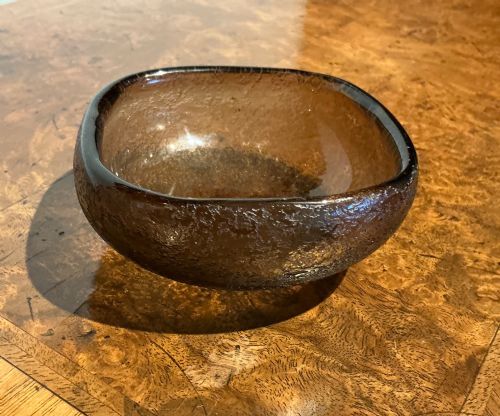
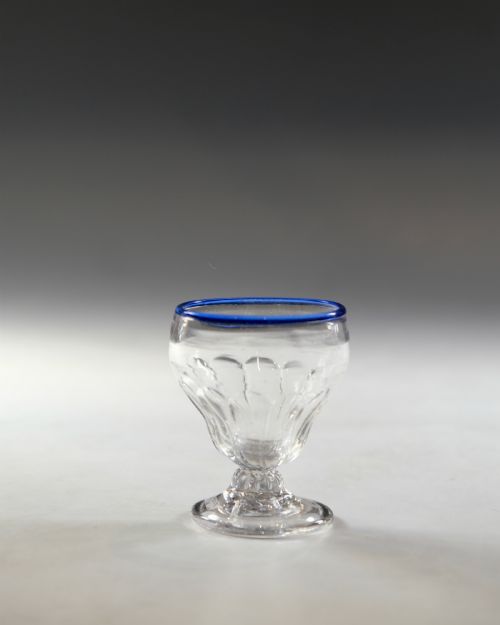
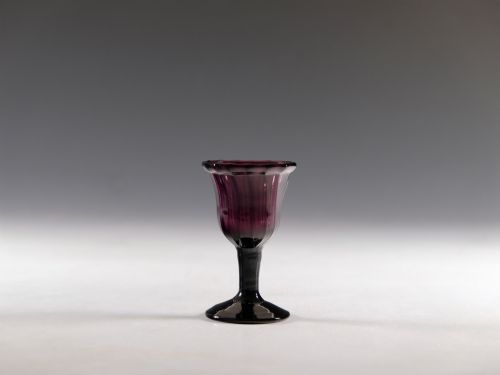
When searching for antique blown glass, buyers encounter diverse domestic objects and lighting shaped by free-blowing and mold-blowing traditions. The selection spans 18th century wine glasses and decanters through Victorian cranberry glass and 20th century Art Deco vases.
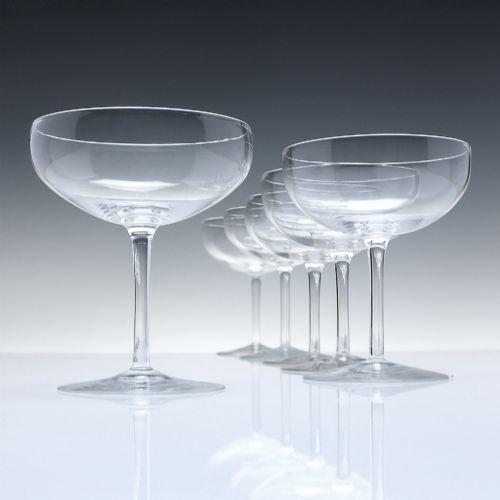
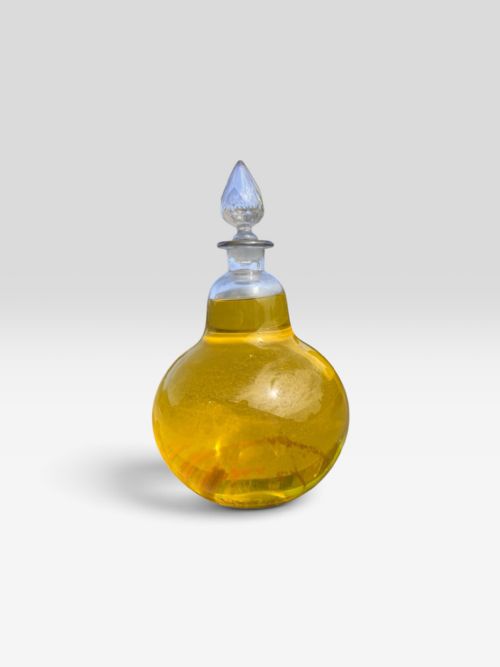
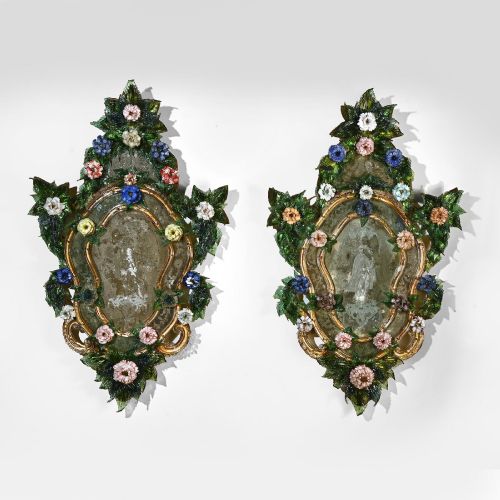
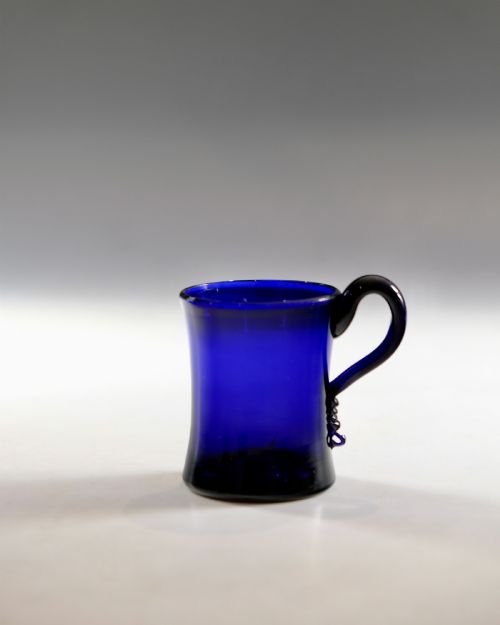
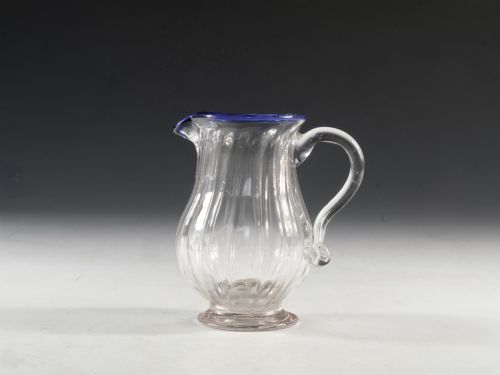
Tableware forms dominate the available pieces, including rummers, champagne coupes, finger bowls and cream jugs in clear, blue or cranberry metal. Functional vessels such as pharmacy carboys, apothecary bottles and oil lamps also appear alongside decorative epergnes and mirrors.
Origins stretch across English glasshouses, Nailsea, Venetian Murano, Bohemia and France, capturing shifts from early lead glass formulations to vibrant coloured glass and iridescent finishes.
How they were made
Craftsmen gathered molten metal on a blowpipe, introducing air to form hollow vessels before shaping the piece with shears, jacks and wooden blocks. Lead glass formulations provided a heavy, refractive substance suited to deep cutting and engraving, while soda-lime glass enabled delicate Venetian forms.
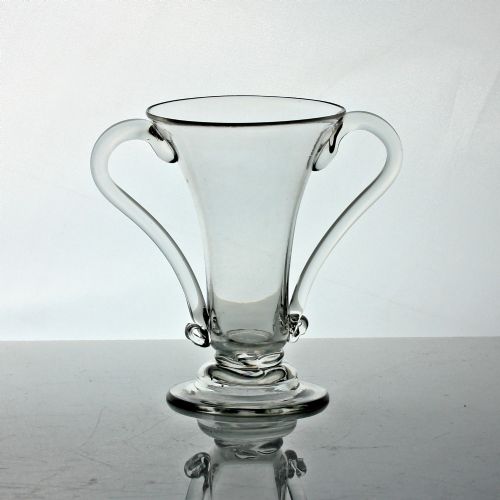
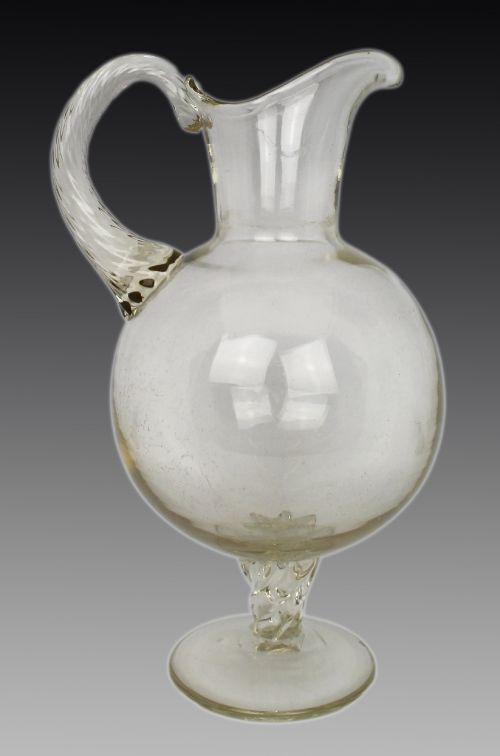
Pontil marks on the base reveal where the pontil rod was snapped off after finishing, often leaving a rough scar that was subsequently ground or polished smooth. Applied elements like trails, handles, coiled feet and threaded decoration were added while the glass remained hot.
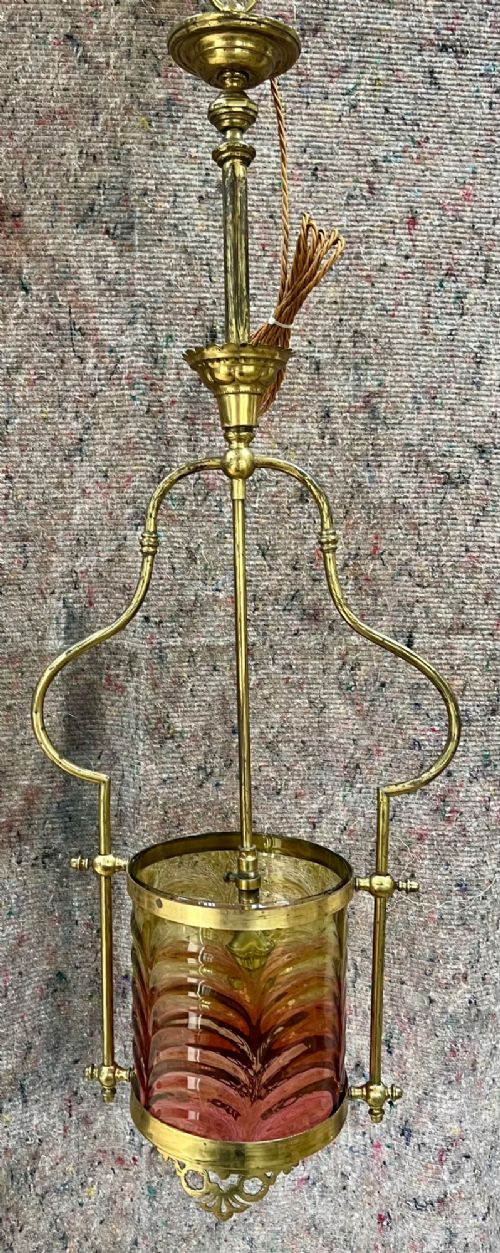
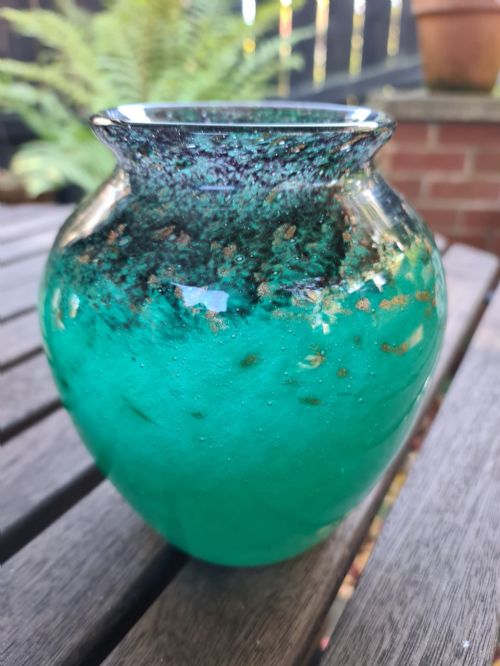
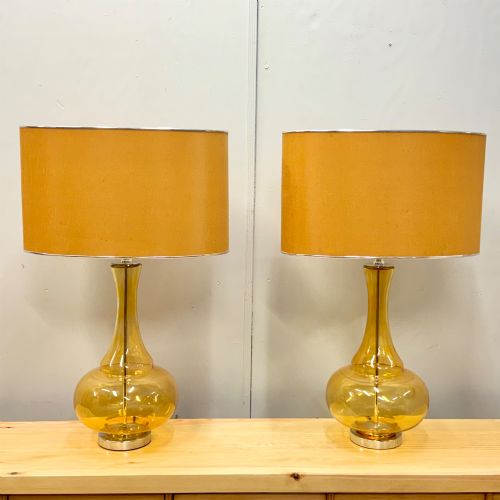
Listings feature Georgian lead glass tableware, Victorian cranberry glass epergnes, and Art Nouveau vases in clear, amber, and green glass.
What varies in quality
The degree of optical clarity, the weight of the metal and the precision of the form distinguish standard utility items from exceptional studio pieces. Early vessels show careful distribution of metal with balanced proportions in the stem, bowl and foot.
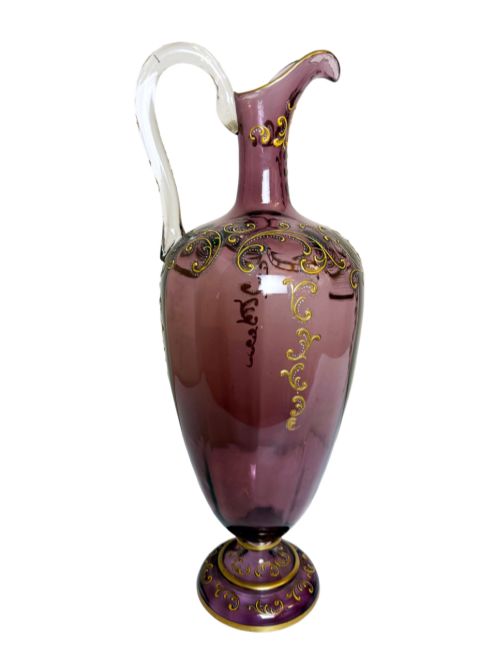
Artistry in surface decoration, such as fine enamel painting, gilt appliques, controlled air bubbles in stems or complex cane work, separates standard production from masterwork output.
Daum·Pallme Konig·James Powell·Franchini And Bigaglia
The Antique Blown Glass Glossary
- Pontil mark
- The rough scar left on the base of a vessel where the pontil rod was attached during manufacture. This mark provides evidence of traditional hand-blowing techniques.
- Lead glass
- Glass containing lead oxide, introduced to increase weight, brilliance and refractive index. It became standard in English production from the late seventeenth century onward.
- Cranberry glass
- Transparent red glass coloured with gold chloride, popular during the Victorian era for jugs, epergnes and decorative tableware. The depth of the pinkish-red hue varies according to gold content.
- Epergne
- A large table centrepiece featuring a central bowl with multiple hanging baskets or trumpet vases attached. Victorian examples frequently utilised cranberry or uranium glass.
- Nailsea glass
- Glassware associated with the Nailsea glassworks in Somerset, characterised by distinctive looped, combed or splashed opaque white cane decoration over coloured grounds.
Antique Blown Glass: Frequently Asked Questions
How do I identify 18th century wine glasses?
Eighteenth century wine glasses typically exhibit heavy lead metal, knopped or air-twist stems, and folded or domed feet reflecting the manufacturing standards of the Georgian period.
Closer inspection of the bowl form, whether trumpet, bell or ogee, helps separate early tavern glasses from refined balustroid examples.
What is cranberry glass?
Cranberry glass is a distinctive transparent red glassware produced by adding gold chloride to the molten batch. It gained immense popularity during the Victorian era for decorative tableware.
Items range from simple jugs and finger bowls to complex multi-trumpet epergnes.
How should I clean antique glass?
Antique glass requires gentle washing in warm water with mild soap, avoiding harsh scrubbing or abrasive materials that might scratch the soft metal or damage gilt highlights.
Items with deep pontil marks or engraved surfaces benefit from air drying on a soft cloth.
What are apothecary carboys?
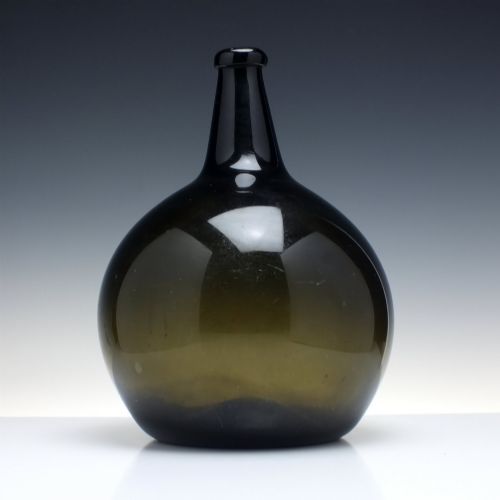
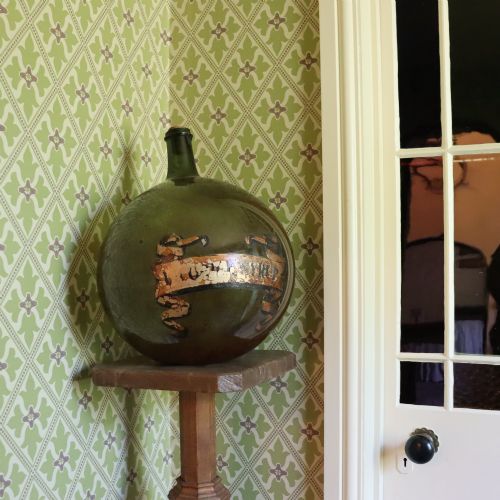
Apothecary carboys are large glass vessels utilised by chemists and pharmacists to store liquids or display coloured solutions in shop windows. Their generous proportions were shaped by free-blowing techniques.
Today they survive as decorative architectural objects prized for their strong silhouettes and rich green or clear metal.