
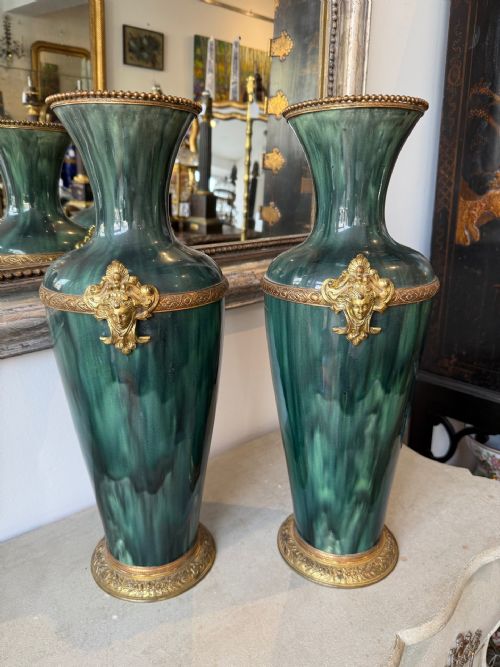


Decorative Mantle Vases
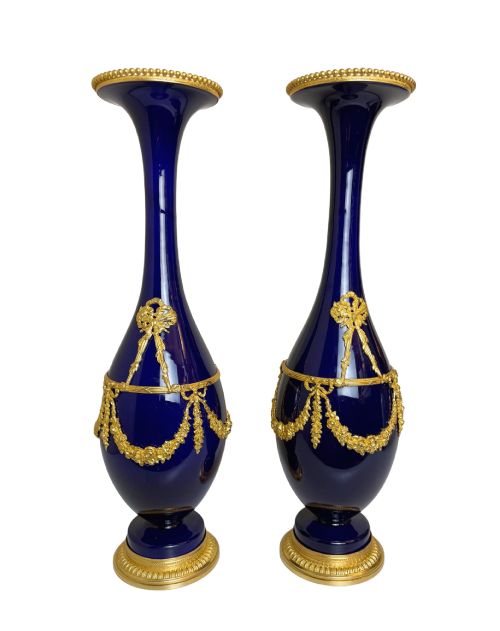
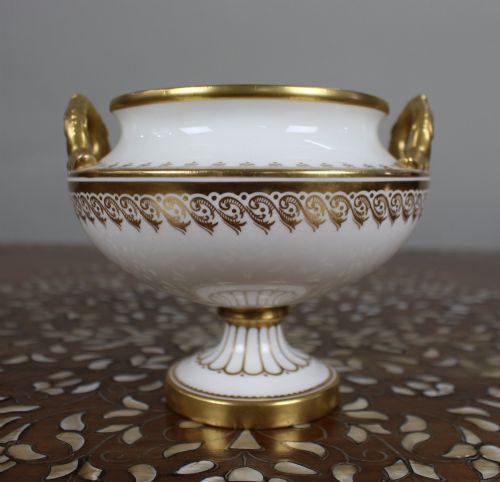
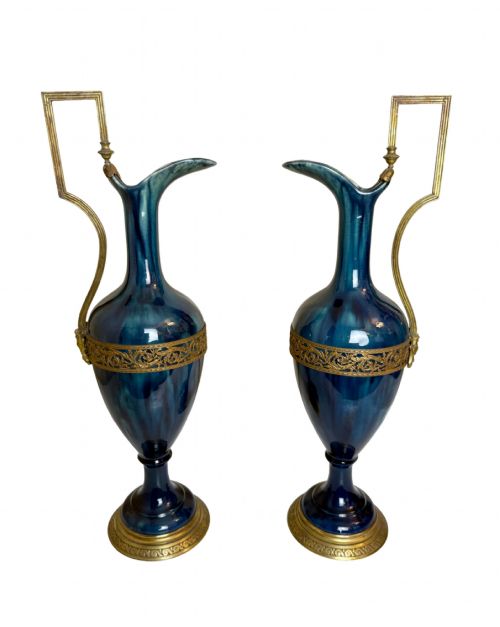
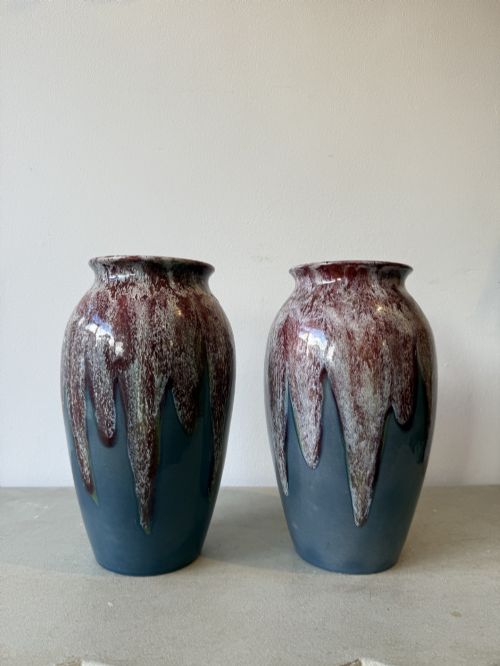
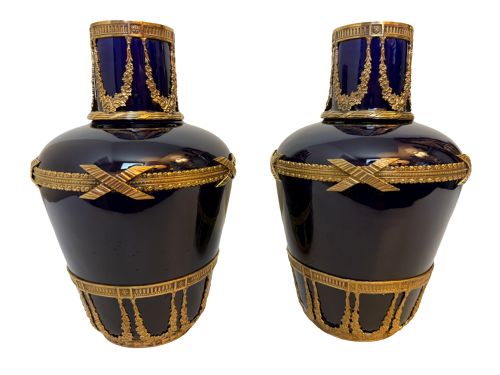
These decorative mantle vases bring nineteenth-century colour and presence to a chimney piece.

Decorative Mantle Vases
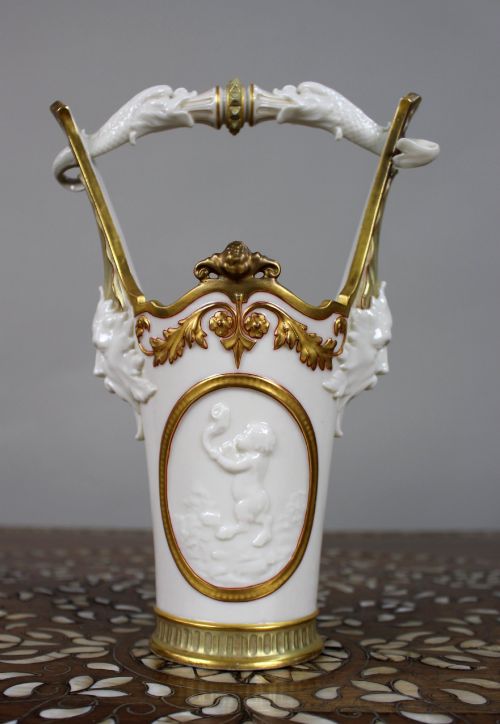
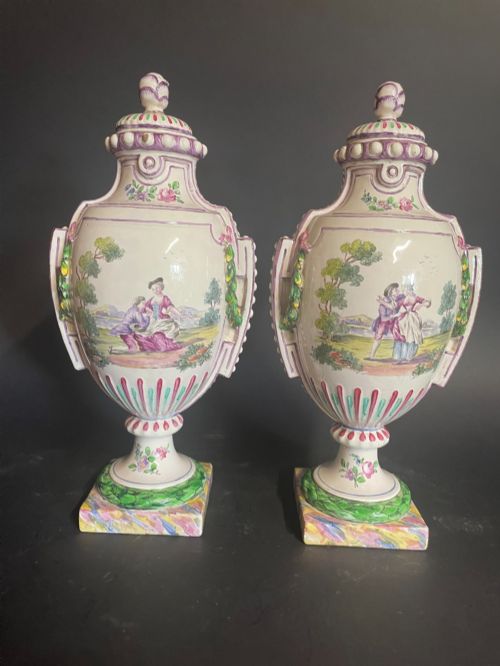
Decorative mantle vases comprise pairs and single vessels designed for display on a fireplace shelf, spanning styles from Victorian and Edwardian to Rococo Revival and Neoclassical. Buyers seeking decorative mantle vases encounter ceramic, glass, and metal forms ranging from classical campana urns and lidded jars to mantel lustres and clock garnitures.
The selection includes English, French, German, and Japanese works, such as Royal Worcester, Royal Vienna, and Satsuma pieces. Blue porcelain and green glass versions with gilt bronze or ormolu trim appear frequently among the nineteenth-century inventory.
How they were made
Makers shaped porcelain, faience, and glass through throwing, moulding, and glazing, often adding hand-painted scenes or delicate pate sur pate decoration. Metal mounts in ormolu, gilt bronze, and gold leaf provide structural trim and handles.
Techniques such as enamel painting, gilding, and transfer printing unite with lacquered papier mache and porphyry to achieve varied surface textures across the ceramic and glass bodies.
Japanese Satsuma and Imari ceramics appear alongside European porcelain works from French, English, and German factories.
What varies in quality
Quality rests upon the crispness of the modelled detail, whether in the casting of bronze and ormolu mounts or the precision of hand-painted porcelain flora and portraits. Superior examples display refined proportions and balanced gilding.
The distinction between standard production pieces and finer items depends on the artist's hand, seen in signed work and specialised manufactory output, alongside the integration of secondary materials like crystal drops on lustres.
Royal Worcester·Doulton Lambeth·Royal Crown Derby·Minton·Royal Vienna·Jennens and Bettridge
The Decorative Mantle Vases Glossary
- Mantle lustre
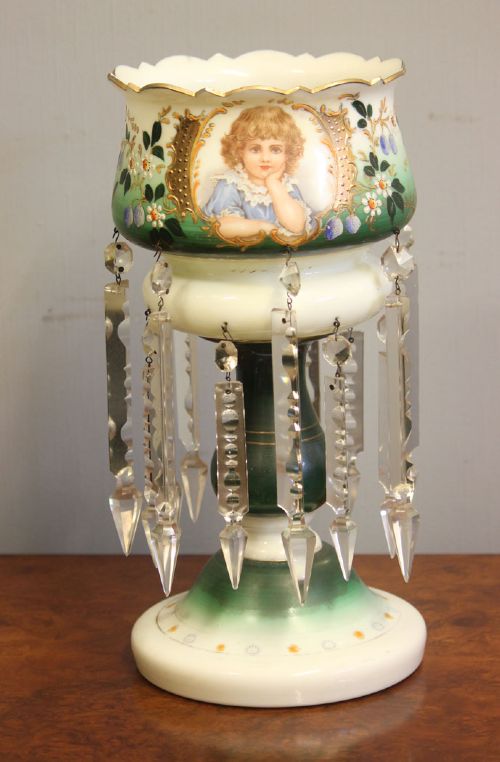
- A Victorian glass vase hung with cut glass prisms designed to reflect candlelight.
- Clock garniture
- A set comprising a central timepiece flanked by matching vases or urns intended for a mantelpiece.
- Ormolu
- Finely ground high-carat gold applied to a bronze base, commonly used for mounts.
- Campana
- An inverted bell-shaped classical urn form popular in the nineteenth century.
- Pate sur pate
- A ceramic technique where wet white porcelain slip is built up in layers on a darker coloured body to create a low relief cameo effect.
Decorative Mantle Vases: Frequently Asked Questions
What are mantle lustres?
Mantle lustres are decorative glass vases fitted with hanging glass prisms around the rim. They sat on fireplace mantles to catch and refract light from candles or gas lamps.
Victorian examples often feature painted glass bodies in blue or green, paired with gilt or enamelled details.
How do clock garnitures work?
Clock garnitures consist of a matching set containing a central clock and two flanking vases or urns. They were designed as a unified decorative scheme for the centrepiece of a room.
The matching side vessels mirror the materials and ornamentation of the clock housing, such as porcelain bodies with ormolu mounts.
What is an ormolu trim?
Ormolu refers to gilded bronze mounts applied to porcelain, glass, or stone bodies. It provided structural reinforcement and decorative handles or bases.
French nineteenth-century pieces frequently employ ormolu to elevate the status of glass and ceramic vases.
How are these vases dated?
Dating relies on factory marks, painter signatures, stylistic indicators, and material composition. Nineteenth-century pieces often carry impressed stamps or painted ciphers.
Stylistic shifts from Rococo Revival to Neoclassical also help place pieces within specific decades like the 1880s or 1890s.