





Antique Blown Glass Goblets
Antique blown glass goblets bring tactile weight and rich colour to the table, spanning Georgian baluster forms to vibrant Victorian sets.
Antique Blown Glass Goblets
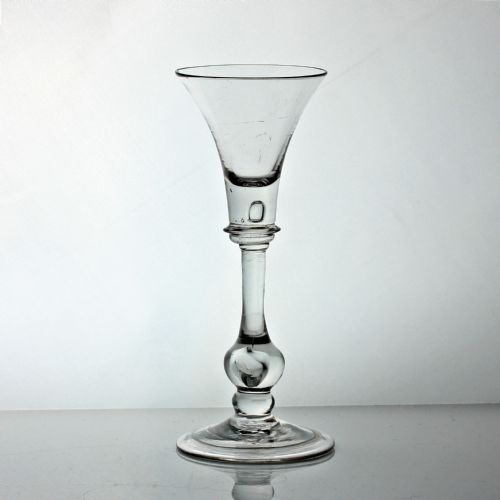
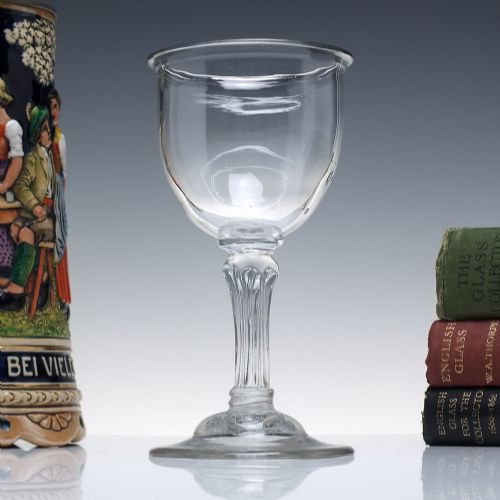
When searching for antique blown glass goblets, buyers encounter a diverse selection of drinkware shaped by hand across multiple centuries. The selection ranges from 18th-century Georgian wine glasses with air tear stems to colourful Victorian cranberry sets and Bristol green roemers.
Most pieces on this page originate from British, German, and Venetian workshops, encompassing styles from German Baroque to Arts and Crafts. Forms extend beyond standard wine glasses to include rummers, cordials, dram glasses, and larger decorative goblets.
How they were made
Craftsmen shaped these vessels using traditional free-blowing and mould-blowing techniques with lead glass, flint glass, and coloured metals. Molten glass was gathered on a punty iron, inflated, and manipulated by hand to form bowls, stems, and folded feet.
Coloured glass was achieved by adding metallic oxides to the batch, creating deep tones of green, cranberry, amber, and turquoise. Optical effects like wrythen moulding, air twists, and trapped bubbles were introduced during the manipulation of the hot metal.
Listings feature lead glass, clear glass, and coloured glass including cranberry and turquoise across Georgian and Victorian periods.
What varies in quality
Distinction in these pieces lies in the crispness of the forming and the optical purity of the metal. Superior examples exhibit balanced proportions, delicate stem formations, and well-finished pontil marks on the underside of the base.
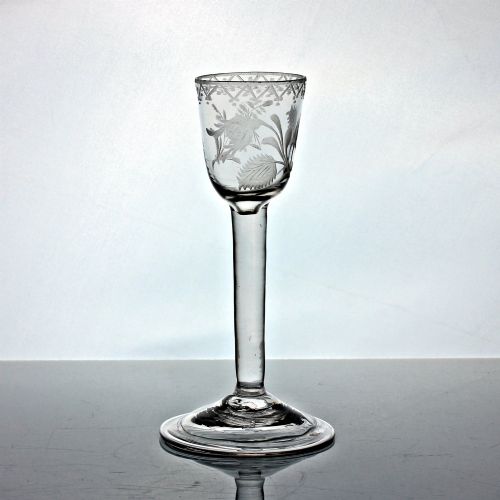
The depth and consistency of coloured glass, alongside the precision of wheel-engraved or etched decoration, separate standard utility pieces from masterworks of the glassblower's art.
Harry Powell for James Powell·Salviati
The Antique Blown Glass Goblets Glossary
- Air twist
- A stem containing an elongated spiral of tiny air bubbles formed by drawing out twisted glass rods. It creates a shimmering internal pattern when turned in the light.
- Roemer
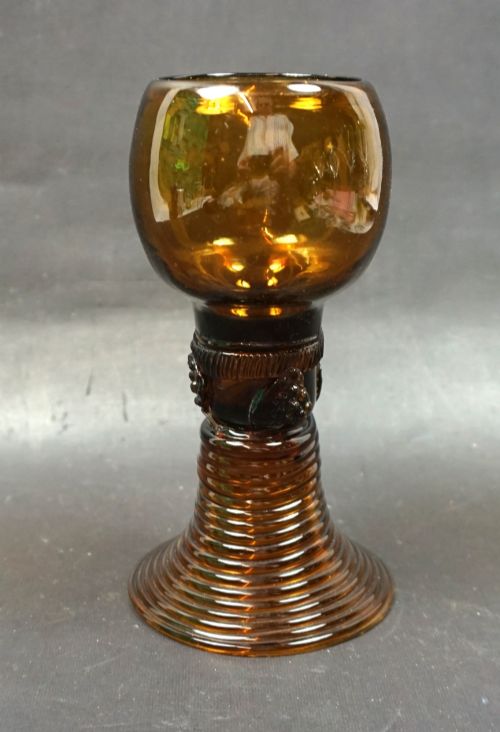
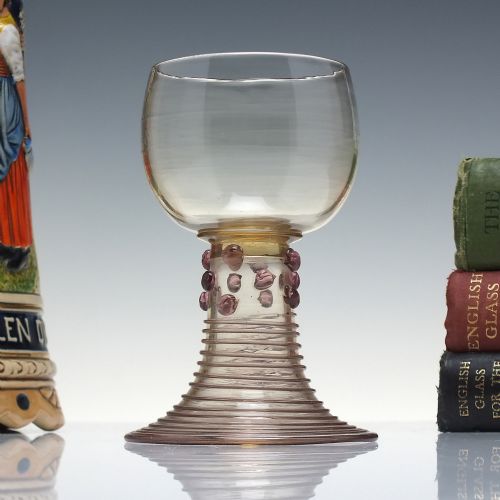
- A traditional Germanic drinking vessel featuring a large bowl set upon a cylindrical stem decorated with applied prunts. These were commonly produced in green or amber glass.
- Pontil mark
- A rough scar left on the base of a vessel where the punty rod was snapped away after shaping. Its presence confirms the piece was hand-blown.
- Baluster stem
- A heavy, swelling stem shape popular in 18th-century English drinking vessels, often featuring knops or nodes resembling architectural columns.
- Wrythen
- A decorative optical twist moulded into the body of the glass, creating spiral ribs that catch the light. This effect appears frequently on Georgian and Victorian tableware.
Antique Blown Glass Goblets: Frequently Asked Questions
Can I use these goblets for drinking wine?
These vessels were originally made for dining and hospitality, so they function well for serving wine and cordials today. Handle them with care during toasts and gatherings.
Pay attention to the delicate nature of 18th-century lead glass and thinner Victorian stems. Hand washing after use ensures they remain safe for occasional dining.
How do I distinguish Georgian from Victorian pieces?
Georgian goblets often feature heavier lead glass, plain or baluster stems with air tears, and restrained forms. Victorian examples frequently embrace vibrant colours like cranberry and incorporate pressed or moulded details.
Examining the pontil mark and style of the bowl helps determine the period. Georgian items lean toward classical restraint, while Victorian glass showcases bold colour and diverse European revivals.
What is a rummer glass?
A rummer is a robust, substantial drinking glass with a short, thick stem and a capacious bowl. They emerged in popularity during the late 18th and 19th centuries for serving wine, ale, and punch.
Their sturdy build made them practical for daily tavern and domestic use. Today, collectors value them for their tactile presence and variety of cut or plain forms.