







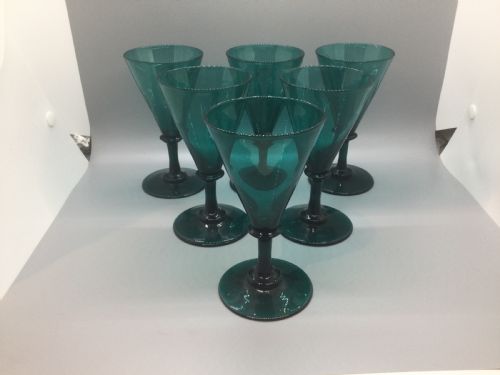
Set of Six Wine Glasses
These matching sets of six wine glasses offer historic charm for the table, spanning Georgian brilliance to Edwardian elegance.
Set of Six Wine Glasses
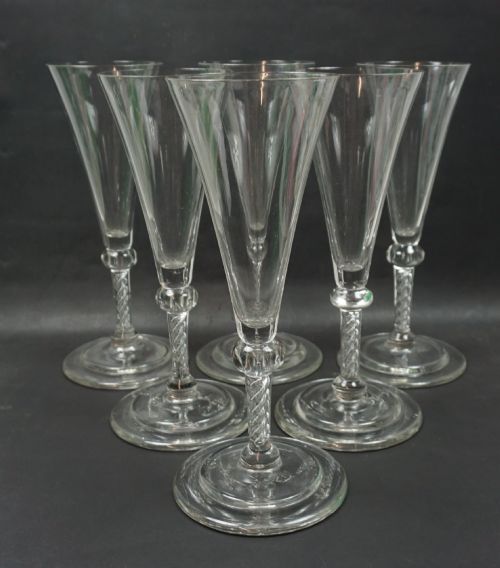
A set of six wine glasses brings period dining traditions directly to the modern table, offering matching vessels for guests. When exploring a set of six wine glasses, buyers encounter forms ranging from tall air twist flutes to heavy crystal rummers and small liquor glasses.
The options span Georgian origins through Victorian and Edwardian periods, with frequent appearances of rich Bristol green, deep cranberry, and amethyst hues alongside clear lead glass. These groupings survived together because they were kept for special occasions or matched suites.
English and continental workshops produced these matching numbers for formal service, ensuring uniformity in stemware. Finding an intact group from the eighteenth or nineteenth century remains a primary goal for collectors who set formal tables.
Materials and construction
Makers utilised lead crystal, clear glass, and various coloured metals, shaping bowls and stems through blowing and forming techniques. Heavy lead glass provided weight and clarity, while coloured glass derived its depth from metallic oxides added during melting.
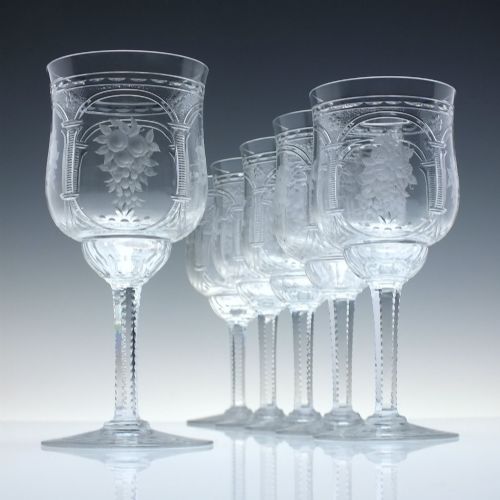
Stems were formed using distinct methods, resulting in air twist threads inside the glass, knops, or bobbin shapes. Bowls often received additional decoration through wheel-cutting, engraving, or applied enamel and gilding.
Continental and English glasshouses employed skilled blowers to maintain consistency across a set of six vessels, though slight individual variations in height and bubble formation confirm hand production.
Set of Six Wine Glasses Retail Price Guide 2026
Typical asking prices for set of six wine glasses among the pieces listed under this phrase on Sellingantiques today, from the lower quarter to the upper quarter. They describe what is for sale here now, not the wider market.
Listings feature sets spanning the Georgian, Victorian, and Edwardian eras, utilising clear lead crystal alongside coloured varieties such as cranberry, amethyst, and Bristol green.
Distinctions in quality
The refinement of the stem and the clarity of the metal determine the standing of an individual piece within a set. Finely drawn air twists and crisp wheel-engraving separate high-workshop production from heavier, utilitarian glass.
Consistency across all six items dictates the integrity of the grouping, as matched heights and uniform colour saturation elevate the desirability of the set. Subtle variations in hand-blown pieces show individual artisan touch rather than factory uniformity.
The depth and tone of coloured glasses, such as cranberry or Bristol green, reflect the skill of the glasshouse in achieving rich, even hues without muddy opacity.
René Lalique·Theresienthal·Friedrich Heckert·John Walsh
The Set of Six Wine Glasses Glossary
- Air twist
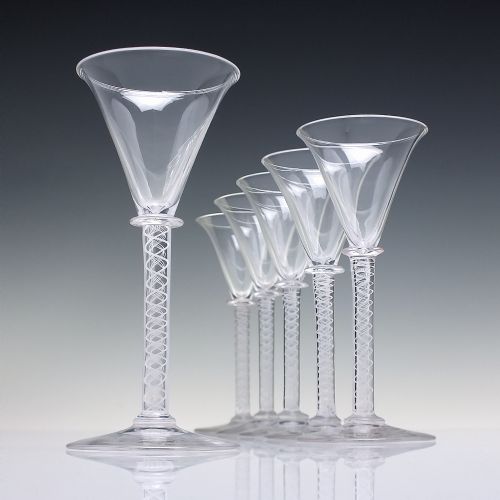
- A decorative stem formation containing elongated internal bubbles drawn into spiral threads. This technique requires exceptional skill by the glassblower.
- Rummer
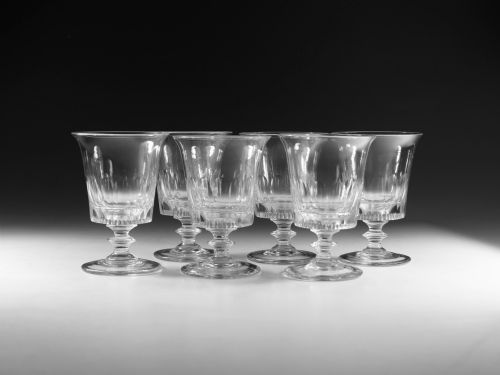
- A large, heavy drinking glass with a short stem and a capacious bowl, often associated with the Georgian period. These vessels were originally utilised for ale or wine.
- Cranberry glass
- Transparent pinkish-red glass produced by adding gold chloride to the molten batch. It gained immense popularity during the Victorian era.
- Baluster stem
- A thick, swelling stem shape resembling architectural columns, common in heavier Georgian and Victorian drinking vessels. It gives the glass a substantial hand-feel.
- Bristol green
- A strong, deep green hue characteristic of English glass production, frequently utilised for wine and finger bowls from the late eighteenth century onward.
Set of Six Wine Glasses: Frequently Asked Questions
How do I date an antique glass?
Dating relies on examining the pontil mark, stem construction, and overall weight of the metal. Georgian pieces often display different proportions and bowl shapes compared to later Victorian examples.
Changes in glass technology and prevailing styles across the nineteenth century help narrow down the decade of manufacture when combined with colour analysis.
Were these glasses meant for wine?
Many historical vessels served various alcoholic beverages depending on capacity and era, including port, sherry, and liquor. Smaller bowls often corresponded to fortified wines.
Gradual changes in wine appreciation influenced the size and form of the bowl over the centuries.
Why do coloured glasses cost more?
Coloured glasses required precise chemical formulas and specialist ingredients like gold or copper oxides to achieve tones such as cranberry or amethyst. The extra steps in production increased the skill required from the glasshouse.
Matching six coloured vessels proved more challenging than producing clear glass sets.