




Antique Black Round Table
An antique black round table anchors a room with dark tones and circular form, offering a surface for lamps, drinks or display.
Antique Black Round Table
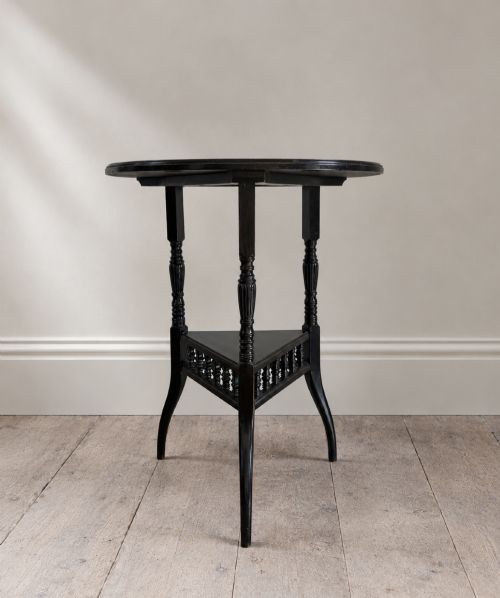
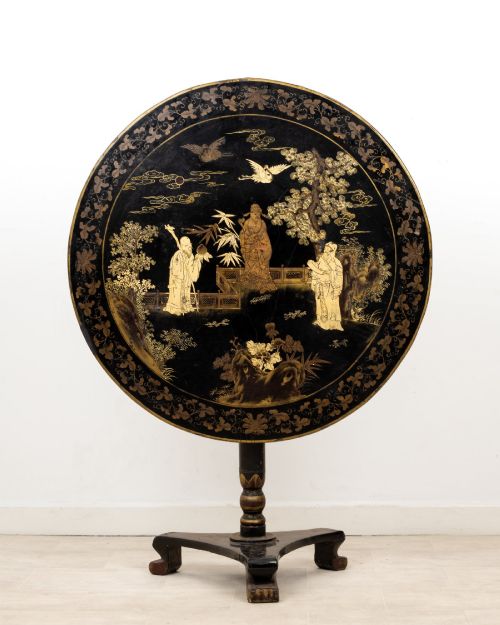
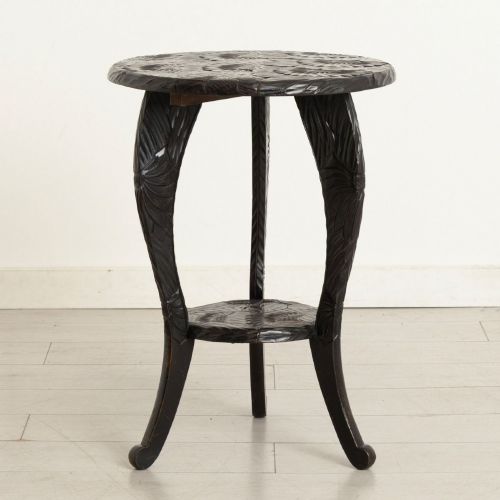
An antique black round table encompasses circular occasional, centre, and bistro tables finished in ebonised wood, black paint, or dark lacquer. These pieces emerge primarily from the nineteenth century and early twentieth century, spanning English, French, Swedish, and Asian origins.
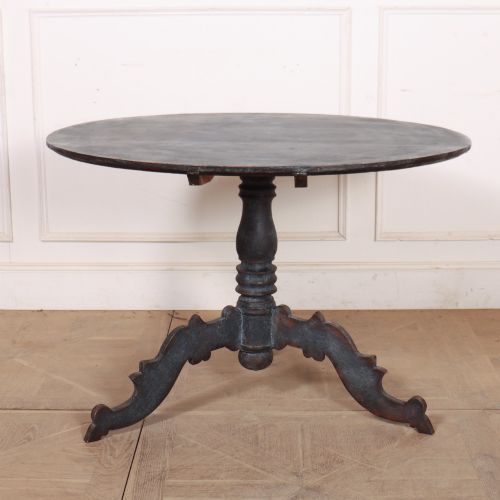
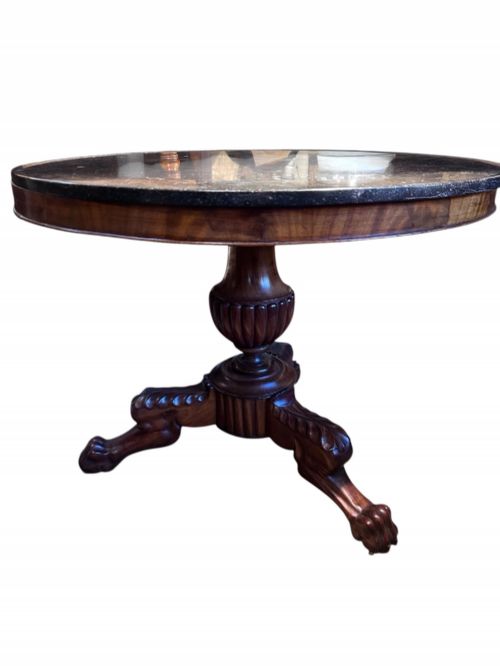
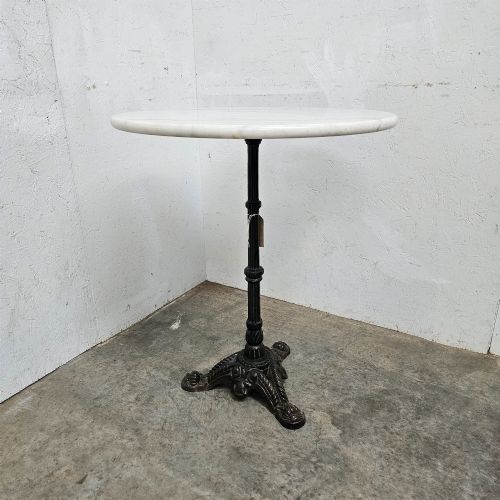
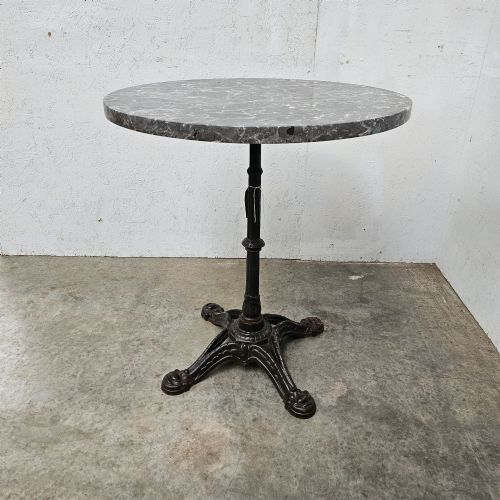
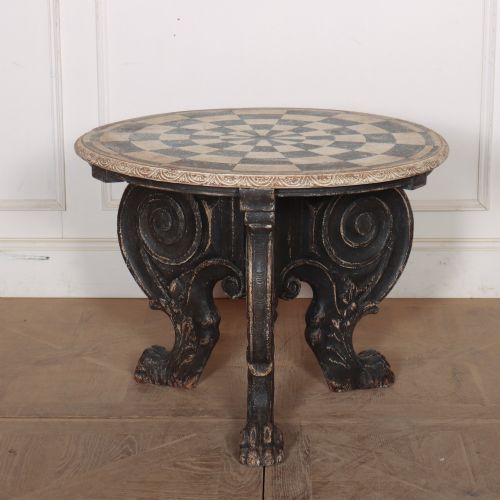
The most frequent examples on this page are French guéridons featuring marble tops and cast iron or mahogany frames, alongside ebonised English side tables and painted Swedish supper tables. Forms range from small lamp tables to larger centre tables suitable for a hallway or drawing room.
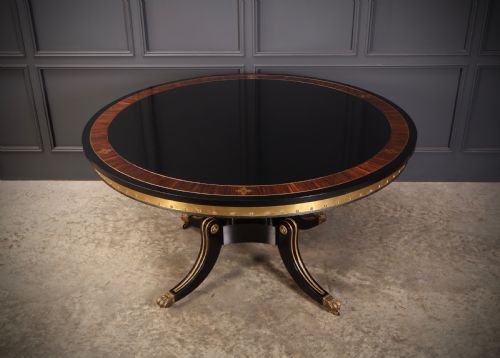
Makers and designers draw on varied aesthetics, including French Empire, Louis Philippe, Arts and Crafts, Chinoiserie, and Victorian Gothic Revival. Each style dictates whether the piece carries heavy gilt bronze mounts, hand-carved details, or simple country house charm.
How they were made
Workshops construct the timber frames of these tables using mahogany, oak, burr elm, or softwoods, which are then ebonised, painted, or lacquered to achieve the characteristic dark surface. Ebonising involves staining wood to imitate ebony, while other pieces receive layers of black paint or Chinese lacquer.
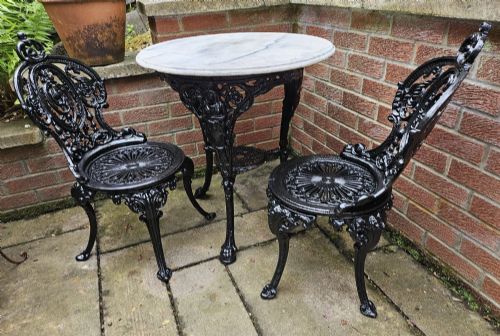
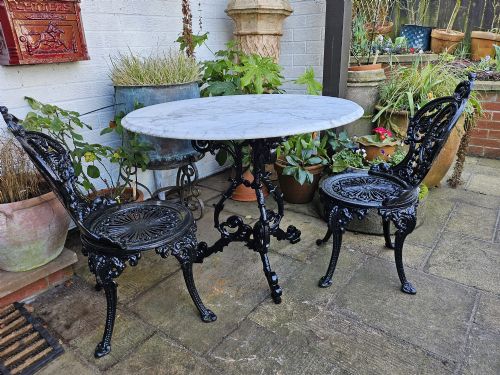
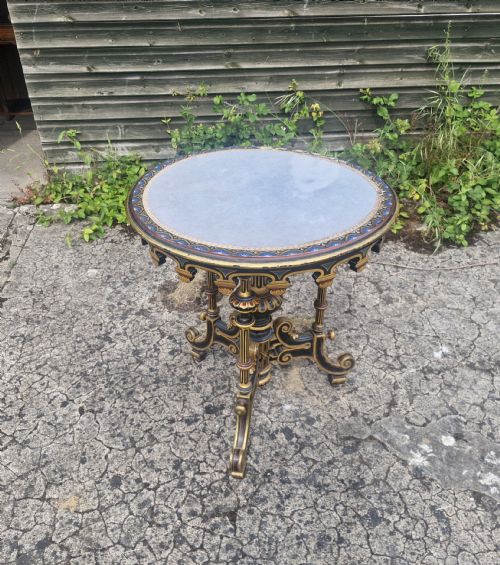
Marble tops, particularly white or grey varieties, sit upon heavy cast iron, brass, or wooden bases, especially on café and bistro tables originating in France. Inlaid brass, gilt highlights, and hand-carved motifs frequently embellish the tops and pedestals of more formal centre tables.
Listings feature pieces spanning the nineteenth century up to the 1930s, utilising marble, cast iron, mahogany, brass, and ebonised wood.
What varies in quality
The distinction between standard and superior pieces lies in the integrity of the materials and the execution of the surface finish. Solid mahogany or burr elm framing, genuine marble slabs with rich veining, and hand-applied ebonising or lacquer demonstrate a higher grade of craftsmanship than simpler painted softwoods.
Proportion and decorative detail also separate the range, where fine brass inlay, crisp hand-carving, and original cast iron scrollwork elevate a table beyond basic utilitarian production. The marriage of a stable, well-balanced pedestal base to a heavy stone or timber top dictates the durability and visual success of the design.
Liberty of London·EW Godwin
The Antique Black Round Table Glossary
- Guéridon
- A small French round table, typically supported by a central pillar or column. These pieces frequently feature marble tops and tripod or claw feet.
- Ebonised
- Wood treated with stain or dye to resemble true ebony. This finish became popular during the nineteenth century for furniture mimicking expensive exotic hardwoods.
- Chinoiserie
- European decorative style employing Chinese artistic motifs. These pieces often display painted or lacquered black surfaces with gold ornamentation.
- Gueridon
- An alternative spelling for guéridon. It denotes the traditional French pedestal table form common in nineteenth-century interiors.
- Tilt top
- A table mechanism allowing the surface to pivot to a vertical position when not in use. This clever design saved space in smaller historic rooms.
Antique Black Round Table: Frequently Asked Questions
How do I style an antique black round table?
Place a round table in the centre of a hallway beneath a pendant light, or use a smaller version as a lamp table beside a sofa. The dark finish works well against pale walls or provides contrast in a maximalist interior.
Keep surface styling simple with a single ceramic vessel or stack of books to let the wood grain or marble top remain visible.
Were these tables used in cafes?
Many round tables with cast iron bases and marble tops originated in French cafes and bistros during the nineteenth and early twentieth centuries. The heavy base and wipeable stone surface made them practical for daily hospitality use.
Domestic versions of similar bistro and café tables were also produced for sunrooms and informal dining spaces.
How do I care for an ebonised wood finish?
Dust the surface regularly with a soft, dry cloth to prevent particle buildup. Avoid placing ebonised wood in direct sunlight or near heat sources to prevent the dark finish from fading or cracking.
Feed the timber occasionally with appropriate furniture wax if the finish appears dry, rubbing it in gently and buffing to a soft sheen.
What is the difference between a centre table and a side table?
A centre table stands freely in the middle of a room, often featuring decoration viewed from all sides. These pieces act as a primary focal point for a library or grand reception space.
A side table is smaller and designed to sit against a wall or beside seating furniture, serving a functional supporting role in the room.