

Antique Black Cabinet
An antique black cabinet brings depth and dramatic presence to a room through dark lacquer, ebonised timber and classical form.
Antique Black Cabinet
When you search for an antique black cabinet, you encounter a diverse range of dark storage furniture spanning several centuries. The selection encompasses freestanding side cabinets, display cases, corner cupboards and elevated pieces on stands.
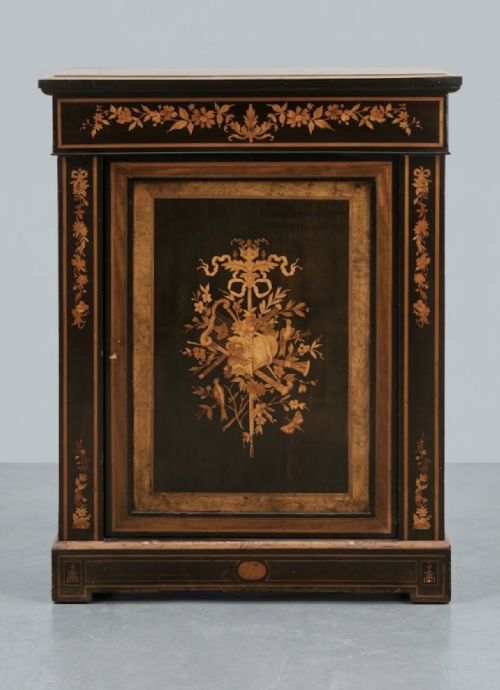
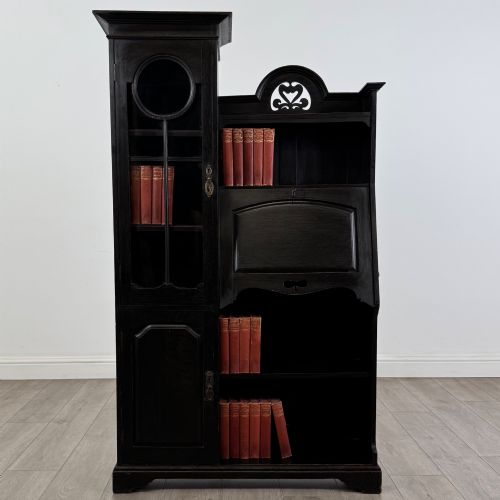
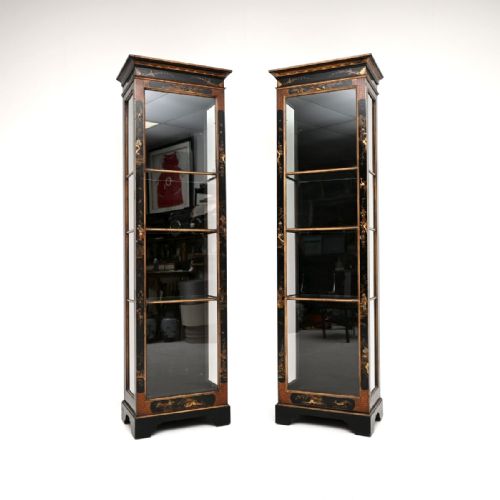
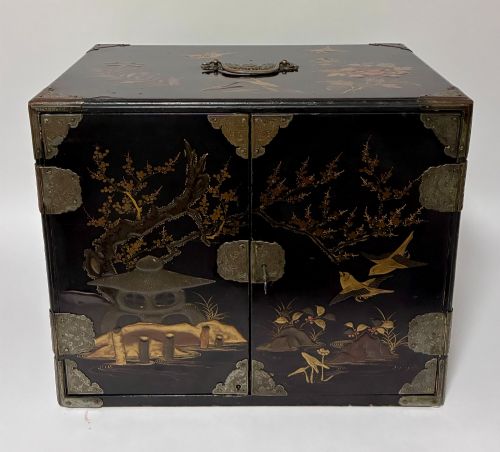
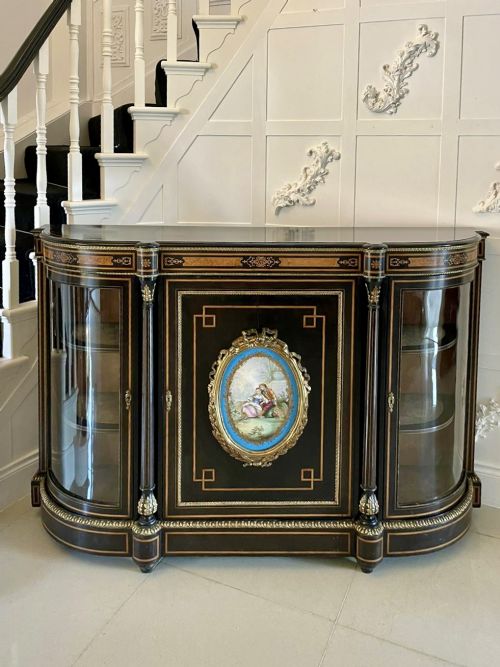
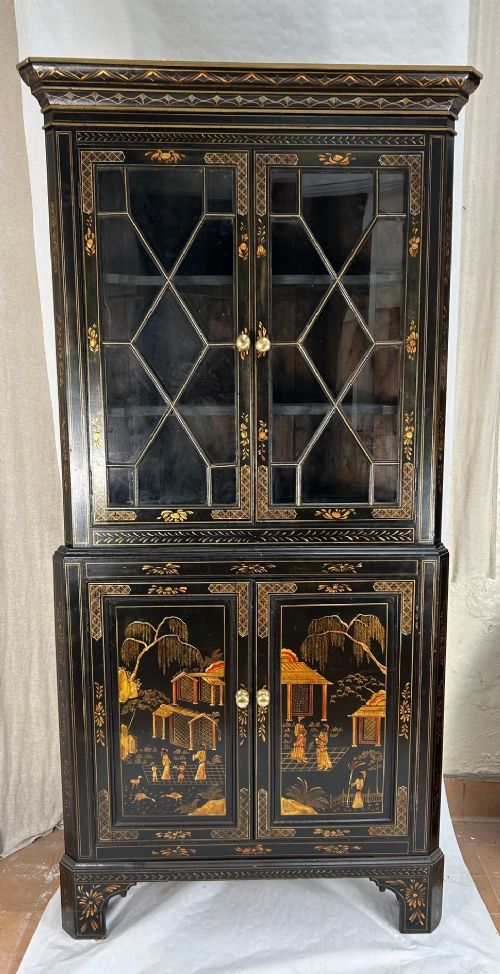
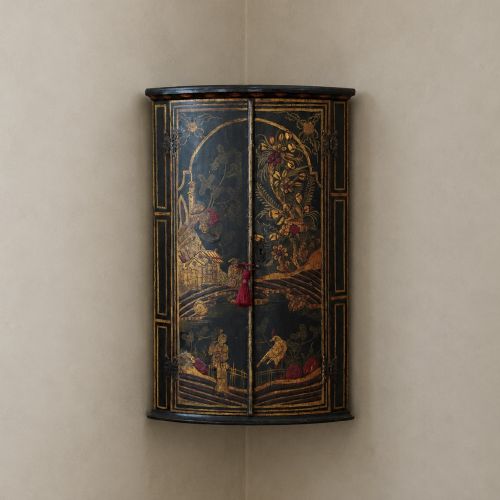
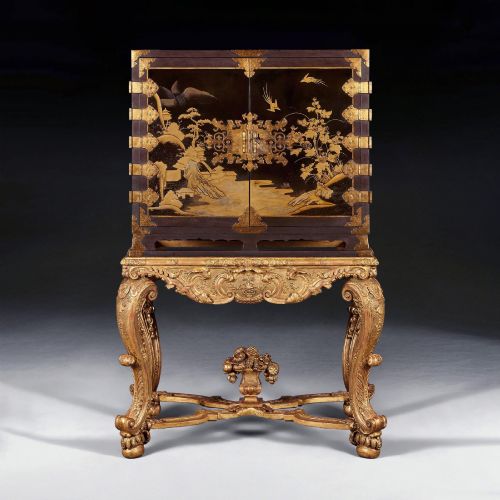
You are most likely to meet pieces finished in black lacquer, Japanned decoration or ebonised wood from the Victorian and Edwardian eras. These domestic pieces served to display ornaments or conceal household items while adding visual weight to a Victorian or Edwardian interior.
How they were made
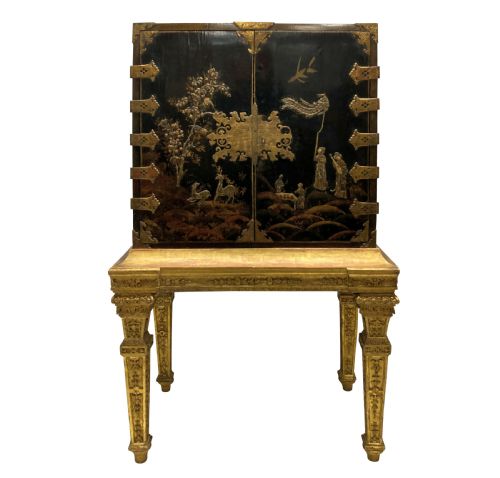
Cabinet makers utilised timber carcasses of oak, pine, amboyna or walnut, applying layered black lacquer or ebonised stains to achieve the dark surface finish. Skilled artisans built up glossy japanned surfaces or decorated panels with raised gilt motifs.
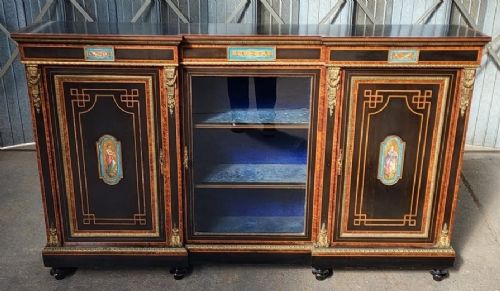
Many examples incorporate cast brass handles, ormolu mounts, and glass panels for display doors. Internal construction relies on traditional joinery, including dovetail drawers and panelled doors suited to heavy use.
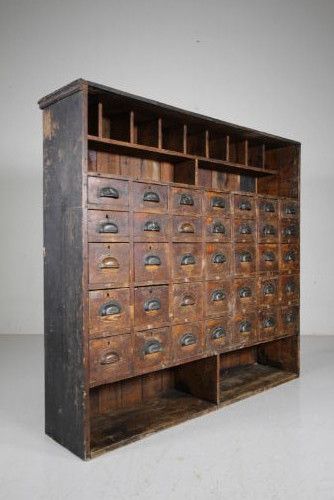
Stuffed birds from New Guinea rub shoulders with apothecary chests containing eighty tiny drawers.
What varies in quality
The standard of a dark cabinet depends heavily on the crispness of its hand-applied lacquer, the depth of the ebonising, and the preservation of any gilt or painted Chinoiserie detailing. Pieces featuring hand-carved decoration or high-grade ormolu mounts sit firmly at the upper end of the scale.
Construction methods also dictate worth, as superior items exhibit precise dovetailing, intact original glass, and heavy timber frames that have resisted warping over time.
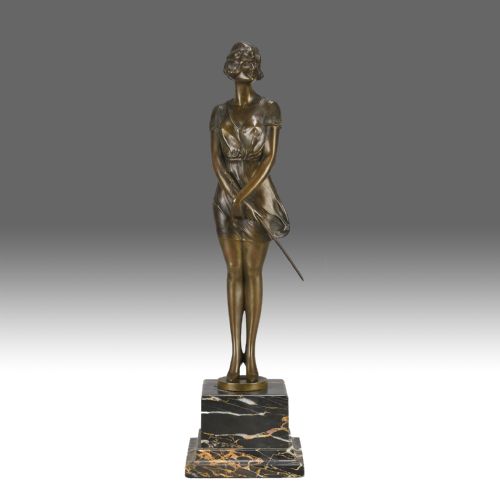
Maples and Co.·Bruno Zach·James Bruce·George Edmund Street·F. Whitfield and Co.
The Antique Black Cabinet Glossary
- Ebonised
- Timber stained or painted to imitate ebony. This dark finish became particularly popular during the Victorian period for formal furniture.
- Japannan
- European imitation of Japanese and Chinese lacquerwork. Artisans applied multiple coats of varnish and raised metallic decoration.
- Ormolu
- Gilt bronze mounts applied to furniture. It provides decorative contrast against dark wood and lacquer surfaces.
- Chinoiserie
- European artistic style reflecting Chinese motifs. It frequently appears on lacquer cabinets and screens as gilt figures and landscapes.
Antique Black Cabinet: Frequently Asked Questions
Where should I place a dark cabinet?
These cabinets work well against light-coloured walls where the dark finish provides a strong visual anchor.
They suit living rooms, dining spaces or hallways as statement storage pieces.
How do I care for lacquer surfaces?
Dust gently with a soft, dry cloth to prevent scratching the delicate finish.
Avoid placing the furniture in direct sunlight or near heat sources to protect the lacquer from cracking.
Are these cabinets suitable for everyday use?
Most antique storage pieces remain sturdy enough for regular domestic utility.
Internal shelving and drawers offer practical space for books, tableware or household items.
How do I identify the period of a cabinet?
Examine the construction methods, such as drawer dovetailing, and the style of decorative mounts.
Victorian and Edwardian examples often feature distinct hardware and stylistic revivals that signal their age.