


Antique Bedside Light
An antique bedside light brings period character and focused illumination to a bedroom scheme, drawing on decades of decorative history.
Antique Bedside Light
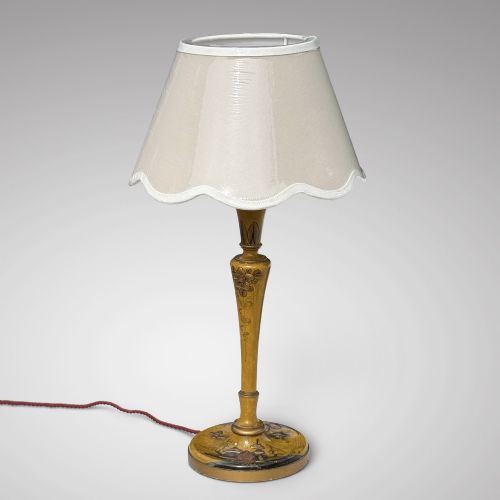
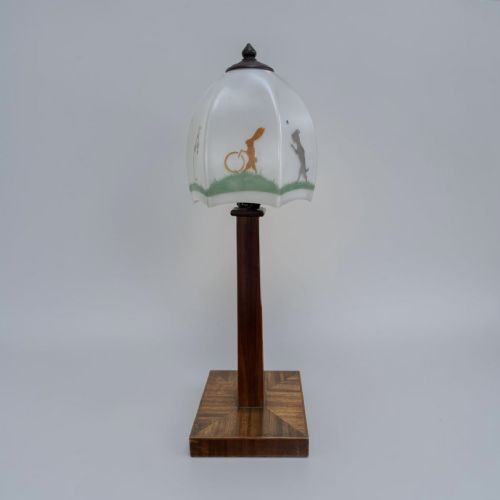
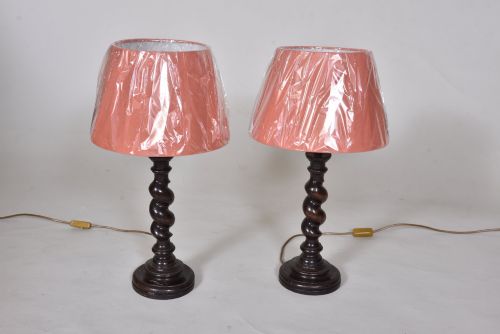
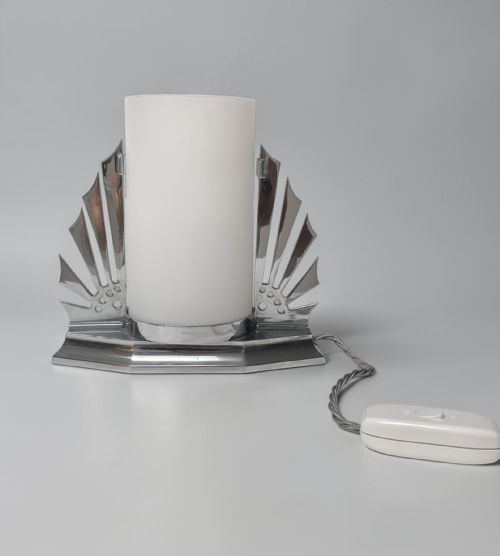
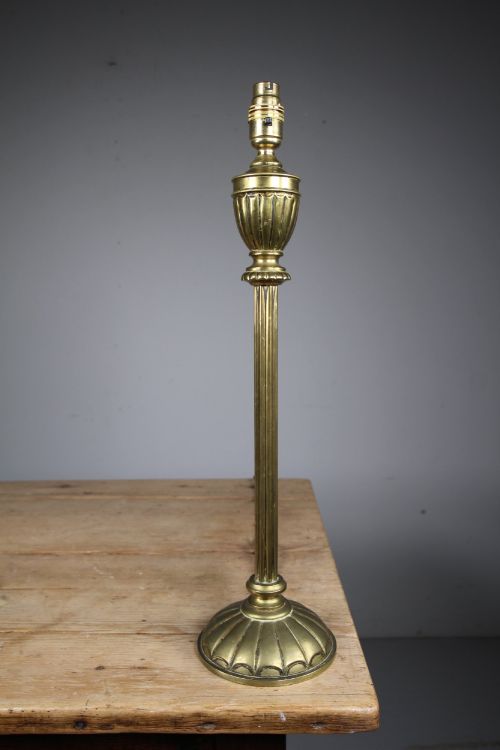
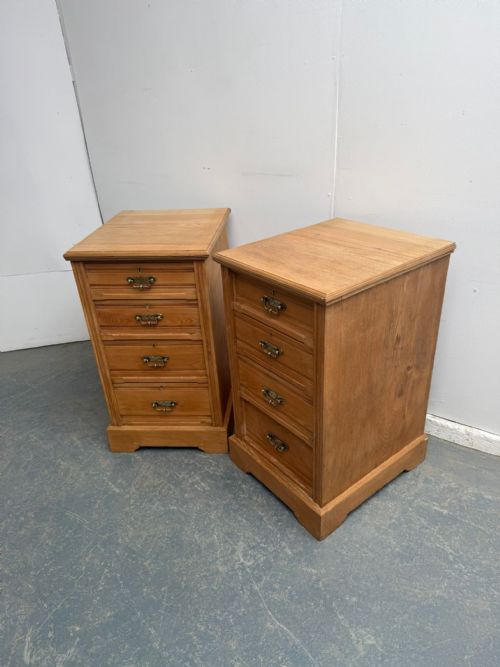
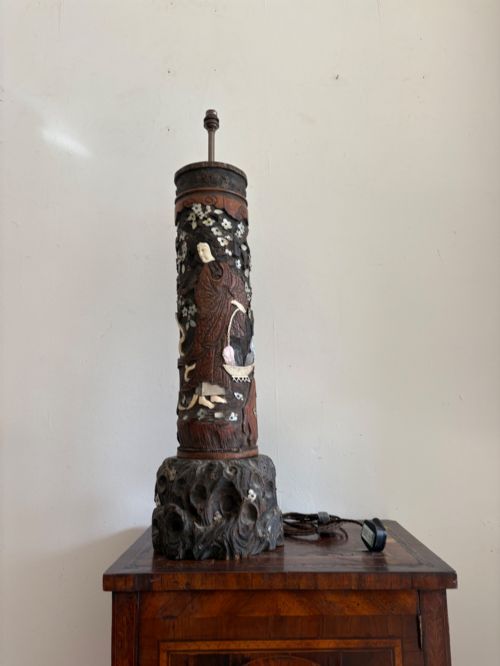
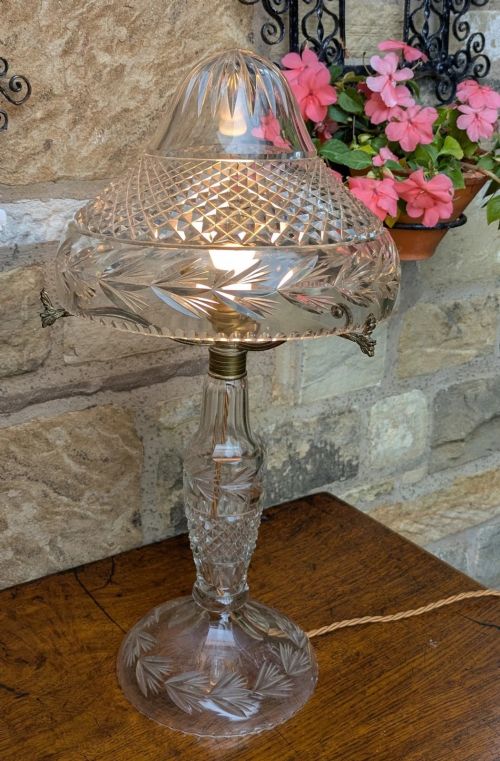
When searching for an antique bedside light, a buyer encounters table lamps, bedside cabinets, and small tables adapted for illumination, drawn from periods spanning the Victorian and Edwardian eras into the 1920s and 1930s. The selection on this page predominantly includes table lamps in brass, bronze, and carved wood alongside compact bedside storage units.
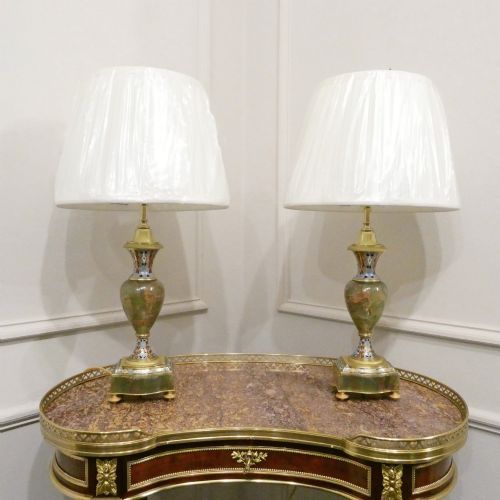
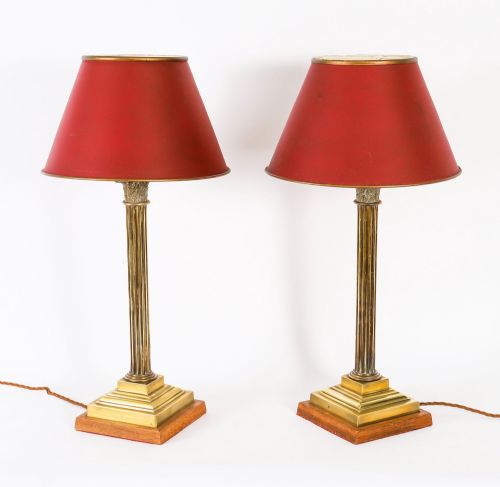
Makers and designers of the past produced these objects in varied regional styles, ranging from French Neoclassical porcelain and Japanese Meiji bronzes to English brass column designs and Art Deco figures. These pieces reflect the interior lighting needs of domestic spaces across the nineteenth and early twentieth centuries.
How they were made
Craftsmen utilised cast brass, gilt bronze, copper, and silver plating for metal lamp bodies, often combining them with marble bases, cut crystal, or hand-painted porcelain. Wood lamp bases and bedside cabinets employed oak, ash, mahogany, and lacquered finishes.
Decorative elements relied on manual techniques such as champlevé enamel, hand-painted lacquer, intricate wood carving, and mother-of-pearl inlay applied to porcelain or bronze structures.
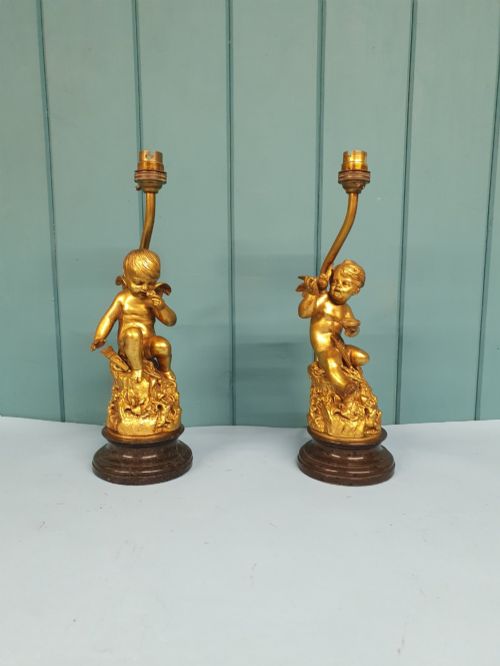
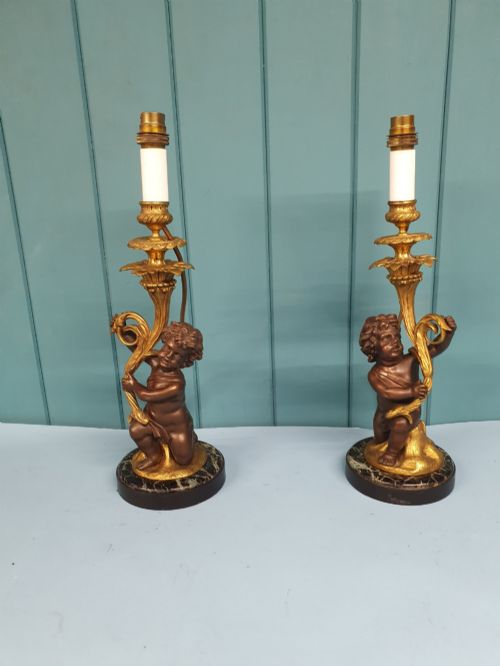
Several brass cherubs bravely hold up nineteenth-century illumination.
What varies in quality
Quality rests upon the precision of the casting and the depth of hand-carving or surface decoration, separating standard production pieces from finer studio or factory work. The integrity of the materials, such as heavy solid brass, genuine marble, or quality hardwoods, dictates the longevity and visual weight of the item.
The preservation of original surface finishes, whether patinated bronze, lacquer, or gilding, governs the desirability of each piece among collectors.
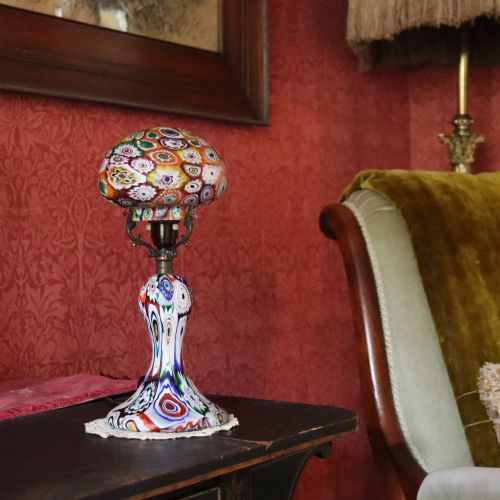
Fratelli Toso·E Rousseau·Dugourc
The Antique Bedside Light Glossary
- Champlevé
- An enamelling technique where troughs are dug into a metal surface and filled with vitreous enamel before firing. This method creates colourful patterned designs on brass and bronze lamp bodies.
- Corinthian column
- A classical architectural column style featuring an ornate capital decorated with acanthus leaves. This form was frequently adapted for nineteenth-century brass table lamps.
- Pate sur pate
- A ceramic decorating method where successive layers of liquid white clay are painted onto a coloured porcelain body to build up a low relief design. It appears on select French decorative lamps.
- Ormolu
- Gilt bronze ornamentation applied to furniture and decorative objects during the eighteenth and nineteenth centuries. The technique involves a mercury gilding process on a bronze base.
- Meiji period
- The era of Japanese history spanning from 1868 to 1912, known for fine metalwork and bronze casting. Pieces from this time often feature in decorative lighting conversions.
Antique Bedside Light: Frequently Asked Questions
How do I choose an antique bedside light?
Consider the scale of your bedside table and the existing decor of the bedroom before selecting a material like brass, carved wood, or porcelain. Matching the period style of the lamp to other furnishings helps create a cohesive interior.
Verify the height and base dimensions to ensure the light fits comfortably alongside a bed without dominating the surface space.
Were these lights originally used beside beds?
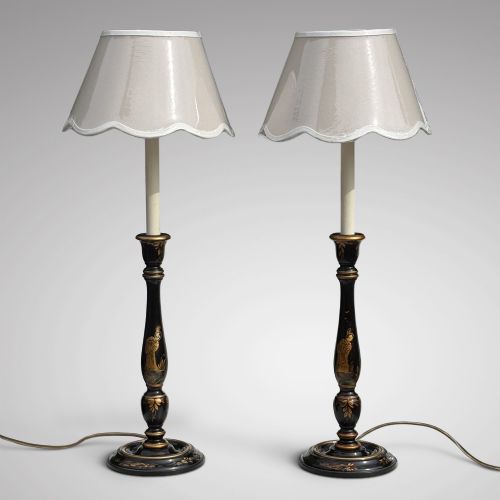
Many items listed as table lamps or candlestick lamps served various domestic lighting roles in sitting rooms, halls, and bedrooms. Converted pieces often started as candlesticks, vases, or desk items before being adapted for electrical illumination.
Bedside cabinets and small tables provided surface space for candles or early portable lamps before electric lighting became standard in domestic quarters.
How can I tell the period of a lamp?
Examine the materials, manufacturing techniques, and stylistic markers characteristic of specific eras such as Victorian casting methods, Edwardian neoclassical motifs, or Art Deco geometric forms. Metal patination and construction joints offer additional clues regarding age.
Consulting recorded examples from known periods helps date pieces accurately without relying solely on superficial decoration.
Can antique lamps be wired for modern use?
Most antique lamps require rewiring to meet contemporary safety standards and fit modern plug sockets. Professional electricians can update internal wiring while preserving the external period components.
Careful rewiring ensures that historic metal and ceramic bodies remain undamaged during the installation of modern electrical fittings.