





Antique Bedroom Vanity Seat
An antique bedroom vanity seat provides a functional perch for dressing, drawing on forms from the nineteenth century to the Art Deco era.
Antique Bedroom Vanity Seat
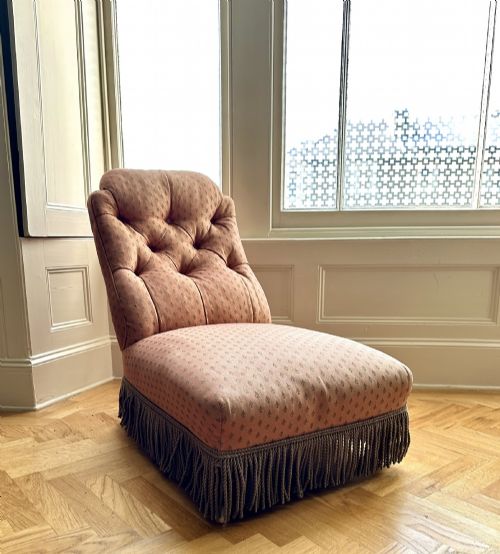
An antique bedroom vanity seat encompasses dressing stools, slipper chairs, nursing chairs, and window seats designed for personal grooming spaces.
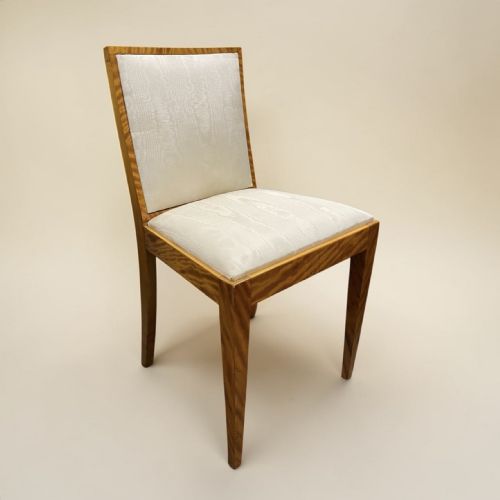
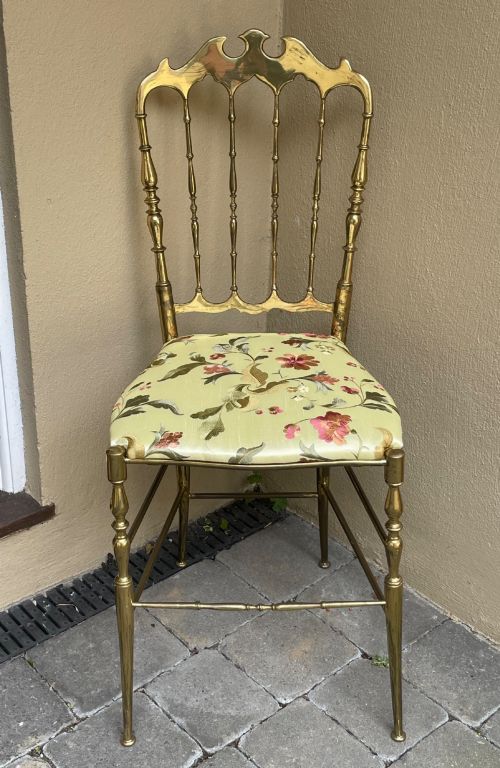
The pieces on this page emerge from the nineteenth century, the Victorian period, and the Edwardian era, extending through to the 1920s and 1930s.
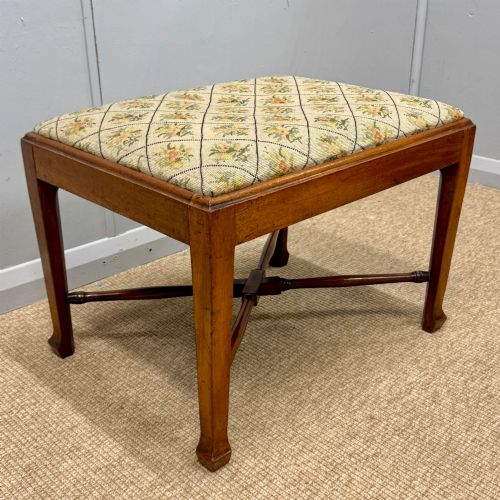
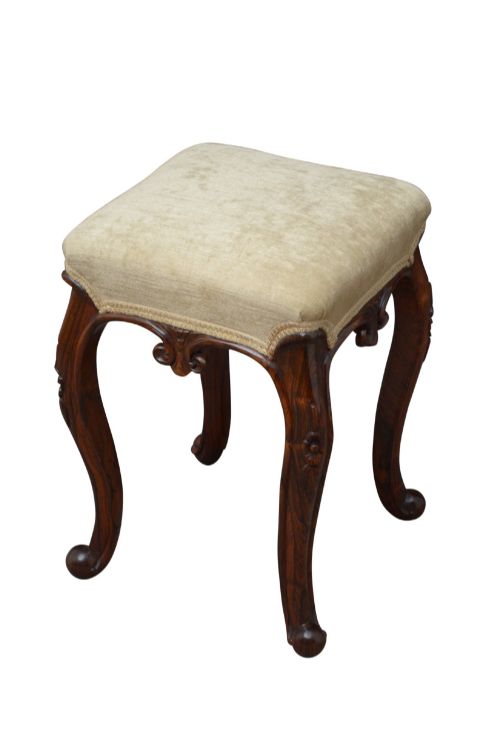
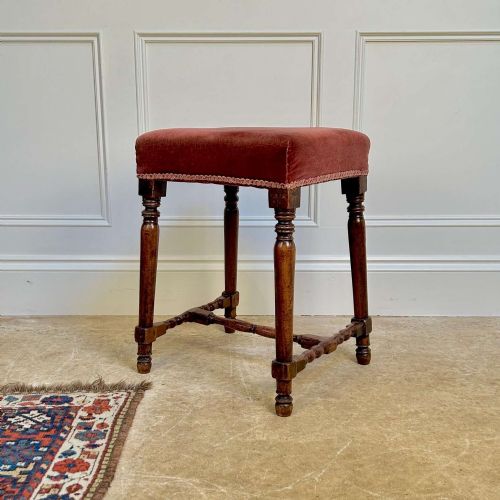
Stools dominate the selection, appearing in square, drum, and X-framed configurations alongside low-slung chairs with upholstered seats.
Materials and construction
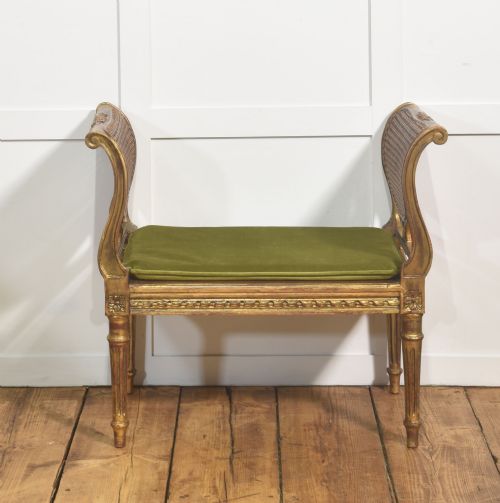
Frames are constructed from solid timbers including mahogany, walnut, rosewood, satinwood, and oak, occasionally finished with giltwood or painted surfaces.
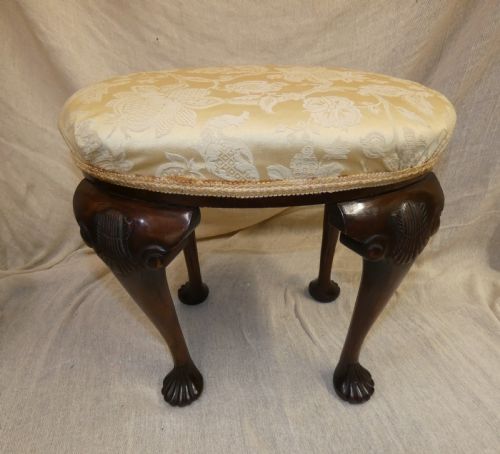
Seating portions incorporate traditional upholstery methods using fabric, velvet, textile, chenille, needlepoint, and cane inserts.
Certain drum-shaped dressing stools cleverly conceal storage inside their oak frames, keeping nineteenth-century powder puffs tucked neatly away.
Craftsmanship and materials
Distinction lies in the execution of carved wooden details, such as cabriole legs, turned supports, and cross stretchers, compared to simpler framing.
The choice of dense hardwoods like goncalo Alves and figured walnut elevates the stature of a piece above standard softwoods or basic mouldings.
Bath Cabinet Makers·Lamb of Manchester
The Antique Bedroom Vanity Seat Glossary
- Cabriole leg
- A furniture leg that curves outward at the knee and tapers inward to an ankle, frequently seen on Victorian and Edwardian examples.
- X-frame
- A structural base formed by intersecting diagonal timbers that support the seat, utilised in both stools and benches.
- Slipper chair
- A low-seated upholstered chair originally designed for ladies' bedrooms to assist with footwear.
- Giltwood
- Timber coated with a thin layer of gold leaf or gilt paint, characteristic of Louis XVI style and Regency pieces.
- Needlepoint
- Stitched textile work executed on canvas, frequently used to cover the seats of dressing stools.
Antique Bedroom Vanity Seat: Frequently Asked Questions
What is an antique bedroom vanity seat?
An antique bedroom vanity seat is a small chair, stool, or bench designed specifically for use at a dressing table or in a boudoir.
These pieces range from low-backed slipper chairs to cushioned dressing stools dating across the nineteenth and early twentieth centuries.
How were dressing stools used?
Dressing stools provided a stable, armless seat that allowed individuals to sit comfortably while grooming or dressing in private quarters.
Their compact size meant they could slide directly beneath a dressing table when not in use.
How do I identify a Victorian vanity seat?
Victorian vanity seats often feature robust timbers like mahogany or walnut, complemented by turned legs, cabriole supports, or intricate hand-carved detailing.
Upholstery on these pieces commonly includes rich textiles such as velvet, needlepoint, or patterned fabric.
Are Art Deco vanity seats different?
Art Deco vanity seats shift away from ornate Victorian carving toward streamlined geometric forms, figured walnut veneers, and drum-shaped storage designs.
They reflect the modern aesthetic of the 1920s and 1930s while retaining the core function of a bedroom dressing seat.