

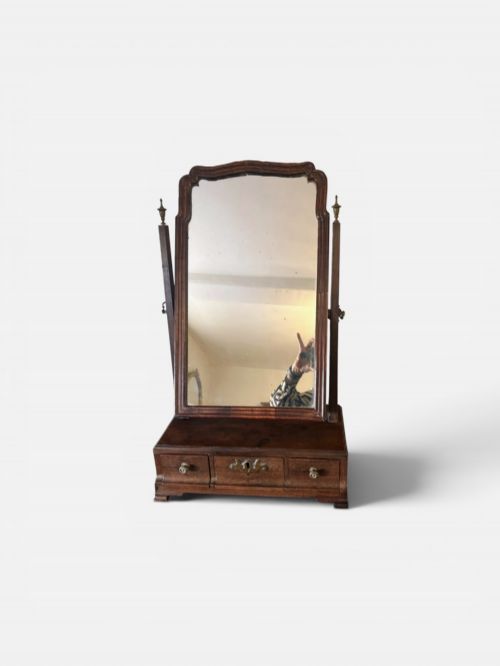
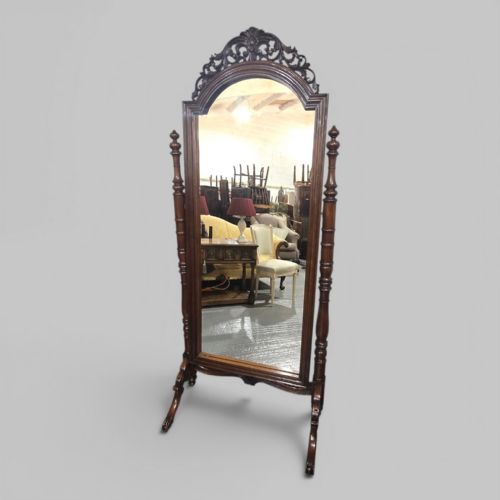
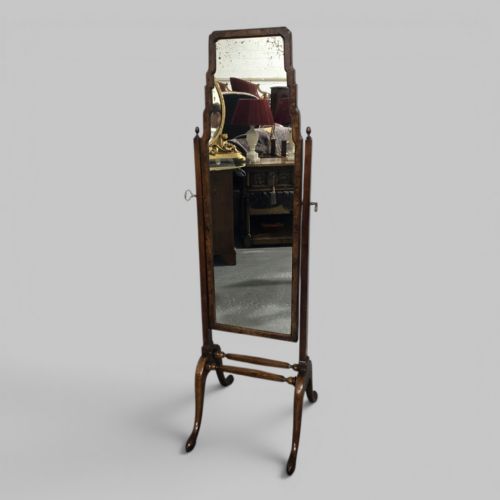
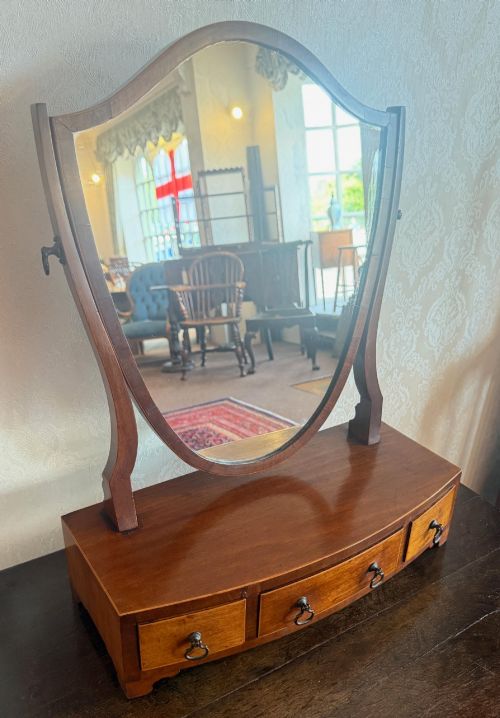

Antique Bedroom Cheval Glass
An antique bedroom cheval glass stands ready to reflect your dressing room, offering full-length adjustable views framed in rich period timbers.
Antique Bedroom Cheval Glass
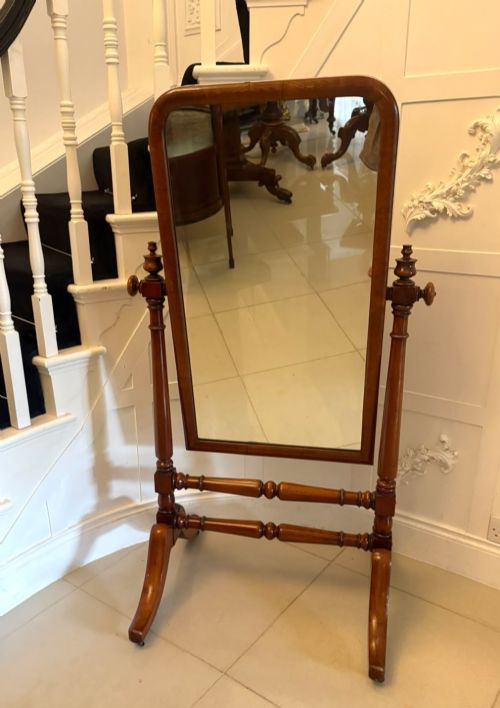
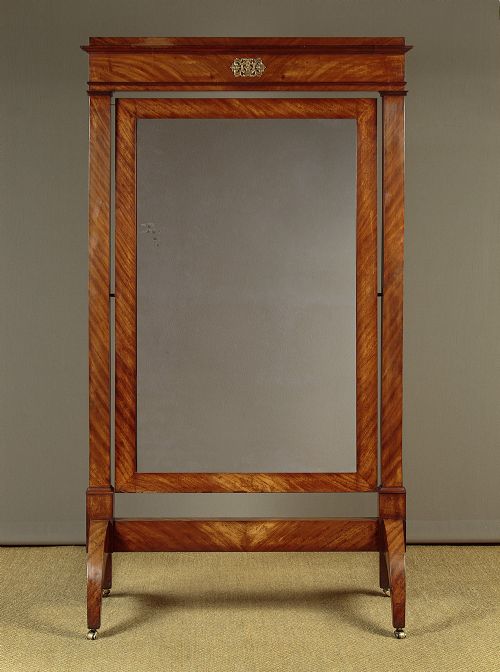
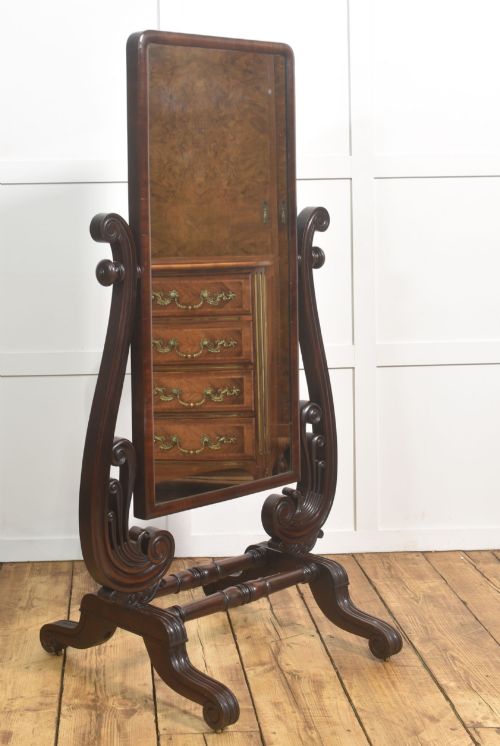
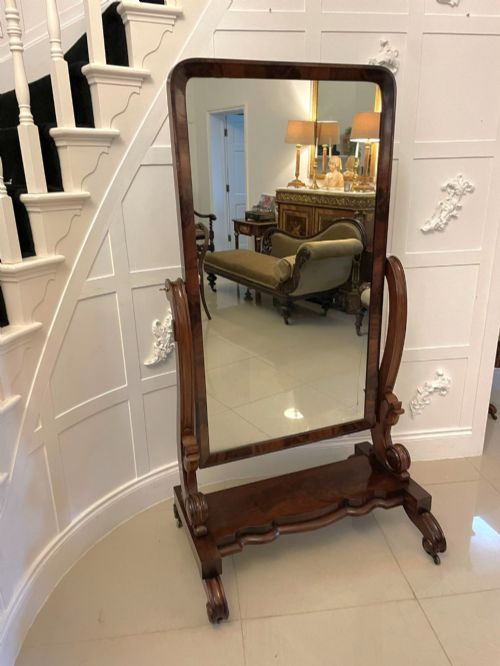
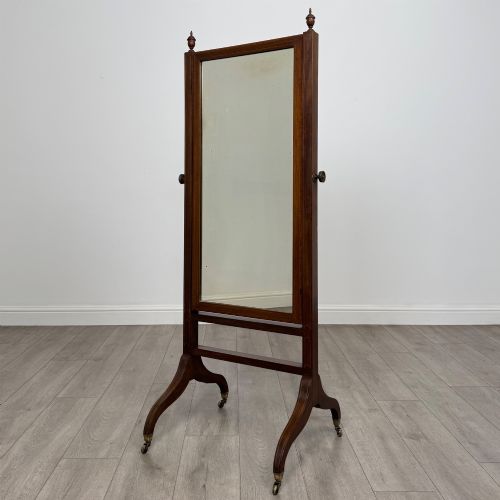
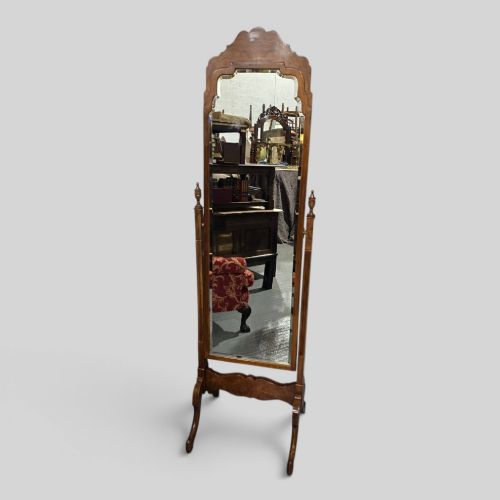
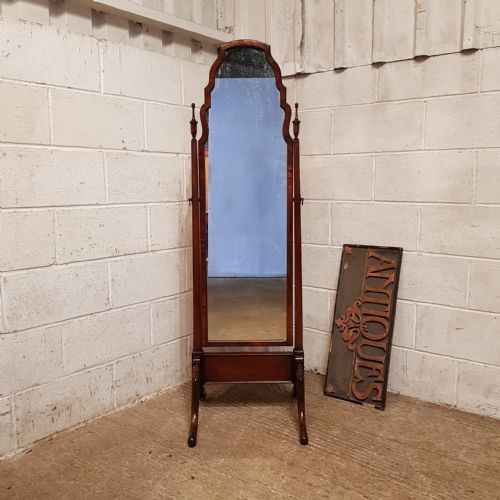
An antique bedroom cheval glass is a freestanding full-length mirror designed to pivot within a supportive vertical frame, allowing the glass to tilt at various angles. These pieces range from substantial Regency and William IV specimens to later Victorian, Edwardian, and twentieth-century interpretations.
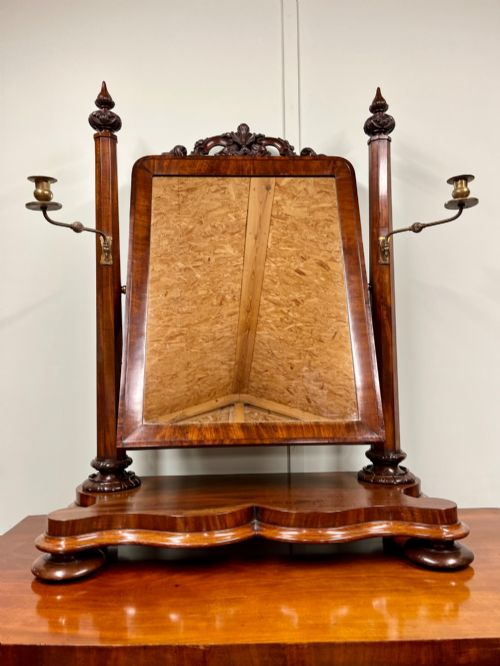
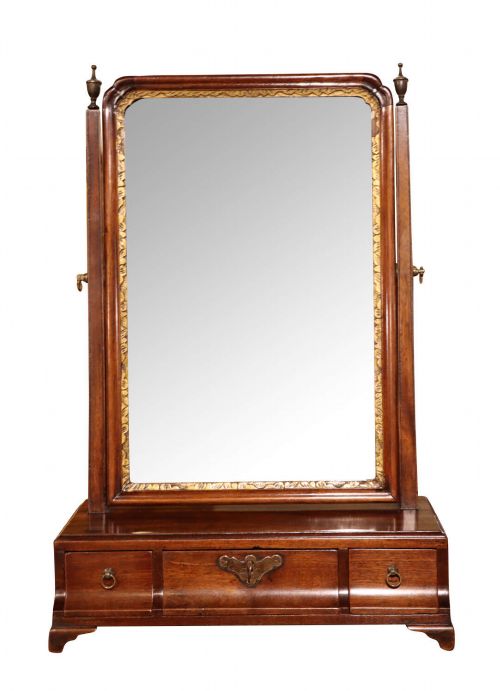
The most common examples encountered on this page are constructed from mahogany, reflecting the material preferences of nineteenth-century cabinet makers. Alongside full-sized floor standing cheval mirrors, buyers will also find smaller dressing table and toilet mirrors designed for placement on top of chests or dressers.
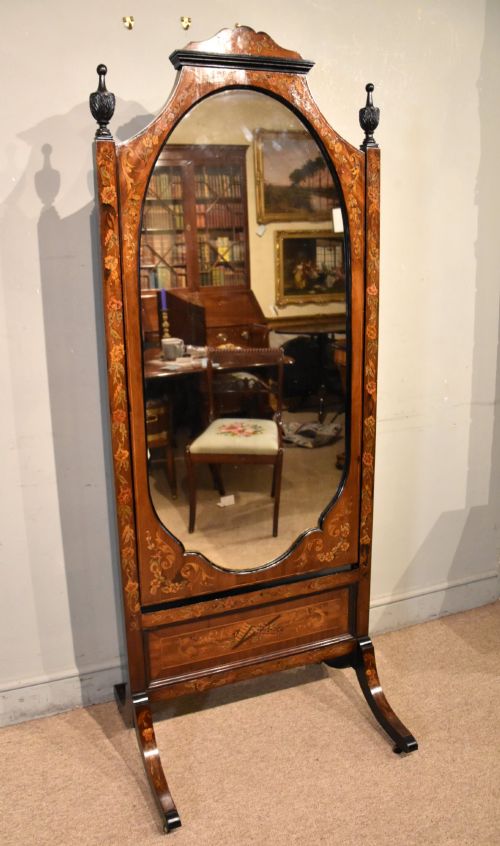
Forms vary from classic rectangular swing frames supported by scrolling uprights to more ornate designs incorporating marquetry inlay, satinwood, or burr walnut. Whether standing tall on four splayed legs or resting on a box base fitted with small drawers, each piece serves the dual purpose of a functional mirror and a prominent architectural item of bedroom furniture.
Distinctions in Quality
Quality rests in the weight and stability of the frame, the crispness of any applied marquetry inlay or carved details, and the depth of the timber's grain. Superior pieces display substantial proportions, solid brass pivoting mechanisms, and well-balanced uprights that support the heavy glass without sagging.
The sophistication of the base design also marks the grade of the piece, moving from simple four-legged trestles to boxes fitted with miniature drawers or intricate scrollwork. Original mirror glass with gentle foxing adds character, while secondary timbers and internal drawer construction reveal the care taken by the original maker.
Listings feature pieces spanning the Regency, Victorian, Edwardian, and William IV periods, constructed primarily in mahogany, walnut, oak, and satinwood.
Gillows
The Antique Bedroom Cheval Glass Glossary
- Cheval mirror
- A freestanding full-length mirror mounted on a pivot within a four-legged frame. The word derives from the French for horse, referring to the four-legged support structure.
- Swing mirror
- A mirror plate hung on vertical pivots allowing it to tilt back and forth. These often sit within a desktop dressing box or atop a larger table.
- Flame mahogany
- A decorative veneer cut from timber where the branch meets the trunk, creating a characteristic flickering flame pattern. Cabinet makers utilised this figure on prominent display surfaces.
- Marquetry
- The art of applying pieces of veneer to a structure to form decorative patterns and pictures. It frequently incorporates contrasting woods like boxwood and satinwood.
- Toilet mirror
- A smaller tabletop dressing mirror popular during the Georgian and Victorian eras. They commonly feature small storage drawers integrated into the base plinth.
Antique Bedroom Cheval Glass: Frequently Asked Questions
How do I date an antique cheval glass?
Dating relies on observing the timber choices, construction joints, and stylistic cues of the frame. Regency and William IV pieces often display heavier architectural lines, while Edwardian and later examples show lighter framing.
Hardware such as brass pivot screws and the beveling or foxing on the glass plate also offer clues to the decade of manufacture. Comparing the secondary woods inside any drawers helps confirm the period.
Where should I place a cheval mirror?
These mirrors suit bedrooms and dressing rooms where full-length reflections are practical. Placing them near a window allows the glass to bounce natural light around the space.
Ensure the floor is level so the freestanding frame bears weight evenly on its feet. Keeping the pivot screws correctly adjusted prevents the heavy glass from swinging too freely.
Are toilet mirrors the same as cheval mirrors?
Toilet mirrors are much smaller scaled versions designed to sit on top of a dressing table or chest of drawers rather than stand directly on the floor. Both utilise a pivoting swing mechanism, but their intended placement differs.
Many toilet mirror bases include small trinket drawers for jewellery, whereas floor-standing cheval glasses rely entirely on their upright frame and legs.
What is flame mahogany?
Flame mahogany is a highly figured wood veneer featuring a distinctive rippled pattern that resembles flickering flames. Cabinet makers prized this timber for prominent surfaces on high-end furniture.
It is achieved by slicing across the grain where limbs join the main trunk, creating dramatic movement that catches the light.