





Adjustable Floor Mirror
These adjustable floor mirror pieces offer flexible viewing angles and sturdy stands, bringing practical utility and period character to any room.
Adjustable Floor Mirror
An adjustable floor mirror provides a full-length or targeted reflection, often mounted on a pivoting frame or a telescopic stand. When you search for an adjustable floor mirror, you encounter freestanding furniture designed for dressing rooms and bedrooms.
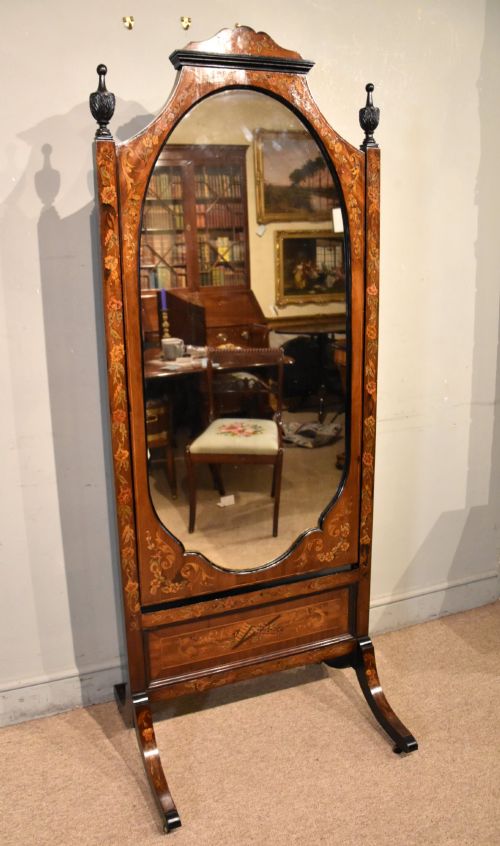
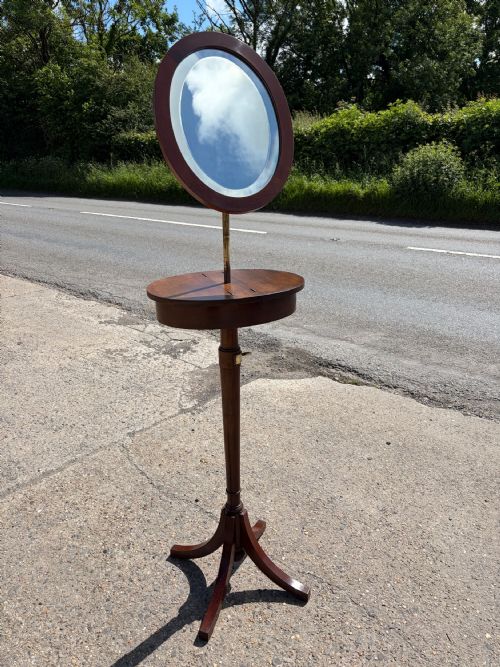
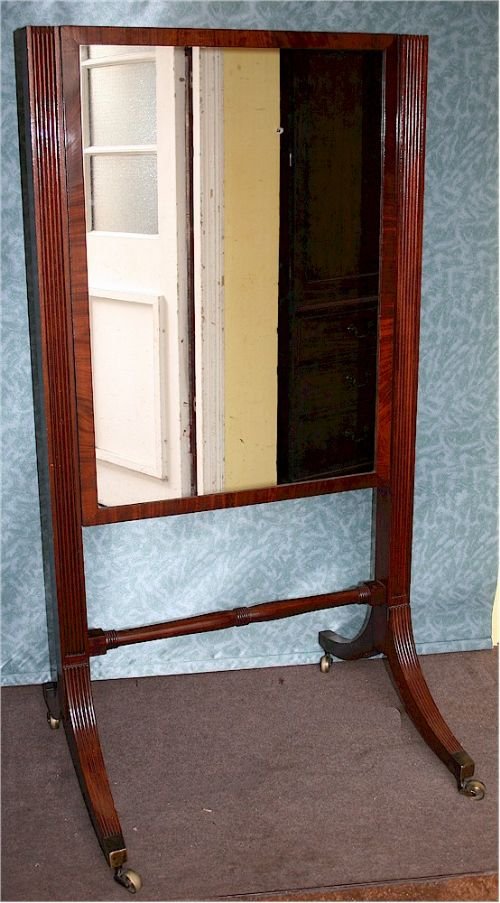
The selections span the Victorian and Regency eras, encompassing forms from grand cheval mirrors to compact shaving stands. Mahogany frames dominate the offerings, occasionally paired with brass fittings and marquetry inlay.
Tall cheval mirrors and tripod-based shaving stands represent the primary formats found in these listings. These pieces combine mirror glass with adjustable wooden or metal mechanisms to alter the angle of reflection.
How they were made
Cabinet makers utilised solid mahogany and wood veneers to construct the frames and stands of these mirrors. Marquetry inlay appears on select surfaces, adding decorative detail to the timber.
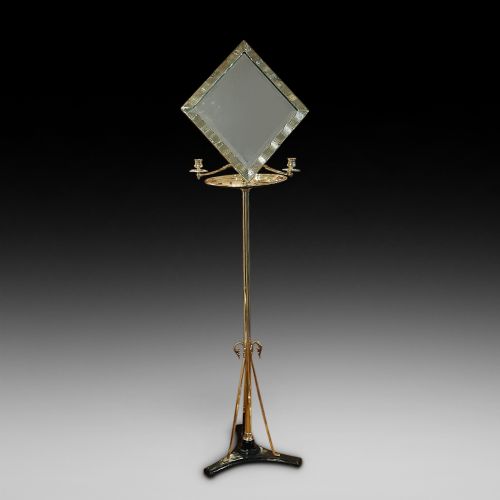
Metal components such as brass, cast iron, and painted metal form the telescopic stems and pivoting hinges. These brass and iron elements enable the height and tilt adjustments characteristic of the design.
Adjustable Floor Mirror Retail Price Guide 2026
Typical asking prices for adjustable floor mirror among the pieces listed under this phrase on Sellingantiques today, from the lower quarter to the upper quarter. They describe what is for sale here now, not the wider market.
The listings here span the Victorian and Regency periods, featuring mahogany, brass, and cast iron across cheval mirrors and shaving stands.
What varies in quality
The refinement of the timber turning and the precision of the brass adjustment mechanisms distinguish finer examples from simpler workshop output. Heavier tripod bases and sophisticated telescopic stems indicate higher standards of manufacture.
The clarity and original condition of the mirror glass contribute significantly to the overall character of the piece. Subtle details in the marquetry inlay and the stability of the pivoting frame further separate standard items from superior specimens.
The Adjustable Floor Mirror Glossary
- Cheval mirror
- A large freestanding mirror supported by a frame with four legs or pillars, designed to swing on pivots. This format allows the user to tilt the glass to various angles.
- Telescopic
- A construction method allowing parts to slide within one another to alter height. This mechanism is frequently found on shaving stands and adjustable mirrors.
- Marquetry inlay
- Decorative patterns formed by inserting small pieces of differing wood into a veneer. It provides surface ornamentation on Victorian mahogany frames.
- Dressing glass
- A tabletop or floor-standing mirror used while grooming. These pieces often feature tilt mechanisms mounted on small stands or boxes.
Adjustable Floor Mirror: Frequently Asked Questions
What is an adjustable floor mirror?
An adjustable floor mirror is a freestanding looking glass mounted on pivots or telescopic stands to alter the viewing angle. These pieces serve functional dressing purposes while functioning as decorative furniture.
Most examples date from the Victorian and Regency periods, constructed from mahogany with brass fittings. They range from tall cheval designs to compact shaving stands on tripod bases.
How do you use a telescopic shaving mirror?
A telescopic shaving mirror adjusts in height by sliding an internal rod up or down within a stable base. The mirror plate itself typically tilts on pivots to direct the reflection.
These pieces were originally placed in bedrooms or dressing rooms for close-up grooming tasks. Their adjustable nature allows users to modify both height and angle easily.
What woods were used for these mirrors?
Mahogany is the predominant timber found in these period mirrors, prized for its strength and rich grain. Cabinet makers often enhanced the wood with marquetry inlay.
Supporting elements frequently incorporate brass and cast iron to facilitate the adjustable mechanisms. This combination of timber and metal ensures both stability and smooth movement.
How do I distinguish Victorian from Regency styles?
Victorian pieces often feature robust mahogany frames, sometimes ornamented with marquetry inlay or complex telescopic brass stems. They typically date from the mid to late nineteenth century.
Regency style pieces reflect earlier classical influences in their cleaner lines and simpler geometry. Listings also include later interpretations built in the Regency manner.