




Victorian Free Standing Mirror
A victorian free standing mirror brings both function and presence to a room, moving easily to catch the light.
Victorian Free Standing Mirror
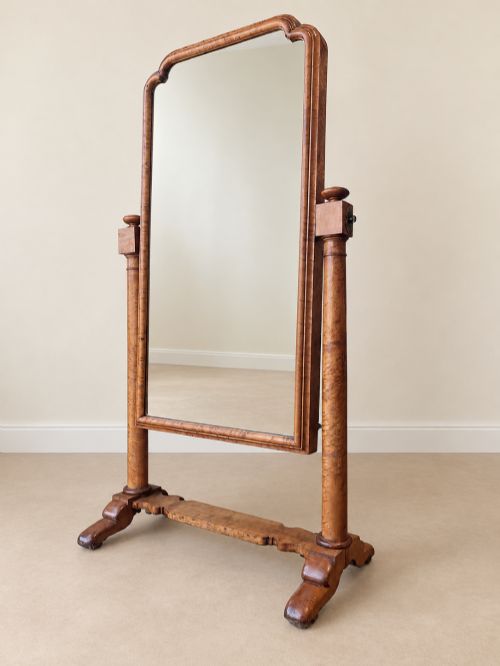
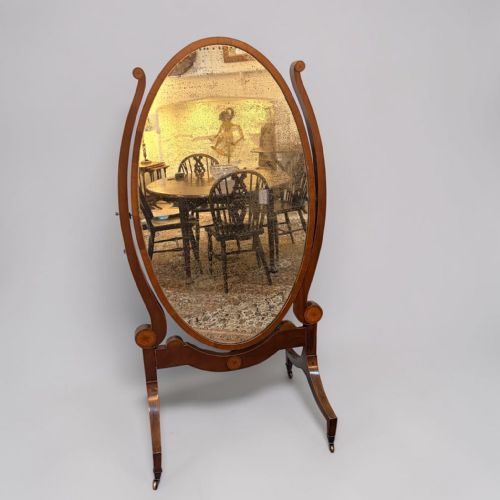
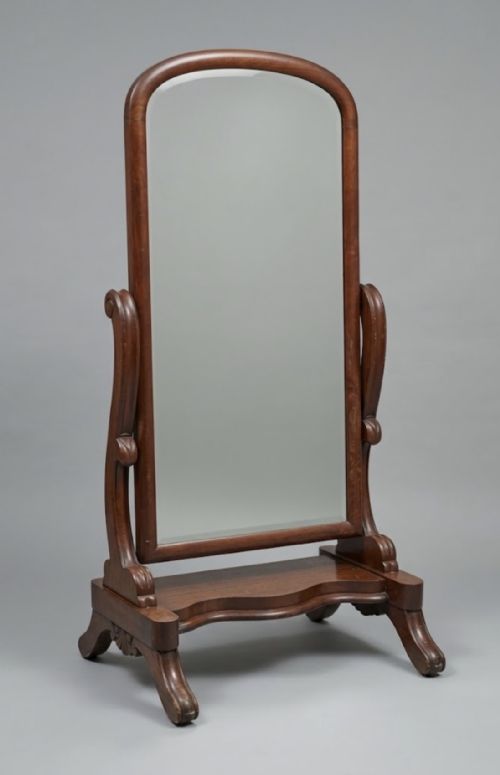
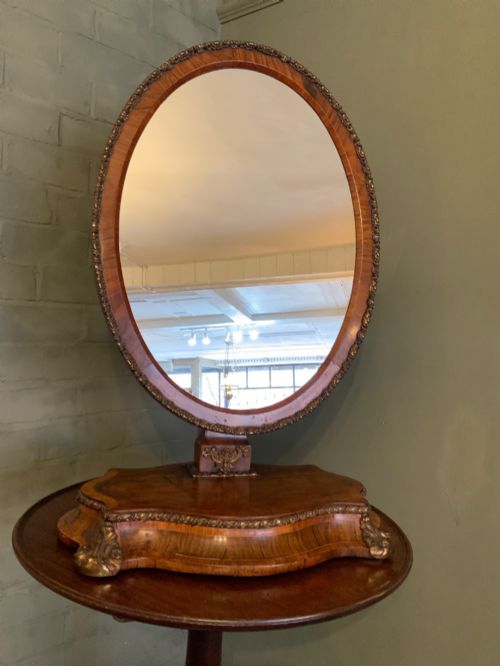
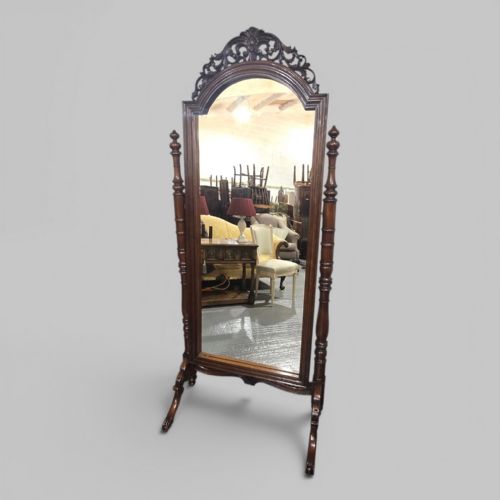
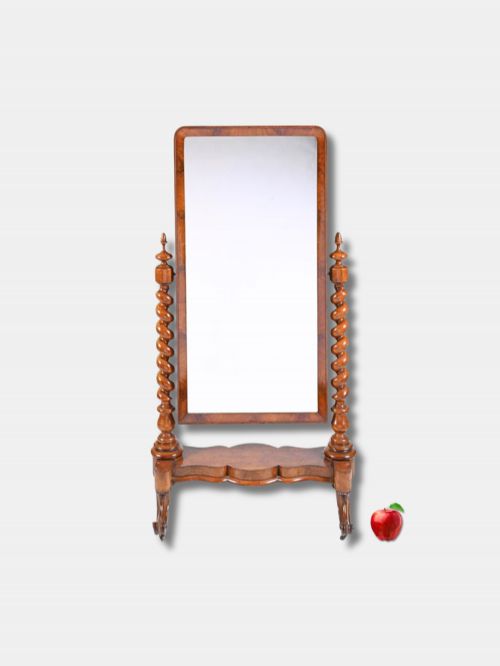
A victorian free standing mirror primarily takes the form of a cheval mirror or a smaller toilet mirror designed to sit on a dressing table. These pieces allow a full view of attire and add depth to bedrooms and dressing rooms.
The materials seen in these listings range from rich mahogany and burr walnut to oak and pitch pine, often paired with brass fittings. They appear in styles stretching from Regency and William IV influences through to Rococo Revival and Arts and Crafts.
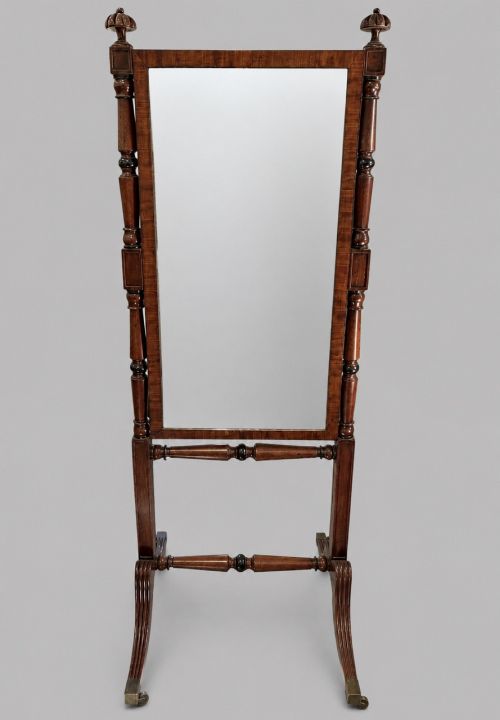
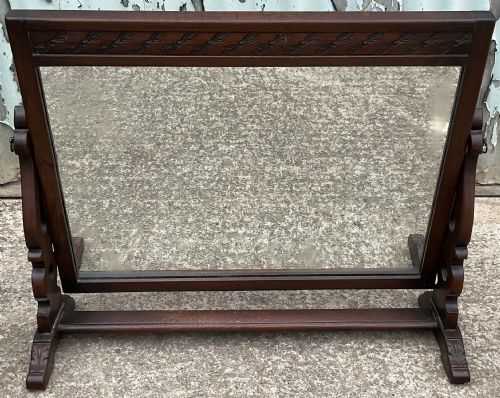
Floor-standing cheval versions dominate the selection, supported by sturdy frames with swing mechanisms that tilt the glass. Smaller table mirrors provide similar adjustment on a more intimate scale for the top of a chest or dressing table.
Materials and Construction
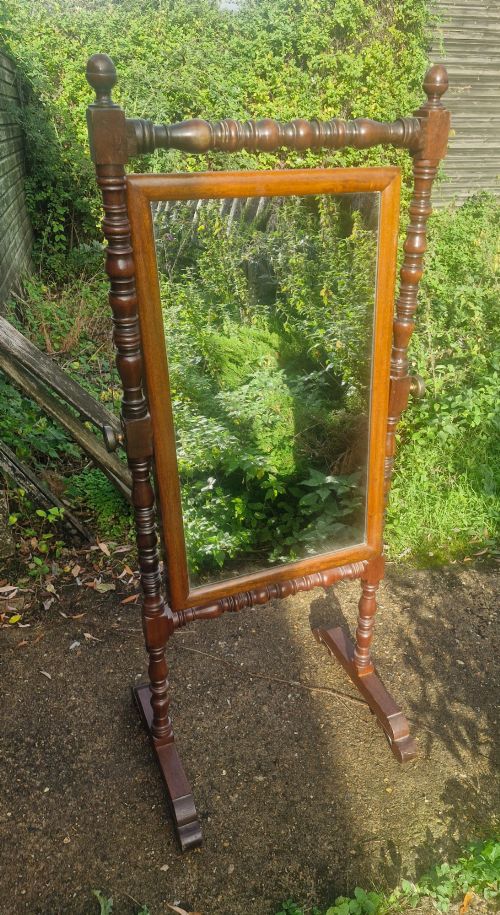
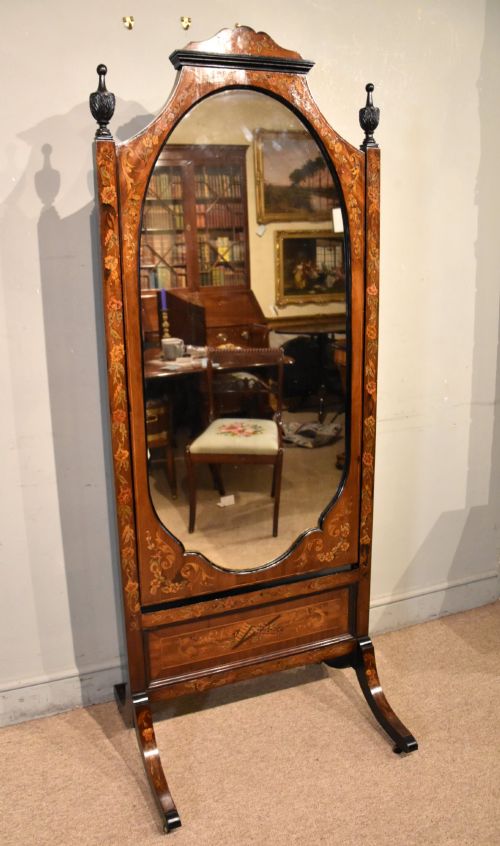
Cabinet makers relied heavily on solid and veneered timbers such as mahogany, walnut, and oak to build the substantial frames required to support heavy glass. Marquetry inlay, ormolu mounts, and hand-turned supports like barley twist columns added decorative contrast to the timber.
The mirror glass itself sits within adjustable pivoting frames held by brass pins or telescopic stands, allowing the user to alter the angle of reflection. Heavy floor bases utilised splayed legs or scrolling feet to keep the tall, swinging weight stable.
Victorian Free Standing Mirror Retail Price Guide 2026
Typical asking prices for victorian free standing mirror among the pieces listed under this phrase on Sellingantiques today, from the lower quarter to the upper quarter. They describe what is for sale here now, not the wider market.
Period styles span Regency, William IV, Victorian, Rococo Revival, and Arts and Crafts.
Assessing Quality and Execution
Quality rests in the choice of timber figure, such as highly figured mahogany or burr walnut, which gives the frame a rich visual depth. Superior examples show refined hand-carving and careful attention to the turning of upright supports.
The integrity of the pivoting mechanism and the weight of the base dictate how steadily the glass swings and holds its position. Better-made mirrors employ substantial brass hardware and tight joinery that resists the natural lean of a heavy frame over time.
Gillows
The Victorian Free Standing Mirror Glossary
- Cheval mirror
- A large floor-standing mirror mounted in a frame that allows it to swing freely on pivots. It is tall enough to show a person's entire figure.
- Toilet mirror
- A smaller mirror designed to sit upon a dressing table or chest of drawers. These often feature small box bases fitted with drawers.
- Ormolu
- Gilded bronze or brass mounts applied to furniture for decoration. It adds metallic warmth and contrast to dark wood frames.
- Barley twist
- A type of turned wooden support resembling the spirals of a barley sugar stick. This technique creates a sense of movement in the uprights.
- Inlay
- Pieces of contrasting wood or other materials fitted into the surface of a primary timber to form decorative patterns. Marquetry is a detailed form of this work.
Victorian Free Standing Mirror: Frequently Asked Questions
How do I choose between a cheval and a table mirror?
Floor-standing cheval mirrors suit dressing rooms and bedrooms where you need to check full-length attire. They require adequate floor space to allow the frame to swing safely without obstruction.
Table mirrors sit comfortably on top of an existing chest of drawers or dressing table. They work well for upper-body reflection and take up far less room in a smaller space.
Where should I place a freestanding mirror?
Position the mirror where it can capture and reflect natural light from a window to brighten the room. Placing it opposite a light source maximises the illusion of space.
Ensure the floor beneath a heavy cheval mirror is level so the swing mechanism functions properly. Keep the piece away from direct heat sources to protect the wooden frame and veneer.
How do I adjust the mirror angle?
Most pieces use side pivot screws or pins that can be gently tightened or loosened by hand or with a proper tool. This controls the tension on the swing frame so the glass stays at the desired tilt.
Take care to support the weight of the glass plate while adjusting the fixings. Overtightening can strip the threads in older brass fittings.