





Antique Beach Landscape
An antique beach landscape captures the shifting light and human life of the shore through nineteenth and early twentieth-century brushwork.
Antique Beach Landscape
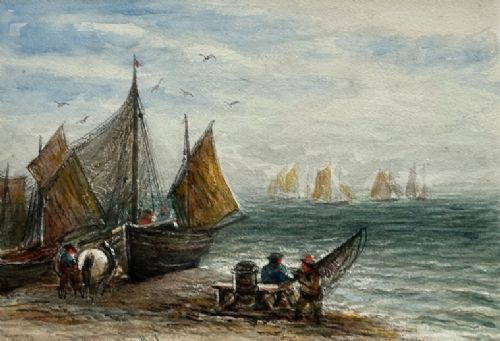
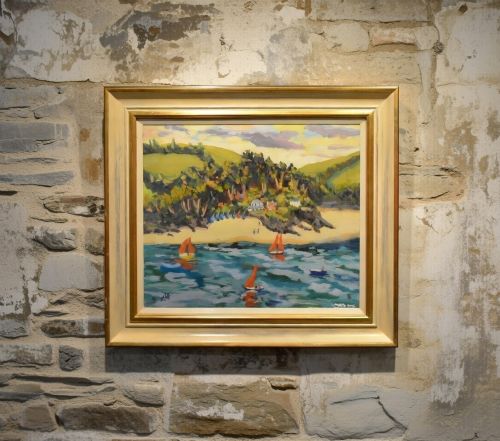
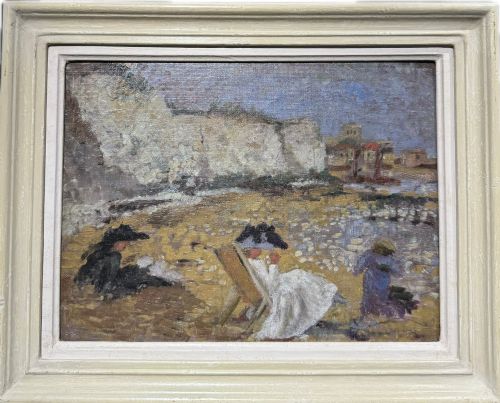
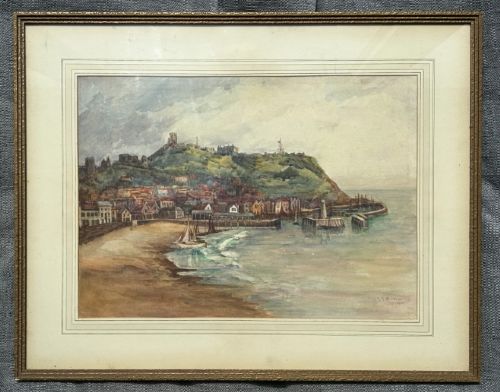
When you search for an antique beach landscape, you are looking at original works on paper and canvas that record coastal life, harbours and marine views from the nineteenth and early twentieth centuries. These pieces range from detailed Victorian watercolours of fishing boats on the Yorkshire coast to Impressionist and Post-Impressionist oils capturing figures gathered by the sea.
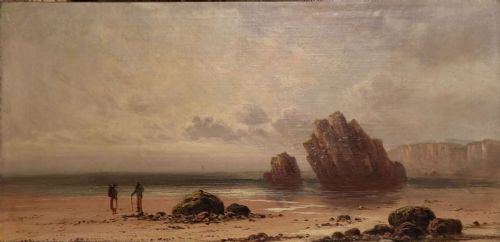
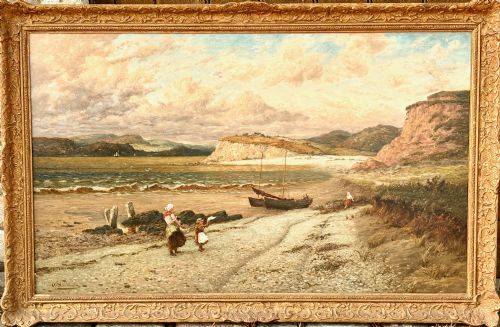
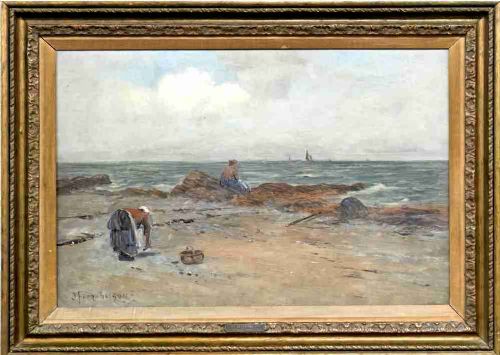
The version you are most likely to meet on this page is a nineteenth-century watercolour or oil painting depicting British and European shores, often featuring local figures hauling nets, children playing on the sand or dramatic sea stacks under expansive skies.
How they were made
Artists of these periods worked primarily in oil paint on canvas or board, and watercolour on paper, sometimes employing gouache to build opaque highlights on coastal scenes. Canvas supports were stretched over wooden frames and frequently housed within gesso or giltwood frames that reflect the period taste of the maker.
Watercolour works required deft brushwork and layered washes to capture the transient effects of light on water and sand, whilst oil painters utilised heavier impasto and deliberate strokes to render the texture of cliffs, crashing waves and stormy skies.
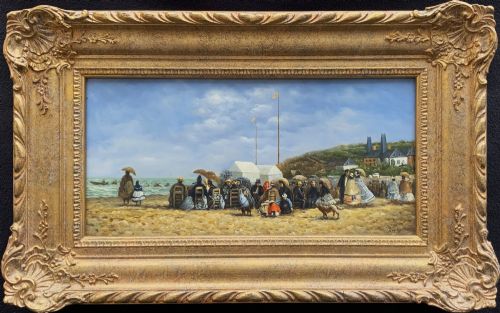
Several beach scenes capture early twentieth-century holidaymakers sharing the sand with a boxer, a photographer and ladies in white.
What varies in quality
The distinction between a standard coastal study and a superior work rests on the artist's ability to render light, atmosphere and movement convincingly rather than relying on formulaic topographical recording. Stronger compositions demonstrate confident brush handling, accurate perspective in marine settings and a harmonious palette that captures the specific mood of the shore.
Condition and originality also determine standing, particularly the survival of the untouched surface, the vibrancy of the pigments against fading, and whether the painting retains its original period frame without heavy restoration.
James Orrock·William Banks Fortescue·Joseph Farquharson·Robert Leslie Howey·James Webb·Kate E Booth·Sir David Murray·George Hamilton Constantine·William Russell Flint·Owen Bowen·Robert Macaulay Stevenson·William Edward Webb
The Antique Beach Landscape Glossary
- Seascape
- A work of art depicting the sea, coastlines or marine views. These compositions often focus on the interaction between land, water and sky.
- Impressionism
- A nineteenth-century painting style characterised by relatively small, thin yet visible brush strokes and an emphasis on accurate depiction of light in its changing qualities.
- Gesso
- A plaster-like mixture applied to wood or canvas as a base for painting or moulded into decorative reliefs on antique frames. It provides a smooth surface for gilding.
- Gouache
- An opaque watercolour paint consisting of natural pigment, water, a binding agent and sometimes additional inert material. It dries to a matte finish with heavier coverage than traditional watercolour.
Antique Beach Landscape: Frequently Asked Questions
What is a beach landscape?
A beach landscape is a painted or worked depiction of a coastal area, shore, or harbour scene. These works focus on the natural environment of the coast alongside human activities such as fishing and gathering.
Created across various historical periods, they serve as both artistic interpretations and historical records of maritime life.
How were these paintings displayed?
These works were traditionally housed in wooden frames, often adorned with gesso mouldings or gilt finishes to complement domestic interiors. They hung in country houses, parlours and galleries as principal decorative statements.
The choice of frame often reflected the prevailing style of the decade in which the painting was produced.
How do I care for an antique painting?
Preserving these pieces involves keeping them away from direct sunlight, damp environments and extreme temperature fluctuations. Consistent indoor conditions prevent the canvas from sagging and protect watercolours from fading.
Dusting should be done gently with a soft, dry brush, avoiding any liquid cleaners on the painted surface.
How do I identify the period?
Dating a piece relies on examining the stretcher materials, framing techniques, paper types and the stylistic conventions of the brushwork. Signatures, dates and historical inscriptions on the reverse often provide direct evidence of origin.
Comparing the handling of light and subject matter to known movements helps narrow down the decade of creation.