

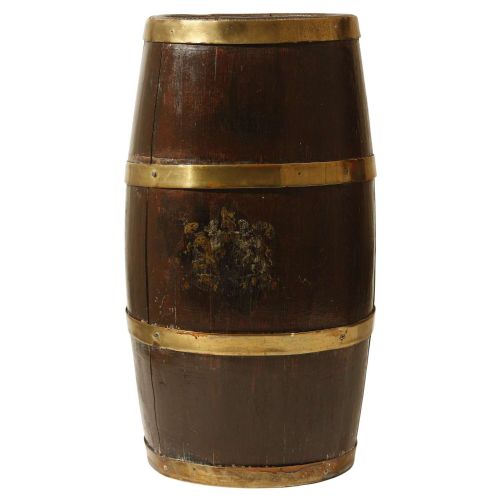


Antique Barrel Stick Stand
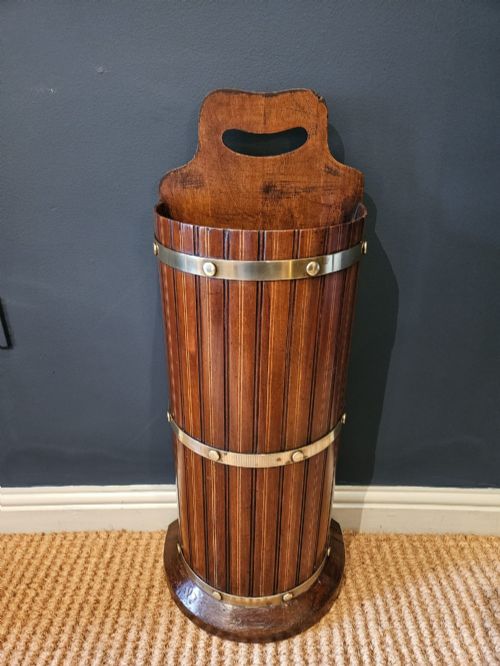
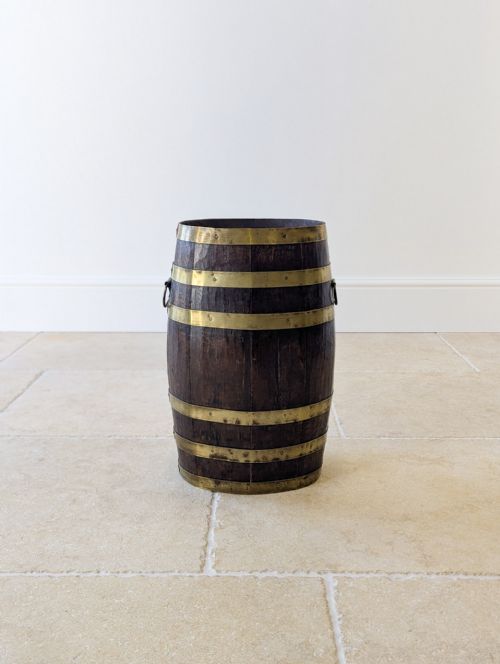
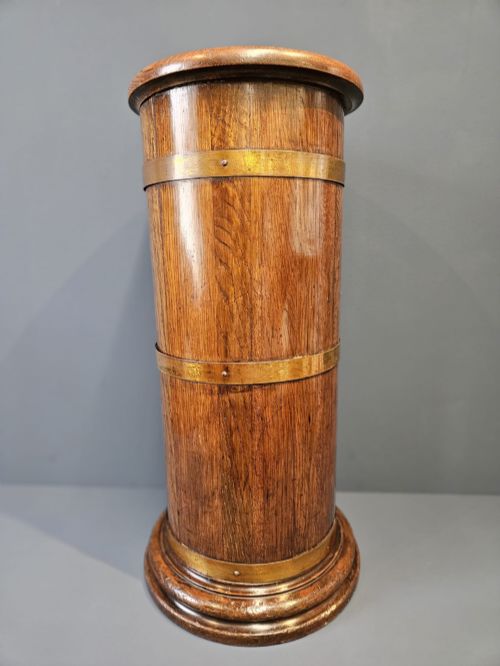
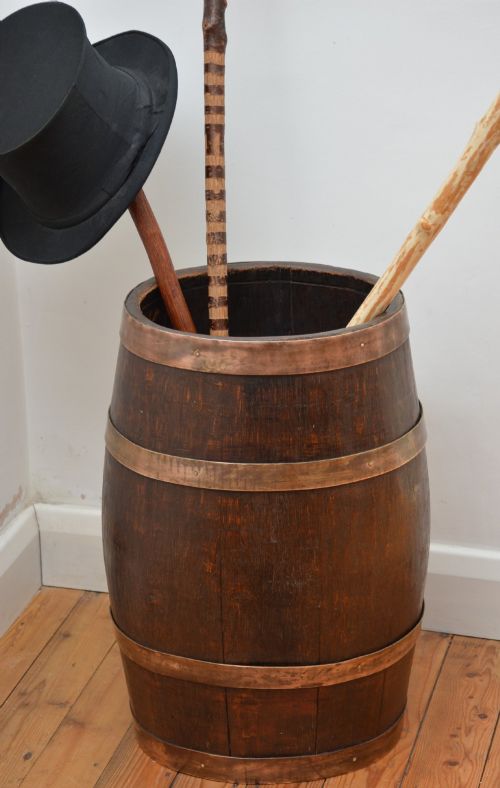
An antique barrel stick stand brings sturdy timber and polished metalwork into a hallway to hold walking canes and umbrellas.
Antique Barrel Stick Stand
An antique barrel stick stand is a practical hallway furnishing shaped from casks, staves, and repurposed vessels. These pieces range from compact country house designs to larger oval formats built for daily service.
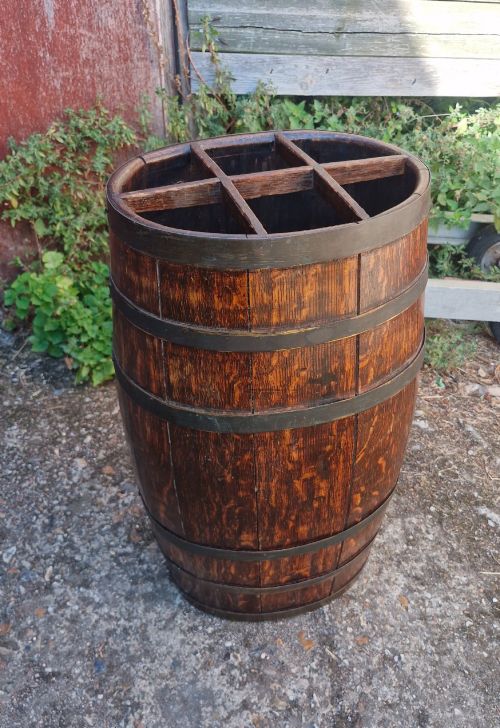
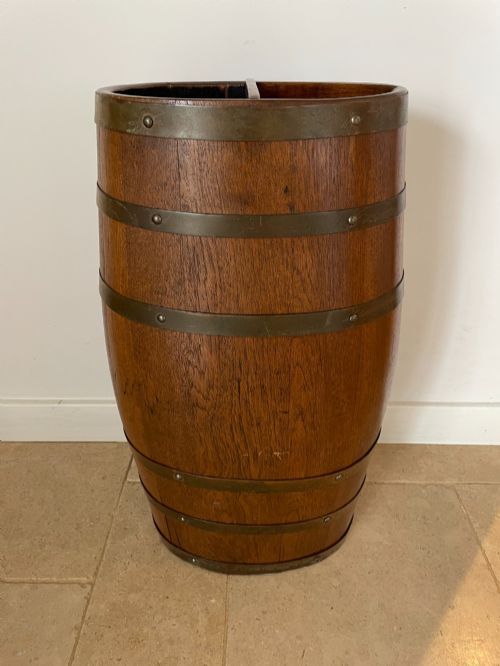
Forms vary from round coopered casks to oval shapes fitted with interior stick loops. Makers utilised local materials to create robust vessels suited for wet umbrellas and heavy walking sticks.
Construction and materials
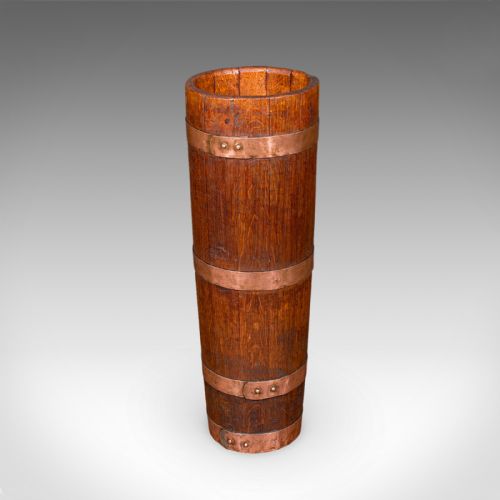
Cooperage forms the foundation of these pieces, utilising shaped wooden staves bound tightly together. Craftsmen employed oak as the primary timber, complemented by copper, brass, and iron hoops.
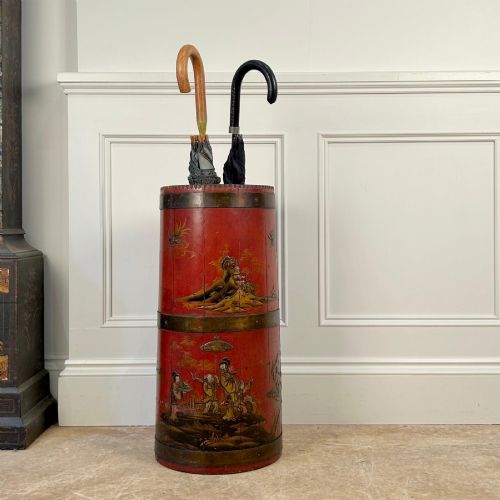
Metal bands secure the wooden staves, often tightened with rivets or fastened around the circumference. Certain examples incorporate japanned finishes or lacquered surfaces alongside traditional woodwork.
Some stands wear their former distillery lives proudly, disguised as miniature whisky casks waiting for rainy days.
Gradations in quality
Quality rests in the precision of the cooperage and the weight of the metal bindings. Finely made examples show tight stave joints and substantial brass or copper hardware rather than thin sheet metal.
Provenance and decorative details separate standard vessels from finer country house commissions. Pieces featuring applied coats of arms, internal umbrella loops, or distinct oval proportions demonstrate superior craftsmanship.
R.A. Lister
The Antique Barrel Stick Stand Glossary
- Coopered
- Constructed from curved wooden staves bound together with hoops, mirroring the traditional method of making casks and barrels.
- Stave
- One of the narrow vertical strips of wood that form the sides of a barrel or stick stand.
- Japanned
- Finished with a hard, glossy black or dark resinous varnish originating from European imitations of Asian lacquerware.
- Saltglaze
- A glossy, textured ceramic finish achieved by throwing common salt into the kiln during high-temperature firing.
- Stick loop
- An internal metal ring or divider fitted to the top of a stand to keep walking canes and umbrellas upright.
Antique Barrel Stick Stand: Frequently Asked Questions
What are barrel stick stands made of?
These stands are constructed primarily from timber staves, with oak appearing most frequently across the pieces. Metal components such as brass, copper, and iron provide structural reinforcement around the wood.
Additional materials include stoneware and lacquer finishes seen on specific Edwardian and Victorian variations.
How were these stands used originally?
Households placed them in entrance halls and vestibules to store wet umbrellas and walking sticks after outdoor use. The deep wooden interior contained moisture and mud away from hallway floors.
Many incorporated internal loops to keep individual canes separate and organised within the vessel.
Are these pieces waterproof inside?
Traditional coopered vessels were built to hold liquids, utilising tightly fitted wooden staves held by metal hoops. Over time, shrinkage can occur between the dry staves inside a modern heated home.
Owners often place a small tray or liner inside the base to catch drips from wet umbrellas.
How do I date a stick stand?
Dating relies on observing the timber grain, the type of metal used for the bands, and the overall construction method. Victorian examples frequently feature heavy brass bindings and coopered oak staves.
Edwardian pieces sometimes introduce painted decorations like Japassing, while earlier Georgian items display simpler hand-coopered forms.
Where should I place a barrel stand?
They suit entrance halls, porches, and boot rooms where coats and footwear are stored. Their vertical proportions allow them to fit into narrow spaces beside doorways.
Avoid positioning them directly against heat sources to prevent the wooden staves from drying and separating.