


Antique Bag Face
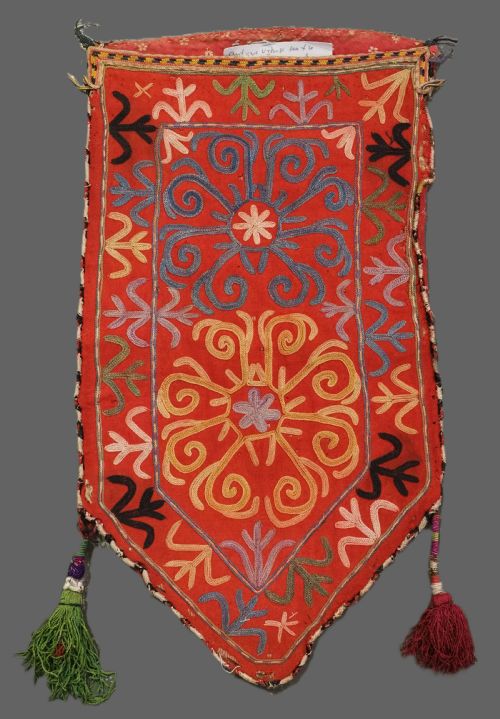
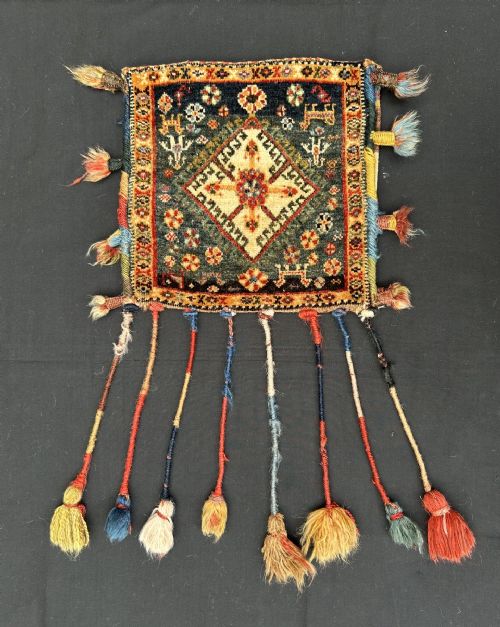
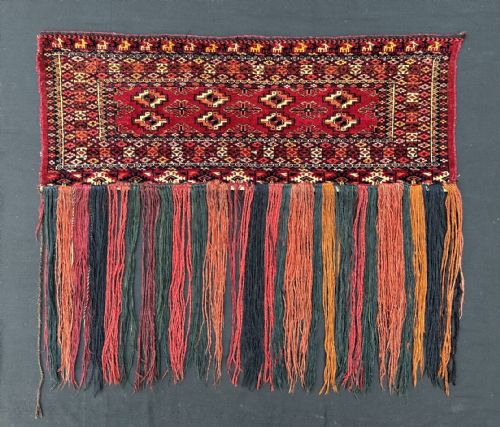
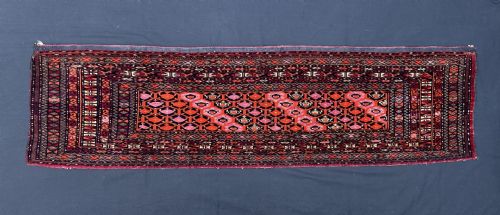
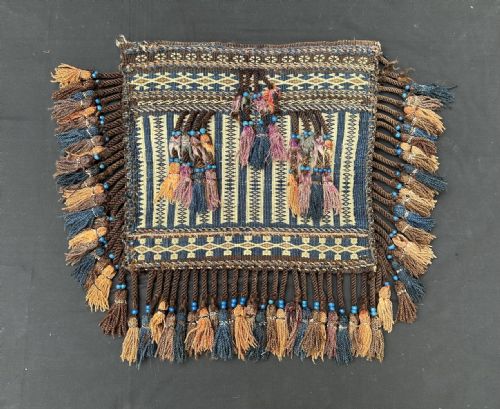
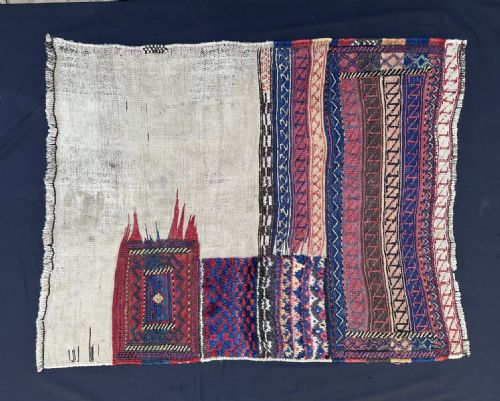
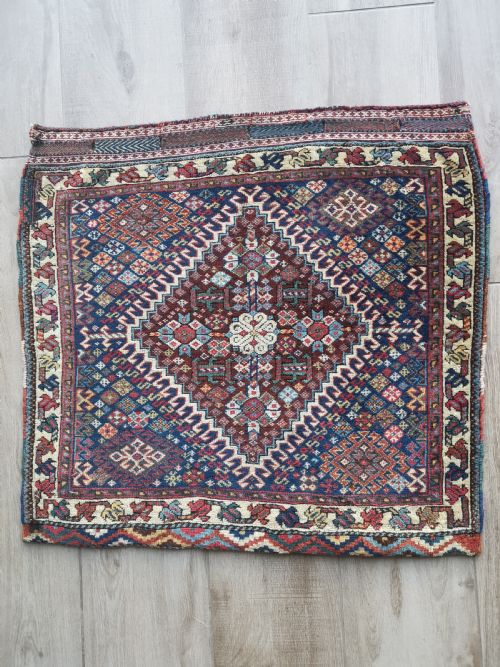
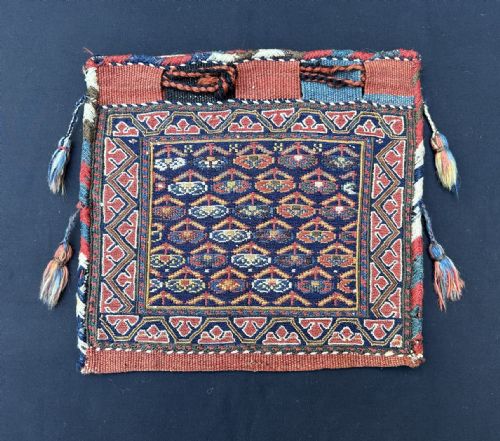
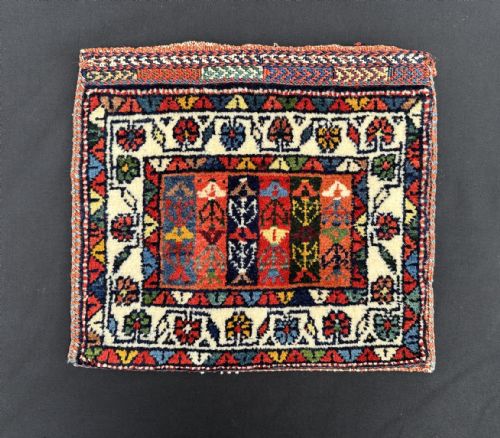
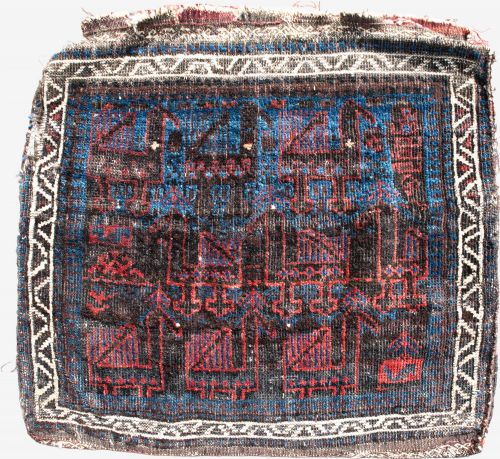
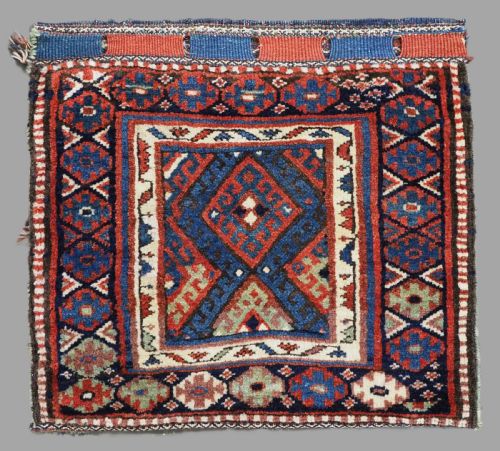
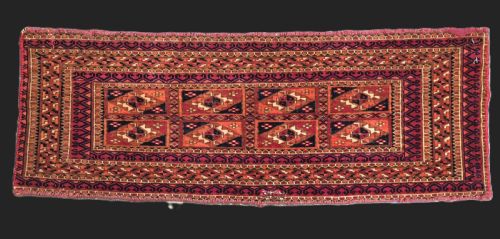
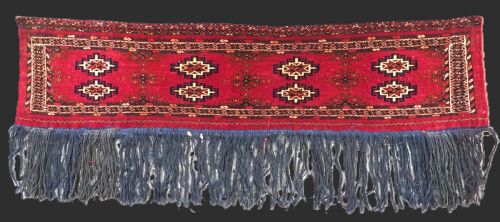
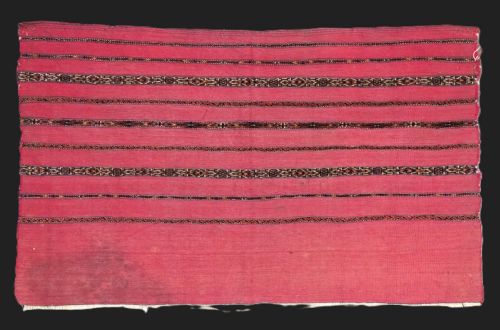
These woven fragments are antique bag face panels, rescued from nomadic horse tack and household storage bags to serve as striking wall art.
Antique Bag Face
When you examine an antique bag face, you are looking at the decorative front of a utilitarian piece created by tribal and nomadic groups across Persia, Central Asia, and the Caucasus. These woven panels once formed parts of larger saddlebags, storage sacks, and bedding bags used in daily nomadic life. Over generations, the worn backs were removed, leaving only the intricate face panels preserved for display.
Materials and Construction
The foundation and pile of these textiles rely predominantly on hand-spun wool, often paired with cotton for structural integrity and occasional silk highlights. Weavers utilised natural dyes extracted from local plants and minerals to achieve deep madder reds, rich indigos, and warm ivories. Some specialised pieces incorporate flatweave soumak techniques or glass beads alongside knotted pile.
Nomadic workshops and tribal households produced these items on portable horizontal looms set up in camps. The density of the knotting and the precision of the geometric or floral patterns reflect the weaver's skill and the specific tribal canon. Finished panels were subsequently separated from their plain weave backs or side chambers when the containers wore out.
The listings span pieces dated across the nineteenth and early twentieth centuries, alongside occasional eighteenth-century fragments.
Evaluating the Weaving
Quality in these textiles depends heavily on the handle, the fineness of the knotting, and the clarity of the design drawing. Tighter foundations and more resilient wool create a firmer structure that maintains its shape and detail over centuries. Secondary materials like silk or carefully chosen natural dye variations elevate individual examples above standard utility pieces.
The precision of the tribal guls or pictorial elements - such as bird motifs or specific medallion repeats - signals the weaver's mastery. Pieces with balanced proportions, intact borders, and sophisticated colour saturation occupy the upper tier of the available range.
The Antique Bag Face Glossary
- Gul
- A primary medallion or octagonal design element used repeatedly in Turkmen and tribal weaving. These motifs often identify the specific tribe or clan that produced the textile.
- Torba
- A small storage bag or wall hanging traditionally used within a nomadic tent. They frequently feature wide, detailed main borders and structured field designs.
- Chuval
- A large tent bag used for storing household goods and bedding during migrations. Their surviving faces display prominent guls and complex geometric layouts.
- Soumak
- A flatweave technique utilising wrapping threads over the warp strands to create a textured, durable surface. Shahsavan weavers frequently employed this method for their bag faces.
- Khorjin
- A complete double saddlebag used for transport on horses or camels. Surviving fragments typically consist of just the decorative face separated from the connecting web.
Antique Bag Face: Frequently Asked Questions
How were these bags used?
Nomadic tribes utilised these containers for packing clothing, bedding, and personal belongings during seasonal migrations. Larger sacks hung inside tents for domestic organisation, while smaller variations served as vanity bags or pillow covers.
Equestrian transport also required robust double saddlebags slung over pack animals. The faces absorbed the outward wear while keeping contents secure within the camp.
How do I hang a bag face?
You can mount these textile panels on a wall by attaching a custom cotton sleeve to the reverse and sliding a flat wooden batten through it. This distributes the weight evenly across the wool foundation without piercing the fabric.
Avoid using direct pins, nails, or heavy adhesives that stress individual warp and weft threads. Professional framing behind UV-filtered glass provides an alternative display method.
How do I identify different tribes?
Tribal attribution relies on specific structural traits, structural wool qualities, and distinct primary motifs such as the Tekke gol or Baluch bird patterns. Regional colour palettes - ranging from deep madder reds to ivory grounds - further narrow down the origin.
Comparing border bands and minor guls against established reference examples helps distinguish between Turkmen, Kurdish, Afshar, and Qashqai work.