





Antique Asian Table Lamp
An antique asian table lamp brings grounded history and intricate craft to a room, uniting eastern ornamentation with practical illumination.
Antique Asian Table Lamp
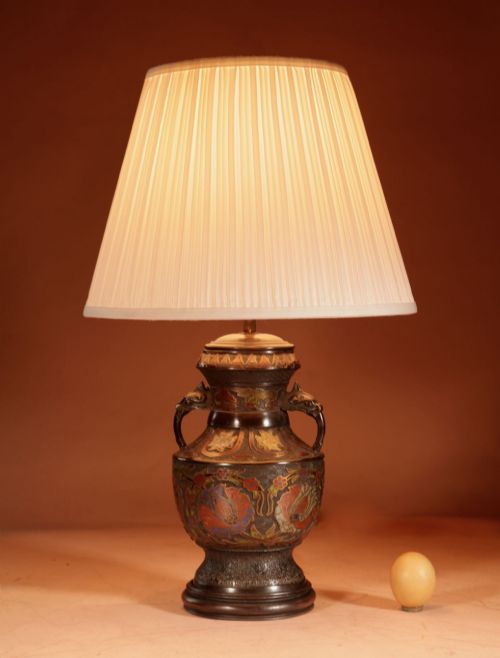
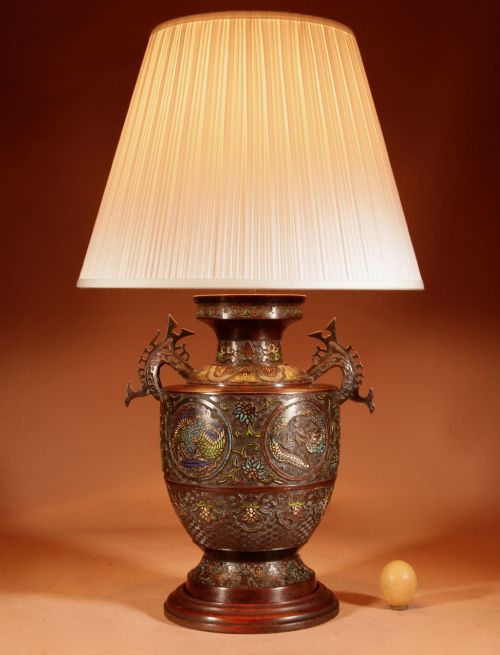
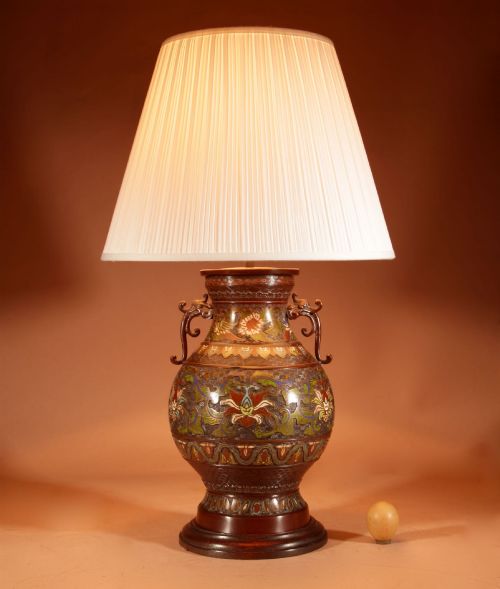
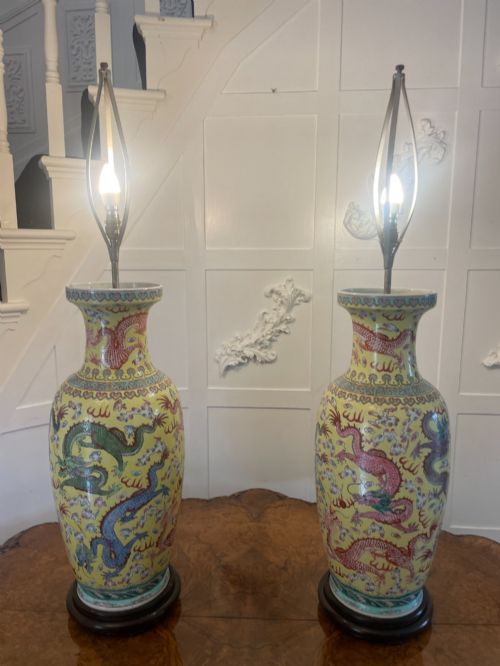
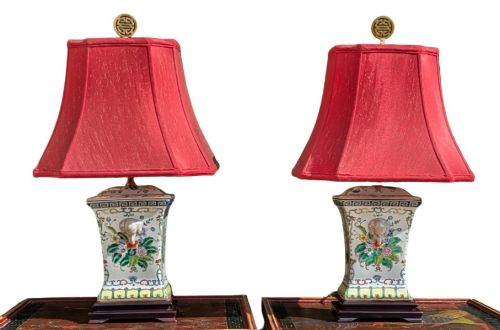
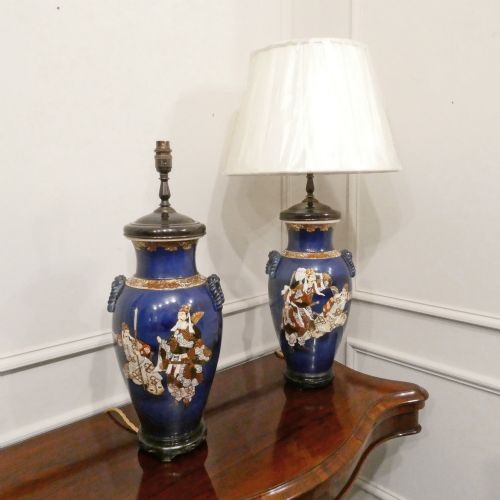
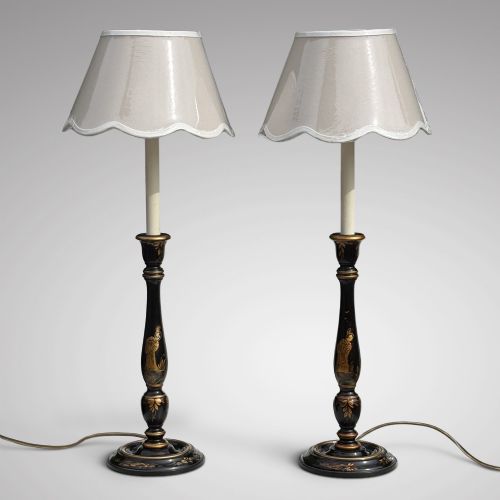
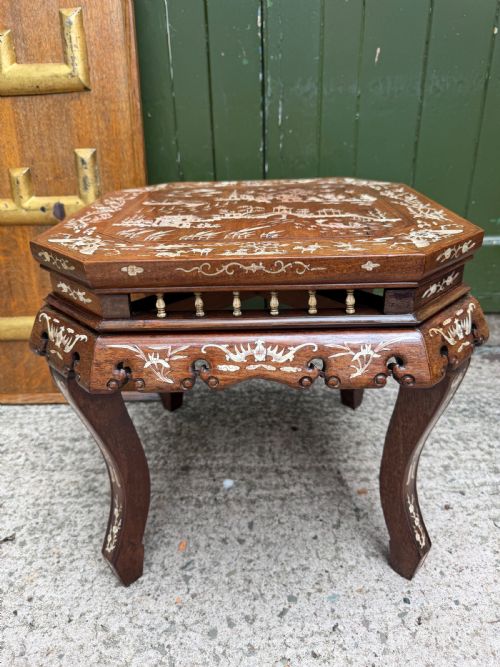
When searching for an antique asian table lamp, buyers encounter pieces formed from converted export vases, bronze vessels, and carved hardwood stands from the seventeenth to the twentieth century.
Japanese Meiji period bronzes and Chinese Qing dynasty ceramics dominate the selection, frequently adapted into functional lighting during the Victorian and Edwardian eras.
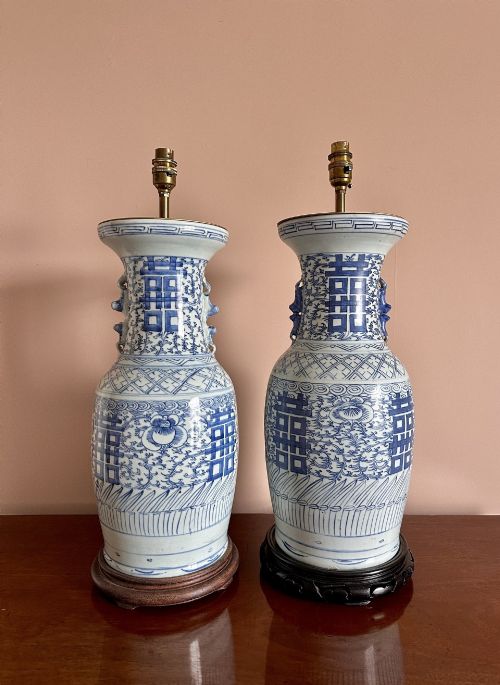
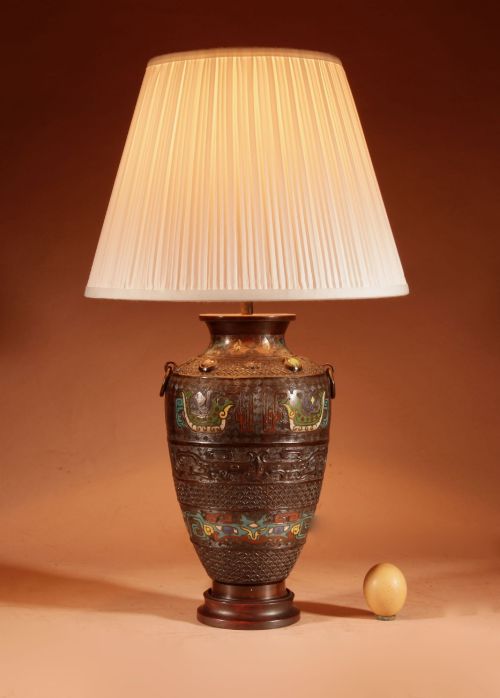
Pairs of cloisonné enamel vases and Satsuma earthenware jars appear regularly alongside carved root wood and champlevé lanterns.
How they were made
Craftsmen utilised heavy cast bronze, brass, and hardwoods such as huali, shaping vessels and figures by hand before applying decorative patinas and enamel work.
Cloisonné and champlevé techniques required fusing vitreous enamel within wire partitions on metallic surfaces, while ceramics relied on hand-painted cobalt blue or polychrome glazes.
Many items underwent later conversion into lighting, wherein original scholar's objects, brush pots, and temple vases received electrical fittings whilst retaining their antique bodies.
Antique Asian Table Lamp Retail Price Guide 2026
Typical asking prices for asian table lamp among the pieces listed under this phrase on Sellingantiques today, from the lower quarter to the upper quarter. They describe what is for sale here now, not the wider market.
Several bronze elephants stand ready to illuminate the room, bearing the unmistakable weight of Meiji period foundry work.
What varies in quality
The distinction between tiers rests upon the crispness of the original casting, the fineness of the enamel cell-work, and the preservation of hand-carved surface detail.
Original pairs maintain higher cohesion than married sets, showing matching proportions, consistent glaze tones, and identical patination across both bases.
The integrity of the conversion matters significantly, distinguishing pieces where wiring respects the historic vessel from those with intrusive alterations.
The Antique Asian Table Lamp Glossary
- Cloisonne
- Enamelling technique where metal wire creates tiny compartments on a base, filled with paste and fired. This method produces intricate geometric and floral patterns on metal vessels.
- Meiji Period
- Japanese historical era spanning from 1868 to 1912. Pieces from this time often exhibit highly detailed bronze casting and ornate Satsuma earthenware decoration.
- Champleve
- Enamelling method where troughs are gouged into a bronze or brass base to hold coloured enamel. The resulting surface shows bold metallic outlines between vibrant sections of colour.
- Satsuma
- Type of Japanese earthenware featuring a crackled ivory glaze decorated with enamels and gilt. These ceramics were widely adapted into decorative lighting during the late nineteenth and early twentieth centuries.
- Blanc de Chine
- White porcelain produced in Fujian province, China, known for its smooth milky glaze. Figures such as Shi lions and Daoist immortals frequently utilise this tactile ceramic.
Antique Asian Table Lamp: Frequently Asked Questions
How do I identify a Meiji period lamp?
Look for dense cast bronze details, energetic dragons, or signature Satsuma crackle-glaze ceramic bodies dating between 1868 and 1912.
Such items often display high relief work and traditional Japanese iconography reflecting the craftsmanship of that specific era.
Are these lamps converted from old vases?
Many examples began life as temple vases, brush pots, or ginger jars before receiving electrical wiring in the nineteenth or twentieth century.
This adaptive history means the ceramic or bronze body predates the functional lighting components attached to it.
How do I clean an antique bronze lamp?
Dust the surface gently with a dry, soft brush to protect the historic patina accumulated over centuries.
Avoid chemical polishes or water, which can strip away original bronze ageing and damage delicate enamel insets.
Do matching pairs usually survive together?
While single pieces appear frequently, surviving pairs do occur, offering balanced symmetry for side tables and mantlepieces.
Matching pairs share identical glaze characteristics, height, and casting details from the original workshop.