



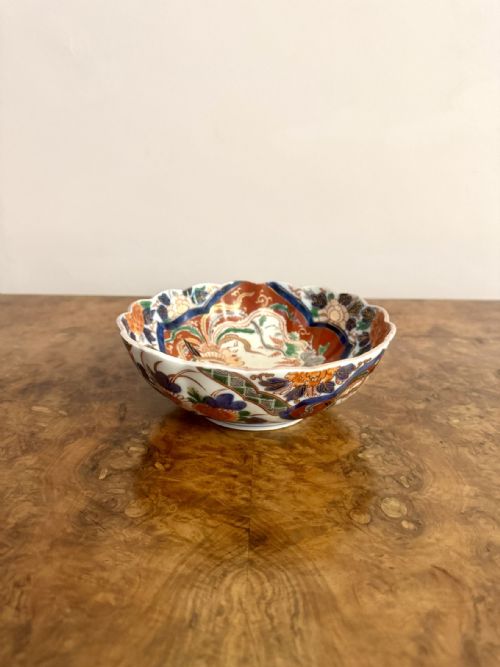
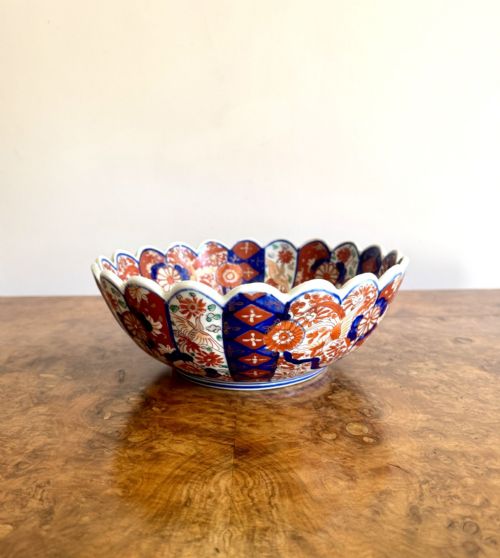
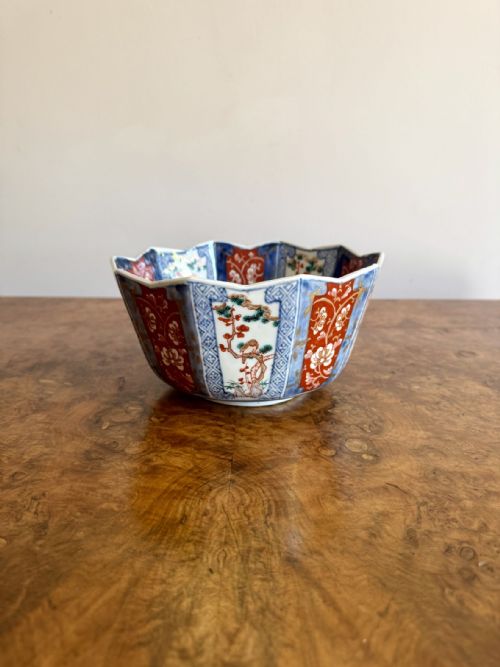


Antique Arita Bowl
An antique arita bowl brings the historic kilns of Hizen province into the room through painted porcelain and cobalt blue.
Antique Arita Bowl
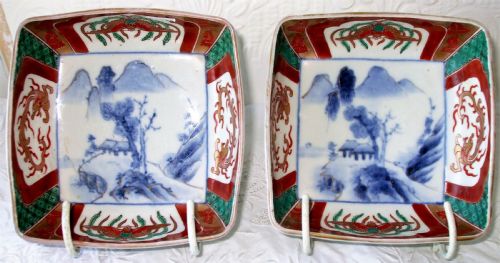
An antique arita bowl represents centuries of Japanese ceramic tradition produced in the town of Arita, spanning the Edo period through the Meiji period. These pieces take forms ranging from deep decorative vessels to shallow dishes and large jardiniere planters.
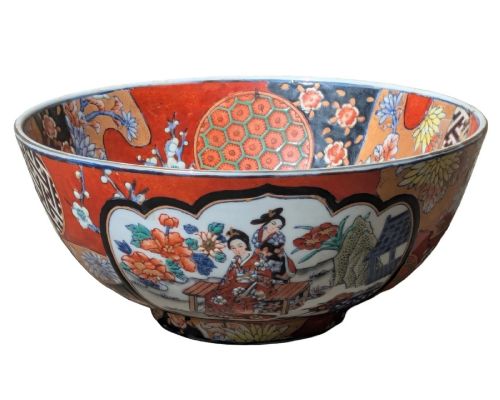
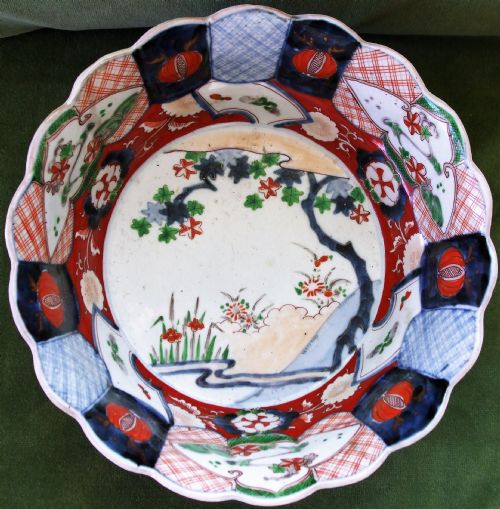
The most common examples on this page date from the 19th century and the 1900s, often displaying the distinctive Japanese Imari palette of cobalt blue and iron red, alongside touches of gold leaf.
Earlier vessels from the 17th century and 18th century appear less frequently, offering collectors a glimpse into the foundational years of export porcelain manufacture in Hizen.
Materials and technique
Potters shaped fine ceramic and porcelain clay on the wheel or in moulds before applying cobalt underglaze pigments for the primary blue designs. Artisans then added overglaze enamel colours, including iron red and occasionally gold leaf, firing the vessel multiple times to fix the decoration.
The use of cobalt underglaze combined with enamel and gilt creates the layered visual depth characteristic of Japanese Imari production across the Edo and Meiji eras.
Listings span the 17th, 18th, and 19th centuries, featuring porcelain, enamel, and cobalt underglaze across various bowl forms.
Judging quality
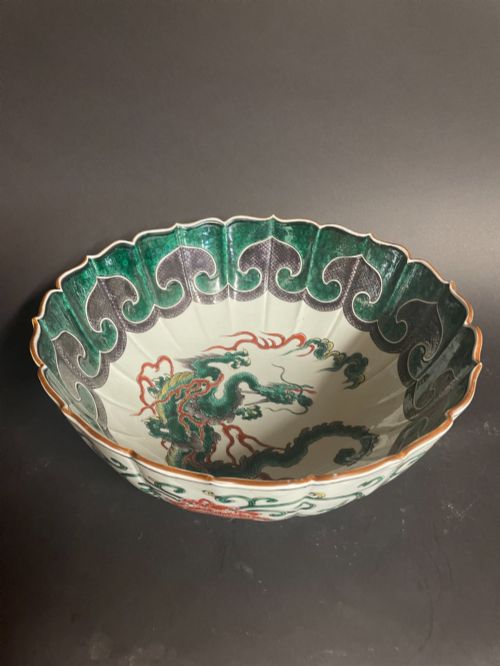
Quality rests on the crispness of the hand-painted brushwork, the vibrancy of the enamel pigments, and the delicacy of form, particularly around scalloped or clam shell edges. Earlier 17th century pieces demonstrate historical weight and potting characteristics distinct from the massed output of the Meiji period.
The integration of cobalt underglaze with secondary enamels distinguishes standard decorative vessels from those with finer artistic detail and balanced composition.
The Antique Arita Bowl Glossary
- Arita
- The Japanese town in Hizen province where porcelain production began in the early 17th century. It remains the historic heartland of Japanese ceramic manufacturing.
- Edo Period
- The period in Japanese history spanning from 1603 to 1868, characterised by economic growth and stability under the Tokugawa shogunate. Pieces from this era often show early potting traditions.
- Meiji Period
- The era from 1868 to 1912 following the restoration of imperial rule, known for intense artistic production directed towards international export markets.
- Cobalt Underglaze
- A pigment applied directly to the raw clay body before glazing and firing, producing a stable blue colour beneath the shiny surface layer.
Antique Arita Bowl: Frequently Asked Questions
How do I date an antique arita bowl?
Dating relies on stylistic markers, such as the palette and painting style associated with the Edo or Meiji periods. Earlier pieces often display simpler potting methods compared to later export wares.
Examining the base and the tone of the cobalt underglaze further helps place the vessel within the 17th, 18th, or 19th century.
Were these bowls used for food?
Many larger examples served as centrepieces or decorative dishes rather than everyday tableware. Export pieces made during the Edo and Meiji periods frequently functioned as display items in European and Japanese interiors.
Smaller dishes and bowls saw use for serving, though surviving antique examples are generally preserved for display today.
How should I clean my porcelain bowl?
Dust the surface gently with a soft, dry cloth to remove everyday particles. Avoid harsh chemical cleaners or abrasive sponges that might damage the overglaze enamels and gold leaf.
Washing in lukewarm water with mild soap is acceptable only when strictly necessary, followed by immediate drying with a soft towel.