



Antique Apothecary Scales
Antique apothecary scales are precision instruments of brass and mahogany designed for measuring small quantities, combining utilitarian accuracy with enduring decorative appeal.

Antique Apothecary Scales
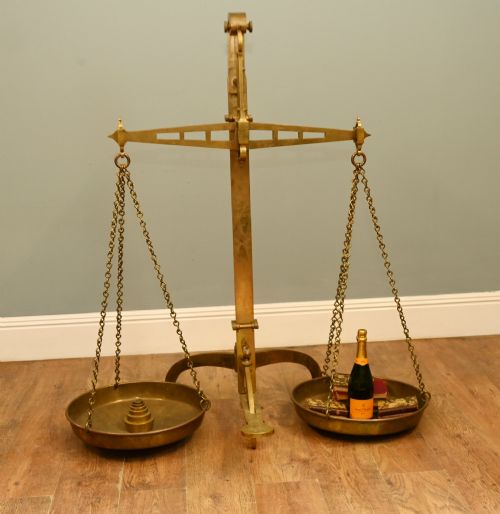
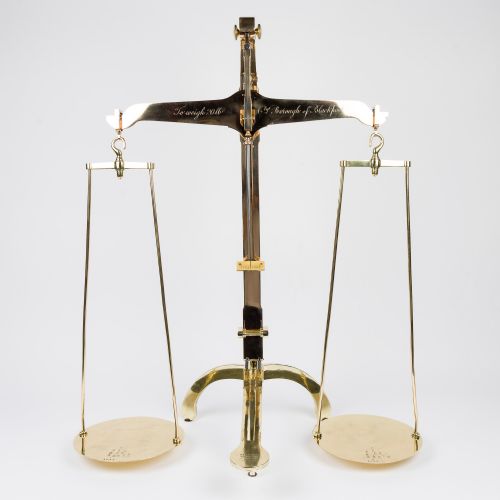
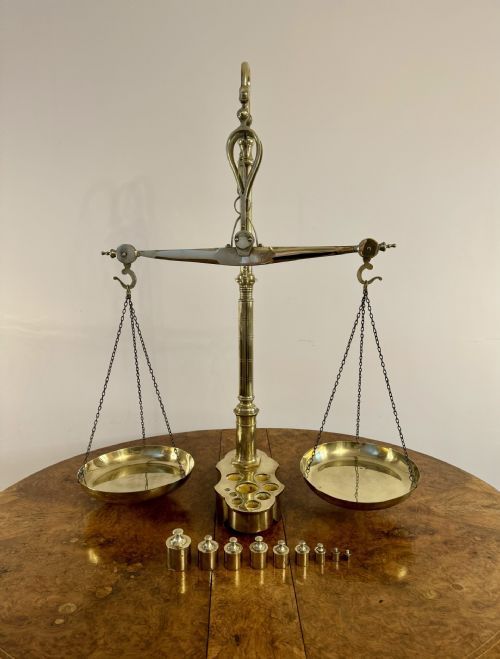
Antique apothecary scales comprise beam balances, countertop setups, and travelling kits designed for precise measurement in medical and scientific contexts. The pieces seen here span the nineteenth and twentieth centuries, including Victorian brass and mahogany examples alongside robust industrial variants.
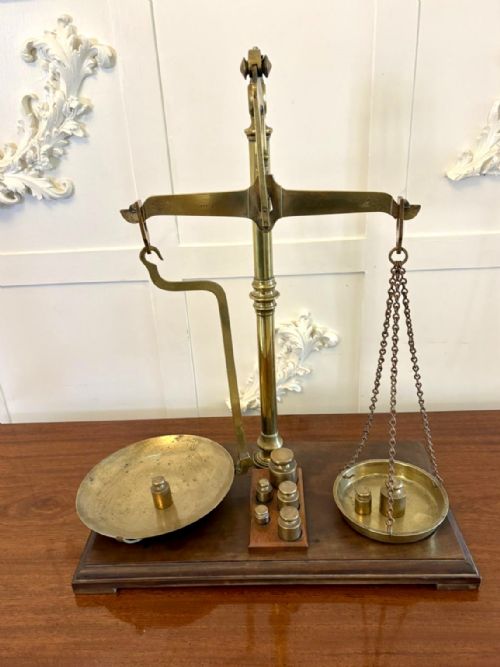
The most common formats on this page are beam scales mounted on wooden bases or fitted within lidded mahogany boxes, frequently accompanied by brass weights in blocks. Buyers also encounter heavier verification balances and hanging designs originating from various British and European makers.
Forms range from compact travelling sets used by doctors on the move to large countertop balances bearing municipal verification stamps. These objects reflect a period when dispensing medicines required meticulous calibration and finely tuned mechanical assemblies.

How they were made
Makers utilised polished brass for beams, pans, and indicator needles to ensure corrosion resistance and smooth movement. The metal components were cast, turned, and hand-finished to achieve the precise balance necessary for accurate dispensing.
Cabinetmakers housed the delicate mechanisms in mahogany, oak, and other hardwoods, often creating fitted drawers or lidded boxes to protect the weights. These wooden housings were polished and sometimes brass-mounted for durability during travel or daily apothecary use.
Antique Apothecary Scales Retail Price Guide 2026
Typical asking prices for apothecary scales among the pieces listed under this phrase on Sellingantiques today, from the lower quarter to the upper quarter. They describe what is for sale here now, not the wider market.
Some travelling doctor sets pack away so neatly into fitted mahogany boxes they resemble miniature writing desks.
What varies in quality
Quality rests in the precision of the balance beam, the crispness of maker signatures, and the completeness of the original weight sets. Finer pieces retain matching serial numbers across the beam and pans, indicating factory alignment rather than assembled parts.
The choice of housing also distinguishes the range, from simple pine or iron frames to flamed mahogany boxes with dovetailed joints and fitted compartments. Original labels, verification stamps, and untouched patina elevate the standing of a surviving set.
Day & Millward·Parnall & Sons·De Grave Short & Co·Oertling·Bartlett & Sons·May Roberts & Co·Fairbanks Scale Co
The Antique Apothecary Scales Glossary
- Beam scale
- A weighing device consisting of a horizontal lever suspended from a central fulcrum with equal arms. This design ensures that equal weights on each side balance precisely.
- Treen
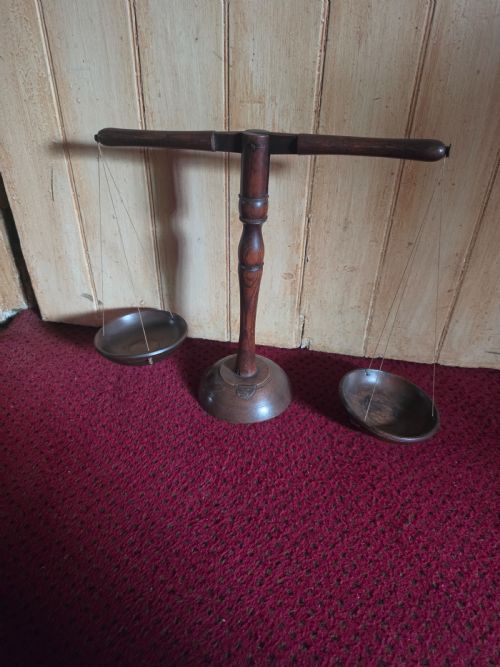
- Small handmade wooden household objects and utilitarian wares. In this context, it describes turned wooden scales and associated containers.
- Fulcrum
- The pivot point upon which the balancing beam rests and rotates. Its condition directly affects the sensitivity and movement of the scale.
- Troy ounce
- A system of units of mass traditionally used for precious metals and apothecary items. Weight sets accompanying these scales often utilise this specific measure.
- Verification balance
- A heavy-duty scale used by local authorities to check commercial weights and measures. These instruments often bear regional inscriptions and municipal stamps.
Antique Apothecary Scales: Frequently Asked Questions
How do apothecary scales work?
These instruments operate on the principle of lever equilibrium, where an equal load on both pans brings the central indicator needle to a dead vertical stop.
Fine adjustments are made using rider weights or by inspecting the swing of the brass beam against a calibrated scale plate.
Are original weights usually included?
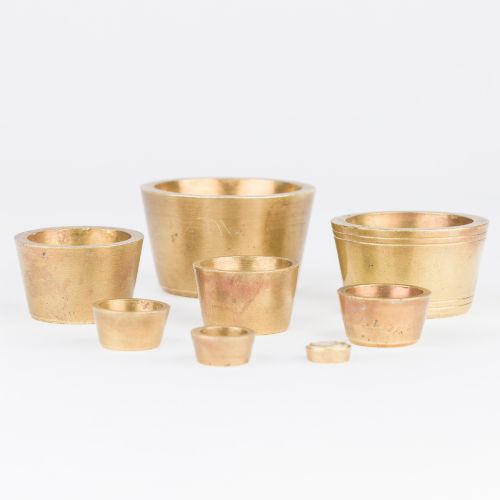
Many surviving sets retain their original brass weights, housed either in fitted wooden block stands or lined compartments within the mahogany base boxes.
When weights are missing, finding matching period replacements requires matching the specific Troy or metric sizing denoted on the original documentation or drawer slots.
How do I clean brass and mahogany?
Maintenance requires gentle dusting with a dry microfiber cloth and minimal handling of exposed brass components to preserve the natural oxidation and aged patina.
Harsh commercial polishes should be avoided because they strip the historical character and can damage delicate maker signatures or engraved inscriptions.
Can these scales still weigh accurately?
While many mechanical beam balances remain surprisingly sensitive, they are primarily collected and displayed as historical scientific instruments rather than calibrated for modern use.
Slight shifts in wooden bases or minor wear on knife-edge pivots mean professional recalibration is necessary if precise measurement is required.