





Antique Decorative Scales
When you handle antique decorative scales, you hold instruments that measured letters, groceries and meat with heavy brass and iron components.
Antique Decorative Scales
Antique decorative scales encompass functional weighing instruments and desk accessories produced across the nineteenth and early twentieth centuries. These pieces reflect the utilitarian needs of domestic and commercial life, translated into objects of display through polished metals and sturdy timber bases.
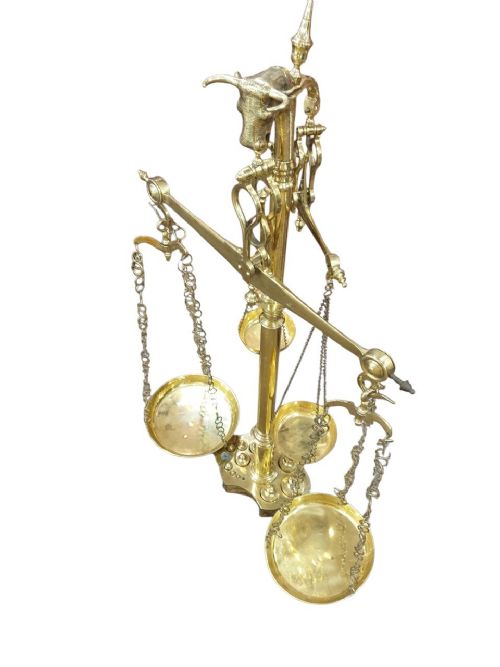
The versions most commonly met on this page include brass postal scales from the Victorian and Edwardian eras, alongside substantial butcher and grocer balances in iron and copper. Postal scales often sit on small wooden plinths complete with brass weights, while larger commercial models present impressive scale and presence.
Origins span English, French and Dutch workshops, capturing styles from the Victorian period through to early twentieth-century rustic industrial designs. Buyers encounter everything from compact letter balances to monumental floor-standing butcher scales intended for prominent display.
Materials and construction
Makers utilised resilient combinations of brass, iron and copper for the working mechanisms and pans, ensuring both durability and a striking metallic contrast. These metals were cast, hammered and polished to catch the light, paired frequently with wooden bases in hardwood or pine.
Structural integrity relied on heavy wrought iron and lead components for balance and weight, whilst smaller desk postal scales incorporated fitted wooden blocks. The contrast between warm timber and bright brass defines the physical construction of these measuring instruments.
Antique Decorative Scales Retail Price Guide 2026
Typical asking prices for decorative scales among the pieces listed under this phrase on Sellingantiques today, from the lower quarter to the upper quarter. They describe what is for sale here now, not the wider market.
Judging quality and character
Superior examples demonstrate crisp casting in the brass beams and substantial thickness in the metal pans, whereas lesser pieces show softer definition and lighter gauge materials. The weight and rigidity of the base material directly indicate the original purpose and tier of manufacture.
The survival of original surface finishes, from polished brass to unpolished iron, separates untouched specimens from those heavily restored. Quality rests in the mechanical harmony of the beam and the integrity of the combined wood and metal elements.
The Antique Decorative Scales Glossary
- Postal scale
- A small desk balance designed specifically for weighing letters and parcels to calculate postage rates accurately. These typically feature a brass beam and weights mounted on a wooden base.
- Balance scale
- A traditional weighing device utilising a central fulcrum and two suspended pans to compare an object's mass against known weights. They appear in both domestic desk sizes and large commercial formats.
- Butcher scale
- A heavy-duty commercial weighing instrument constructed from iron and brass, built to handle substantial quantities of meat in a shop environment. Their monumental proportions suit floor-standing display.
- Wrought iron
- Tough, malleable iron worked by hammering, often utilised for the structural arms and brackets of larger commercial scales. It provides the necessary strength to support heavy loads without bending.
- Malachite
- A green copper carbonate mineral sometimes utilised as an ornamental surface material on Victorian desk accessories. Its distinctive banding adds rich colour to small postal scales.
Antique Decorative Scales: Frequently Asked Questions
What were antique postal scales used for?
These desk balances served households and offices in determining correct letter postage before digital mail processing existed.
Users placed correspondence on the small brass platform and added matching weights until the beam levelled.
How do I identify a Victorian scale?
Victorian models frequently display specific registry marks, Gothic Revival influences or heavy brass casting methods typical of nineteenth-century metalwork.
They often combine polished brass beams with walnut or mahogany bases designed for desktop use.
Where should I place large floor scales?
Monumental commercial butcher scales require strong, level flooring due to their substantial iron and brass weight.
They function well as focal points in open living spaces, hallways or farmhouse kitchens.
Are these old scales still accurate?
While many mechanical balance scales retain their moving parts, small shifts in metal over decades mean they serve primarily as decorative objects.
Calibration varies, and most buyers utilise them for interior display rather than precise daily measurement.