
Antique Accent Table Drawers
These antique accent table drawers combine small proportions with fitted storage, offering practical surfaces across periods from the seventeenth century to the twentieth.
Antique Accent Table Drawers
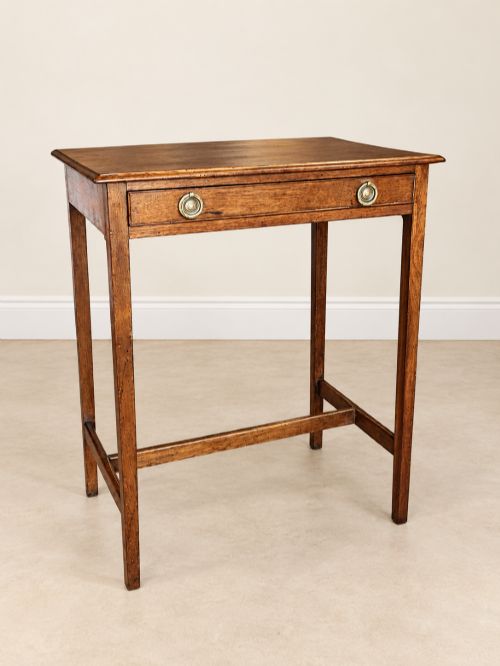
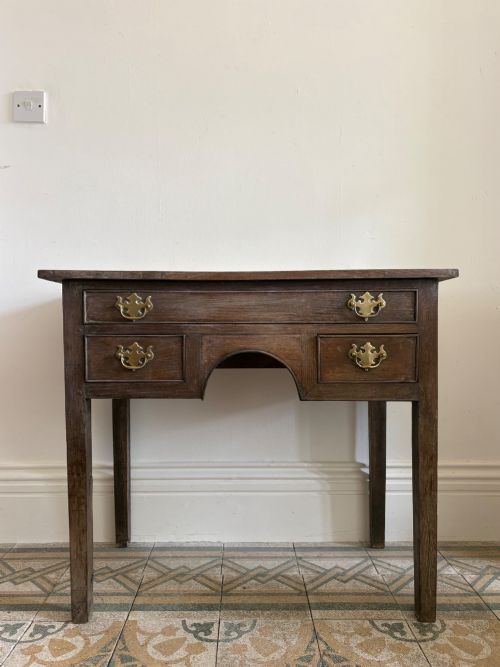
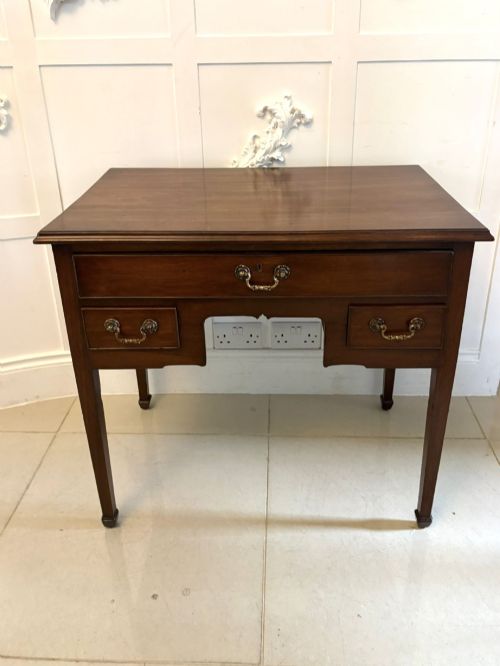
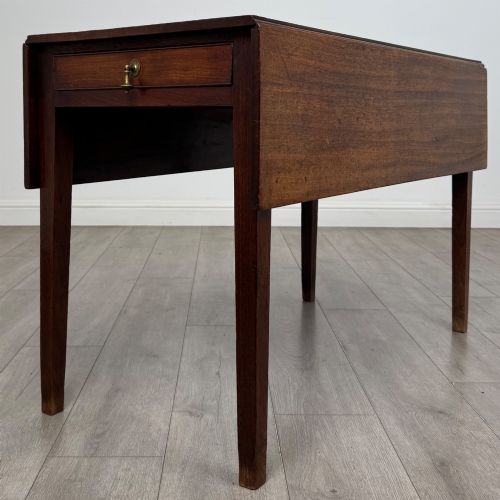
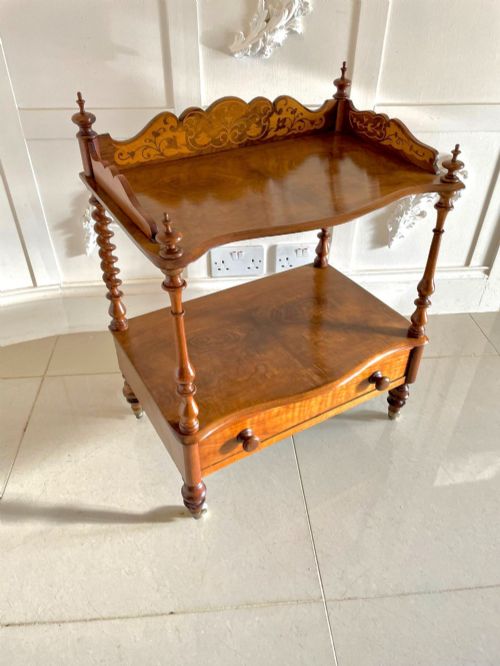
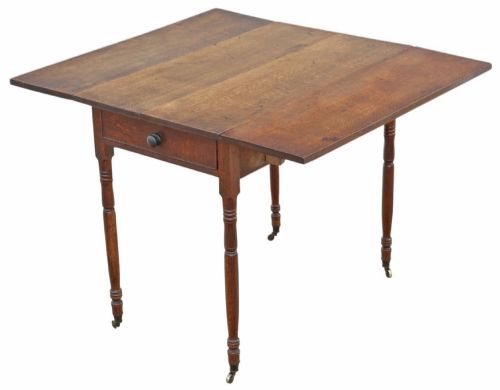
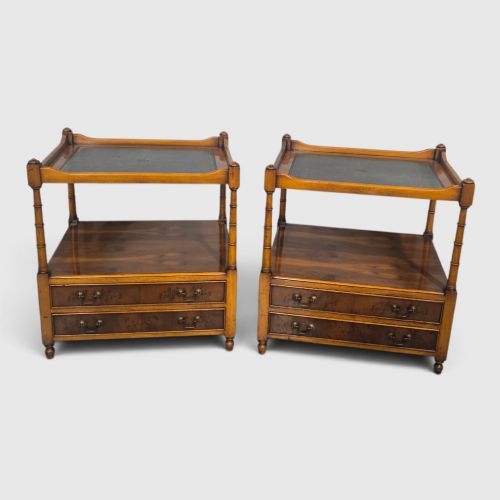
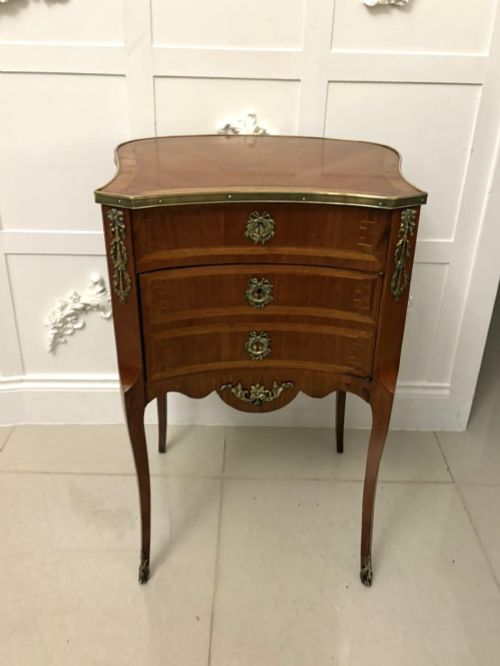
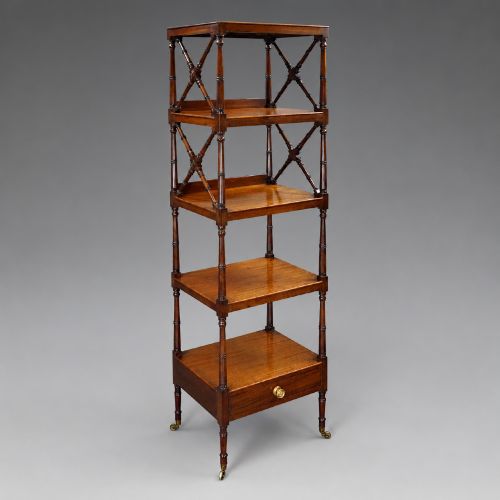
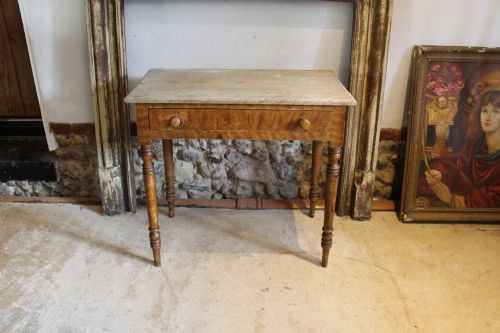
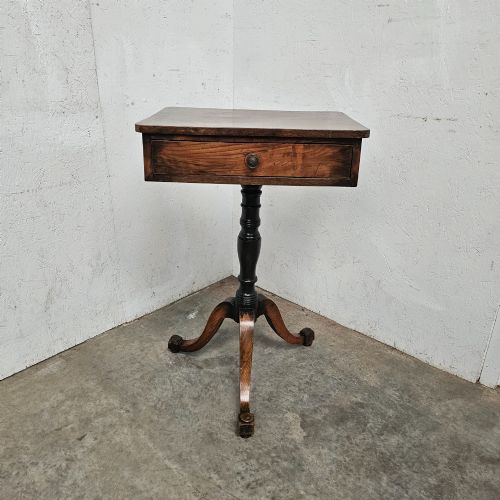
Antique accent table drawers appear primarily as side tables, lowboys, Pembroke tables, and small lamp tables equipped with one or two integrated frieze compartments. These compact pieces serve beside seating or against walls, providing convenient concealed storage for small items without dominating a room.
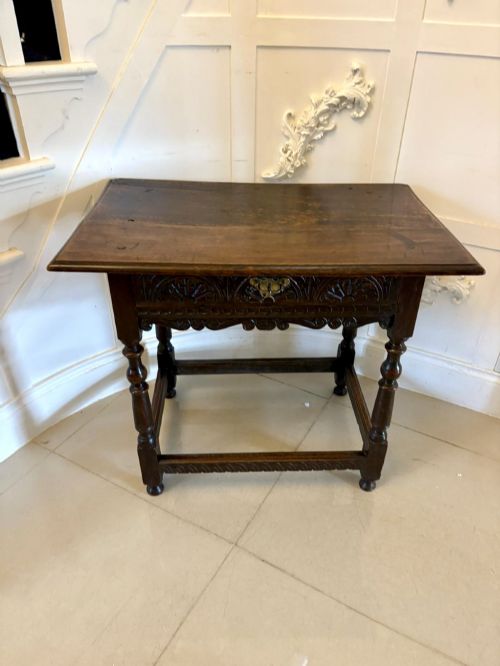
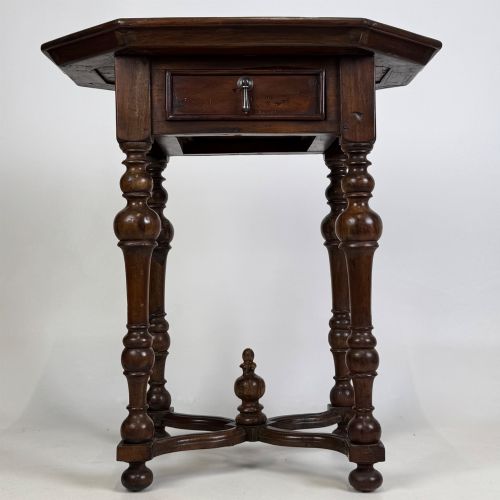
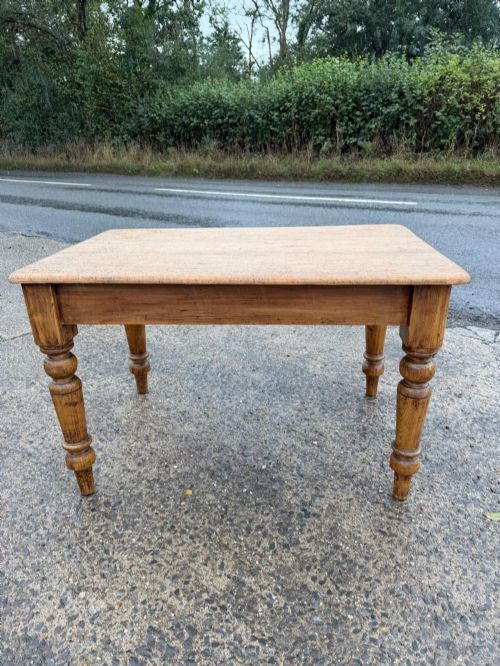
The selection ranges from seventeenth-century oak examples with bobbin turning to eighteenth-century Georgian mahogany lowboys and Victorian walnut or pine designs. Buyers frequently encounter Edwardian oak and walnut versions alongside earlier provincial fruitwood and elm variants.
Materials and Detail
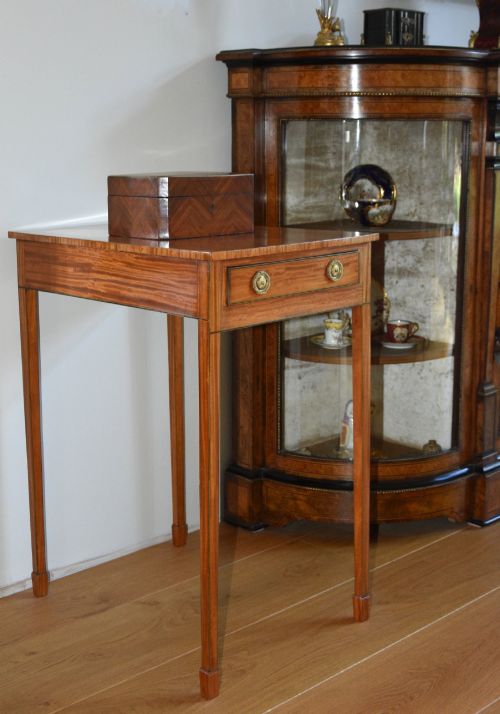
The distinction between standard utility items and exceptional pieces rests upon timber selection and surface finish. Figured grains, such as burr walnut or satinwood, paired with subtle cross-banding or inlay, elevate the visual presence of a side table far above plain pine or basic oak.
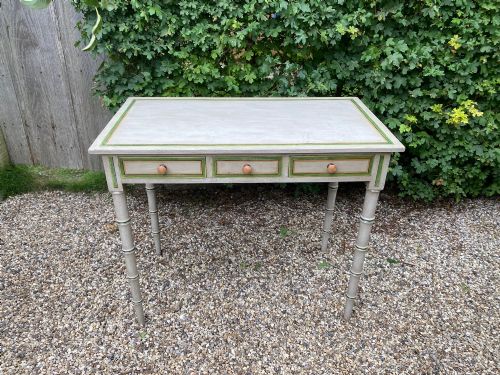
Execution of detail also separates the tiers, seen in the crispness of turned legs, the precision of dovetailing in the drawer box, and the retention of original brass hardware or scumble paint finishes rather than later replacements.
Listings span multiple centuries, uniting seventeenth-century oak joinery with nineteenth-century mahogany, pine, and walnut forms.
The Antique Accent Table Drawers Glossary
- Lowboy
- A small oak or mahogany table with one or more drawers, standing on relatively tall legs and originating in the eighteenth century.
- Pembroke table
- A small drop-leaf table with hinged flaps on either side and typically a single drawer at one end, designed for versatile placement.
- Frieze
- The horizontal structural band immediately beneath the top surface of a table, which commonly houses the drawer box.
- Cross-banding
- A decorative border of veneer laid around the perimeter of a table top or drawer front with the grain running perpendicular to the centre.
- Bobbin turning
- A type of lathe-turned wooden furniture leg or stretcher shaped like a string of spools or bobbins, popular in the seventeenth century.
Antique Accent Table Drawers: Frequently Asked Questions
Where should I place a small side table?
These compact pieces fit easily beside a sofa, armchair, or in a hallway where surface space is limited. Their integrated drawers provide useful storage for everyday clutter.
They also function effectively as bedside stands or lamp tables in larger rooms, adding period character to empty corners.
How do I identify a Georgian lowboy?
Georgian lowboys generally date from the eighteenth century, constructed in mahogany or oak with one to three drawers in the frieze. They typically stand on cabriole or straight legs and display restrained proportions.
Finer versions often feature cross-banded veneers and original brass drop handles, distinguishing them from later revival pieces.
Are seventeenth century tables sturdy for daily use?
Seventeenth-century oak and elm tables were built with pegged mortise and tenon joints designed for heavy domestic service. Their robust timber construction handles modern weight comfortably.
Care should be taken with surface moisture and direct heat to protect the aged polish and dry timber.