

Anglo Indian Wooden Carving
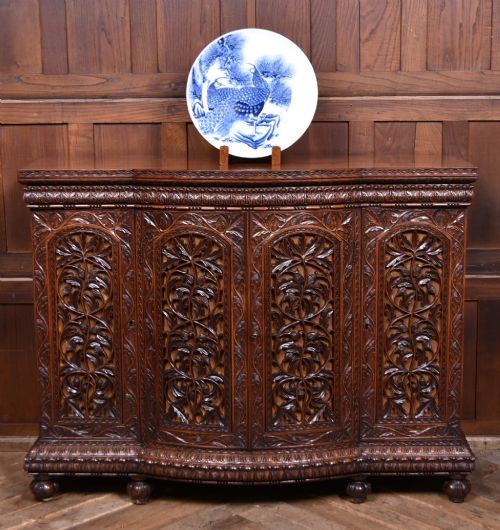
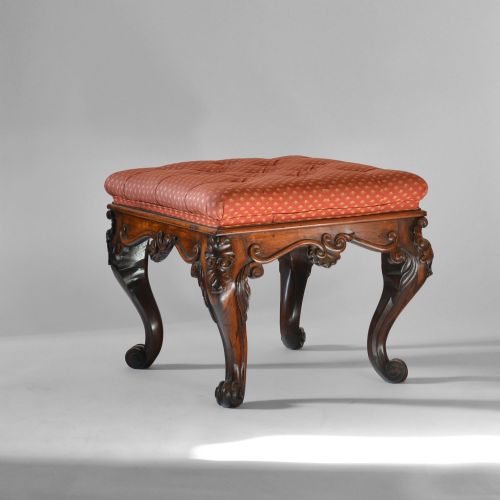
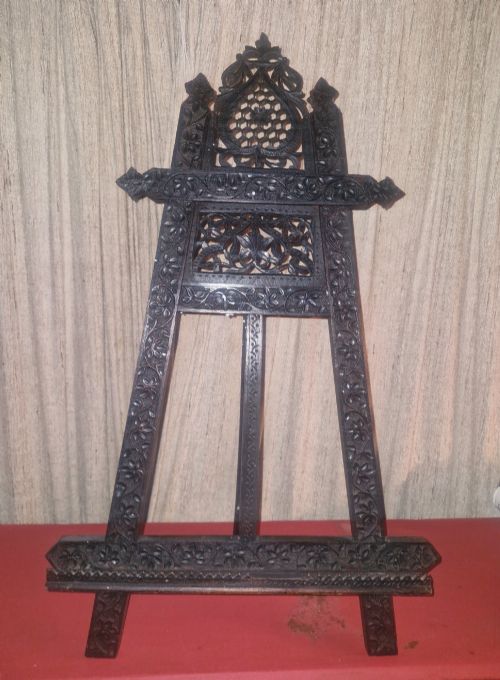
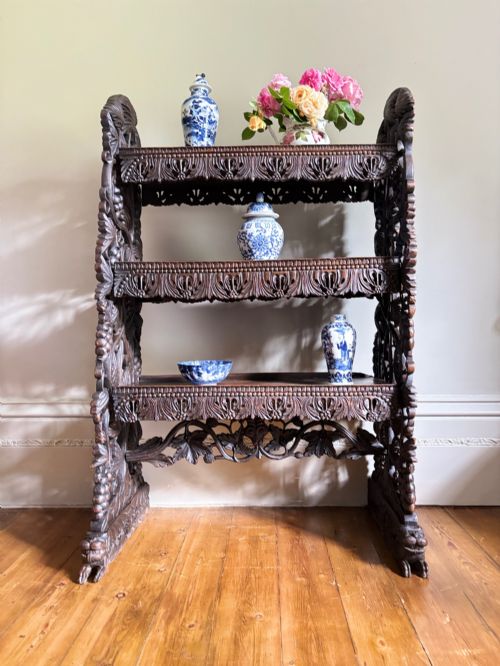
These pieces of anglo indian wooden carving combine British colonial scale with intricate native craft, offering tables, chests, and mirrors to anchor a room.
Anglo Indian Wooden Carving
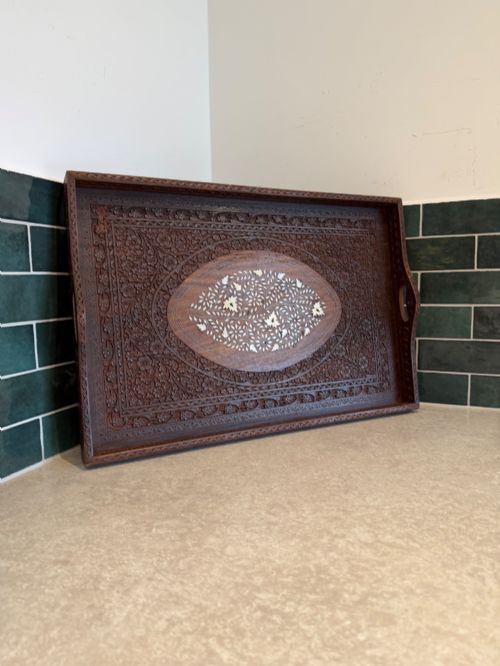
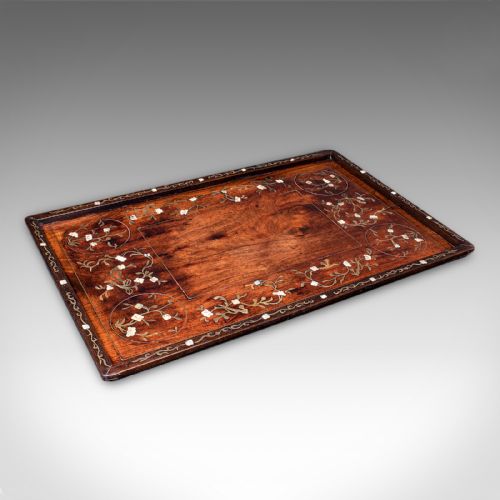
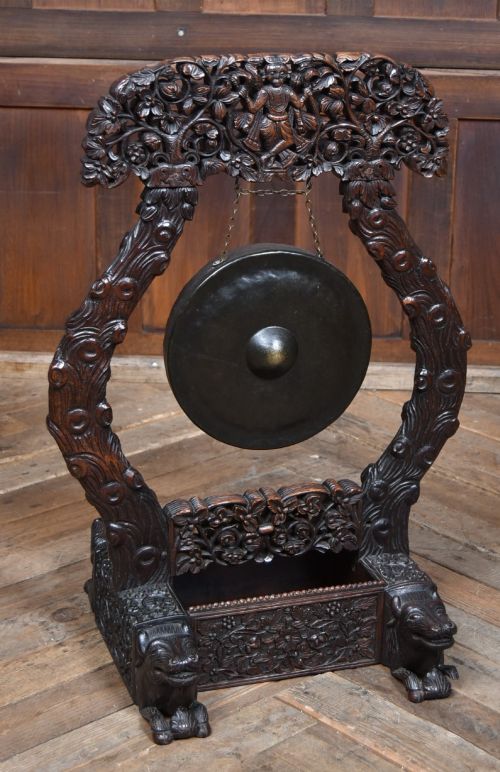
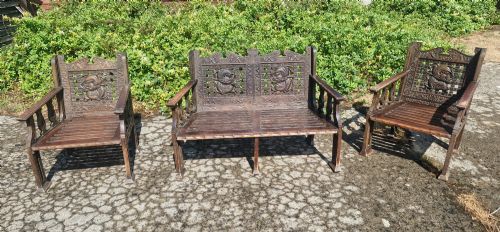
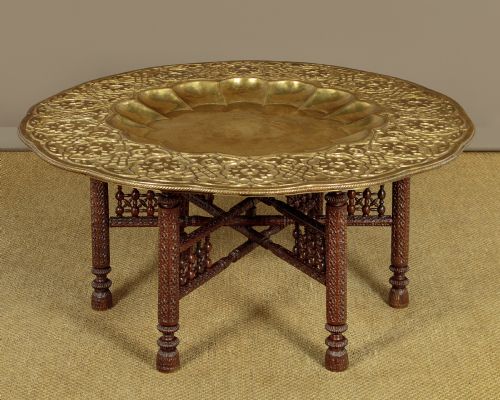
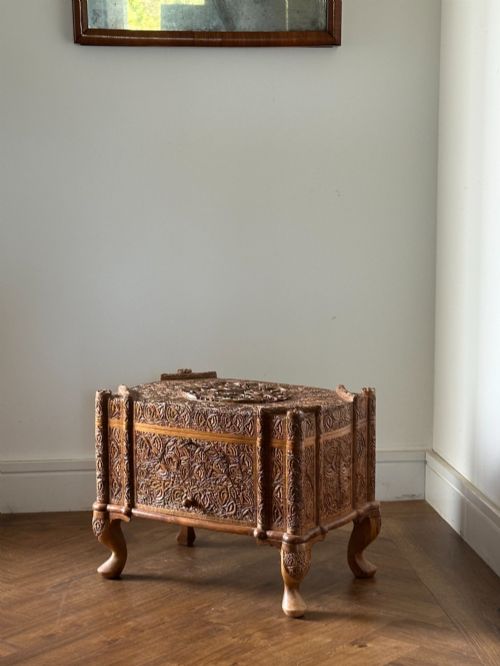
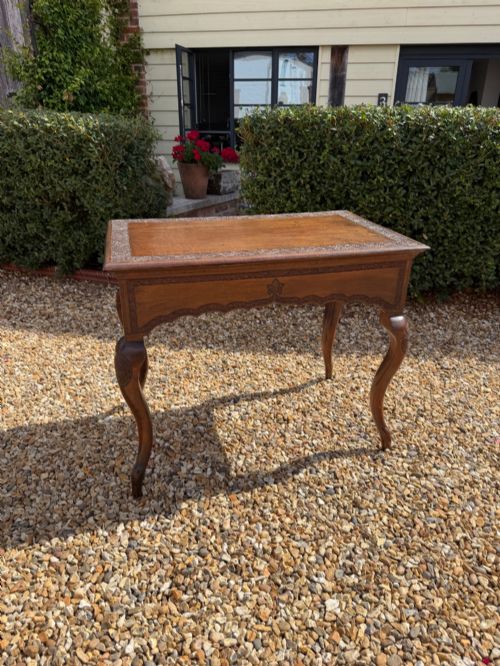
An anglo indian wooden carving brings together traditional craftsmanship and British domestic forms from the nineteenth and early twentieth centuries. Collectors encounter side tables, coffee tables, serving trays, and larger items such as bookcases and dowry chests.
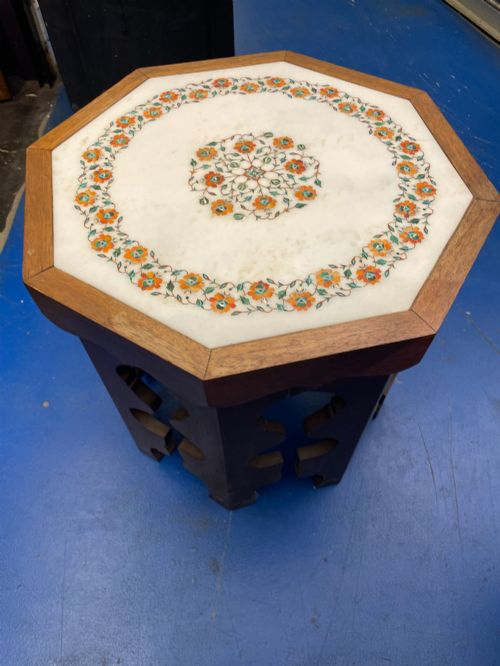
The selection ranges from Victorian and Edwardian examples to specific regional types including Hoshiarpur octagonal tables and Kashmiri walnut pieces. These items serve as functional furniture and decorative accents within a domestic interior.
How they were made
Artisans utilised dense timbers such as teak, padouk, rosewood, ebony, and walnut as the primary structural foundation for each carved form. These woods provided the necessary stability for deep, intricate relief work across surfaces.
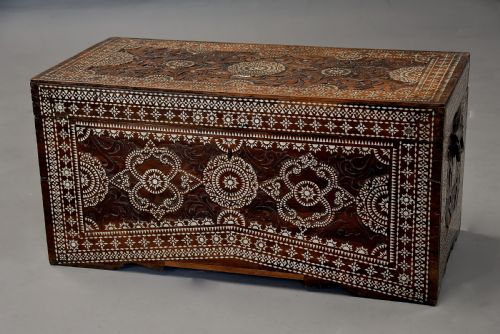
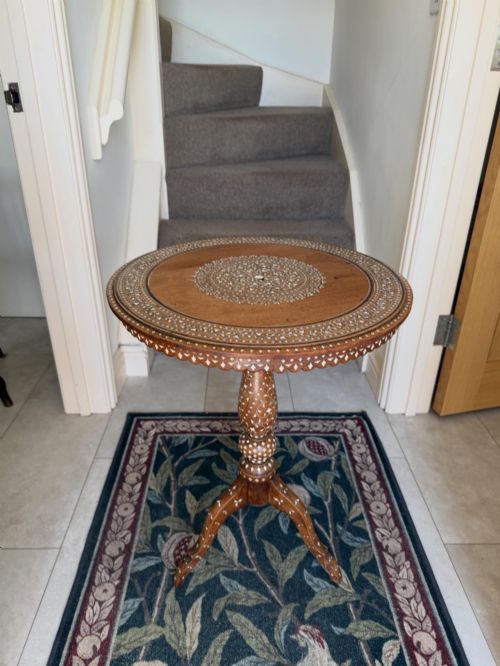
Many objects incorporate contrasting materials including brass, bone, and mother of pearl inlaid into the timber substrate. Surface decoration combines geometric patterns with floral motifs executed entirely by hand.
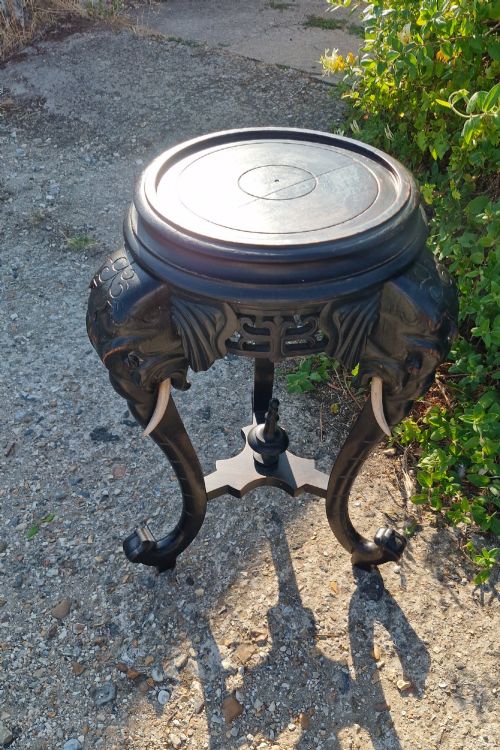
Elephant tables complete with painted wooden tusks stand ready to greet guests in the hallway.
What varies in quality
Depth and precision of the chisel work distinguish superior examples from simpler production. Master carvers achieved crisp undercut details and balanced symmetry across complex multi-panel surfaces.
Integrity of the inlay work and selection of the underlying timber determine the overall merit of a piece. Denser hardwoods and intact contrasting elements denote careful initial manufacture.
Hoshiarpur workshops
The Anglo Indian Wooden Carving Glossary
- Hoshiarpur
- A centre in the Punjab renowned for intricate wooden tables and furniture featuring micro-mosaic inlay. Pieces from this region typically employ brass, bone, or wire set into dark timber.
- Padouk
- A heavy, durable tropical hardwood with a distinctive reddish hue often utilised in nineteenth-century campaign and colonial furniture. It accepts fine carving without splintering.
- Sarcophagus
- A monumental coffin-shaped form adopted during the Regency and Victorian periods for luxury storage boxes, caskets, and tea caddies. These objects feature sloping lids and stepped plinths.
- Inlay
- A decorative technique where contrasting materials are embedded flush into recesses cut within the wooden base. Common inserts include mother of pearl, bone, and sheet brass.
- Dowry chest
- A large storage trunk associated with marriage customs, constructed with robust timbers and reinforced with iron or brass mounts. These pieces provided secure storage for household textiles and valuables.
Anglo Indian Wooden Carving: Frequently Asked Questions
How do I identify Hoshiarpur tables?
Hoshiarpur tables are typically octagonal or folding, featuring dense all-over carving combined with geometric brass or bone inlay. The timber is usually a dark hardwood finished with intricate floral and scroll motifs across every surface.
These pieces were produced for export during the late nineteenth and early twentieth centuries, reflecting the Victorian taste for exotic colonial furnishings.
What woods were used for these items?
Artisans utilised locally available tropical timbers including teak, padouk, rosewood, ebony, and walnut. These dense woods supported the deep relief carving demanded by both domestic patrons and the export market.
Inland regions such as Kashmir also utilised walnut for smaller occasional tables and lamp bases, while southern workshops favored heavier dark hardwoods.
How should I care for inlaid wood?
Maintain stable indoor humidity levels to prevent the timber from shrinking and loosening the delicate brass or bone inserts. Apply minimal moisture and avoid modern chemical polishes that can discolour the natural materials.
Occasional application of appropriate wax preserves the surface sheen of both the carved wooden body and the embedded decorative elements.
Are these items from the Victorian period?
Many examples date from the Victorian and Edwardian eras, spanning the late nineteenth century through to the nineteen-twenties. This period saw extensive trade and administrative exchange between Britain and India, driving production for Western homes.
Stylistic markers such as brass mounts, folding bases, and specific cabinet proportions help establish the chronological context of individual objects.