





Anglo Indian Tilt Top Table
An anglo indian tilt top table brings colonial craftsmanship and dense tropical timbers straight into a modern interior.
Anglo Indian Tilt Top Table
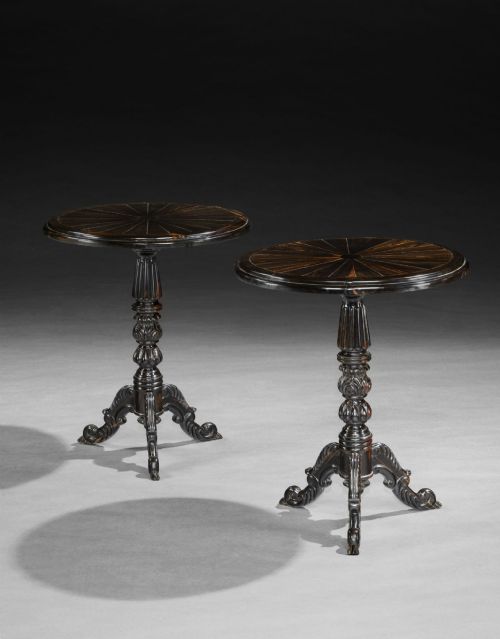
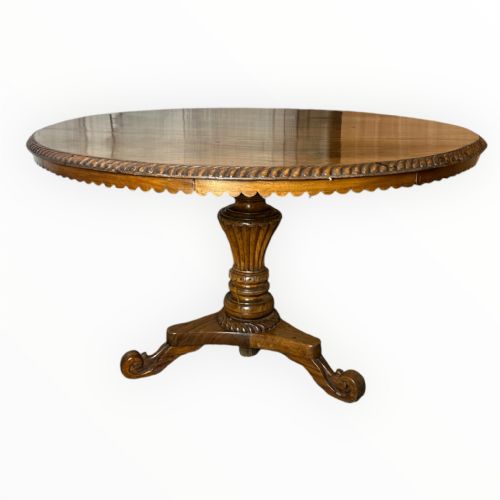
An anglo indian tilt top table combines British furniture forms with South Asian woodworking traditions from the nineteenth century. These pieces usually feature circular tops that hinge vertically on a central pedestal supported by three legs.
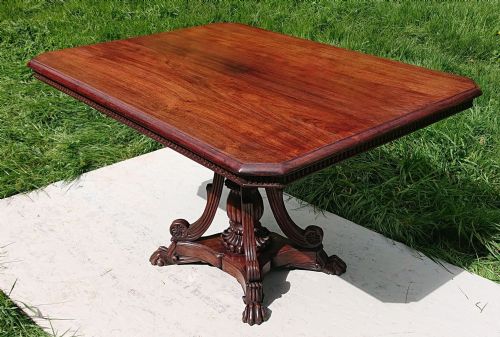
The selection includes regional variations spanning the Victorian era, with examples originating from Ceylon, Burma, Bombay, and northern India. Forms range from heavy occasional and centre tables to smaller tripod designs.
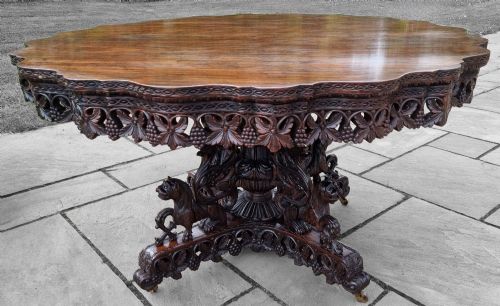
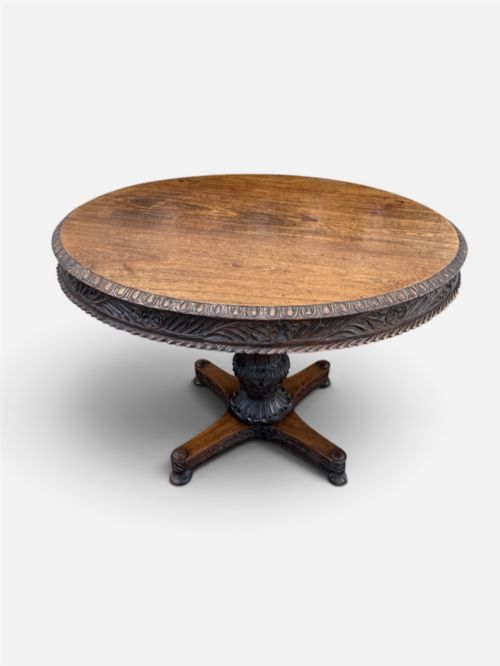
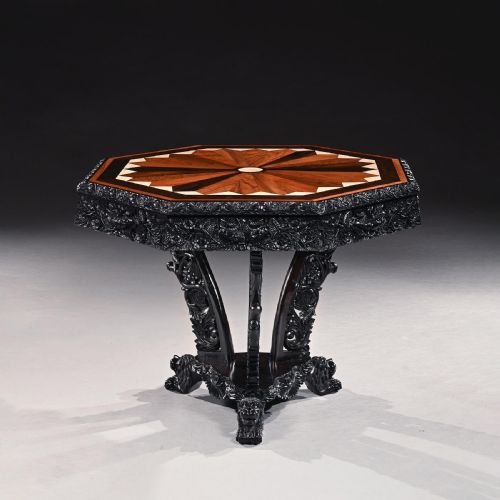
Carved ornament defines the group, with floral motifs, geometric patterns, and figural details appearing across the pedestals and borders. Many retain their original tilting mechanism, allowing the top to fold flat when not in use.
Materials and construction
Carvers utilised dense exotic hardwoods including teak, rosewood, padauk, ebony, coromandel, and satinwood. These heavy timbers allowed artisans to execute deep relief carving without compromising the structural integrity of the base or top.
Construction techniques combine traditional British pedestal framing with intricate indigenous joinery and hand carving. Surfaces frequently incorporate brass fittings, mother of pearl inlay, or detailed painted work depending on the regional workshop.
Listings feature items from the nineteenth century, including specific dates such as eighteen-forty, eighteen-fifty, eighteen-sixty, and eighteen-eighty.
Distinctions in quality
The depth and crispness of the hand carving separate standard production from exceptional execution. Superior examples display undercut foliage and sharp detail that remains consistent across the entire base and border.
Selection of timber also marks the tier of a piece, with figured coromandel, rich ebony, and highly grained satinwood commanding greater presence than standard teak or general hardwood. The structural stability of the tilting mechanism further distinguishes finer workshop output.
The Anglo Indian Tilt Top Table Glossary
- Tilt top
- A table top mounted on a hinge mechanism that allows the surface to rotate vertically and rest flat against the pedestal when stored. This mechanism saved floor space in colonial drawing rooms.
- Padauk
- A heavy tropical hardwood with a dense grain and warm reddish-brown hue. It served as a primary material for durable colonial furniture.
- Tripod base
- A pedestal support resting on three distinct feet or legs. This configuration provides steady balance on uneven floors.
- Ceylonese
- Pertaining to Ceylon, now Sri Lanka, known for distinct nineteenth-century cabinet work utilising ebony and satinwood. These pieces often feature specific regional carving styles.
- Coromandel
- A heavy, highly figured dark timber with contrasting light streaks. Cabinetmakers reserved this material for high-status tables.
Anglo Indian Tilt Top Table: Frequently Asked Questions
What is an anglo indian tilt top table?
These pieces are nineteenth-century tables created during the British colonial period in India, Burma, and Ceylon. They combine traditional European furniture forms with local tropical timbers and intricate carving.
The tops are mounted on hinges so they can tilt vertically when not in use. This practical design allowed colonial households to store the tables against walls to save space.
How do I use an anglo indian tilt top table at home?
These tables function well as central display pieces, lamp tables, or occasional surfaces in a living room. Their rich timber tones anchor neutral spaces and complement traditional or eclectic interiors.
Because the top tilts, you can position the table flat against a wall as a decorative panel when floor space is limited. Ensure heavy items are removed before tilting the surface.
What woods were used for these tables?
Artisans utilised dense tropical hardwoods native to South Asia and Southeast Asia. Common materials include teak, rosewood, padauk, ebony, coromandel, and satinwood.
These timbers offered the structural weight and fine grain required for deep relief carving. Some examples also incorporate lighter specimen woods for inlaid geometric patterns.
How can I tell the regional origin?
Regional origin often reveals itself through the choice of timber and the style of carving. Ceylonese pieces frequently employ ebony or satinwood with distinct floral motifs, while Burmese examples often feature deeply carved teak or padauk.
Bombay and northern Indian workshops developed their own specific vocabulary of geometric patterns and pedestal turns. Examining the construction details and secondary woods provides further clues.
How do I care for the timber surface?
Protect the polished hardwood surfaces by keeping tables away from direct sunlight and strong heat sources. Apply a light application of appropriate furniture wax periodically to nourish the dry tropical timber.
Avoid placing damp items directly onto the wood to prevent water marking. Dust regularly with a soft, dry cloth to maintain the natural sheen of the grain.