


Anglo Indian Lamp
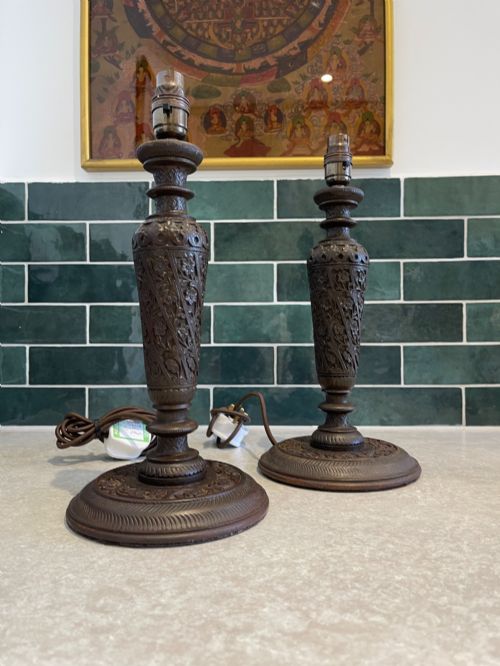
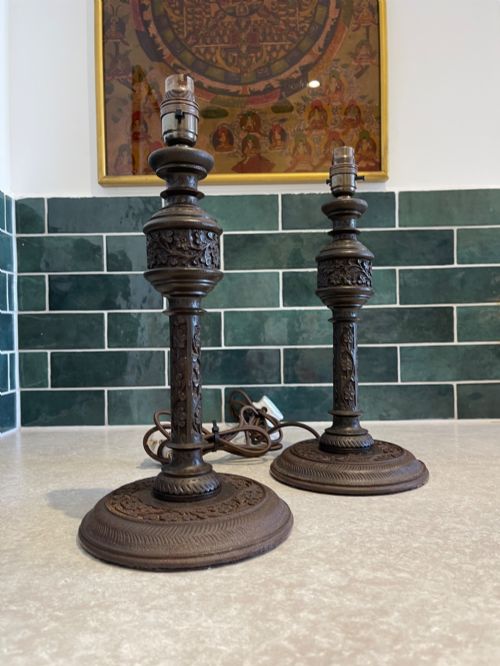
These pieces known as an anglo indian lamp bring rich colonial craftsmanship and intricate oriental design into a room.
Anglo Indian Lamp
When searching for an anglo indian lamp, a buyer encounters lighting and occasional furniture adapted for illumination from the nineteenth and early twentieth centuries. These objects combine traditional regional woodworking and metalworking traditions with British domestic forms of the Victorian and Edwardian eras.
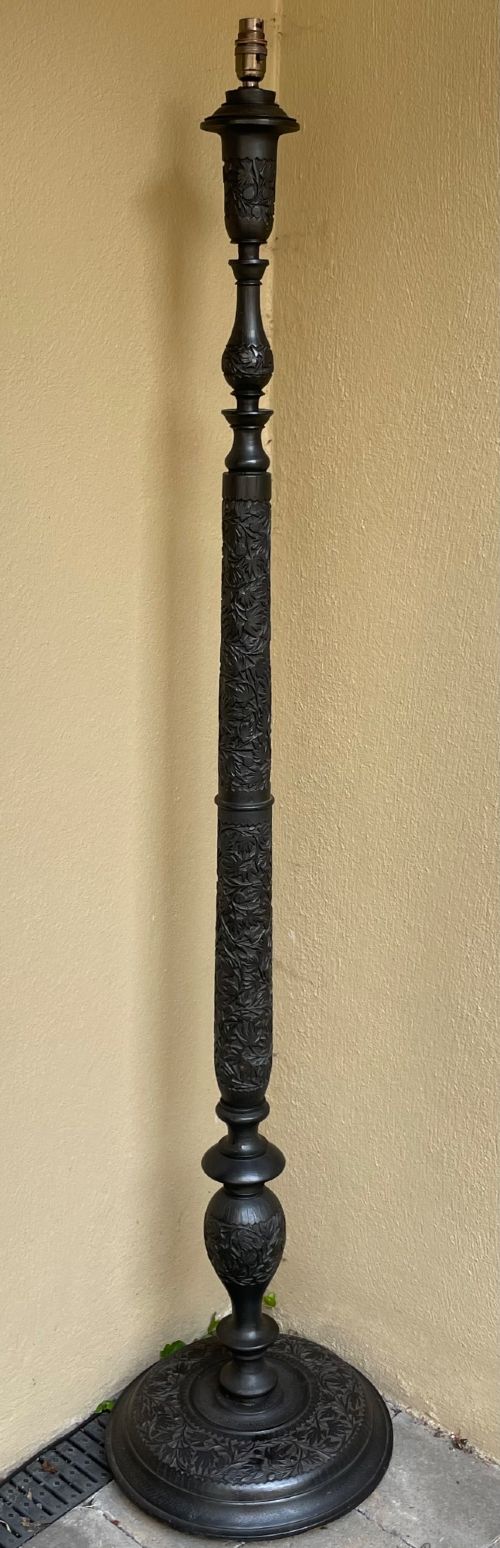
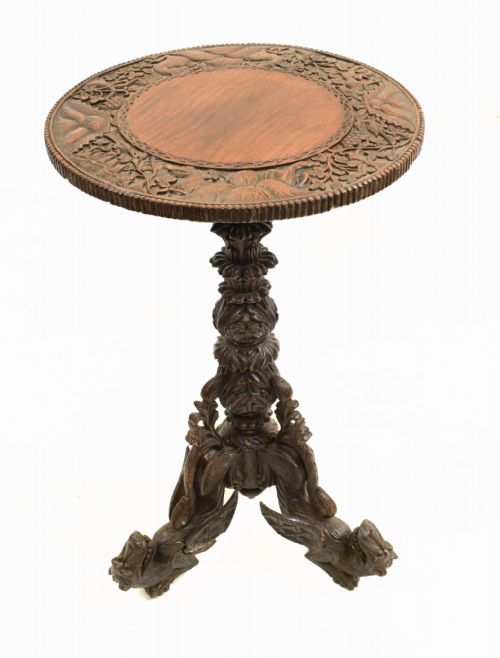
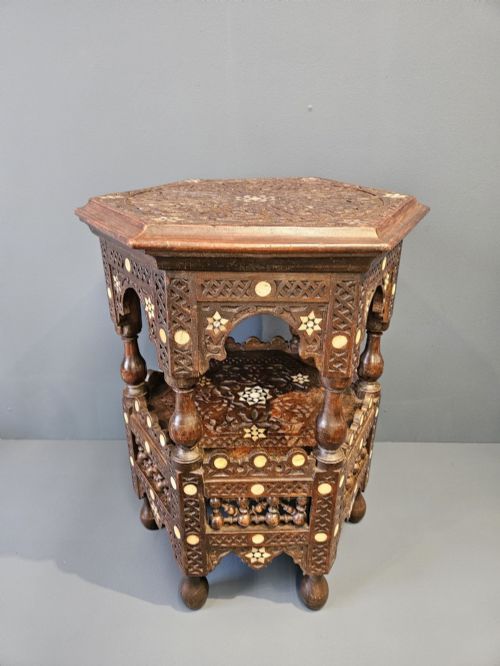
The most common version on this page is the carved wooden standard lamp or smaller table lamp, alongside inlaid occasional tables that double as lamp stands. Materials range from dense tropical hardwoods like teak and padauk to hand-painted lacquer and pierced brass.
Origins span distinct colonial regions, including Kashmir, Hoshiarpur, and Burma, alongside broader Victorian orientalist styles. Pieces emerge from periods including the late nineteenth century and the 1920s, reflecting changing tastes in British interior decoration.
How they were made
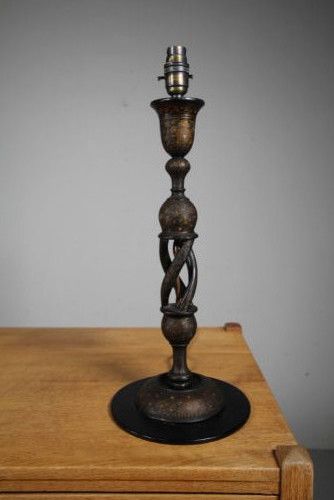
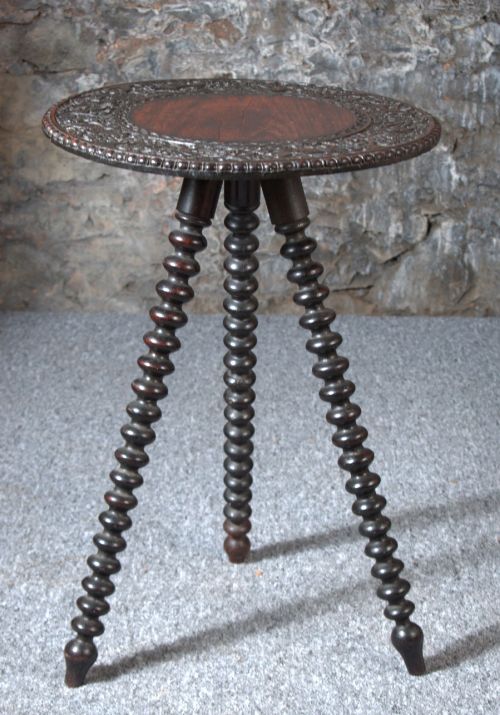
Makers utilised dense timbers such as teak, padauk, rosewood, and sandalwood, which allowed artisans to execute deep, intricate relief carving without splitting. Wood surfaces were frequently turned into twist columns for standard lamps or assembled into folding tables.
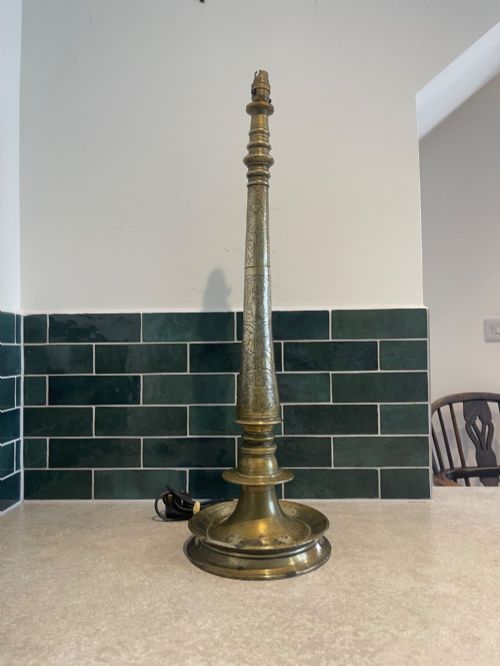
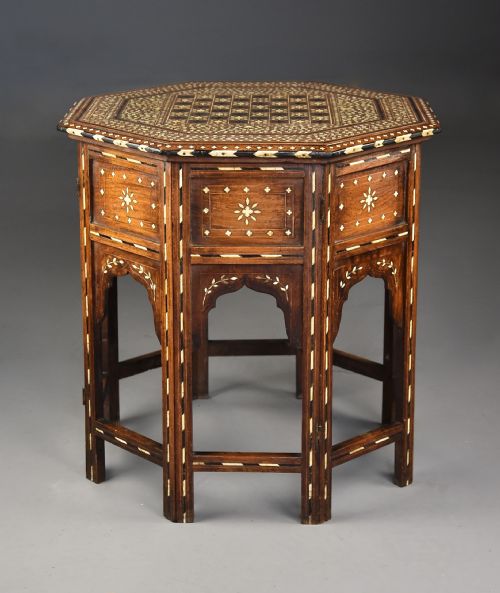
Inlay work involved contrasting materials like bone, ivory, and ebony set into hardwood geometric or floral patterns, particularly in Hoshiarpur pieces. Brass and bronze components were cast, pierced, and hand-painted, creating pendant lights, incense burners converted to lamps, and solid brass column bases.
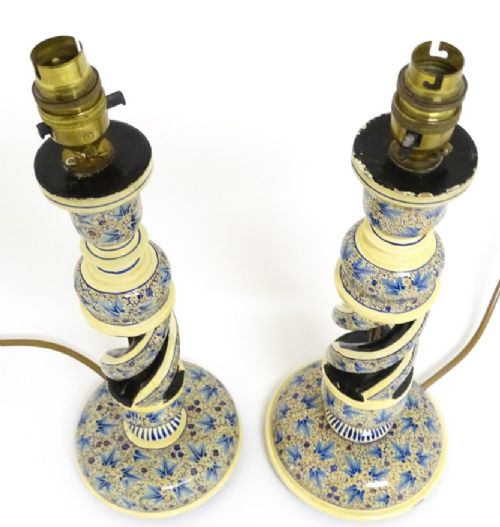
Kashmiri items employed detailed hand-painted lacquer techniques on wood bases, producing floral patterns in cream and multi-coloured palettes. Construction methods combined traditional regional joinery with adaptations for electrical wiring in later twentieth-century examples.
The listings show materials spanning brass, teak, padauk, rosewood, and bone inlay across Victorian and early twentieth-century periods.
What varies in quality
The depth and crispness of the hand carving separate standard commercial items from exceptional workshop output. Superior examples display undercut foliage and sharply defined geometric borders that retain their geometric precision across complex multi-tiered structures.
Material selection dictates the longevity and visual weight of the piece, with dense padauk and heavy cast brass representing the upper tier of construction. The precision of bone or ivory inlay work, where individual pieces sit flush without excessive filler, marks the distinction between ordinary and fine production.
Liberty
The Anglo Indian Lamp Glossary
- Padauk
- A heavy, dense tropical hardwood valued for its reddish-brown colour and stability in intricate carving. It was frequently utilised for colonial tables and standard lamps.
- Hoshiarpur
- A North Indian centre known for intricate wood inlay work using materials such as bone and ebony. Pieces from this region feature dense geometric and floral patterns.
- Standard lamp
- A tall floor-standing lighting fixture designed to illuminate a room from a single vertical column. These often incorporate heavy turned wooden shafts or telescopic metal mechanisms.
- Tilt top
- A table construction featuring a hinged surface that folds vertically when not in use. This mechanism allowed easier storage in colonial domestic spaces.
Anglo Indian Lamp: Frequently Asked Questions
What is an anglo indian lamp?
An anglo indian lamp is a lighting fixture or lamp table created during the nineteenth or early twentieth centuries that merges British colonial form with South Asian decorative techniques. These pieces utilise regional materials such as teak, padauk, and brass.
They reflect the cross-cultural design exchanges of the period, incorporating traditional hand carving, lacquer, and inlay work into domestic furnishings for British homes.
How were these lamps used?
These pieces served as functional lighting and versatile furniture in colonial and Victorian interiors, often functioning as standard floor lamps or table stands. Many were designed alongside occasional tables to hold oil lamps or later electrical fittings.
Their dual function as tables and lamp bases made them practical for sitting rooms and studies where surface space and illumination were required simultaneously.
How do I live with one?
Integrating an anglo indian lamp into a modern interior involves pairing its warm timber tones and intricate metalwork with neutral backgrounds. These pieces anchor a room as statement lighting or serve as functional side tables next to seating.
Care involves regular dusting of carved wooden surfaces and using appropriate polishes that preserve the natural grain of hardwoods like teak and rosewood.
How do I date an anglo indian lamp?
Dating relies on examining the combination of materials, joinery methods, and stylistic influences such as Aesthetic Movement or Moorish Revival details. Earlier nineteenth-century examples often feature solid padauk and hand-forged brass components.
Later pieces from the 1920s and 1930s frequently show evidence of early electrical rewiring adaptations and specific regional lacquer techniques typical of Kashmiri workshops from that decade.