
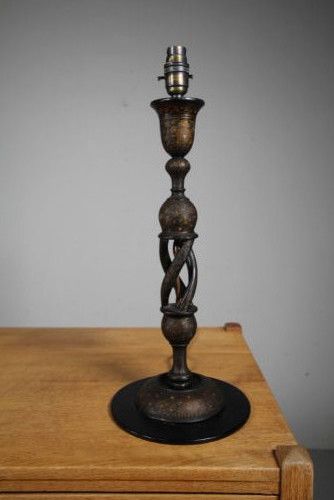
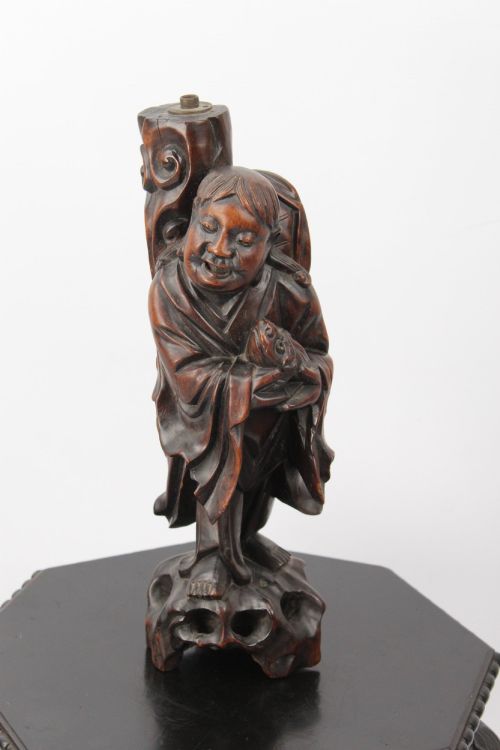
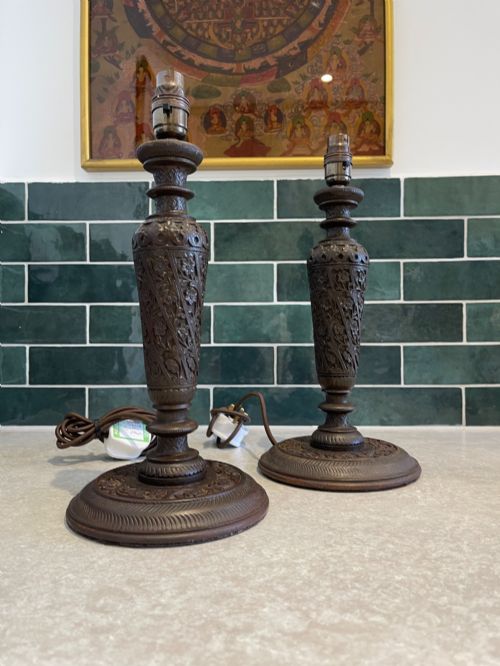
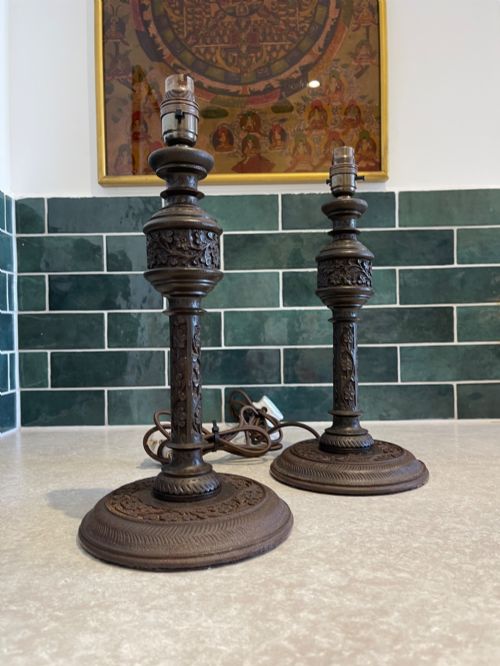
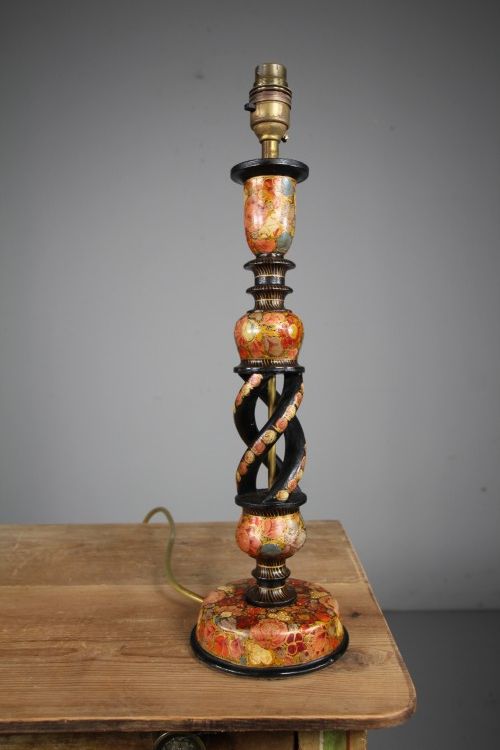


Hand Carved Table Lamp
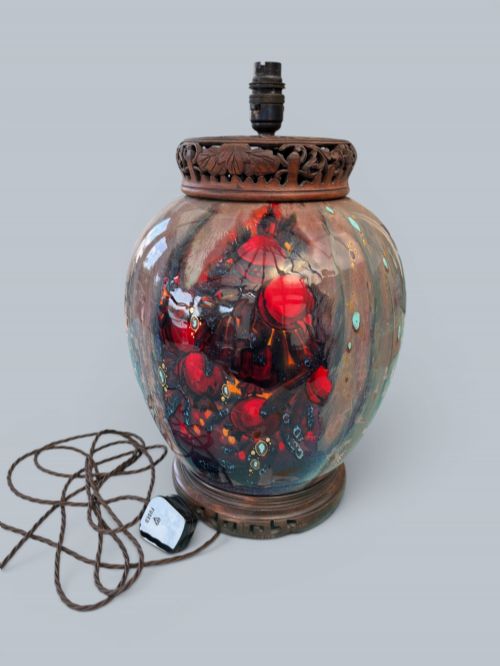
A hand carved table lamp brings organic texture and regional craft to a room, drawing the eye with carved wood and figurative detail.
Hand Carved Table Lamp
When you search for a hand carved table lamp, you encounter regional woodwork from the nineteenth century into the 1930s, encompassing styles from Anglo-Indian and Kashmiri workshops to Black Forest production.
The pieces on this page are predominantly tall turned or figural wooden standards, often wired for modern use, alongside smaller carved bases derived from root wood or walnut.
Makers ranged from European workshops utilising local linden to craftsmen across the Indian subcontinent carving teak, padauk, and hardwood.
Materials and construction
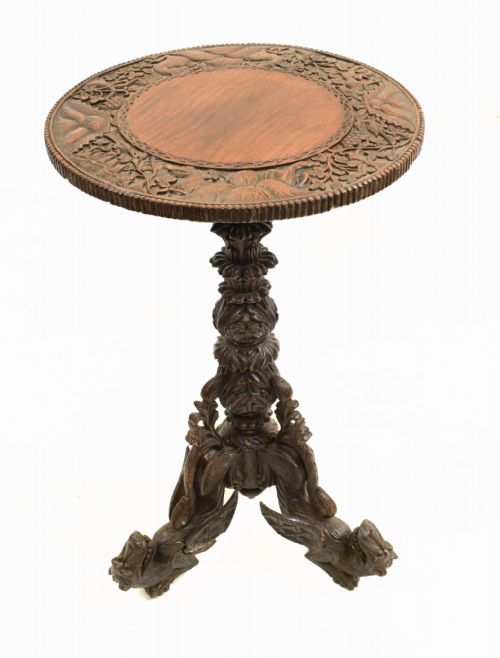
These lamps rely on dense timbers such as teak, walnut, padauk, and linden, selected for their stability under deep chiselling.
Craftsmen shaped the timber using hand gouges and turning lathes, applying surface treatments like red lacquer or silver leaf to accentuate the carved relief.
Several pieces feature carved bears keeping watch from the base of the lamp.
Distinctions in quality
Quality rests in the crispness of the carving and the integrity of the timber, where deeper relief work and retained structural detail distinguish finer examples.
Proportion and balance dictate worth, as a well-turned standard maintains stability and harmony between the carved base and the lighting hardware.
Liberty of London·Moorcroft Art Pottery
The Hand Carved Table Lamp Glossary
- Black Forest
- A nineteenth-century European carving style originating in the mountainous border regions, known for realistic animal figures such as bears carved from linden wood.
- Anglo-Indian
- A design style combining British Victorian furniture forms with traditional Indian carving techniques and tropical hardwoods.
- Root wood
- Timber sourced from the root burls of trees, valued for its eccentric grain patterns and organic, gnarled contours.
- Padauk
- A heavy, durable tropical hardwood with a reddish hue utilised in colonial and Indian furniture production.
Hand Carved Table Lamp: Frequently Asked Questions
Are these lamps rewired for modern use?
Many older lamps feature updated electrical fittings to meet contemporary safety standards while retaining their antique wooden bases.
Buyers should inspect the cord and plug details provided in individual listings to confirm compatibility with current sockets.
How do I identify a Black Forest lamp?
Black Forest pieces typically depict naturalistic woodland animals, most notably bears, carved from linden wood during the early twentieth century.
The carving style is distinct for its texture and regional European origin, separating it from Asian and Indian hardwood pieces.
What timbers were commonly used?
Carvers utilised dense regional woods such as teak, walnut, padauk, and linden depending on the geographic origin of the workshop.
These timbers provided the structural density required for intricate, deep-relief carving without splintering.
How do I date these carved pieces?
Dating relies on stylistic markers, tool marks, and the integration of electrical wiring, with many examples spanning the Victorian era through the 1930s.
Evaluating the wood finish and regional design motifs helps place the lamp within its historical period.