
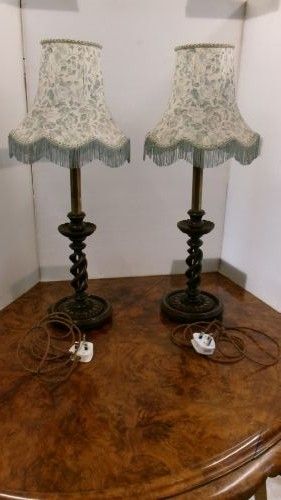


Vintage Twisted Lamp Base
These vintage twisted lamp base selections offer a striking sculptural form for interior lighting, bringing genuine period character and texture to a room.
Vintage Twisted Lamp Base
A vintage twisted lamp base provides a distinctive helical or barley twist silhouette that adds immediate visual interest to table and floor settings. Buyers searching for a vintage twisted lamp base encounter forms that range from substantial floor stands to tall table lights designed to hold fabric shades.
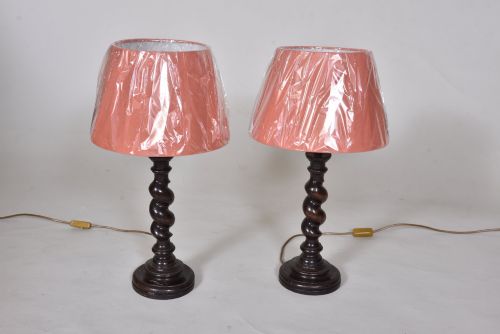
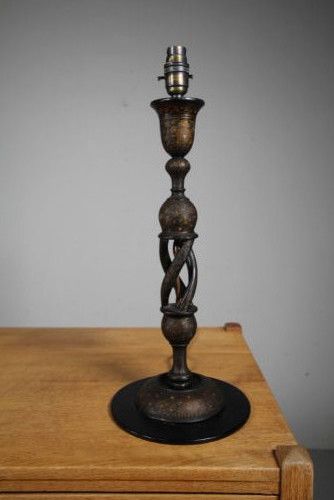
The examples gathered here span several distinct periods including the Victorian era, the nineteen-twenties, and the nineteen-thirties. Origins vary from English workshops utilising dark oak and brass to Kashmiri pieces finished in lacquer and papier-mache.
Most pieces fall into specific categories such as table lamps and floor lamps, with occasional pairs appearing in oak, brass, and chrome. The stylistic vocabulary encompasses Anglo-Indian, Art Deco, Jacobean Revival, and English Country traditions.
Materials and construction methods
Makers shaped heavy hardwoods like dark oak into deep barley twist columns, employing traditional lathe-turning techniques to achieve the precise helical rhythm. Metal versions relied on brass casting and chrome plating to create rigid, reflective columns that catch the light.
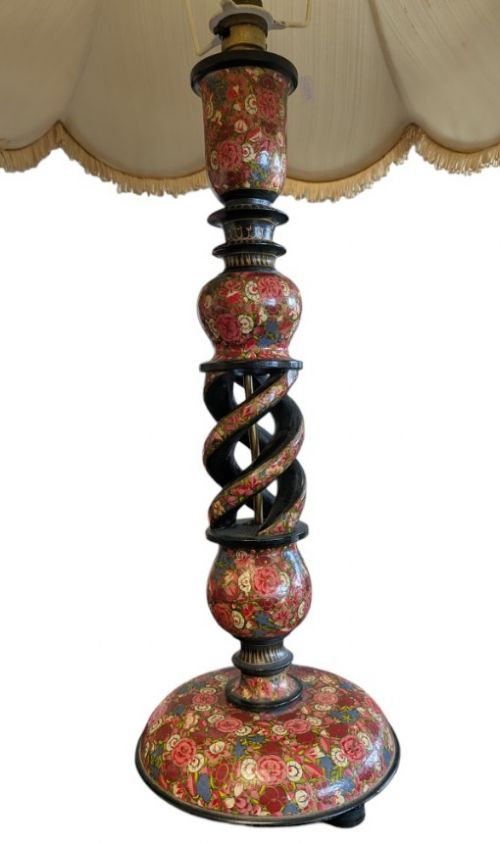
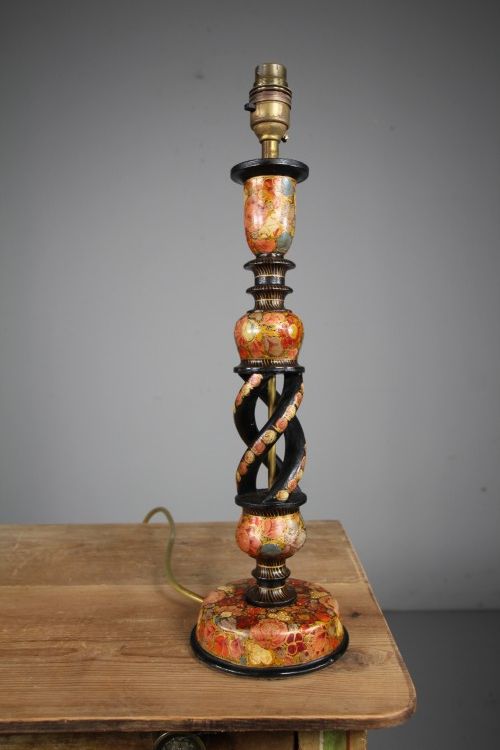
Kashmiri examples utilised papier-mache and wood foundations finished with handpainted lacquer details and floral motifs. Fabric elements accompanied many of these stands to complete the composition of the finished lighting fixture.
Materials represented across the selection include brass, fabric, wood, lacquer, papier-mache, chrome, glass, and dark oak.
Assessing quality and craftsmanship
The crispness and depth of the twist define the character of the carved wooden and cast metal shafts, separating assertive profiles from softer, more generalized turnings. Precision in the lathe work ensures the helix maintains an even rhythm from base to collar.
Surface preservation dictates the visual impact, whether through the patina of aged brass and dark oak or the intact detail of handpainted Kashmiri lacquer. Original proportions and height also govern how successfully a base holds a shade without appearing top-heavy.
The Vintage Twisted Lamp Base Glossary
- Barley twist
- A cylindrical column carved or turned into a helical screw shape resembling a stalk of barley. This profile became popular during the seventeenth century and returned in later revival periods.
- Kashmiri
- Pertaining to decorative arts from Kashmir, traditionally featuring handpainted floral patterns on lacquer over papier-mache or wooden cores. These items date primarily to the early twentieth century in this selection.
- Jacobean Revival
- A nineteenth and early twentieth-century style imitating the heavy, dark oak furniture and architectural elements of the early seventeenth century. It frequently incorporates turned supports and geometric mouldings.
- Art Deco
- A design style spanning the nineteen-twenties and thirties characterised by sleek lines, geometric forms, and modern industrial materials such as chrome. It represents a departure from earlier ornamental revivals.
- Papier-mache
- A composite material consisting of paper pieces or pulp bound with glue, layered over a core and allowed to form a hard shell before painting. It provides a lightweight yet durable base for intricate surface decoration.
Vintage Twisted Lamp Base: Frequently Asked Questions
How do I choose the right shade?
Consider the height and weight of the column when selecting a fabric covering to ensure proper balance. Tall table lamps require wider proportions to complement the vertical twist without overwhelming the stand.
Matching the period style of the shade to the base enhances the overall aesthetic. Neutral fabrics often allow detailed handpainted lacquer or carved wood to remain the focal point.
How do I clean wooden twists?
Dust the helical carved grooves regularly with a soft, dry cloth to prevent buildup in the recessed areas. Avoid harsh chemical cleaners that can strip the aged patina from dark oak.
Preserve lacquer surfaces on Kashmiri pieces by keeping them away from direct sunlight and moisture. Gentle dusting maintains the handpainted decoration without harming the finish.
Can I find matching pairs?
Pairs occasionally appear in nineteenth-century oak and nineteen-twenties chrome or wood configurations. These symmetrical sets provide balanced illumination for sideboards or mantelpieces.
Single statement pieces remain more common, particularly among tall floor lamps and Kashmiri table lights. Mixing complementary heights creates an eclectic arrangement within a room.