
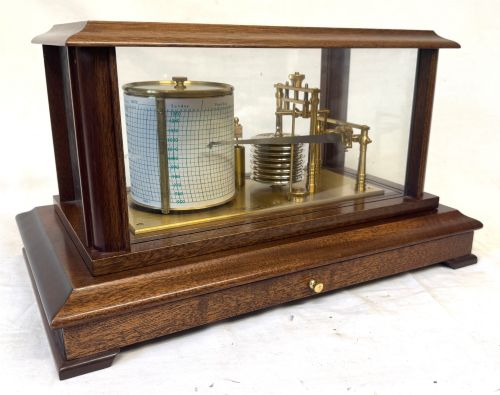
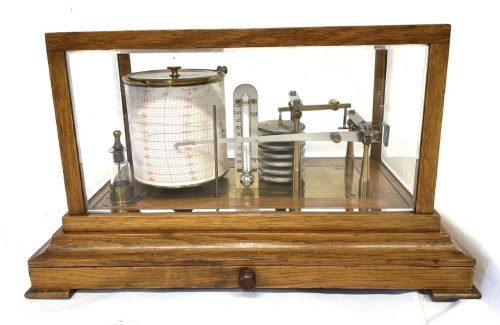
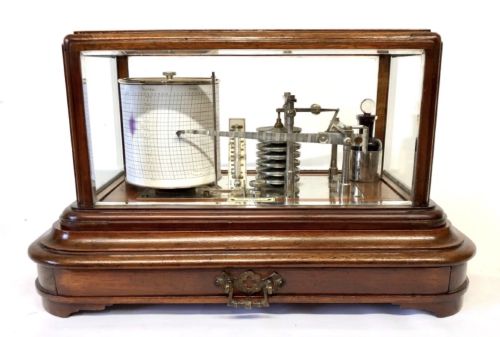
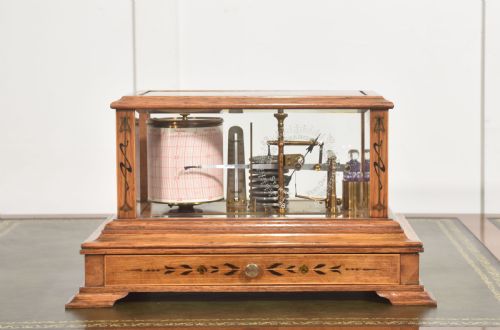


Aneroid Barograph Barometer
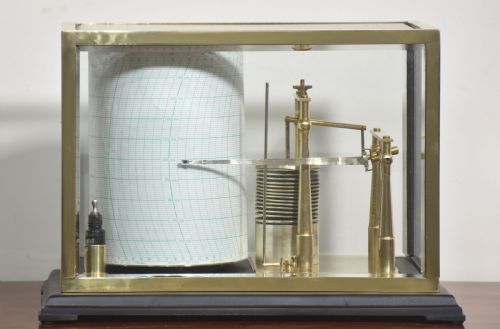
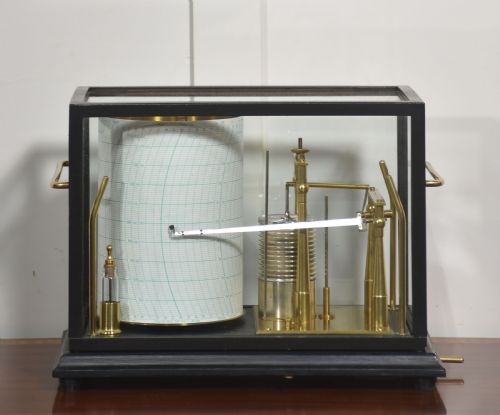
An aneroid barograph barometer records atmospheric pressure on a rotating drum, combining utility with fine cabinet work.
Aneroid Barograph Barometer
The aneroid barograph barometer is a self-recording meteorological instrument housed in a glazed timber case. When searching for an aneroid barograph barometer, collectors encounter scientific instruments designed to chart weather trends over weekly intervals.
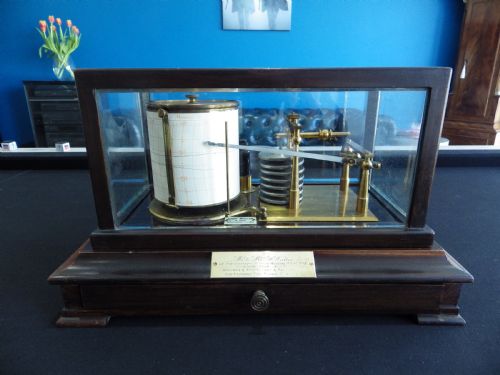
Most examples found on this page date from the late nineteenth century through to the interwar period and the mid twentieth century. These instruments typically combine brass mechanisms with mahogany, oak or walnut enclosures, often incorporating chart drawers and thermometers.
Variations include table models in five-glass cases and wall-mounted versions, alongside instruments featuring retailer signatures from London, regional towns and overseas outposts.
Materials and construction methods
The cases utilise dense hardwoods such as mahogany, oak and walnut, joined with traditional cabinetry techniques and fitted with bevelled glass panels to display the internal mechanics. Brass and steel form the delicate levers, vacuum chambers and clockwork drums that drive the recording arm.
Paper charts printed with weekly pressure graduations wrap around the revolving drum, while ancillary components like mercury thermometers and barometer dials are mounted directly onto the timber baseboards or brass beds.
Listings feature scientific instruments housed in oak, mahogany and walnut, spanning from the Victorian era to the mid twentieth century.
Distinctions in quality and execution
Quality rests in the precision of the brass movement and the cabinetmaker's choice of timber veneers, stringing or inlay work. Prominent scientific makers and high-end retailers produce pieces with crisper engravings, heavier gauge glass and superior mechanical responsiveness.
Simpler workshop pieces or utilitarian examples lack decorative detailing and finer cabinet touches, relying on standard construction while retaining the core mechanical function of recording atmospheric data.
Short and Mason·Negretti and Zambra·R Fuess·Antoine Redier·Jules Richard·Richard Freres
The Aneroid Barograph Barometer Glossary
- Aneroid
- Operating without liquid, using expanding and contracting metal vacuum chambers to measure atmospheric pressure. This technology replaced traditional mercury tubes in portable and self-recording barometers.
- Barograph
- A recording barometer that traces pressure changes onto a paper chart fitted to a clockwork drum. It provides a continuous visual history of weather patterns over several days.
- Bevelled glass
- Glass panes with angled, polished edges fitted into the corners of timber instrument cases. This technique adds refinement and allows clear viewing of the internal mechanism.
- Chart drawer
- A small compartment built into the base of the timber case to store spare recording papers and ink supplies. It keeps necessary accessories contained within the furniture itself.
Aneroid Barograph Barometer: Frequently Asked Questions
How do I read an aneroid barograph barometer?
The pen arm traces a line across the rotating paper chart, showing whether pressure rises or falls over the week. Rising lines indicate improving weather, while falling lines suggest approaching storms or unsettled conditions.
The clockwork drum completes one rotation every seven days, requiring periodic winding to maintain accurate timing and continuous data collection.
Where were these instruments placed in a home?
Owners typically placed them on study desks, library tables or mantelpieces where guests could observe the delicate mechanics and daily weather traces. Wall-mounted versions hung in hallways or offices for easy consultation by household members.
The enclosed wooden cases protected the sensitive brass bellows and clockwork movements from dust and accidental damage during everyday use.
How do I change the paper charts?
You lift the hinged pen arm away from the drum, slide the brass cylinder off its spindle, and remove the used paper sheet. A fresh chart is wrapped around the drum and secured with a small metal clip before replacing the cylinder.
After repositioning the drum, you gently lower the pen onto the paper and ensure it contains adequate ink to resume tracing.
How do I date a timber case?
Cabinet styles follow the prevailing furniture aesthetics of their era, shifting from heavy Victorian mahogany designs to Edwardian oak cases with bevelled glass, and later interwar or mid-century forms. Maker signatures and retailer plaques also help narrow down the production period.
Internal clockwork movements sometimes feature stamped serial numbers or patent dates that provide additional chronological clues.