




Allegorical Porcelain Figurine
These allegorical porcelain figurine works represent personified concepts from the seasons and elements, bringing classical narrative directly to the tabletop.
Allegorical Porcelain Figurine
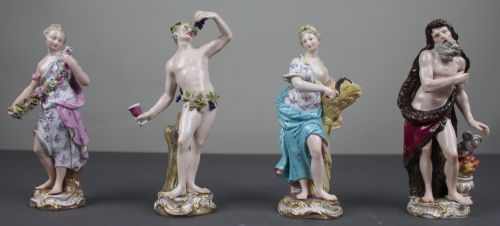
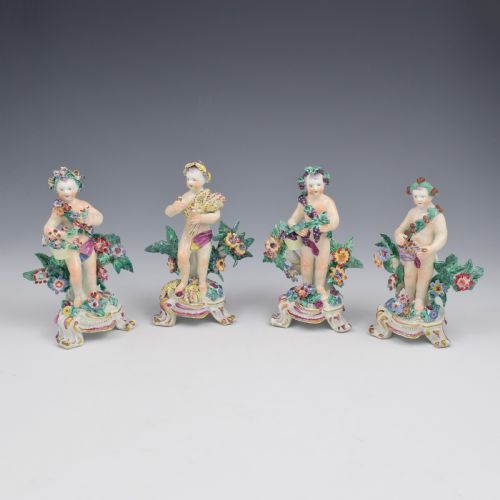
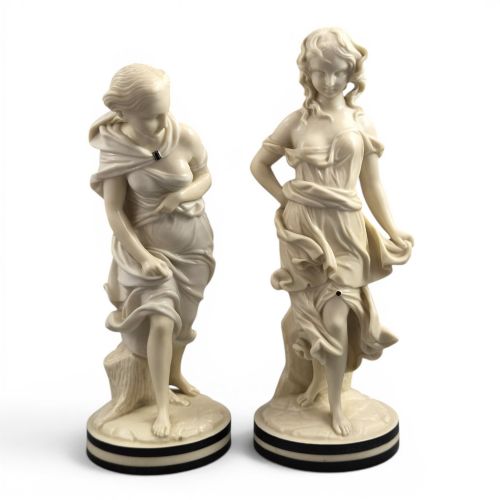
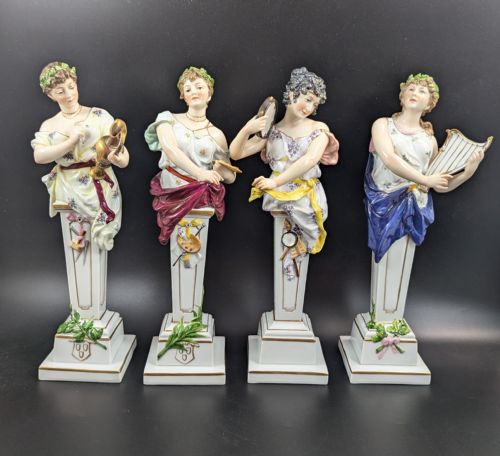
An allegorical porcelain figurine depicts abstract concepts such as the four seasons, the elements, the continents, or months of the year through human and putti forms. These sculptural pieces draw heavily upon classical mythology and Georgian taste, translating grand sculptural themes into domestic ornaments.
The most common examples encountered on this page belong to the eighteenth-century and nineteenth-century traditions. Sets depicting the four seasons or individual figures representing water, earth, autumn, and winter appear frequently alongside continental personifications.
English factories like Bow, Chelsea, and Derby sit alongside continental makers such as Meissen, Dresden, and Volkstedt in this selection. Buyers find both individual statuettes and complete pairs or sets representing overarching thematic series.
What separates the fine examples
Quality rests significantly in the crispness of the modelling and the depth of the hand-painted enamel work. Superior pieces retain sharp relief in moulded details like leaves, hair, and drapery without blurring from worn moulds.
The sophistication of the palette and the delicacy of applied floral elements distinguish finer output. Expertly rendered facial expressions and stable, well-balanced firing demonstrate superior factory execution.
Father Time occasionally puts down his scythe just long enough to clip a playful cupid's wings.
Meissen·Bow Porcelain·Royal Worcester·Samson·Carl Thieme·Derby Porcelain·Volkstedt·Chelsea Porcelain·Royal Berlin
The Allegorical Porcelain Figurine Glossary
- Soft-Paste Porcelain
- An artificial porcelain composition fired at lower temperatures than hard-paste. It creates a warm, creamy body common in early English factories.
- Hard-Paste Porcelain
- A true porcelain made from kaolin and petuntse fired at high temperatures. This body provides a bright white, durable surface utilised widely in continental manufactories.
- Putto
- A chubby male child figure, often winged, derived from classical art. These figures populate many seasonal and elemental sculptural groups.
- Polychrome
- Decoration employing multiple distinct enamel colours. Painters used these pigments to render costumes, natural elements, and skin tones realistically.
- Gilding
- The application of gold or gold leaf to ceramic surfaces. It accentuates borders, garment trims, and rococo scroll bases.
Allegorical Porcelain Figurine: Frequently Asked Questions
What do allegorical figures represent?
These sculptures embody abstract ideas, most commonly the four seasons, the four elements, the continents, or specific months. Artists used classical symbolism, such as harvested crops for autumn or water ewers for aquatic figures, to make these concepts visible.
Collectors often seek out matching sets that tell a complete thematic story across a mantelpiece or cabinet. Each figure holds specific attributes that identify its precise allegorical meaning within the broader set.
How can I tell eighteenth century pieces apart?
Eighteenth-century works generally display softer paste bodies, understated enamel palettes, and hand-modelled details specific to early factories like Bow, Chelsea, or Derby. Unmarked pieces often require careful comparison of paste texture and base construction.
Later nineteenth-century revivals and continental copies frequently utilised harder paste porcelain and brighter, more uniform enamel colours. Examining the underside and the crispness of the scrollwork helps distinguish period originals from later interpretations.
Were these figures meant for display?
Wealthy patrons originally placed these delicate porcelain sculptures on dining tables as part of elaborate dessert services or displayed them in formal drawing rooms. They served as conversation pieces that demonstrated the owner's classical education and refined taste.
Over time, collectors moved them into enclosed cabinets and specialised display shelves to protect their fragile enamel surfaces and protruding floral elements from damage.
How do I care for antique porcelain figures?
These delicate sculptures require secure placement away from high-traffic areas and direct sunlight to protect their hand-painted enamel and gold leaf decoration. Dusting should be done gently with a soft, dry brush.
Avoid using water or chemical cleaners on antique porcelain, especially on pieces with soft-paste bodies or delicate applied elements like leaves and ribbons.