




Allegorical Female Statue
An allegorical female statue brings personified virtues, seasons, and natural elements into a room in bronze, marble, and porcelain.
Allegorical Female Statue
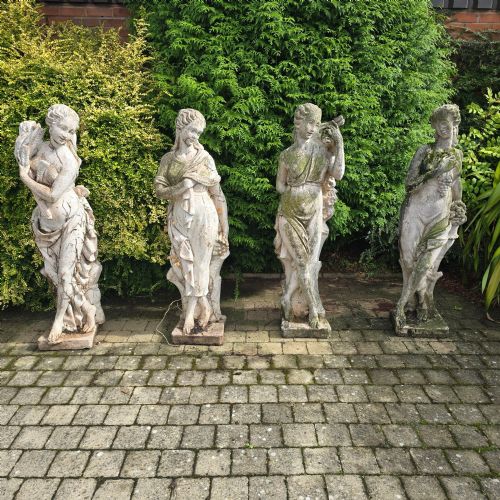
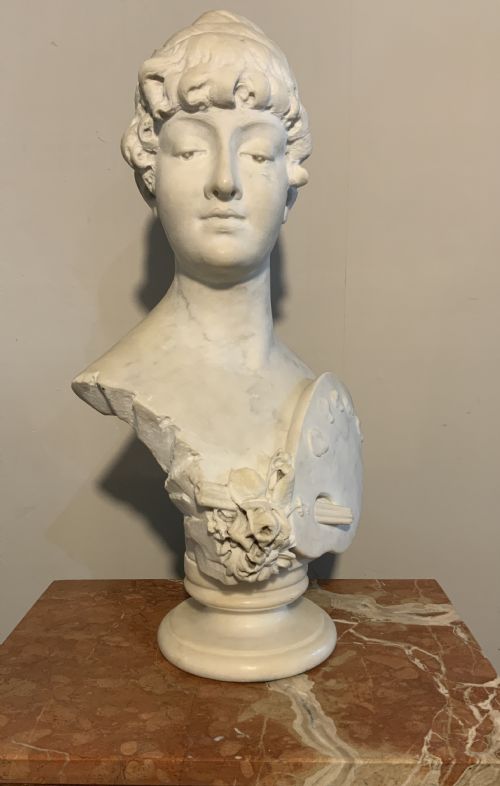
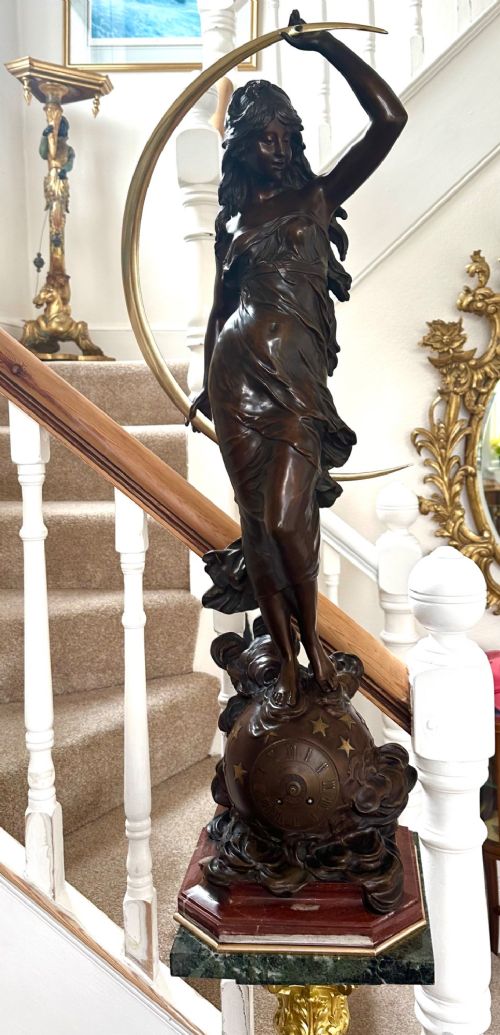
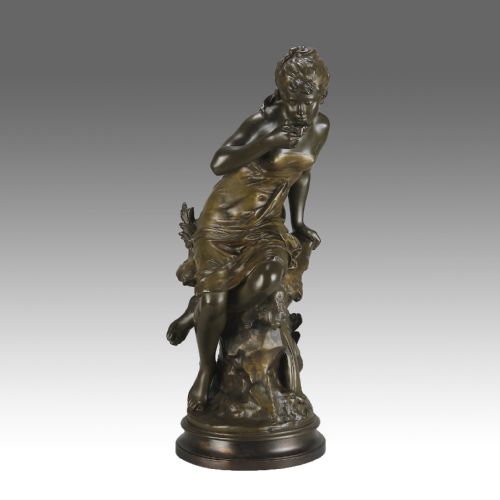
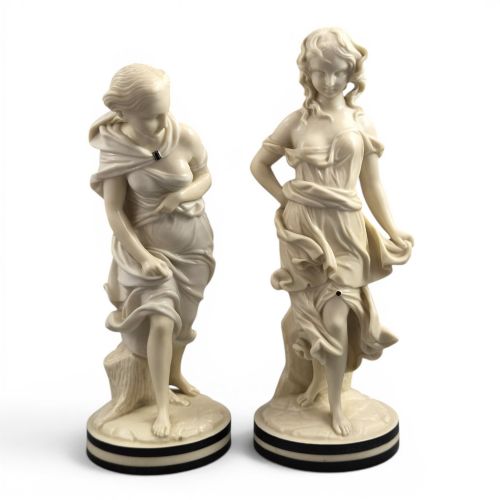
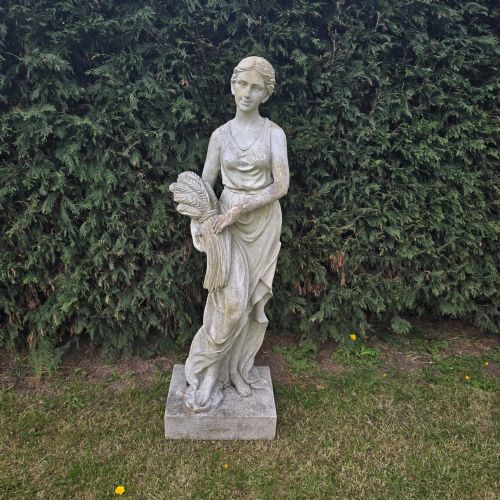
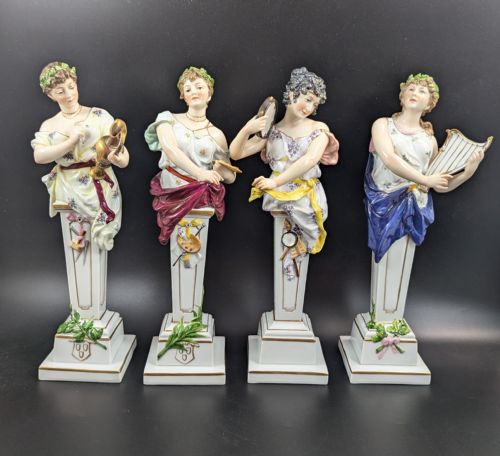
An allegorical female statue embodies abstract concepts such as the seasons, peace, art, and the breeze through classical or romantic human form. These pieces take the shape of mantel clocks, table lamps, garden statues, and cabinet figurines.
The selections span from the Georgian period and the Victorian era through to the early twentieth century. Art Nouveau, Neoclassical, and Rococo Revival styles dominate the offerings across these decades.
Makers and foundries across Britain, France, Germany, and Italy produced these works in media ranging from cast spelter to carved Carrara marble. Buyers encounter everything from intimate porcelain pairs to life-sized garden figures.
Materials and methods
Foundries cast figures in bronze and spelter, often utilising lost-wax techniques to capture flowing drapery and intricate botanical details. Surface patination ranges from deep brown metal finishes to gilded highlights.
Sculptors carved solid blocks of Carrara marble and alabaster by hand, achieving smooth flesh tones and textured garments. Potteries shaped porcelain and enamel bodies before hand-painting and glazing individual pieces.
Architectural and garden elements rely on cast stone and reconstituted stone for outdoor resilience. Clocks and lamps integrate functional brass and clockwork movements directly into the sculptural cast metal bodies.
The object types span mantel clocks, table lamps, garden statues, and cabinet-sized porcelain figurines.
Distinctions in craftsmanship
The finesse of the chisel or the sharpness of the metal chase determines the vitality of hair, fingers, and drapery. Softer castings lose definition in facial expressions and botanical ornaments, whereas superior examples retain crisp detail.
Material selection divides standard production from exceptional work. Solid carved marble and heavy cast bronze stand apart from lighter spelter and mass-produced porcelain variants.
In painted ceramics and enamel work, the precision of the brushwork and the depth of the glaze separate ordinary decorative items from master factory output.
August Moreau·Mathurin Moreau·James Hadley·Ernst Barrias·Achille Mollica
The Allegorical Female Statue Glossary
- Allegory
- The representation of abstract ideas through human figures or symbolic attributes. An allegorical female statue typically depicts seasons, virtues, or natural forces.
- Spelter
- A zinc alloy used as a less expensive substitute for bronze in decorative figures. Spelter pieces often receive a bronze-like coating to mimic more costly metalwork.
- Carrara marble
- A type of white or blue-grey marble quarried in Italy. Sculptors prize this stone for its fine grain and luminous quality.
- Patina
- The surface coloration and sheen acquired by bronze through age or chemical treatment. A well-preserved patina enhances the sculptural contours.
Allegorical Female Statue: Frequently Asked Questions
How do I identify an allegorical figure?
Look for symbolic items held by the figure, such as wheat sheaves for autumn, flowers for spring, or a torch for light. Inscriptions on the base or clock dial often name the specific virtue or season.
Titles frequently reference mythological figures or personifications like Selene, Aurora, or Peace. Comparing the attributes to traditional iconography confirms the subject matter.
Where should I place a bronze statue?
Bronze figures suit studies, mantelpieces, and entrance halls where stable indoor temperatures protect the metal and its patina. Smaller examples work well on desks or within glass-fronted cabinets.
Keep pieces away from direct heat sources and moisture to preserve surface finishes. Larger garden statues require weather-resistant placement on stone or paved foundations.
How do I clean antique marble and alabaster?
Dust surfaces gently with a soft, dry cloth or a natural bristle brush to remove surface particles without scratching. Avoid chemical cleaners, commercial polishes, and excess water, which penetrate porous stone.
Consult a professional restorer if the stone requires deep cleaning or repair. Alabaster is particularly soft and dissolves easily in moisture.
What is the difference between bronze and spelter?
Bronze is a durable copper and tin alloy that accepts detailed chasing and rich patination. Spelter is a softer zinc alloy that feels lighter and often shows casting seams or flaking metallic paint.
Tap testing reveals a dull thud for spelter and a more resonant ring for bronze, though careful inspection of weight and base construction remains the safest guide.