



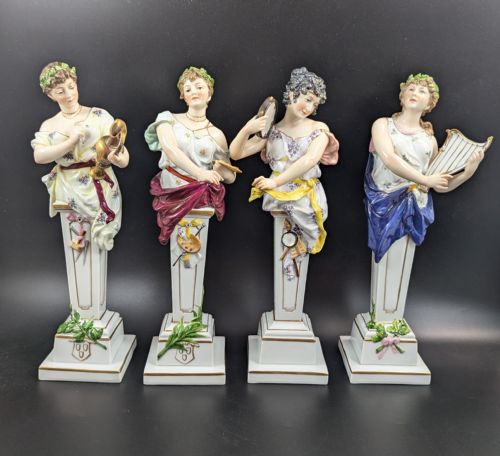


Allegorical Female Figure Art
Allegorical female figure art captures classical and natural themes in bronze, marble, and oil on canvas.
Allegorical Female Figure Art
Most pieces date from the nineteenth century, ranging from eighteenth-century classical canvases to Art Nouveau bronzes and twentieth-century French statuary. Sculptures and figurines dominate the selection, often taking the form of paired dancers, lamp bases, or standalone figures on pedestals. Painters and sculptors from this era frequently drew upon neoclassical and European school traditions to shape these subjects.
How they were made
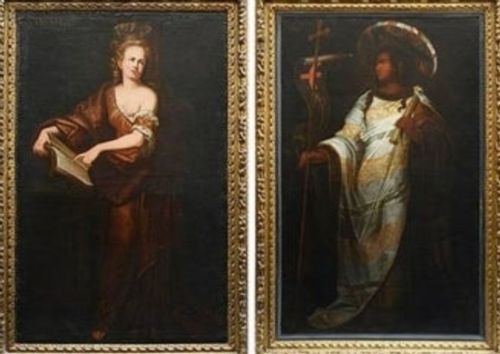
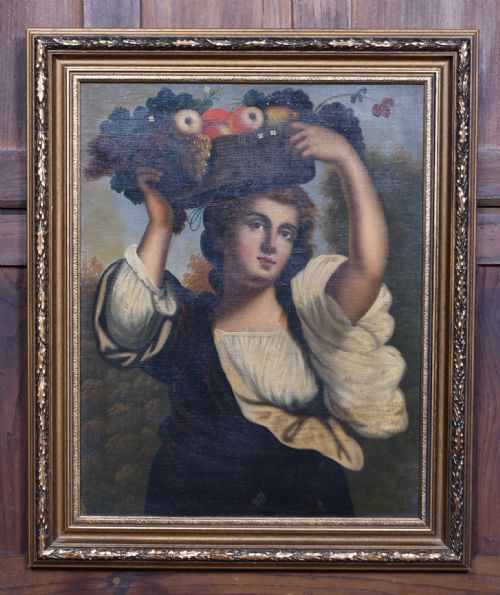
Painted works utilise oil paint on canvas or board support surfaces, framed frequently in gilt wood. The application of oil colour builds depth in drapery and background elements, characteristic of European school and nineteenth-century Italian practices.
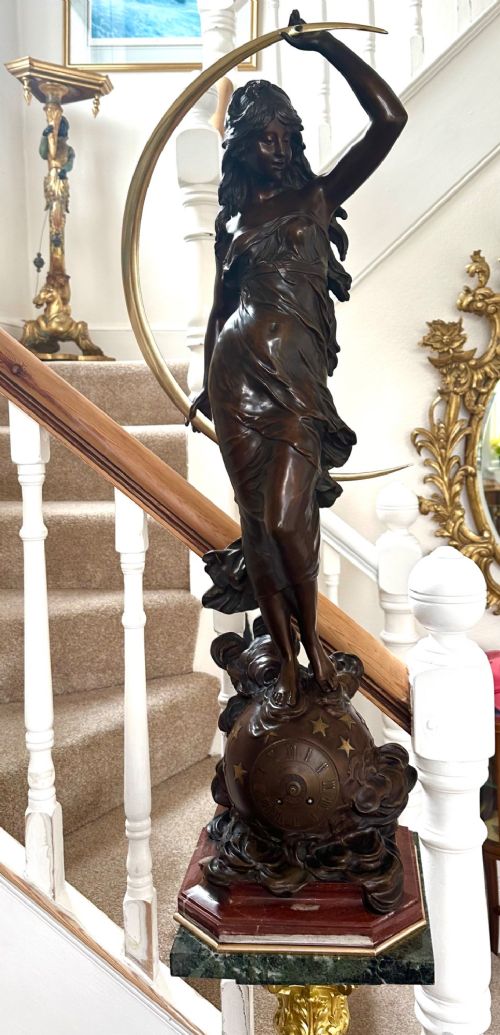
Aurora drives her chariot across nineteenth-century metalwork while seasonal dancers persistently harvest grapes in eternal bronze.
What varies in quality
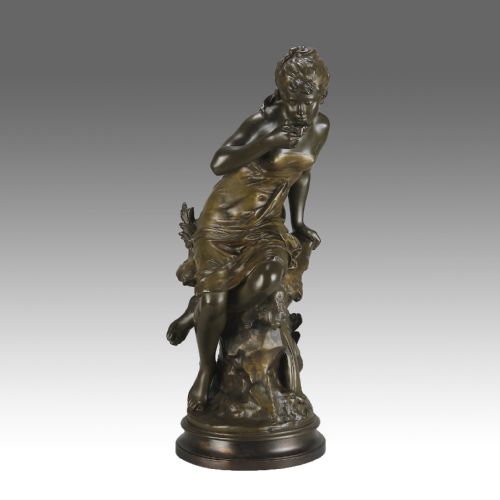
Quality in these figurative works rests upon the fidelity of the casting, the crispness of the chisel work in carved stone, and the expressive handling of paint on canvas. Finer bronzes display precise chasing that preserves fine details in hair, fingers, and flowing garments without smoothing away texture. Softer spelter pieces rely heavily on initial casting quality and surface finishing.
In painted representations, the finesse of brushwork and the structural integrity of the canvas or board determine the standard of the piece. Masterworks by recognised sculptors and painters demonstrate superior proportion, balanced composition, and deliberate handling of light across the allegorical subject.
August Moreau·Mathurin Moreau·Ernst Barrias·Guiseppe Mazzolini·Achille Mollica
The Allegorical Female Figure Art Glossary
- Allegory
- A symbolic representation where physical figures convey abstract ideas or moral qualities. This technique underpins depictions of seasons, virtues, and mythological concepts.
- Spelter
- A zinc alloy frequently utilised as a less costly alternative to bronze for decorative figures. It accepts patination well to simulate heavier metals.
- Patina
- The surface coloration and sheen developed naturally with age or applied chemically to bronze and metal sculptures. It enhances visual depth across contours.
- Neoclassical
- A style drawing inspiration from the classical art and culture of ancient Greece and Rome. It prioritises balance, restraint, and clear anatomical proportion.
- Alabaster
- A fine-grained, translucent stone used for carving statues and decorative items. Its softness permits delicate detail work in facial expressions and drapery.
Allegorical Female Figure Art: Frequently Asked Questions
What is allegorical female figure art?
Allegorical female figure art consists of sculptures, paintings, and lamps depicting women who personify abstract concepts, natural forces, or classical themes. These representations draw upon mythology, seasons, and virtues to communicate deeper symbolic meaning.
Creators from the eighteenth through the twentieth centuries expressed these ideas through mediums such as cast bronze, carved alabaster, and oil paint on canvas.
Where should I place a bronze figure?
Bronze and spelter figures suit display on sturdy sideboards, pedestals, or mantelpieces where their three-dimensional form receives adequate lighting. Figures designed as lamp bases integrate illumination directly into functional decorative schemes.
Keep heavier marble and alabaster sculptures on secure, level surfaces away from high-traffic edges to ensure physical stability.
How do I identify Art Nouveau pieces?
Art Nouveau pieces typically display fluid, organic lines inspired by natural forms, featuring flowing hair, draping garments, and plant motifs. Sculptures from this movement often incorporate graceful female personifications of nature, the breeze, or spring.
Bronze and spelter castings from this period emphasise dynamic movement and asymmetrical silhouettes rather than rigid neoclassical symmetry.
How do I care for nineteenth-century bronze?
Nineteenth-century bronze requires gentle dusting with a soft, dry cloth to prevent the accumulation of abrasive particles on the patinated surface. Avoid applying liquid cleaners or polishes that can strip the original chemical or natural patina.
Maintain stable indoor humidity levels to protect any integrated wooden elements, gilt frames, or mixed-media components accompanying the metal.