
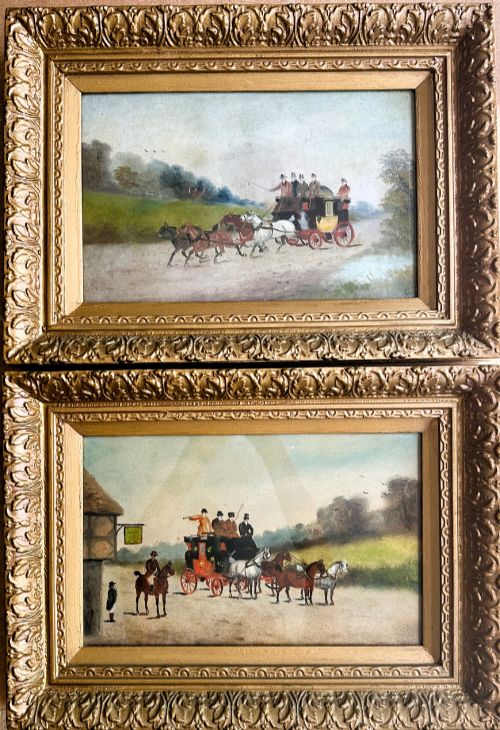


Pair Oil on Board
These pair oil on board selections bring matching artistic visions into a room, offering dual compositions created across the nineteenth and early twentieth centuries.
Pair Oil on Board
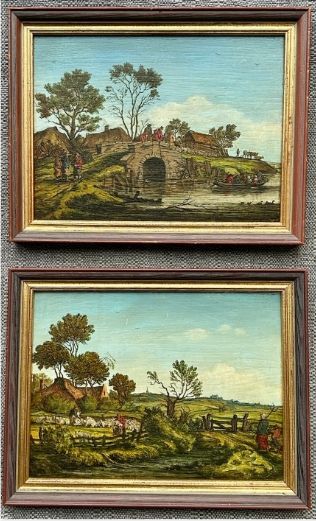
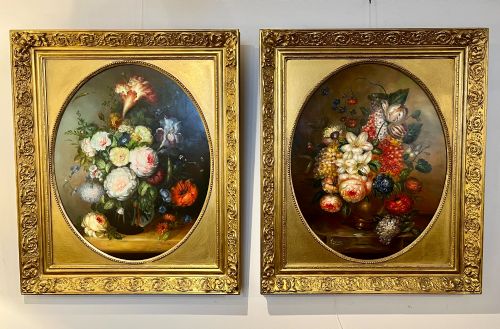
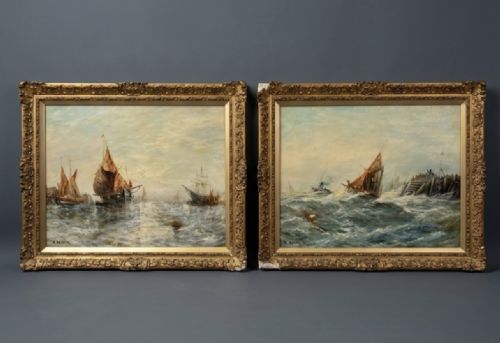
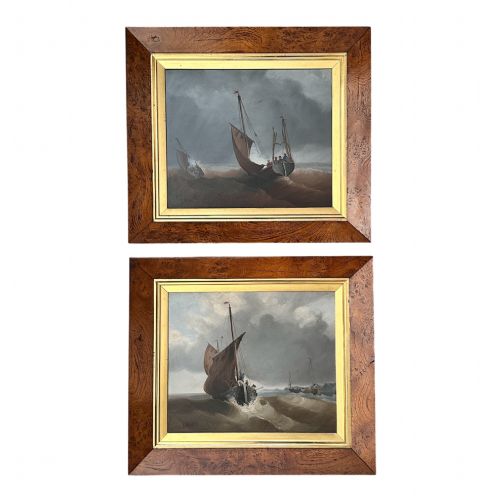
A pair oil on board selection comprises two corresponding painted compositions executed upon rigid supports rather than woven fabric. These dual works frequently depict complementary subjects such as morning and evening scenes, matching floral still lifes, or balanced coastal and marine views. Buyers pursuing this phrase often seek unified decorative schemes designed to hang symmetrically upon domestic walls.
The examples encountered on this page originate predominantly from the nineteenth and early twentieth centuries, spanning Victorian, Edwardian, and regional European schools. Common thematic subjects include rural farmyards, coaching scenes, sporting dogs, and Dutch-inspired still life arrangements. Most panels retain their period frames, which often incorporate gilt wood or gesso ornamentation suited to the era of creation.
Materials and construction
Artists painted these works using traditional oil pigments applied directly to wooden panels or prepared artists boards. The rigid support provided a stable, smooth ground that allowed for fine brushwork and detailed rendering without the bounce associated with stretched canvas. Pigments were bound in oil, building up rich surface textures and subtle colour gradations that have hardened over generations.
Presentation relied heavily on the framing matching the aesthetic of the period. Many panels sit within heavy gilt wood frames or decorative moulded settings that protect the edges of the board. The combination of oil paint, sturdy backing material, and period framing accounts for the survival of these matching sets over the centuries.
Listings feature works spanning from the eighteenth century through the Edwardian period, utilising oil paint on wood and board.
Evaluating quality and execution
Quality in these paired works rests on the surety of the brushwork and the balance between the two panels. Superior examples display confident draughtsmanship, harmonious tonal palettes, and a clear compositional dialogue where neither picture overwhelms its partner. Lesser examples may show hesitant drawing or mismatched panel preparation.
The integrity of the original surface and the framing also influence the overall standard. Works that retain their matching period frames without excessive overpaint or heavy restoration present a more cohesive historical object. The depth of the pigment and the natural ageing of the oil layer further distinguish masterly execution from simpler naive or decorative output.
John Moore of Ipswich·Philip Rideout·Evelyn Chester·Richard Wilson·Alfred De Breanski
The Pair Oil on Board Glossary
- Board
- A rigid flat support made from wood or compressed material used by painters as a substitute for stretched canvas. It provides a stable, non-yielding surface for oil pigments.
- Gilt
- A thin layer of gold leaf or metallic gold paint applied to wooden frames. It adds reflective warmth and decorative emphasis to the surrounding artwork.
- Tondo
- A circular painting or relief sculpture. This format offers a distinct compositional challenge compared to traditional rectangular panels.
- Naive school
- Art produced by painters without formal academic training, often characterised by a flat perspective and charming directness. These works frequently capture vernacular life with honest simplicity.
- Gesso
- A white paint mixture consisting of a binder mixed with chalk, gypsum, or pigment, used to prepare surfaces for painting or to build up decorative mouldings on frames.
Pair Oil on Board: Frequently Asked Questions
How should I hang a pair of paintings?
These matching panels work best when hung at eye level with equal spacing between them to maintain visual balance. Aligning the centre points ensures the two compositions relate harmoniously on the wall.
Consider the surrounding lighting to prevent glare on the oil surface or the gilt frame. Keeping them away from direct heat sources protects the wooden boards and the oil paint from drying out.
What subjects are most common in these pairs?
Rural landscapes, maritime scenes, and still lifes dominate these paired compositions. Artists frequently created companion pieces depicting contrasting times of day or complementary natural elements.
Animal studies, including sporting dogs and farmyard scenes, also appear regularly as matching sets. These themes reflect nineteenth-century domestic tastes for narrative and pastoral decoration.
How do I identify a nineteenth-century board?
Nineteenth-century boards typically display period characteristics such as hand-cut wooden panels or early millboard composition. Examining the reverse often reveals historical labels, stamps, or oxidation consistent with age.
The style of the framing and the formulation of the oil pigments provide further clues to the period. Comparing the ageing of the paint layer helps confirm the era of execution.
Can I separate a pair of paintings?
Separating matching panels disrupts the artistic intent and historical unity of the set. Creators conceived these works to be viewed together as a single decorative statement.
Preserving the pair maintains its integrity and collective character for future collectors. Keeping them together honours the original pairing intended by the artist.