
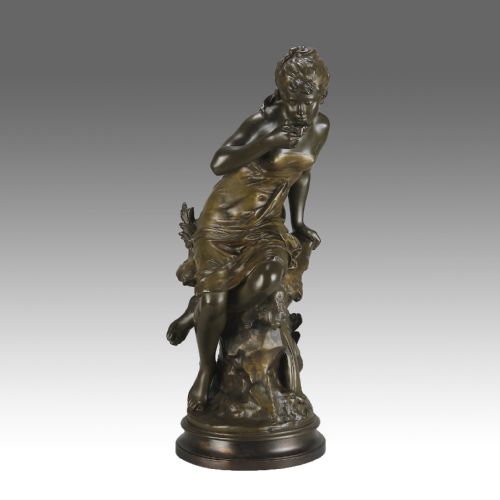
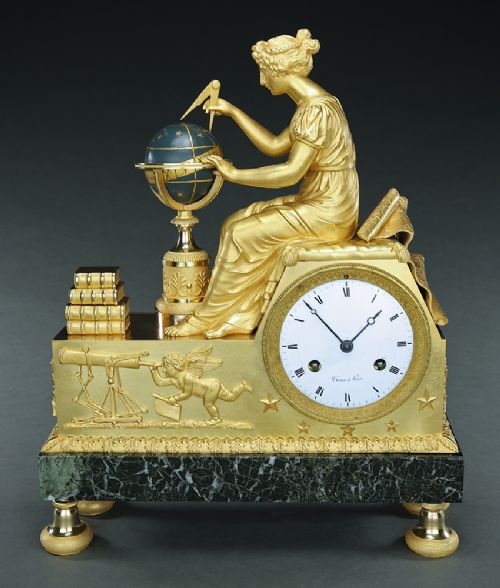
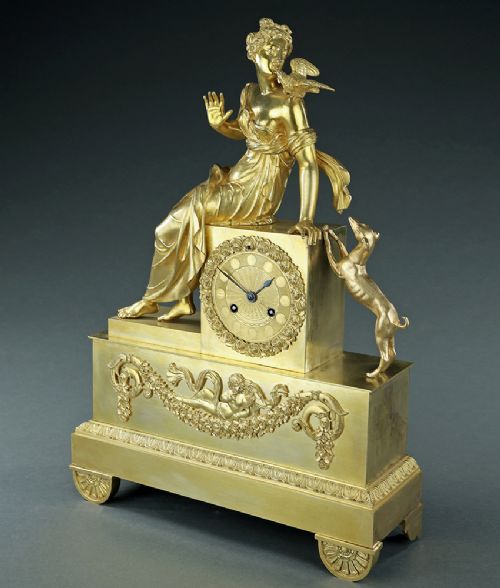


Allegorical Bronze Figure
An allegorical bronze figure embodies an abstract concept like science, art or harvest through classical personification, bringing nineteenth-century sculpture into domestic interiors.
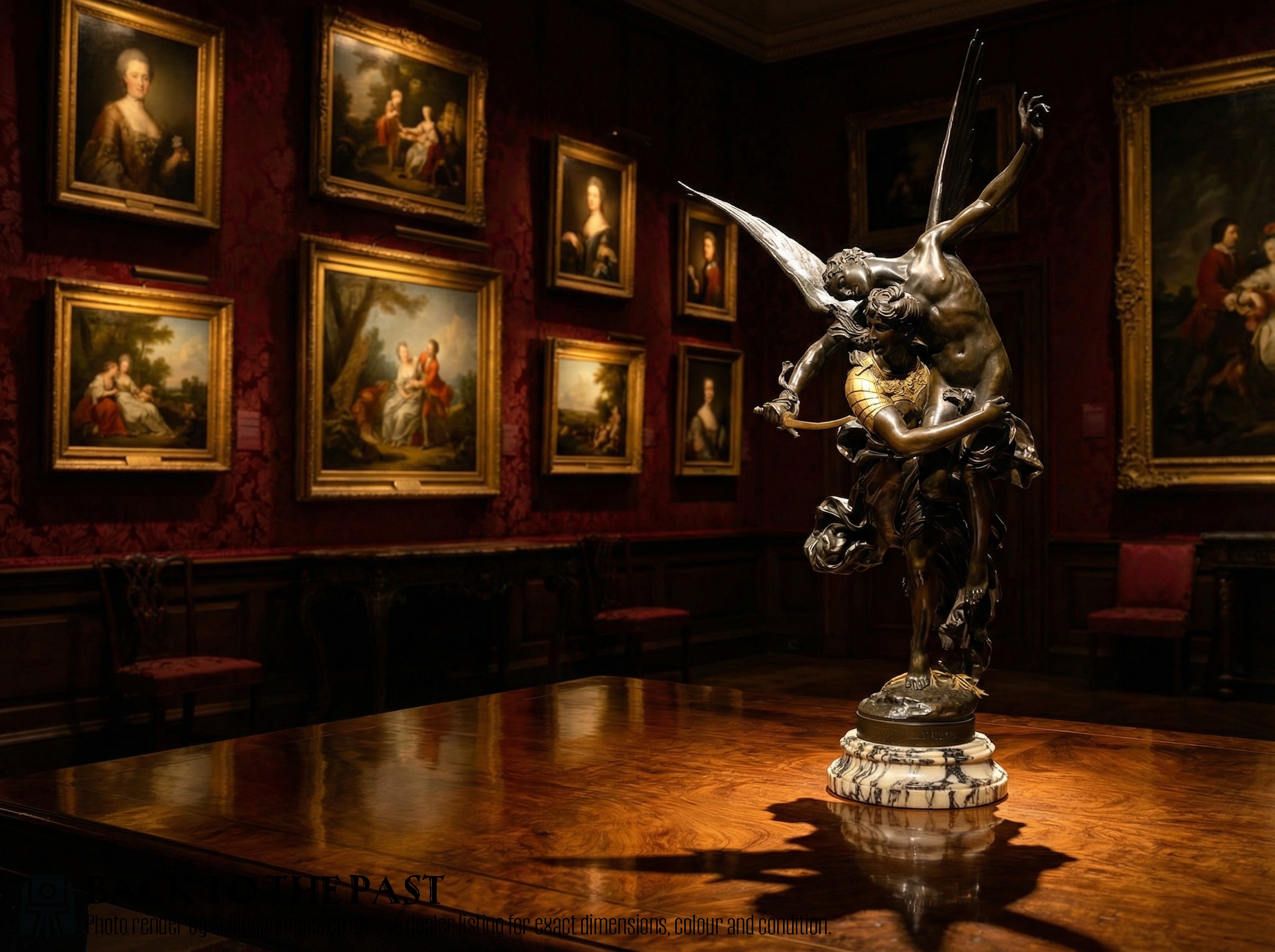
Allegorical Bronze Figure
When you search for an allegorical bronze figure, you encounter sculptural works that personify themes such as harvest, astronomy, literature and justice. These pieces frequently take the form of freestanding sculptures, lamp bases or figural clock garnitures.
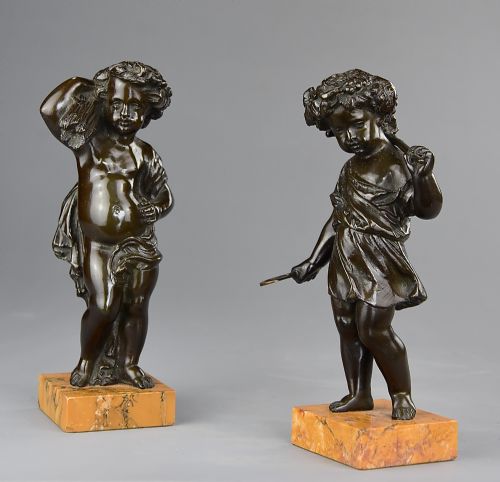
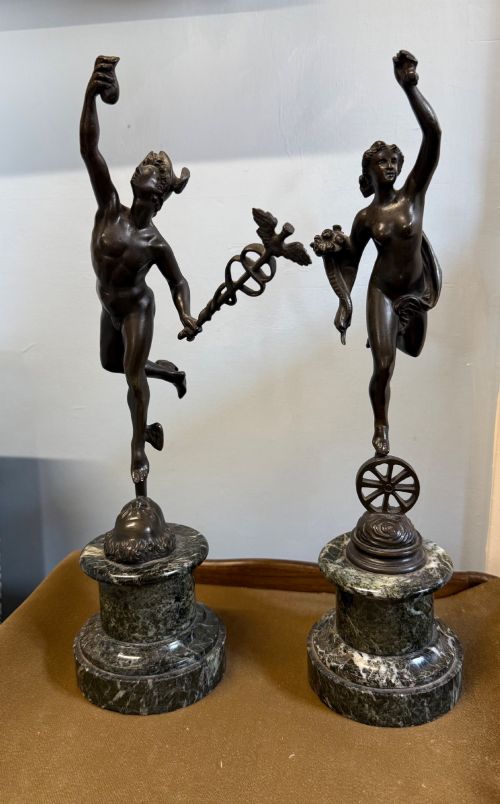
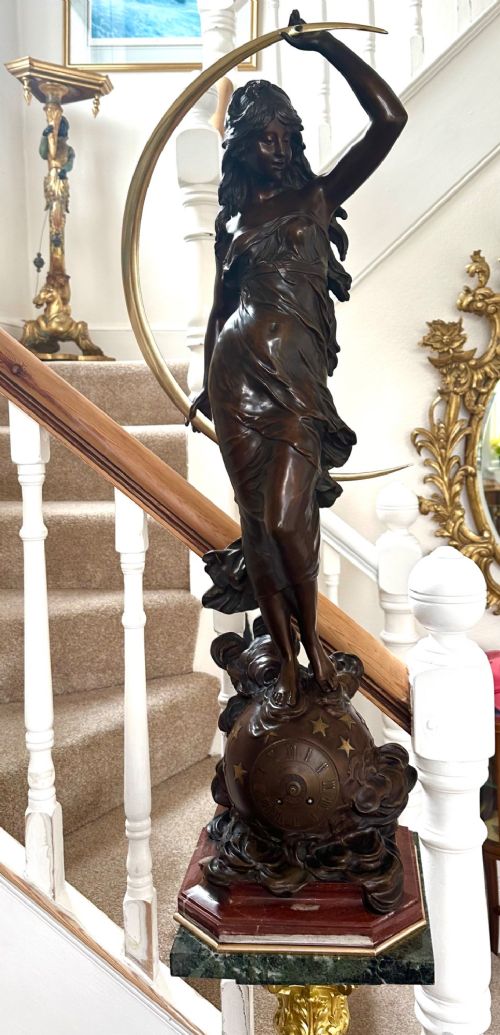
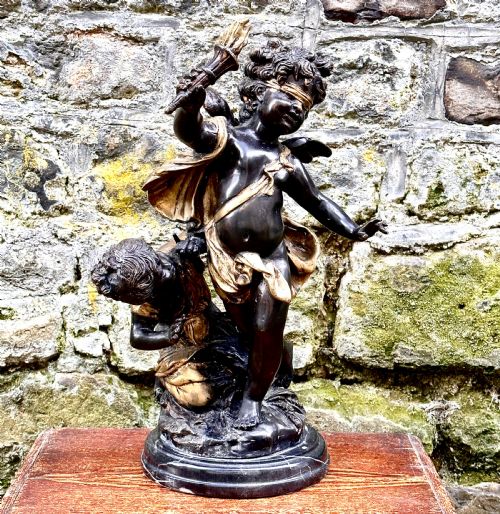
The selections on this page span the nineteenth century, encompassing Victorian productions alongside French Empire, Louis XVI and Art Nouveau stylistic revivals. Subjects range from individual mythological deities like Selene and Aurora to pairs of harvest putti and dancers.
Many of these works reference named sculptors and founders, including Auguste Moreau, Mathurin Moreau, Emile Louis Picault, Ernst Barrias and Barbedienne. They provide a direct connection to European foundry traditions of the eighteen-eighties and eighteen-nineties.
How they were made
Foundries utilised traditional metalcasting techniques to produce patinated bronze, gilt bronze and ormolu figures. These metallic elements are frequently mounted upon heavy marble bases, plinths or rouge marble architectural clock bodies.
Listings feature works produced across the nineteenth and early twentieth centuries, spanning Victorian, Art Nouveau, French Empire and Louis XVI styles.
What varies in quality
The distinction between tiers rests upon the crispness of the chased surface detail and the depth of the patination. Master founders achieved subtle transitions in muscle tone, drapery folds and facial expression that lesser castings miss.
The integration of the figure with its mounting alters the overall success of the piece. Superior examples feature custom-fitted marble plinths and richly gilded ormolu mounts that complement the central bronze sculpture.
Claude Michael Clodion·August Moreau·Mathurin Moreau·Emile Louis Picault·Ernst Barrias·Barbedienne·Jean-Jules Cambos·Deniere Et Fils
The Allegorical Bronze Figure Glossary
- Allegory
- The representation of abstract ideas through human form and symbolic attributes. In nineteenth-century sculpture, figures often personify virtues, seasons or academic disciplines.
- Ormolu
- Gilt bronze produced by applying a mercury-gilding process to a bronze base. This technique creates a durable golden finish seen on French clocks and decorative mounts.
- Patination
- The surface coloration and treatment applied to bronze through chemical means or natural ageing. A controlled patina enhances sculptural depth and highlights fine details.
- Garniture
- A set of matching decorative objects, typically comprising a mantel clock flanked by matching candelabra or sculptural figures. These sets served as centrepieces on nineteenth-century mantelpieces.
- Spelter
- A zinc alloy utilised as a less expensive alternative to bronze for sculptural figures. It accepts metallic paints and patination to simulate heavier bronze works.
Allegorical Bronze Figure: Frequently Asked Questions
What is an allegorical bronze figure?
An allegorical bronze figure is a nineteenth-century sculptural work representing an abstract concept, virtue or season through human form. These pieces often depict mythological figures or personifications like harvest, literature and justice.
Found primarily on decorative objects from the Victorian and Art Nouveau periods, they function as standalone sculptures, lamp bases and clock components. Their themes reflect nineteenth-century educational and aesthetic values.
How do I identify the subject?
Subjects are typically identified through symbolic attributes held by the figure, such as wheat sheaves for harvest, globes for astronomy, or books for literature. Inscribed titles on the base or plinth often confirm the specific personification.
Comparing the attributes against classical mythology and nineteenth-century iconography reveals the intended meaning behind figures like Selene, Aurora or Fortuna.
Where should I display them?
These figures suit prominent locations where their patination and detail can be appreciated up close, such as mantelpieces, side tables or dedicated pedestals. Clock garnitures work naturally atop fireplace surrounds as symmetrical decorative arrangements.
Ensure the display surface supports the substantial weight of marble bases and cast metal components safely.
How do I distinguish bronze from spelter?
Bronze exhibits greater weight, a cooler temperature to the touch, and a resonant sound when lightly tapped compared to spelter. Underneath surface patination, bronze shows a warm golden-brown metal tone rather than the greyish-white interior typical of zinc alloys.
Foundry marks and finer surface chasing also indicate higher-quality bronze castings rather than mass-produced spelter alternatives.