


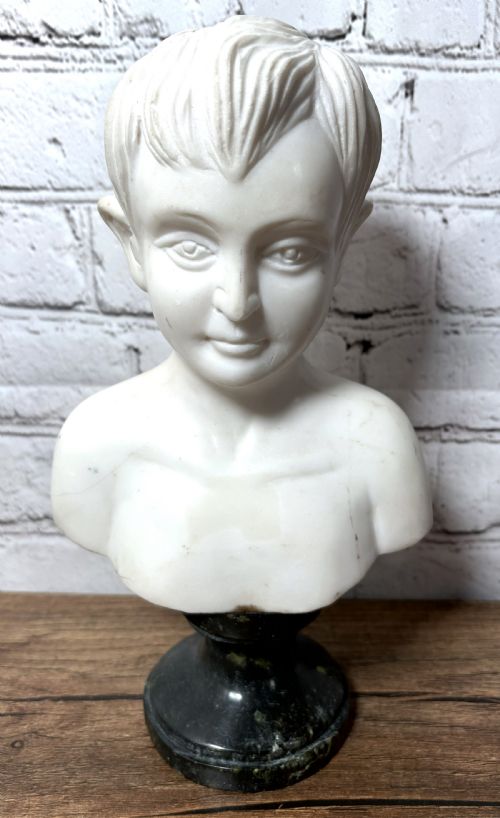


Alabaster Portrait Sculpture
Alabaster portrait sculpture captures likenesses in stone, offering tactile depth and classical elegance that collectors prize for interiors.
Alabaster Portrait Sculpture
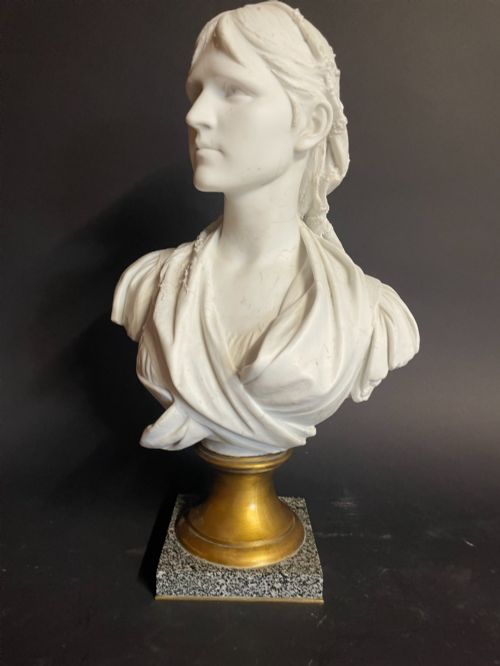
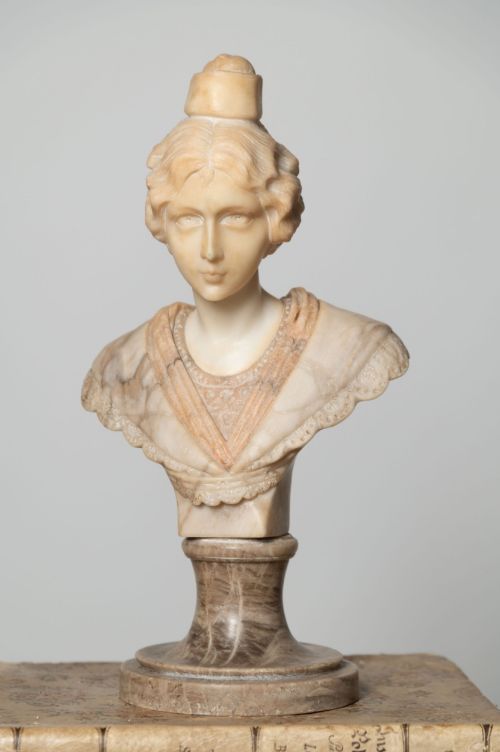
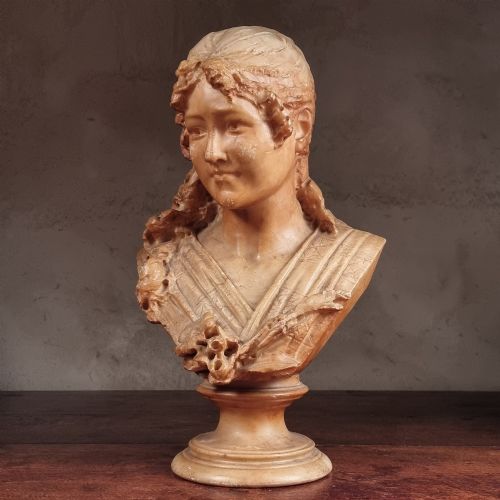
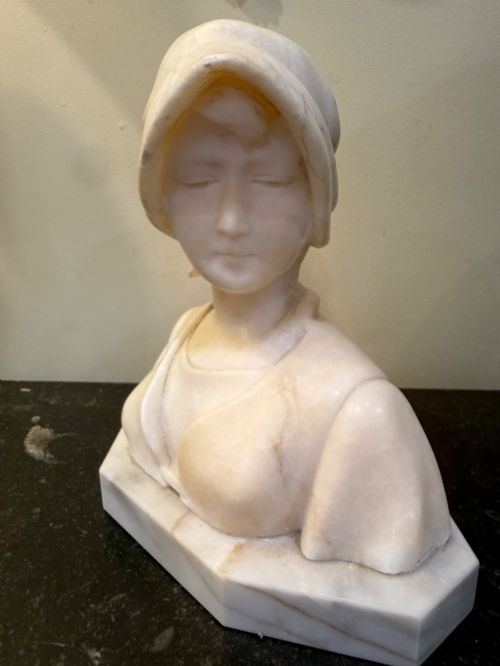
Alabaster portrait sculpture encompasses carved likenesses of women, girls, boys, and gentlemen originating predominantly from the nineteenth century up to the Edwardian period. Buyers encounter female busts, profile plaques, and death masks created across various European traditions including French, Italian, and Continental workshops.
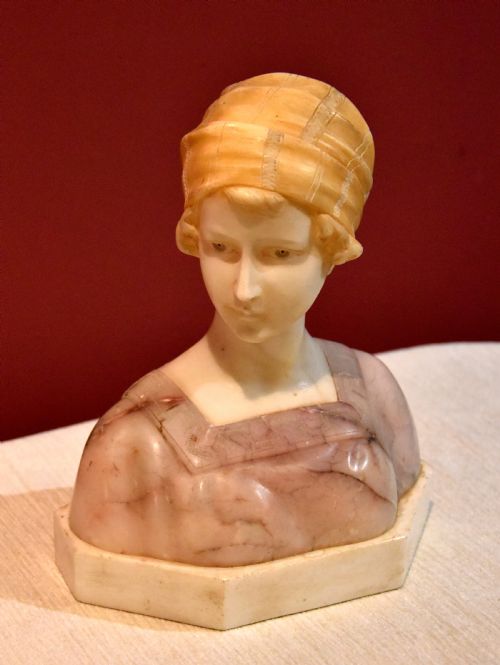
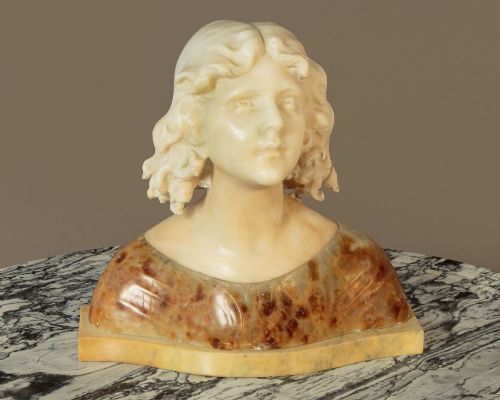
Victorian, Neoclassical, and Art Nouveau styles dominate the selection. The most common form on this page is the nineteenth-century female bust carved from white or tinted alabaster.
How they were made
Sculptors carved these portrait pieces directly from blocks of alabaster and marble, utilising chisels and rasps to shape hair, fabric, and flesh. Softer than marble, alabaster allowed artisans to achieve translucent qualities that mimic human skin.
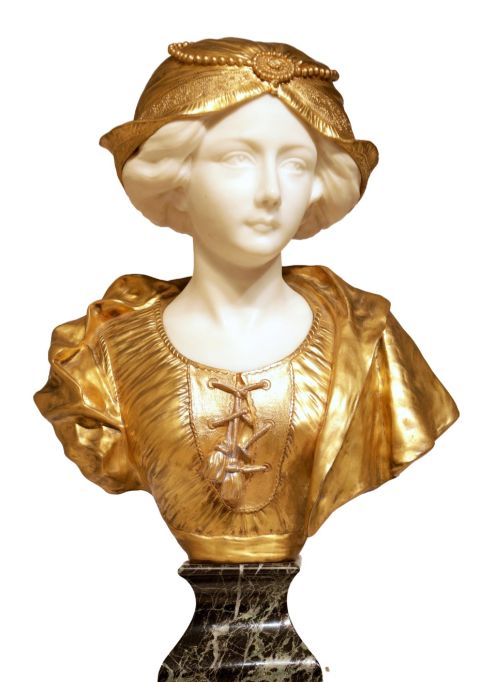
Many works incorporate mixed media, mounting alabaster heads upon marble plinths or combining them with bronze, brass, or ormolu mounts and cast details. Signatures are often incised directly into the stone or metal elements by the maker.
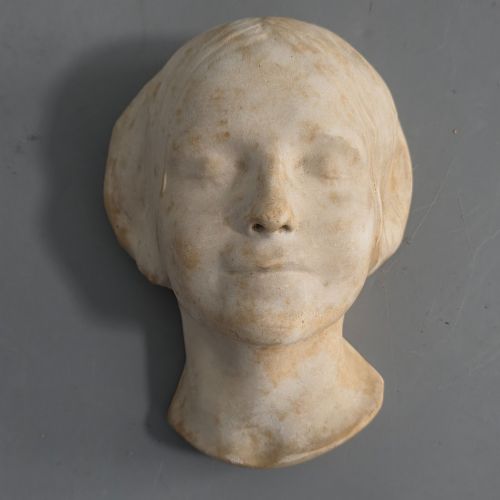
One listed piece records an anonymous face pulled directly from the Seine, preserving a quiet nineteenth-century mystery in stone.
What varies in quality
The skill of the carver dictates the life and expression captured in the portrait, separating mechanical copies from expressive works. Finer pieces demonstrate mastery over the translucency of the stone, particularly in the rendering of hair, eyelids, and drapery.
The choice and combination of materials influence the overall character of the piece, with mixed-media works utilising bronze, gilt bronze, and contrasting marbles requiring greater coordination between stone carvers and metalworkers.
Affortunato Gory·Auguste Henri Carli·George Van Der Straeten·G.V. Vaerenbergh·Mieczyslaw Leon Zawiejski·GREUZE
The Alabaster Portrait Sculpture Glossary
- Alabaster
- A soft, fine-grained stone prized for its translucency and ease of carving. It permits sculptors to create subtle shifts in light across a portrait.
- Bust
- A sculpted representation of a person's head, shoulders, and upper chest. This format is standard for nineteenth-century portrait sculpture.
- Ormolu
- Gilded bronze applied as mounts or decorative elements on sculpture bases. It provides a warm metallic contrast to white stone.
- Profile plaque
- A flat-backed sculptural panel depicting a subject from the side. These wall-hanging pieces often portray literary or historical figures.
- Death mask
- A cast taken from a deceased person's face. The example listed on this page captures a nineteenth-century subject in alabaster and stone.
Alabaster Portrait Sculpture: Frequently Asked Questions
What is alabaster portrait sculpture?
Alabaster portrait sculpture consists of carved three-dimensional likenesses and relief plaques depicting human subjects in stone.
These works range from nineteenth-century female busts to profile plaques of historical figures.
How were these sculptures displayed?
Sculptures were placed upon pedestals, mantelpieces, and library tables to display refinement in domestic interiors.
Wall plaques were hung in studies and reception rooms as decorative and commemorative items.
How do I identify the period?
Period identification relies on stylistic cues such as Victorian drapery, Neoclassical severity, or Art Nouveau hair styling.
Signatures, material combinations, and mounting techniques also provide clues to the decade of creation.
Are bronze and marble combined?
Several pieces combine alabaster and marble heads with bronze, brass, or ormolu mounts and clothing elements.
This mixed-media approach was popular among French and Continental workshops of the late nineteenth century.